The cider starts out sharp and watery in the saucepan, then turns darker and much more fragrant as it simmers. That concentrated flavor is what keeps these cake-style apple cider donuts tasting like apples instead of just cinnamon and sugar. I tested the dough until it held its shape after cutting but still fried up tender, with a soft middle and a crisp, deep-golden edge.
These donuts are made with a cake-style dough, so there’s no yeast rise to wait for. The dough is sticky before chilling, which can make rolling feel messy if you rush it; an hour in the refrigerator makes it far easier to handle. A thermometer matters at the stove, too, because oil that’s too cool leaves the donuts heavy, while oil that’s too hot darkens them before the centers cook.
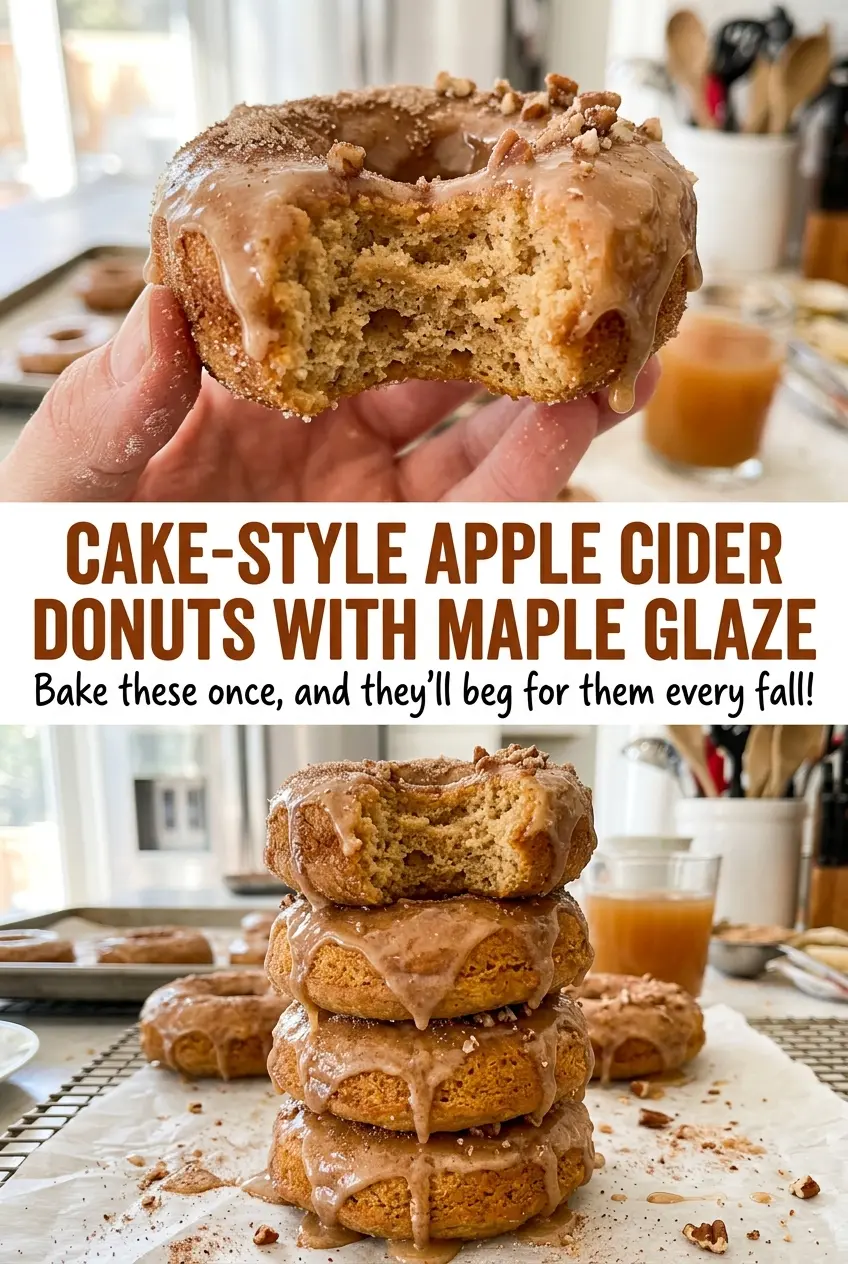
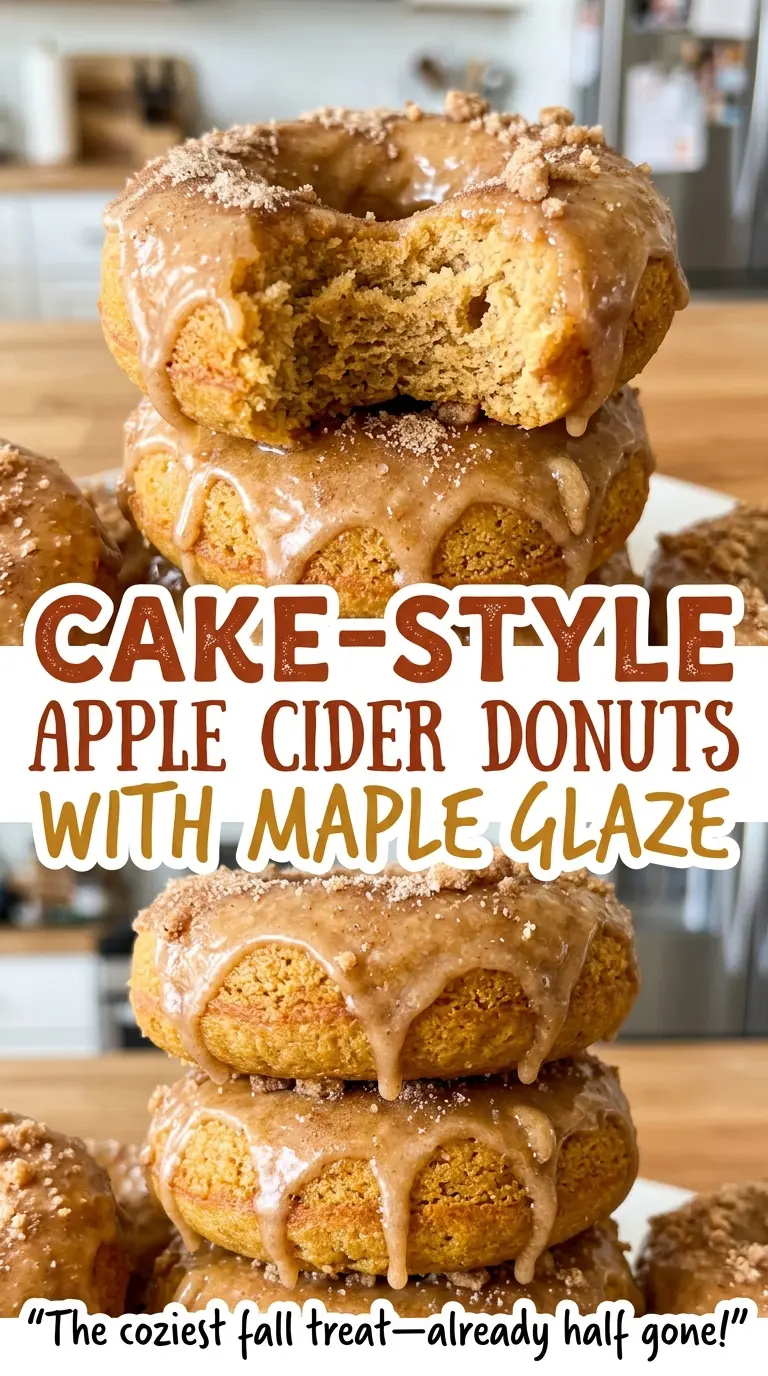
The maple glaze is thick enough to cling to the tops without hiding the warm spice or the apple in the crumb. Let the donuts cool before dipping, and you’ll get a smooth, set glaze over a tender cake center.
Kitchen Note
The dough is supposed to feel sticky before it chills, so resist the urge to work extra flour into it. After an hour in the refrigerator, it firms up enough to roll with a light dusting of the reserved flour, and the donuts stay tender instead of getting heavy.
Save these cake-style apple cider donuts with maple glaze for a batch with concentrated cider flavor, tender cake centers, and a smooth maple finish.
The Cider Has to Lose Water Before It Can Give These Donuts Apple Flavor
Unreduced cider brings plenty of liquid, but not enough concentrated apple flavor to stand up to the flour, spices, frying, and maple glaze. Simmering it down changes that balance: the apple becomes more pronounced while excess water cooks away. That matters in a cake-style dough, where adding too much liquid can leave you with a soft, difficult-to-cut mixture rather than neat donut rounds.
There’s also a useful difference between cider and apple juice here. Cider’s fuller, less filtered taste gives the crumb a rounded apple note that juice often can’t match. Choose a cider you’d enjoy drinking, but it doesn’t need to be a specialty bottle; a straightforward grocery-store cider works well. Let the reduction cool to room temperature before mixing it with the eggs and dairy. Warm cider can soften the butter and change the texture of the dough before it has a chance to chill.
The result is a donut that tastes unmistakably of apple without leaning on a heavy coating of spice. Cinnamon and nutmeg support the cider rather than taking over, and the maple glaze adds a separate, clear finish.
Why Cider, Buttermilk, and Maple Each Matter in These Donuts
- Apple cider — It brings the signature apple taste and moisture. A regular, good-quality cider is fine; reducing it is more important than buying an expensive brand. Apple juice isn’t an equal swap because it’s usually sweeter and lighter in flavor.
- All-purpose flour — It gives the donuts enough structure to roll and cut while keeping the crumb tender. Standard all-purpose flour is the right choice here; bread flour can make the result chewier. For a gluten-free version, use a cup-for-cup baking blend as described below.
- Buttermilk, eggs, and butter — Buttermilk’s acidity works with the baking soda, while eggs bind the dough and softened butter creams with the sugar for a fine, soft crumb. Room-temperature eggs and buttermilk blend more evenly. Plain kefir can replace the buttermilk in the same quantity, though the tang may be a little milder.
- Baking powder, baking soda, cinnamon, and nutmeg — The leaveners lift the cake dough, and the spices bring warmth without covering the cider. Fresh spices smell stronger, but everyday ground spices work; replace spices that have lost their aroma rather than adding extra to compensate.
- Vegetable oil — A neutral frying oil lets the cider and maple come through. Canola oil is a practical substitute with a similarly mild taste. Use a thermometer to manage the temperature rather than judging the oil by appearance.
- Pure maple syrup — It gives the glaze its recognizable maple flavor. Pure maple syrup makes a more distinct glaze than pancake syrup, while ordinary powdered sugar and milk are fine for building its smooth, dippable texture.
From Sticky Dough to a Clean Fry: The Stages That Matter
Concentrate and cool the cider
Simmer the apple cider in a small saucepan over medium heat until it has reduced to one-half cup, which takes about 15 to 20 minutes. The liquid will look darker and smell more concentrated as it cooks. Pour it aside and let it cool to room temperature, about 30 minutes. Mixing it in while warm can soften the butter and interfere with the dough’s texture.
Cream the butter, then chill the dough
Whisk 3 1/4 cups of the flour with the baking powder, baking soda, cinnamon, nutmeg, and salt, keeping the remaining flour for rolling. Beat the sugar and softened butter until creamy, about 2 minutes, then beat in the eggs one at a time before mixing in the cooled cider, buttermilk, and vanilla. Stir in the flour mixture only until no dry streaks remain; overmixing can make the donuts tough. Cover the sticky dough and chill it for 1 hour.
Roll and cut without packing in extra flour
Dust the work surface lightly with some of the reserved flour, then roll the dough to one-half inch thick. Cut 3-inch rounds with 1-inch centers and place the donuts and holes on a lightly floured, parchment-lined baking sheet. Gather and reroll the scraps once; repeated rerolling works the dough more and can make the last donuts less tender. Use only enough flour to keep the dough from sticking.
Fry in small batches at a steady temperature
Heat the vegetable oil in a 6-quart Dutch oven over medium heat to 350°F, checking with a thermometer. Fry 2 or 3 donuts at a time for 1 to 2 minutes per side, keeping the oil near 350°F, until deep golden and cooked through. Crowding the pot makes the oil temperature harder to maintain, so let it recover between batches if needed. Fry the holes for about 1 minute, turning once, then move everything to a wire rack set over a baking sheet.
Dip only after the donuts have cooled
Let the donuts and holes cool completely on the rack, about 20 minutes. Whisk the powdered sugar, maple syrup, milk, and salt until the glaze is smooth, thick, and still dippable. Dip the top of each cooled donut, letting the extra glaze drip back into the bowl. Leave them on the rack for about 10 minutes so the coating can set before serving.
Two Ways to Change the Finish or Make a Gluten-Free Batch
Swap the maple glaze for cinnamon sugar
For a dry, warmly spiced finish, skip the maple glaze and coat the donuts in granulated sugar mixed with cinnamon while they’re still warm. The coating won’t have the maple flavor or smooth shine, but it gives the outside a light crunch and keeps the cake crumb front and center.
Use a cup-for-cup gluten-free flour blend
Replace the all-purpose flour with a gluten-free baking blend labeled as a 1:1 replacement for wheat flour; a blend that includes xanthan gum gives the dough better structure. Keep the same division between the dough flour and the flour reserved for rolling. The dough may be more delicate to lift, but a thin spatula helps transfer the cut rounds without stretching them.
Storage and Reheating
- Room temperature: The donuts are best the day they’re fried. Keep leftovers covered in an airtight container and eat within 2 days.
- Refrigerator: Store airtight for up to 3 days; the crumb will firm up and the glaze may lose some of its shine.
- Freezer: Freeze completely cooled, unglazed donuts in a single layer, then transfer them to an airtight freezer bag for up to 2 months. Thaw at room temperature and glaze after thawing.
- Reheating: Warm an unglazed donut in the microwave for about 5 seconds, then glaze it. Longer heating can toughen the cake, and warming a glazed donut softens the coating.
The Questions That Come Up Before the First Batch Is Gone
Cake-Style Apple Cider Donuts with Maple Glaze
Ingredients
Equipment
Method
- Simmer the apple cider in a small saucepan over medium heat until reduced to 1/2 cup, about 15–20 minutes.
- Cool the reduced cider to room temperature, about 30 minutes.
- Whisk 3 1/4 cups of the flour with the baking powder, baking soda, cinnamon, nutmeg, and salt in a medium bowl.
- Reserve the remaining 1/4 cup flour for rolling.
- Beat the granulated sugar and softened butter in a large bowl until creamy, about 2 minutes.
- Beat in the eggs one at a time.
- Mix in the cooled cider, buttermilk, and vanilla.
- Stir the flour mixture into the wet ingredients just until no dry streaks remain.
- Cover and chill the sticky dough for 1 hour.
- Dust the work surface with some of the reserved flour and roll the dough to 1/2 inch thick.
- Cut 3-inch rounds with 1-inch centers, rerolling scraps once.
- Place the donuts and holes on a lightly floured, parchment-lined baking sheet.
- Heat the vegetable oil in a 6-quart Dutch oven over medium heat to 350°F, checking the temperature with a thermometer.
- Fry 2 or 3 donuts at a time for 1–2 minutes per side, maintaining the oil near 350°F, until deep golden and cooked through.
- Fry the holes for about 1 minute, turning once.
- Transfer the donuts and holes to a wire rack set over a baking sheet.
- Cool completely, about 20 minutes.
- Whisk the powdered sugar, maple syrup, milk, and salt in a medium bowl until smooth and thick but dippable.
- Dip the top of each cooled donut in the glaze and let excess drip back into the bowl.
- Leave the donuts on the rack until the glaze sets, about 10 minutes.