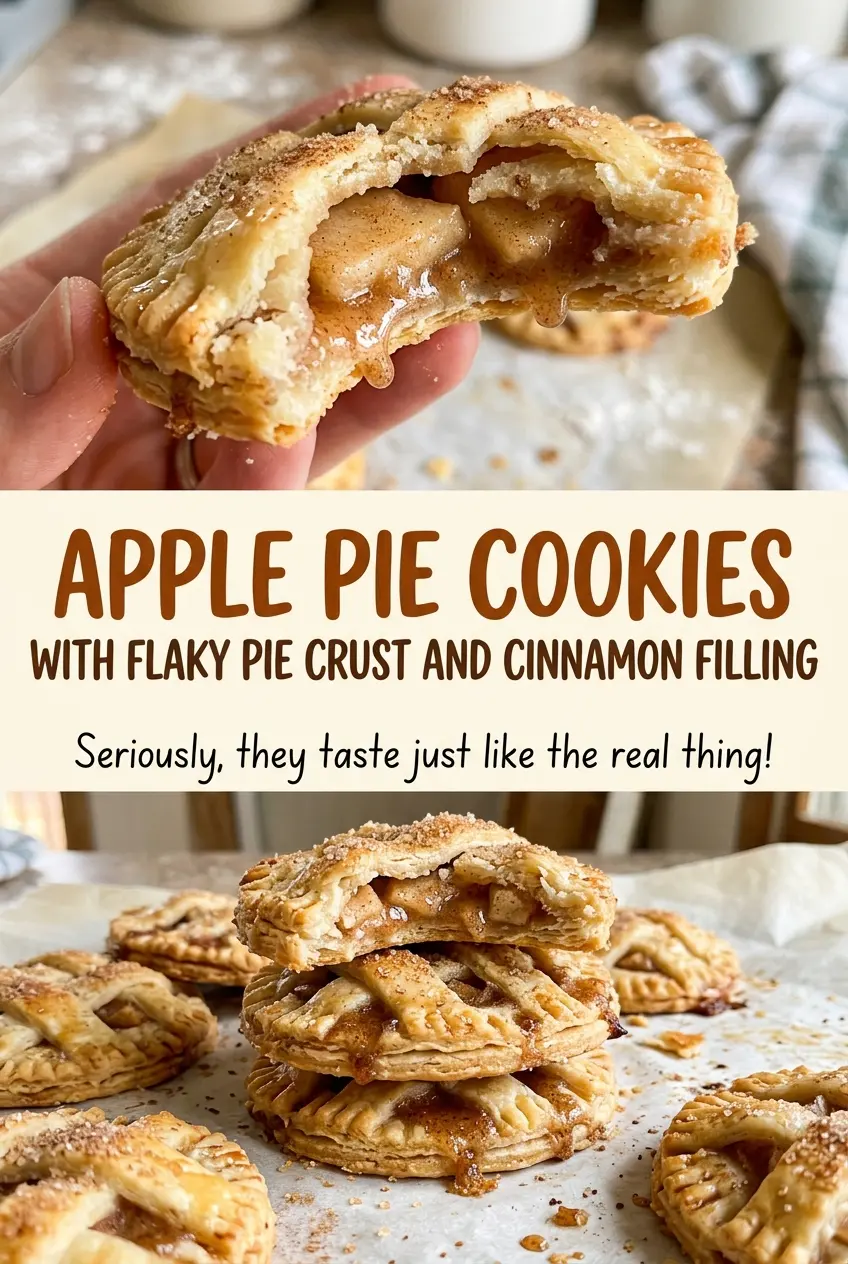
The apple filling starts out glossy and loose in the skillet, then turns into a thick cinnamon syrup as the apples soften. That change is what makes these apple pie cookies feel like little hand pies instead of buttery rounds with juice running onto the pan. I keep the apple pieces small, so each bite fits neatly inside the flaky crust.
For this version, I make the crust from cold butter and chill the dough before rolling. It takes a little planning, but the dough is easier to handle and the finished pastry has distinct, tender layers. The filling gets cooked separately, too, so the apples are already tender by the time the crust turns golden.
Each cookie gets a vented top, a fork-crimped edge, and a little coarse sugar. Break one open after it cools and you’ll find soft cinnamon apples tucked inside a crisp, flaky shell.
Kitchen Note
Let the apple filling cool completely before it goes anywhere near the dough. Warm filling can soften the butter in the crust while you assemble the cookies, making the pastry harder to handle.
Save these apple pie cookies for a baking day when flaky crust and a thick cinnamon-apple center sound just right.
Why the Apple Filling Gets Cooked Before It Goes in the Crust
Raw apple pieces release moisture as they bake. Inside a small pastry, that juice has nowhere to go, so it can leave the bottom crust damp before the top has finished baking. Cooking the filling first gives the cornstarch a chance to thicken the cider and apple juices into a syrup that clings to the fruit.
The timing matters because the apples should soften without turning to mush. They cook covered briefly to start tenderizing, then uncovered with frequent stirring so excess liquid can cook off. Stop when a piece is tender but still holds its shape and the syrup looks thick. If the filling is still watery, give it a little more time in the skillet; a loose filling is much harder to keep inside a small cookie.
This small extra step gives you more control over the filling than relying on the oven to do all the work. You can see the texture before assembling, and the apple pieces stay distinct rather than disappearing into a soft paste.
What the Butter, Apples, and Cider Bring to These Cookies
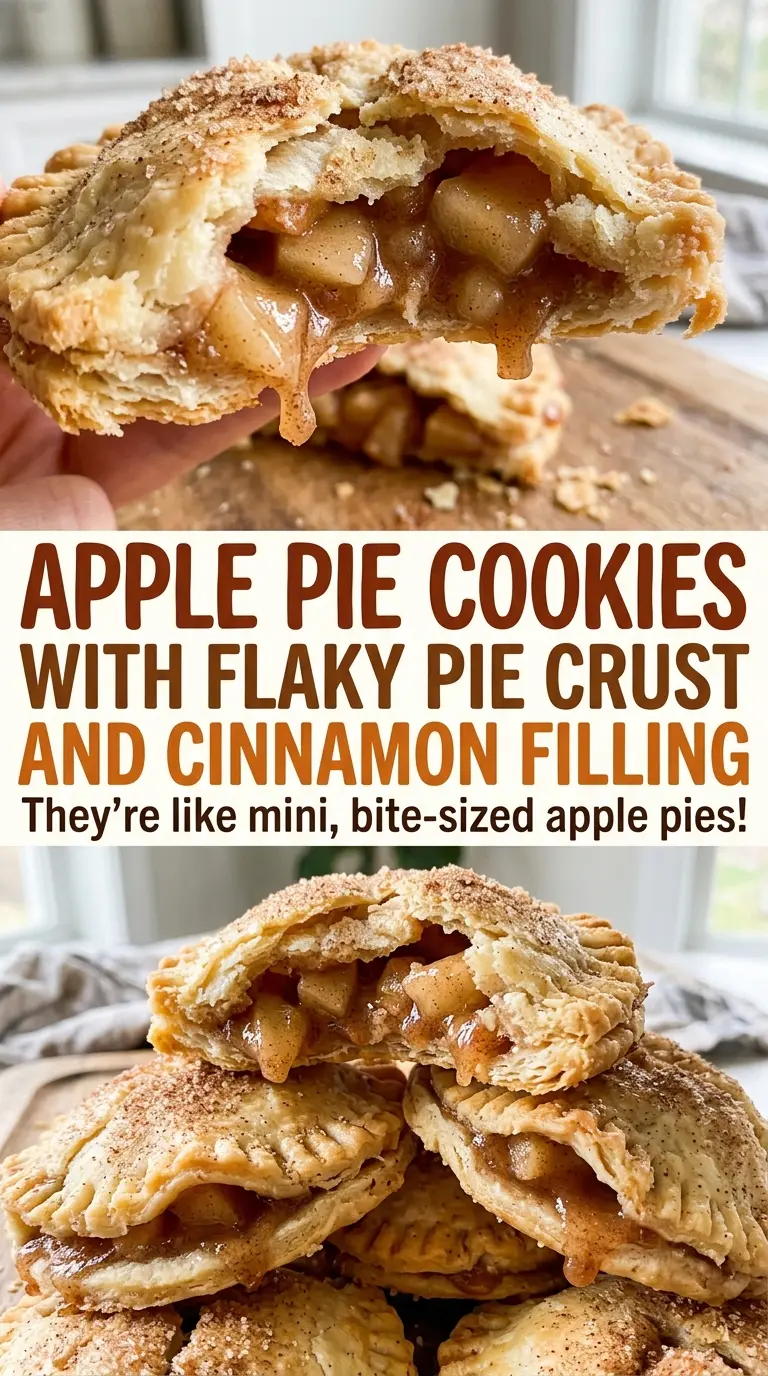
- All-purpose flour and cold butter — All-purpose flour gives the dough enough structure to hold its shape around the filling. Cold butter is what creates the flaky texture, so keep it cold and cut it into cubes just before using. A standard bag of all-purpose flour works well; a flour swap would change how the dough handles.
- Apples — Choose apples that stay in pieces as they cook, and cut them evenly so they soften at roughly the same rate. Peeling and coring them keeps the filling tender and easy to bite through. The specific variety is flexible; the size of the dice matters more than a particular brand or variety.
- Light brown sugar, cinnamon, and cornstarch — Brown sugar adds a mellow molasses note, cinnamon gives the filling its familiar pie flavor, and cornstarch thickens the fruit juices. Whisk these dry ingredients together before adding the apples so the starch doesn’t gather in clumps.
- Lemon juice and apple cider — Lemon juice brightens the filling, while cider brings a concentrated apple note and helps the fruit cook down. Use apple cider rather than a hard cider; the fresh, fruity taste is what belongs here.
- Egg, milk, and coarse sugar — The egg wash helps the pastry tops bake up golden and gives the coarse sugar something to cling to. Turbinado is a good choice for a crunchy finish; the important detail is using coarse sugar rather than fine granulated sugar.
Building the Cookies Without Tough Dough or Runny Centers
Keep the Butter Pieces Distinct
Whisk the flour, granulated sugar, and kosher salt in a large bowl, then cut in the cold butter with a pastry blender or your fingertips. Stop when the largest butter pieces are about pea-size; the mixture shouldn’t look like a smooth paste. Sprinkle on the ice water and toss with a fork until the dough holds together when squeezed. Divide it into two disks, wrap them separately, and refrigerate for at least 1 hour.
Cook the Apples Until the Syrup Thickens
Stir the brown sugar, cornstarch, and cinnamon together in a medium bowl, then toss with the diced apples and lemon juice. Transfer everything to a 10-inch skillet and pour in the apple cider. Cook covered over medium heat for 3 minutes, then uncover and cook for 4 to 6 minutes, stirring often. The apples should be tender but still hold their shape, and the syrup should look thick rather than watery.
Cut, Fill, and Seal the Pastry Rounds
Heat the oven to 375°F and line a large baking sheet with parchment paper. Roll one chilled dough disk between sheets of parchment to about 1/8 inch thick, cut 12 rounds with a 3 1/2-inch cutter, and reroll the scraps once if needed. Repeat with the second disk, cutting three small vents in each round for the tops. Spoon 1 tablespoon of cooled filling onto each bottom round, leaving a 1/2-inch border; brush the border with egg wash, top with a vented round, and crimp the edges with a fork.
Bake Until the Crust Turns Golden
Beat the egg and milk together, brush the tops, and sprinkle on the coarse sugar. Bake for 20 to 25 minutes, until the pastry is golden brown. If the tops still look pale at the early end of that range, let them continue baking until the color develops. Leave the cookies on the baking sheet for 10 minutes before serving so the pastry can settle after baking.
Two Small Changes for a Different Apple Pie Cookie
Choose tart apples for a brighter filling
Use firm Granny Smith apples in place of a sweeter variety, keeping the same amount and dice. Their tartness balances the brown sugar and cinnamon, and firm pieces hold their shape well as the filling cooks.
Swap the coarse sugar on top
Turbinado gives the tops a noticeable crunch, but another coarse-grained sugar works in its place. Keep the same topping amount; fine sugar won’t give you the same crisp, sparkling finish.
Storage and Reheating
- Refrigerator: Store cooled cookies in an airtight container for up to 4 days. The crust softens gradually as it sits with the fruit filling.
- Freezer: Freeze baked cookies in an airtight container for up to 2 months, separating layers so the tops don’t stick together. Thaw at room temperature.
- Reheating: Warm them in a low oven until heated through. A microwave warms the filling quickly but softens the flaky crust.
Questions That Come Up While Making Apple Pie Cookies
Apple Pie Cookies with Flaky Pie Crust and Cinnamon Filling
Ingredients
Equipment
Method
- Whisk the flour, granulated sugar, and salt together in a large bowl.
- Cut in the cold butter with a pastry blender or your fingertips until the largest pieces are about pea-size.
- Sprinkle 6 tablespoons ice water over the mixture and toss with a fork.
- Add more water, 1 teaspoon at a time, until the dough holds together when squeezed.
- Divide the dough in half and shape each half into a disk.
- Wrap the disks separately.
- Refrigerate the dough for at least 1 hour.
- Stir the brown sugar, cornstarch, and cinnamon together in a medium bowl.
- Add the apples and lemon juice and toss to coat.
- Transfer the mixture to a 10-inch skillet and pour in the apple cider.
- Cook over medium heat, covered, for 3 minutes.
- Uncover and cook for 4 to 6 minutes, stirring often, until the apples are tender but hold their shape and the syrup is thick.
- Transfer the filling to a bowl and let it cool completely, about 20 minutes.
- Heat the oven to 375°F and line a large baking sheet with parchment paper.
- Roll one dough disk between sheets of parchment to about 1/8 inch thick.
- Cut out 12 rounds with a 3 1/2-inch cutter, rerolling scraps once as needed, and arrange them on the baking sheet.
- Roll the second disk the same way.
- Cut out 12 rounds and cut three small vents in each round.
- Beat the egg and milk together in a small bowl.
- Spoon 1 tablespoon cooled filling onto each dough round, leaving a 1/2-inch border.
- Brush the borders with egg wash, place a vented round on top, and crimp the edges with a fork to seal.
- Brush the tops with egg wash and sprinkle with the coarse sugar.
- Bake for 20 to 25 minutes, until the crusts are golden brown.
- Let the cookies cool on the baking sheet for 10 minutes before serving.