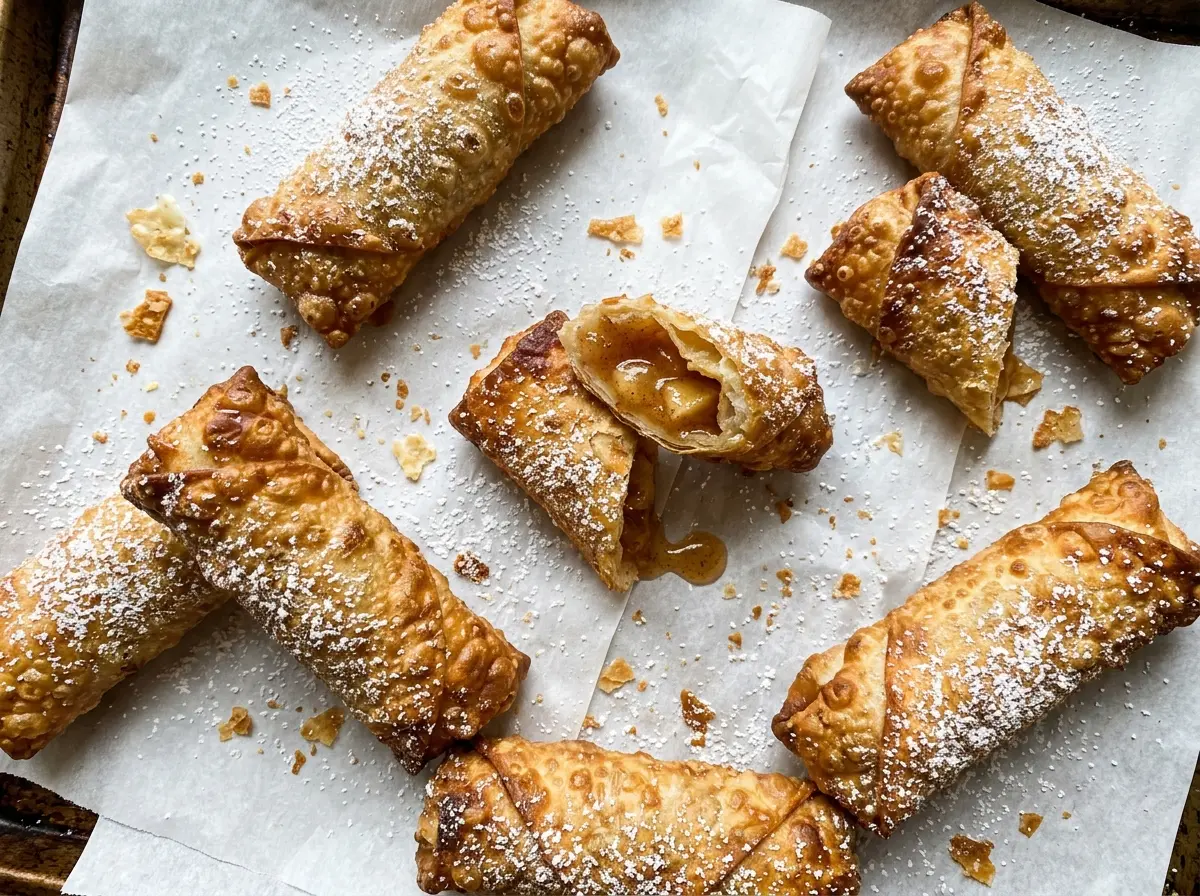
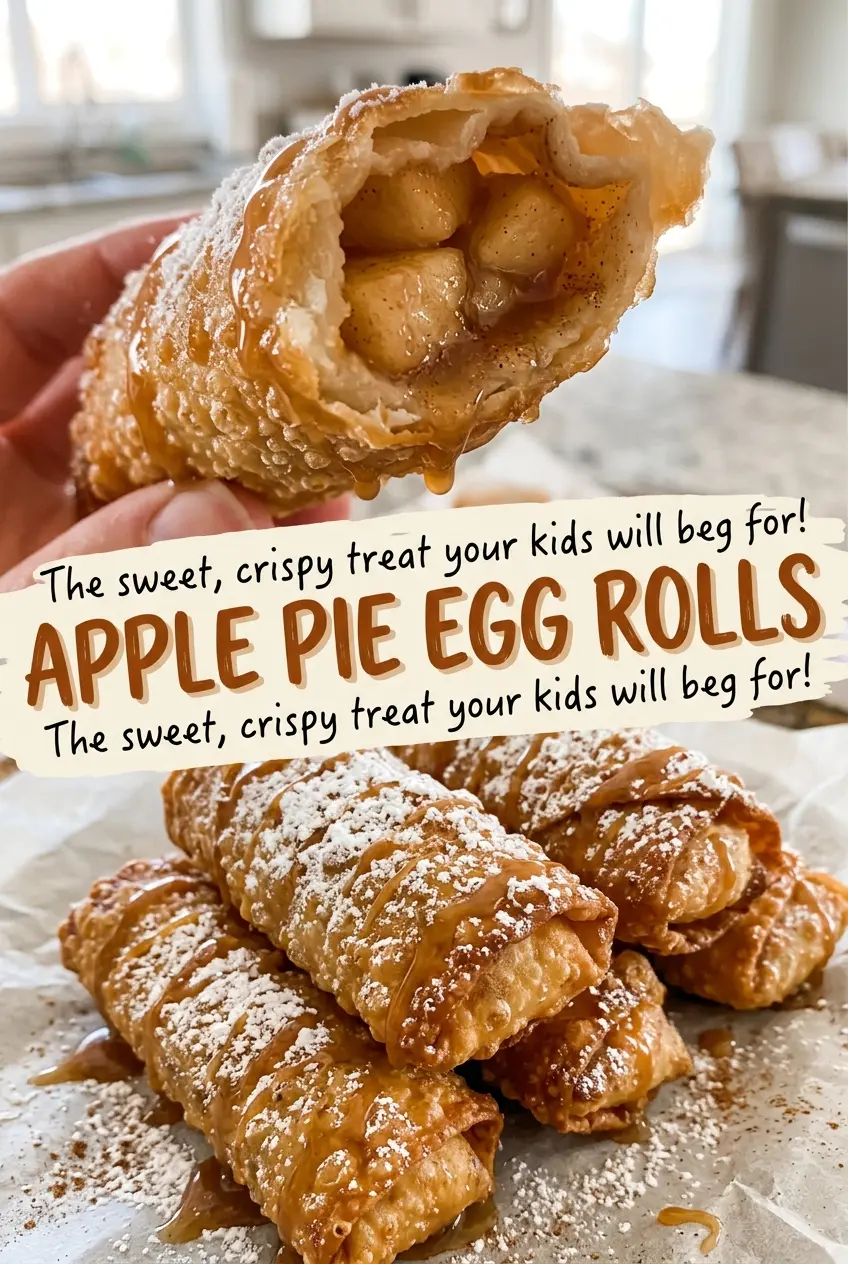
When the apples soften in the butter and cinnamon, the kitchen starts to smell like pie before there’s even a crust in sight. I wanted that familiar apple-pie filling in a crisp, hand-held wrapper, without a soggy center or a roll that splits in the oil. These apple pie egg rolls deliver that contrast: a browned, crunchy shell around tender apples and a warm cinnamon-sugar coating.
The filling needs to be thick enough to stay put and cool enough to wrap without steaming the wrappers. I cook the apples until they’re just tender, then thicken the juices with a cornstarch slurry. Cutting the apples into small, even dice helps them soften at the same pace, and a snug roll keeps the filling tucked inside as the wrapper fries. Each one comes out crisp, sweet, and easy to pick up while it’s still warm.
Kitchen Note
Whisk the cornstarch into the water until it’s smooth before it goes into the apples. A loose slurry disperses evenly, so you don’t end up chasing little starchy lumps through the filling.
Save these apple pie egg rolls for a crisp, cinnamon-sugar dessert with tender apple filling tucked inside.
Why a little apple dice keeps the filling inside the wrapper
An egg roll wrapper is sturdy enough to fry, but it still has to stretch around its filling. Large apple chunks make that job harder: they create uneven bumps, leave gaps between pieces, and can push against the seam as you roll. Cutting the apples into 1/4-inch dice gives you a filling that settles into a compact layer instead of a few bulky pockets.
Texture matters just as much as size. The apples should be tender but still recognizable, not cooked down into applesauce. Cornstarch thickens the juices around them so the filling doesn’t run toward the wrapper’s edges while you’re shaping the rolls. Once it’s cool, it’s easier to portion neatly and less likely to soften the wrapper before it reaches the oil. That combination—small pieces, a cohesive filling, and a tight roll—is what makes the crisp shell hold together around the fruit.
What the apples, starch, and wrapper each bring to the filling
- Apples — Firm baking apples keep their shape through the stovetop cooking and frying. Granny Smith gives the filling a tart edge; a firm, sweeter apple makes it milder. The best fruit doesn’t need to be fancy, but avoid apples that are mealy or already soft. Peel, core, and cut them into even dice so they cook consistently.
- Brown sugar and granulated sugar — Brown sugar adds a molasses note to the filling, while granulated sugar keeps the cinnamon coating clean and crisp. Dark brown sugar can replace light brown sugar for a deeper flavor, though the filling will taste more molasses-rich. Save the coating sugar for rolling the warm egg rolls rather than adding it to the filling.
- Butter and lemon juice — Butter gives the apples a rounded, rich base; unsalted butter lets the sweetness stay balanced. Plant-based butter works as an equal-quantity swap, with a less buttery finish. Lemon juice brightens the cooked apples. Cider vinegar can stand in at the same quantity if you don’t have lemon, though its flavor is a little sharper.
- Cornstarch — This is what turns loose apple juices into a filling that stays in place. Arrowroot starch can replace it in the same quantity; whisk it into the water first, just as you would cornstarch. Don’t skip the thickener or the filling will be harder to wrap cleanly.
- Egg roll wrappers — Their thickness gives the rolls a sturdy, blistered crunch when fried. Keep the wrappers covered while you work so their edges don’t dry out. Spring roll wrappers aren’t a direct substitute; they’re thinner and don’t give the same sturdy shell.
- Vegetable oil — A neutral frying oil keeps the apple and cinnamon flavors in front. Canola oil is a straightforward substitute. Use an oil suited to frying rather than one with a strong flavor that will compete with the filling.
Cook, cool, roll, and fry for a crisp shell
Cook the apples until just tender
Melt the butter in a medium saucepan over medium heat, then stir in the apples, brown sugar, granulated sugar, cinnamon, lemon juice, and salt. Cook for 8 to 10 minutes, stirring occasionally. The apple pieces should be tender when pierced but still hold their diced shape. If they collapse completely, the filling loses the texture that makes each bite feel like apple pie.
Thicken the juices and cool the filling
Whisk the cornstarch with 2 tablespoons of the water until smooth, then stir the slurry into the apples. Cook for 1 minute, until the juices visibly thicken and cling to the fruit. Transfer the filling to a bowl and let it cool completely before assembling. Warm filling can soften the wrappers, which makes rolling and sealing more difficult.
Fold each wrapper into a tight parcel
Set a wrapper on a clean work surface with one corner facing you. Spoon about 2 tablespoons of filling across the lower third, fold in the side corners, and roll it tightly. Moisten the top corner with some of the remaining 2 tablespoons water to seal, then repeat with the other wrappers and filling. Keep the filling in a compact line; a loose, overfilled roll is harder to close securely.
Fry until golden, then coat while warm
Heat the vegetable oil in a 5-quart Dutch oven over medium heat to 350°F. Fry the egg rolls in batches for 2 to 3 minutes, turning occasionally, until golden brown, then transfer them to a wire rack to drain. Let the oil return to 350°F between batches so the next group fries evenly. Mix the cinnamon and sugar in a shallow bowl, and roll the egg rolls in the mixture while they’re still warm.
Two useful ways to change the flavor or fit a dietary need
Add a little ginger for a warmer spice note
Stir a small pinch of ground ginger into the cinnamon sugar before coating the egg rolls. Ginger adds a gentle, peppery warmth without changing the filling’s texture or the frying method.
Use gluten-free egg roll wrappers
Choose gluten-free wrappers made for egg rolls and follow their package handling guidance, since some are more delicate than wheat-based wrappers. The apple filling and cinnamon sugar remain the same; the finished shell may be a little different in texture.
Storage and Reheating
- Refrigerator: Store cooled egg rolls in an airtight container for up to 3 days. The wrapper will soften as it sits.
- Freezer: Freeze cooled egg rolls in a single layer, then transfer them to an airtight freezer container for up to 2 months. Thaw in the refrigerator before reheating.
- Reheating: Warm them in a 350°F oven until hot and crisp again. The microwave heats the filling but softens the wrapper, so it won’t bring back the crunch.
Questions that come up when making apple pie egg rolls
Apple Pie Egg Rolls
Ingredients
Equipment
Method
- Melt the butter in a medium saucepan over medium heat, then add the apples, brown sugar, granulated sugar, cinnamon, lemon juice, and salt; cook for 8 to 10 minutes, stirring occasionally, until the apples are just tender.
- Whisk the cornstarch with 2 tablespoons of the water, stir it into the apples, and cook for 1 minute until the filling is thickened.
- Transfer the filling to a bowl and cool completely.
- Place a wrapper on a clean work surface with one corner facing you, spoon about 2 tablespoons of filling across the lower third, fold in the side corners, and roll it tightly; moisten the top corner with some of the remaining 2 tablespoons water to seal, and repeat with the remaining wrappers and filling.
- Heat the vegetable oil in a 5-quart Dutch oven over medium heat to 350°F.
- Fry the egg rolls in batches for 2 to 3 minutes, turning occasionally, until golden brown; transfer to a wire rack to drain and let the oil return to 350°F between batches.
- Mix the granulated sugar and cinnamon in a shallow bowl, then roll the egg rolls in the mixture while they are still warm.