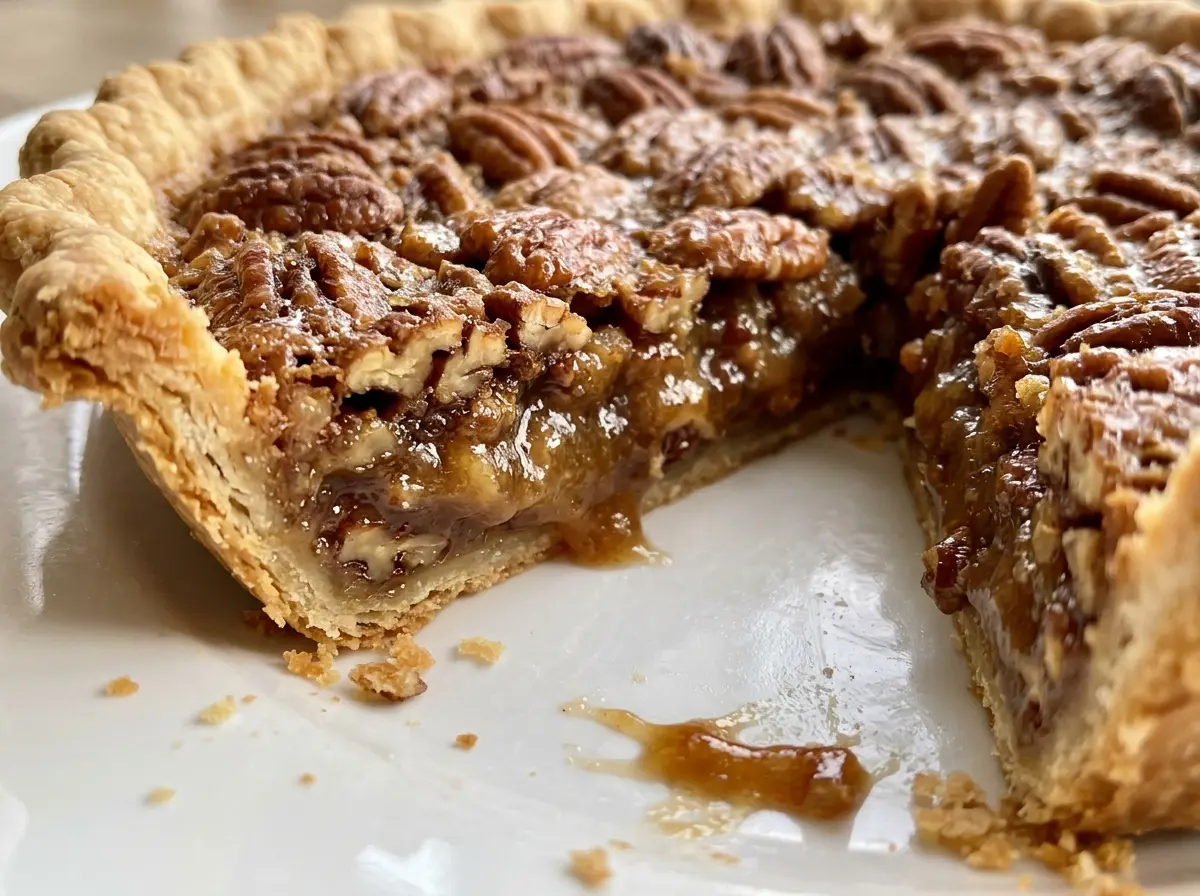
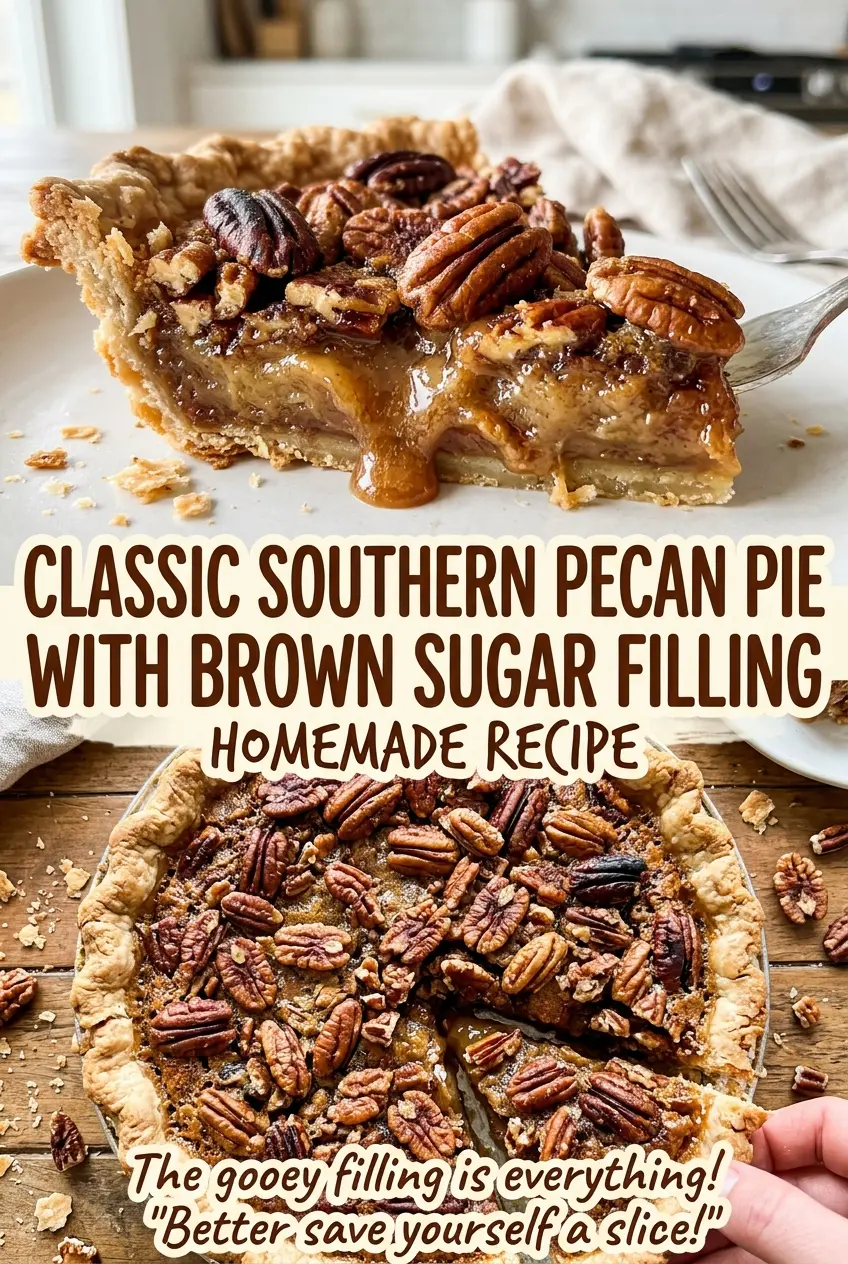
When the pie plate comes out of the oven, the edges look set but the center still gives a small wobble when you gently shake it. That can feel too soon to stop baking, but the filling firms as it cools. With this classic Southern pecan pie, waiting for that soft jiggle—not a completely firm center—is what keeps the slices tender instead of dry.
The filling comes together in one bowl, and the homemade crust uses chilled vegetable shortening for a simple, dependable pastry. I arrange the pecan halves in the shell before pouring in the brown sugar mixture, so the nuts are spread across the pie instead of clumping in one spot. After a slow bake and a full cool, each slice has a glossy brown sugar filling and a generous layer of pecans.
Kitchen Note
Give the pastry dough its full 30 minutes in the refrigerator before rolling. That short rest makes the disk easier to handle and gives you a better chance of fitting it into the pie plate without tearing.
Save this classic Southern pecan pie for its brown sugar filling, crisp pastry, and generous pecan topping.
Why the Lower Oven Rack Matters for a Syrupy Pie
Pecan pie has a wetter filling than a fruit pie, and the pastry sits beneath a full layer of syrup, sugar, eggs, and nuts. Setting the rack in the lower third helps the bottom crust get the heat it needs while the filling bakes. It’s a small placement choice, but it matters when you’re aiming for pastry that’s baked through rather than pale and soft underneath.
Use the lower-third position before the oven heats, rather than moving a hot pie to a different rack partway through. The filling needs time to set, and the crust edge is more exposed to browning during that long bake. If the rim starts getting dark too quickly, a loose strip of foil over the edge protects it while the center finishes. The foil belongs over the crust edge, not across the whole pie.
This is also why I don’t rush the bake to chase a darker top. The filling should come out with a slight movement in the middle, and the pastry can finish settling as the pie cools. A well-baked bottom and a gently set center give you a slice that holds together without turning firm or chewy.
What Each Ingredient Brings to This Brown Sugar Filling
- All-purpose flour — It gives the crust enough structure to roll and hold its shape. A standard store-brand flour works well here; there’s no need for specialty pastry flour.
- Vegetable shortening — Chilled shortening makes a tender, flaky pastry and is easy to cut into the flour. Keep it cold until you mix the dough. Butter can change the crust’s texture, so shortening is the reliable choice for this version.
- Ice water — Cold water brings the dough together without warming the shortening. Add it gradually; the dough needs only enough to hold when pressed, not enough to feel wet or sticky.
- Pecan halves — Halves give the finished pie its recognizable top and a substantial nutty bite. Choose fresh pecans that smell sweet and mild; stale nuts can taste bitter, and that flavor has nowhere to hide in this simple filling.
- Light corn syrup — This is the liquid base that gives the filling its smooth, glossy texture and helps it set around the eggs and pecans. Use light corn syrup for the intended mild sweetness; honey or maple syrup won’t behave exactly the same in the filling.
- Light brown sugar — Its mild molasses note gives the filling its warm caramel-like flavor. A fresh, soft bag from the baking aisle is fine; there’s no need to seek out a premium brand.
- Large eggs and unsalted butter — The eggs give the filling structure, while melted butter adds richness. Use large eggs for the intended balance, and let the melted butter cool before whisking it with them so it doesn’t heat the mixture.
- Vanilla extract — Vanilla rounds out the brown sugar and pecan flavors. A familiar extract from your pantry works; it doesn’t need to be an elaborate or expensive bottle.
From Crumbly Pastry to a Gently Set Center
Mix the Pastry Until It Holds Together
Whisk the flour with half of the salt in a medium bowl, then cut in the chilled shortening with a pastry cutter or your fingertips. Stop when the mixture looks like coarse crumbs, with no large pieces of shortening. Toss in the first portion of ice water with a fork, then add more a tablespoon at a time until the dough holds when pressed. Shape it into a disk, wrap it, and chill it for 30 minutes.
Roll the Shell and Arrange the Pecans
Roll the chilled dough into a 12-inch round and fit it into a 9-inch pie plate. Trim the overhang and crimp the edge. Arrange the pecan halves evenly across the bottom of the shell so the nuts are distributed throughout the pie. If you crowd them into the center, the outer slices won’t get the same generous layer.
Whisk and Pour the Filling
In a medium bowl, whisk together the corn syrup, brown sugar, eggs, melted and cooled butter, vanilla, and the remaining salt. Keep whisking until the mixture looks even, with no clumps of brown sugar sitting at the bottom of the bowl. Pour it over the arranged pecans, letting the filling spread through the shell. Set the oven rack in the lower third and heat the oven to 350°F.
Bake Until the Center Still Moves
Bake the pie for 55 to 65 minutes. If the crust edge is browning too quickly after 30 minutes, cover that edge with foil and continue baking. The edges of the filling should look set while the center still jiggles slightly when you gently shake the pie. Transfer the pie to a wire rack and let it cool for at least 3 hours before slicing.
Three Changes That Keep the Pie Familiar but Make It Yours
A More Nutty Bite with Chopped Pecans
Replace the pecan halves with the same volume of chopped pecans. The filling will still bake the same way, but the top won’t have the classic arranged-halves look, and you’ll get smaller pieces of pecan in each bite.
A Deeper Molasses Note with Dark Brown Sugar
Swap dark brown sugar for the light brown sugar in the same amount. The added molasses flavor gives the filling a darker, more pronounced caramel note while keeping the pie’s familiar sweet, gooey character.
A Gluten-Free Pie Shell
For a gluten-free version, use an unbaked gluten-free pie shell sized for a 9-inch pie plate instead of making the flour crust. Add the filling and bake the pie as usual, watching the rim since gluten-free shells can brown at a different rate.
Storage and Reheating
- Refrigerator: Once the pie has cooled, cover and refrigerate it within 2 hours. It keeps for 3 to 4 days; the filling firms up when cold.
- Freezer: Freeze a fully cooled pie or individual slices, wrapped snugly, for up to 2 months. Thaw in the refrigerator overnight.
- Reheating: Microwave a slice in 10-second bursts, stopping as soon as it’s warm. Longer heating can make the filling runny; serving it chilled is also lovely.
Questions That Come Up While Making Pecan Pie
Classic Southern Pecan Pie With Brown Sugar Filling – Homemade Recipe
Ingredients
Equipment
Method
- In a medium bowl, whisk together the flour and 1/2 teaspoon of the salt.
- Cut in the chilled shortening with a pastry cutter or your fingertips until the mixture looks like coarse crumbs.
- Sprinkle in 3 tablespoons ice water and toss with a fork; add more water, 1 tablespoon at a time, just until the dough holds together when pressed.
- Shape the dough into a disk, wrap it, and refrigerate for 30 minutes.
- Roll the dough into a 12-inch round and fit it into a 9-inch pie plate.
- Trim and crimp the edge.
- Heat the oven to 350°F with a rack in the lower third.
- Arrange the pecan halves evenly in the pie shell.
- In a medium bowl, whisk together the corn syrup, brown sugar, eggs, melted butter, vanilla, and remaining 1/2 teaspoon salt.
- Pour the mixture over the pecans.
- Bake for 55 to 65 minutes, covering the crust edge with foil after 30 minutes if it is browning too quickly; the edges should be set and the center should jiggle slightly when the pie is gently shaken.
- Cool the pie on a wire rack for at least 3 hours before slicing.