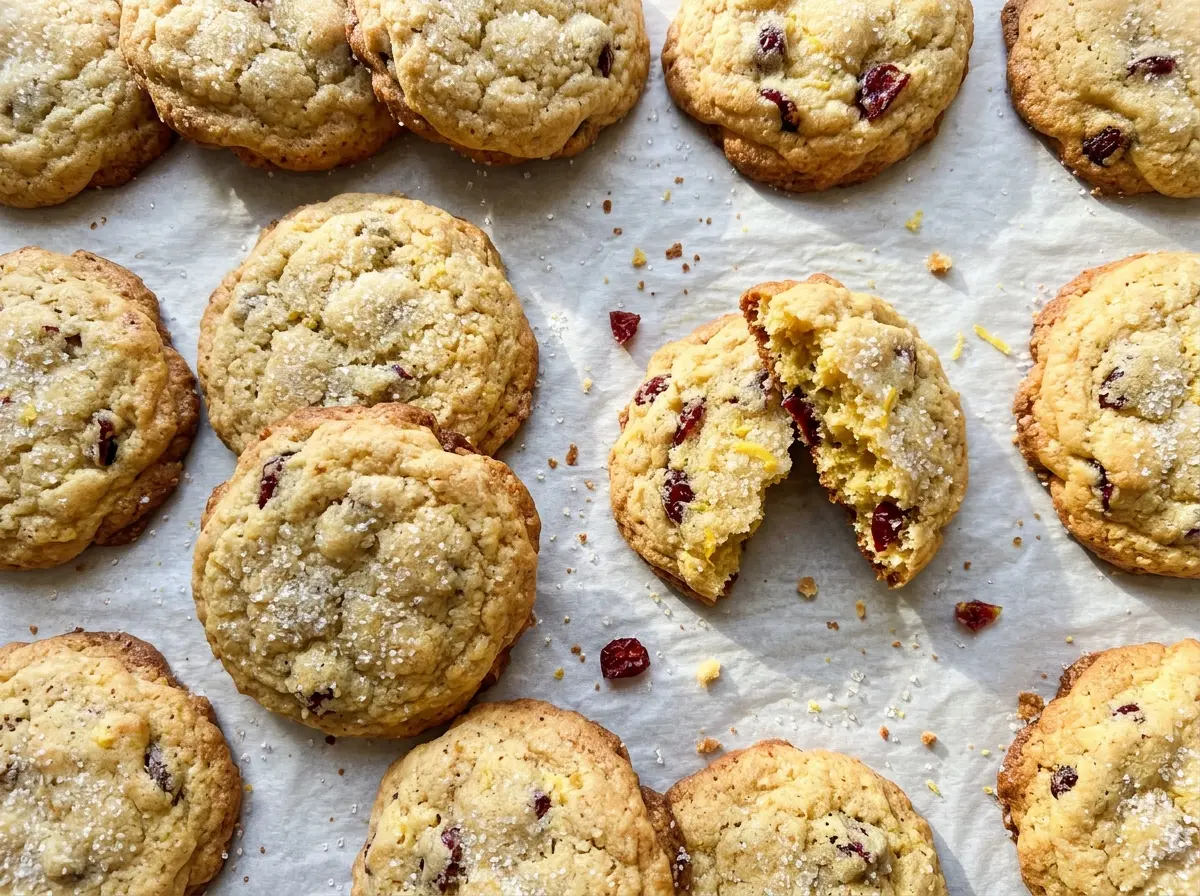
The edges turn pale gold before the centers look deeply baked, and that’s the moment I start watching the oven instead of reaching for another minute. These lemon cranberry cookies are best when the edges are lightly golden and the centers look set; they firm up as they cool without losing their soft bite. The dried cranberries bring a tart, chewy pop that keeps each cookie from tasting too sweet.
Fresh lemon zest does more for the citrus flavor than extra juice would. The zest gives the dough its fragrant lemon aroma, while a little lemon juice brightens the flavor without adding so much liquid that the cookies lose their shape. Fold the cranberries in after the flour disappears, and you’ll get fruit in every bite without overworking the dough.
Kitchen Note
When you beat in the egg and lemon, scrape the sides and bottom of the bowl if you see butter clinging there. That little check helps the wet ingredients come together evenly instead of leaving streaks of butter in the finished dough.
Save these Lemon Cranberry Cookies for a bright citrus bake with chewy cranberry bites and lightly golden edges.
Why Lemon Juice Alone Won’t Make These Cookies Taste Lemon-Forward
Lemon juice tastes bright, but the most recognizable lemon aroma comes from the zest. That’s why this dough uses finely grated zest alongside a smaller amount of juice: you get fragrant citrus in the cookie without relying on extra liquid to carry the flavor. The juice brings a little tang, while the zest makes the lemon noticeable as soon as you break one open.
More juice isn’t a shortcut to a stronger lemon cookie. Extra liquid changes the dough, and it can make the cookies spread differently. For a clear citrus flavor and a dough that’s easy to portion, keep the balance as it is: zest for aroma, juice for brightness, and dried cranberries for a tart, chewy contrast.
What the Lemon, Butter, and Cranberries Each Bring to the Dough

- Lemon zest and juice — Finely grated zest gives the cookies their concentrated citrus aroma, so use a fresh lemon and take only the yellow outer peel. The juice adds a sharper note; bottled juice won’t bring the same fragrance as fresh zest.
- Unsalted butter — Softened butter creams with the sugar and helps create a tender cookie. It should give slightly when pressed but shouldn’t look shiny or melted; stick-style plant butter is a useful swap for a dairy-free batch, though the cookies may spread a little differently.
- All-purpose flour — It gives the dough structure while keeping the cookies tender. For a gluten-free version, use a measure-for-measure gluten-free baking blend intended to replace all-purpose flour; the texture may be a bit more delicate.
- Dried cranberries — Their chewy texture holds up in the oven, and chopping them roughly distributes the tart fruit through the dough. Dried cherries can replace them for a softer, deeper fruit flavor.
- Egg and vanilla — A room-temperature egg blends more smoothly into the creamed butter, and vanilla rounds out the lemon and cranberry flavors. There isn’t a simple egg swap that keeps this particular dough’s texture unchanged.
Mixing and Baking the Cookies Without Overworking the Dough
Whisk the Dry Ingredients, Then Cream the Butter
Heat the oven to 350°F and line two large baking sheets with parchment paper. Whisk the flour, baking soda, and salt in a medium bowl so the leavening is spread through the flour before it reaches the dough. In a large bowl, beat the softened butter and sugar with a mixer on medium speed for about 2 minutes, until the mixture looks light and fluffy. If the butter is melted rather than softened, it won’t cream the same way.
Blend in the Lemon and Stop Once the Flour Disappears
Beat in the room-temperature egg, lemon zest, lemon juice, and vanilla until combined. Add the flour mixture and mix on low just until no dry flour remains; stop there rather than beating until the dough looks perfectly smooth. Overmixing after the flour goes in can make the cookies firmer. Fold in the roughly chopped dried cranberries so they’re spread throughout without crushing them.
Portion Evenly Across Both Sheets
Scoop the dough into 24 portions, about 1 1/2 tablespoons each. Arrange 12 cookies on each prepared sheet, leaving about 2 inches between portions so they have room to spread. Keeping the scoops close in size helps the cookies bake at the same pace. If a few cranberries sit on the outside of a scoop, press them lightly into the dough so they don’t fall off as you move the sheet.
Bake for Lightly Golden Edges
Bake for 10 to 12 minutes, rotating the sheets between oven racks halfway through. Look for lightly golden edges and centers that appear set; don’t wait for the whole surface to turn brown. The cookies will still be delicate when they come out. Cool them on the baking sheets for 5 minutes, then transfer them to a wire rack to cool completely.
Easy Ways to Change the Citrus, Fruit, or Flour
Make Them Orange Cranberry Cookies
Replace the lemon zest and lemon juice with finely grated orange zest and orange juice in the same amounts. The cookies will taste rounder and sweeter, with less of the sharp citrus edge that lemon brings.
Use Dried Cherries Instead
Swap the chopped dried cranberries for chopped dried cherries. Their fruit flavor is deeper and less tart, so the lemon will stand out more clearly against the fruit.
Make a Gluten-Free Batch
Replace the all-purpose flour with a measure-for-measure gluten-free baking blend made for cookies. The flavor stays much the same, but the cookies may be a little more delicate, so let them cool on the baking sheet before moving them.
Storage and Reheating
- Refrigerator: Store cooled cookies in an airtight container for up to 1 week. Chilling firms them up, so let them sit at room temperature before serving.
- Freezer: Freeze fully cooled cookies in an airtight freezer container for up to 2 months, separating layers with parchment. Thaw at room temperature while still covered to help keep them from drying out.
- Reheating: For a warm cookie, microwave one briefly, then check it before adding more time. Overheating can make the cookie tough and the cranberries uncomfortably hot.
Questions That Come Up When Baking Lemon Cranberry Cookies
Lemon Cranberry Cookies
Ingredients
Equipment
Method
- Heat the oven to 350°F.
- Line 2 large baking sheets with parchment paper.
- Whisk the flour, baking soda, and salt together in a medium bowl.
- In a large bowl, beat the butter and sugar with a mixer on medium speed until light and fluffy, about 2 minutes.
- Beat in the egg, lemon zest, lemon juice, and vanilla until combined, scraping down the bowl as needed.
- Add the flour mixture and mix on low just until no dry flour remains.
- Fold in the cranberries.
- Scoop the dough into 24 portions, about 1 1/2 tablespoons each, and arrange 12 on each baking sheet with about 2 inches between them.
- Bake for 10 to 12 minutes, until the edges are lightly golden and the centers look set, rotating the sheets between oven racks halfway through.
- Cool the cookies on the baking sheets for 5 minutes.
- Transfer them to a wire rack to cool completely.