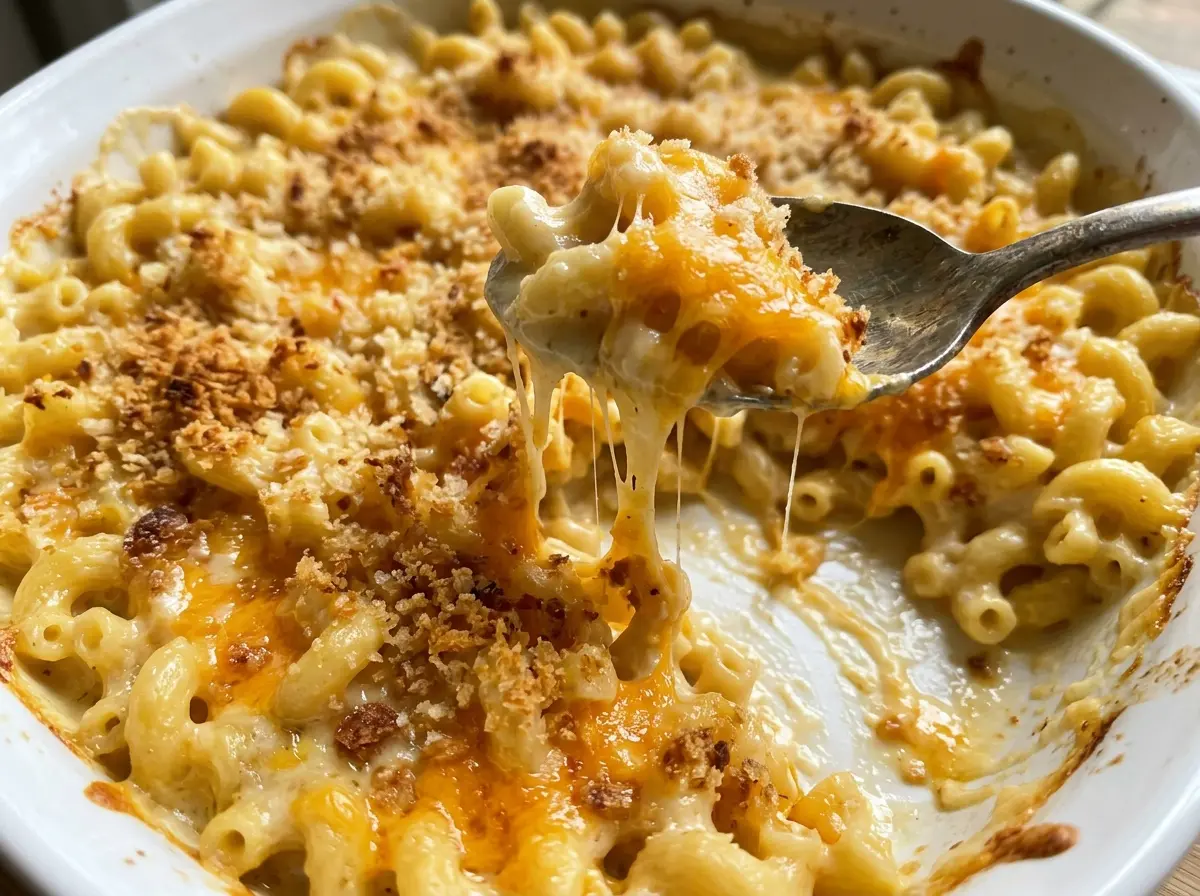
The first thing I watch is the edge of the baking dish: when the cheese sauce starts bubbling there, the middle is still creamy and the panko is turning golden. That contrast is what I want from baked mac and cheese, not a dry casserole with a crunchy top and a stiff center. This version keeps the macaroni tender while giving the surface enough time in the oven to brown.
I like the balance of sharp cheddar and a smooth milk-based sauce here. A little dry mustard gives the cheese a more rounded, savory taste without making the dish taste like mustard. The buttered panko adds a crisp layer over the creamy pasta, and a short rest after baking makes it easier to scoop neat portions. Each bite has a little crunch before you reach the soft macaroni underneath.
Kitchen Note
Coat the sides and corners of the baking dish, not just the bottom. The bubbling cheese can stick around the edges, and a thorough spray helps each scoop release cleanly.
Save this baked mac and cheese for its creamy cheddar center and crisp, golden panko top.
Why the Cheese Sauce Needs to Thicken Before the Cheddar Goes In
A smooth sauce starts before the cheese ever hits the pan. Butter and flour make a simple base that gives the milk something to thicken around; the finished sauce should coat the back of a spoon rather than run off like plain milk. That thickness matters because the macaroni has to carry the sauce through baking, too. If the base is still thin when the cheddar goes in, the finished casserole can feel loose instead of creamy.
Cheddar melts best when it’s stirred into the thickened sauce after the pan comes off the heat. High heat can make cheese tighten or turn grainy, so there’s no benefit to boiling the sauce once the cheese is in. The dry mustard and black pepper season the sauce without competing with the cheddar. Once it’s smooth, the sauce should cling to the macaroni and settle into the spaces between the elbows, not pool at the bottom of the dish.
That small change in texture—from a pourable milk mixture to a spoon-coating sauce—is the difference between pasta that stays coated and a bake that separates into noodles and liquid. Take the time to let the milk mixture thicken before adding the cheese.
What Sharp Cheddar and Panko Bring to This Bake

- Sharp cheddar — It gives the sauce its clear cheese flavor and melts into the milk base. A block shredded at home melts smoothly; pre-shredded cheddar is convenient, though its coating can make the sauce a little less silky. Extra-sharp cheddar is a good way to make the cheese taste bolder while keeping the same basic ingredient.
- Whole milk — Its richness helps the sauce feel creamy rather than thin. It’s worth using whole milk here; lower-fat milk gives the sauce less body and a lighter finish.
- All-purpose flour and unsalted butter — Together they build the thickening base, while unsalted butter lets the measured kosher salt do the seasoning. Whisk the flour into fully melted butter so you don’t leave dry pockets in the sauce.
- Dry mustard — It adds a gentle savory background that makes the cheddar taste fuller. Keep it in the sauce even if you don’t usually reach for mustard; the finished dish won’t taste like a condiment.
- Panko breadcrumbs — Their larger, airy crumbs make a crisp topping when coated with melted butter. Scatter them in an even layer so you don’t end up with bare patches beside thick clumps.
- Elbow macaroni — The curved shape holds sauce well and makes easy, even spoonfuls. The package timing matters because the pasta continues cooking in the oven.
How to Get Creamy Pasta Under a Golden Panko Top
Cook the elbows just shy of tender
Heat the oven to 350°F and spray a 9×13-inch baking dish. Bring 4 quarts of water to a boil in a 6-quart pot, add 1 1/2 teaspoons kosher salt and the macaroni, then cook it for 2 minutes less than the package directions say for al dente. The pasta should still have a little firmness in the middle; fully tender noodles can soften further in the oven. Drain well and set it aside.
Build a smooth cheddar sauce
Melt 4 tablespoons unsalted butter in a 4-quart saucepan over medium heat, whisk in the flour, and cook for 1 minute. Gradually whisk in the whole milk, then bring the mixture to a gentle simmer. Keep whisking as it cooks for 5 to 7 minutes, until it coats the back of a spoon. Take the pan off the heat before stirring in the cheddar, remaining 1/2 teaspoon salt, dry mustard, and black pepper; the sauce should look smooth, not grainy.
Coat the macaroni and prepare the topping
Stir the drained macaroni into the cheese sauce until the elbows are coated all over, then transfer everything to the prepared baking dish. Melt the remaining 2 tablespoons butter and mix it with the panko until the crumbs are evenly moistened. Scatter the topping across the surface rather than dropping it in one pile. An even layer gives you crunch in each portion.
Bake until the edges bubble
Bake for 25 to 30 minutes, until the edges are bubbling and the top is golden. The bubbling at the sides is a useful cue that the center has heated through, while the panko should look toasted rather than pale. Let the dish rest for 10 minutes before serving; the sauce settles around the macaroni, making the portions easier to lift from the pan.
Two Ways to Adjust the Cheddar-and-Crumb Balance
Use extra-sharp cheddar for a bigger cheese bite
Choose extra-sharp cheddar in place of standard sharp cheddar for a more pronounced, tangy flavor. It can melt a touch less smoothly, so shred it finely and stir it into the sauce after the pan is off the heat.
Skip the panko for a soft-topped bake
Leave out the panko and the butter used for its topping if you prefer a soft surface instead of a crisp crust. The macaroni stays creamy, but you’ll lose the browned crunch that contrasts with the cheese sauce; use the bubbling edges as your doneness cue.
Storage and Reheating
- Refrigerator: Refrigerate leftovers within 2 hours and eat them within 3 to 4 days. The pasta softens a little as it sits.
- Freezer: Freeze portions in airtight containers for up to 2 months. Thaw them in the refrigerator; the sauce may be a little less smooth after freezing.
- Reheating: Cover and warm portions in a 350°F oven until the center reaches 165°F. Reheat gently rather than leaving the dish uncovered for a long stretch, which can dry out the edges.
Questions That Come Up When Baking Mac and Cheese
Baked Mac and Cheese
Ingredients
Equipment
Method
- Heat the oven to 350°F.
- Coat a 9x13-inch baking dish with nonstick cooking spray.
- Bring the water to a boil in a 6-quart pot.
- Add 1 1/2 teaspoons salt and the macaroni, and cook until 2 minutes shy of al dente according to the package directions.
- Drain the macaroni.
- Melt 4 tablespoons butter in a 4-quart saucepan over medium heat.
- Whisk in the flour and cook for 1 minute.
- Gradually whisk in the milk.
- Bring the mixture to a gentle simmer and cook, whisking, for 5 to 7 minutes until thick enough to coat the back of a spoon.
- Remove the sauce from the heat and stir in the cheddar, remaining 1/2 teaspoon salt, dry mustard, and black pepper until smooth.
- Stir the drained macaroni into the cheese sauce.
- Transfer the mixture to the prepared baking dish.
- Melt the remaining 2 tablespoons butter.
- Stir the melted butter with the panko.
- Scatter the topping evenly over the macaroni.
- Bake for 25 to 30 minutes until bubbling at the edges and golden on top.
- Let the mac and cheese rest for 10 minutes before serving.