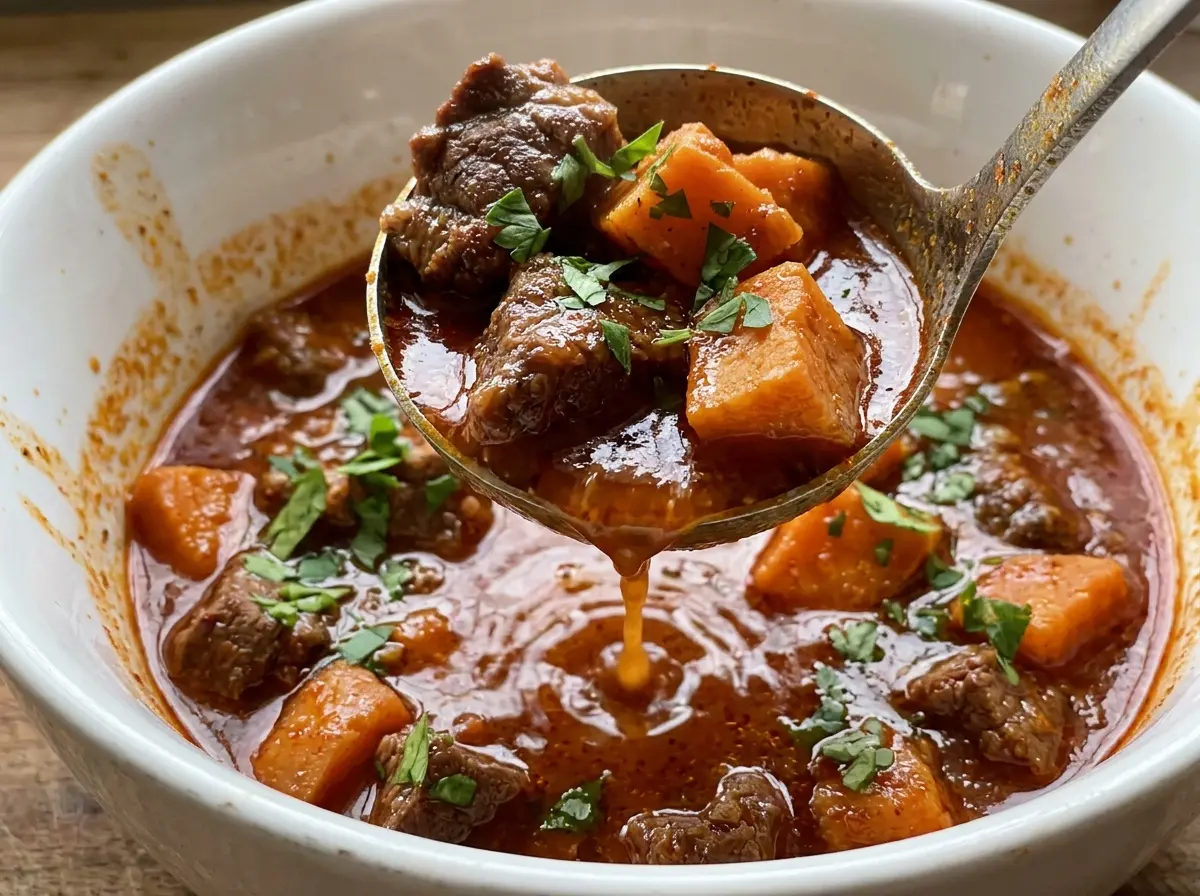
When the lid comes off after the long simmer, the broth has turned a deep paprika red and the beef gives way easily to a fork. That’s the kind of comfort I want from Beef and Sweet Potato Stew with Smoked Paprika: a savory, slow-cooked base with just enough sweetness from the vegetables to round it out.
I cook the smoked paprika with the tomato paste and flour before adding the broth. That short turn in the pot lets the spice mingle with the rich paste, so it tastes warm and smoky instead of raw or dusty. The finished stew is hearty without feeling heavy, with tender beef and a sauce that clings to every spoonful.
Kitchen Note
Keep the carrots and sweet potatoes close to their listed cut sizes. Smaller pieces can soften before the beef is ready, while evenly cut vegetables finish at about the same time.
Save this smoked paprika beef stew for a cozy dinner, with tender chuck and sweet potatoes in a savory, slow-simmered broth.
Why the Beef Simmer Comes Before the Sweet Potatoes
Chuck roast needs a long, gentle cook to become tender, but carrots and sweet potatoes don’t need nearly as much time. If they went into the pot with the beef, they’d sit through the whole braise and could lose their shape before the meat was ready. Giving the beef its own stretch of simmering lets it soften first, then the vegetables cook in the finished, savory broth.
There’s a useful texture cue here: the beef should be nearly fork-tender before the vegetables go in, not completely falling apart. It continues cooking while the carrots and sweet potatoes soften, so the meat and vegetables reach the table together. The low, gentle simmer matters too. A rolling boil can make the beef tighten up instead of relaxing into tender pieces.
This order also keeps the sweet potatoes from dissolving into the broth. They’ll still lend a little body as they cook, but you’ll have distinct cubes alongside the beef rather than a pot that tastes like mashed sweet potato.
What Gives This Stew Its Smoky Depth and Savory Base
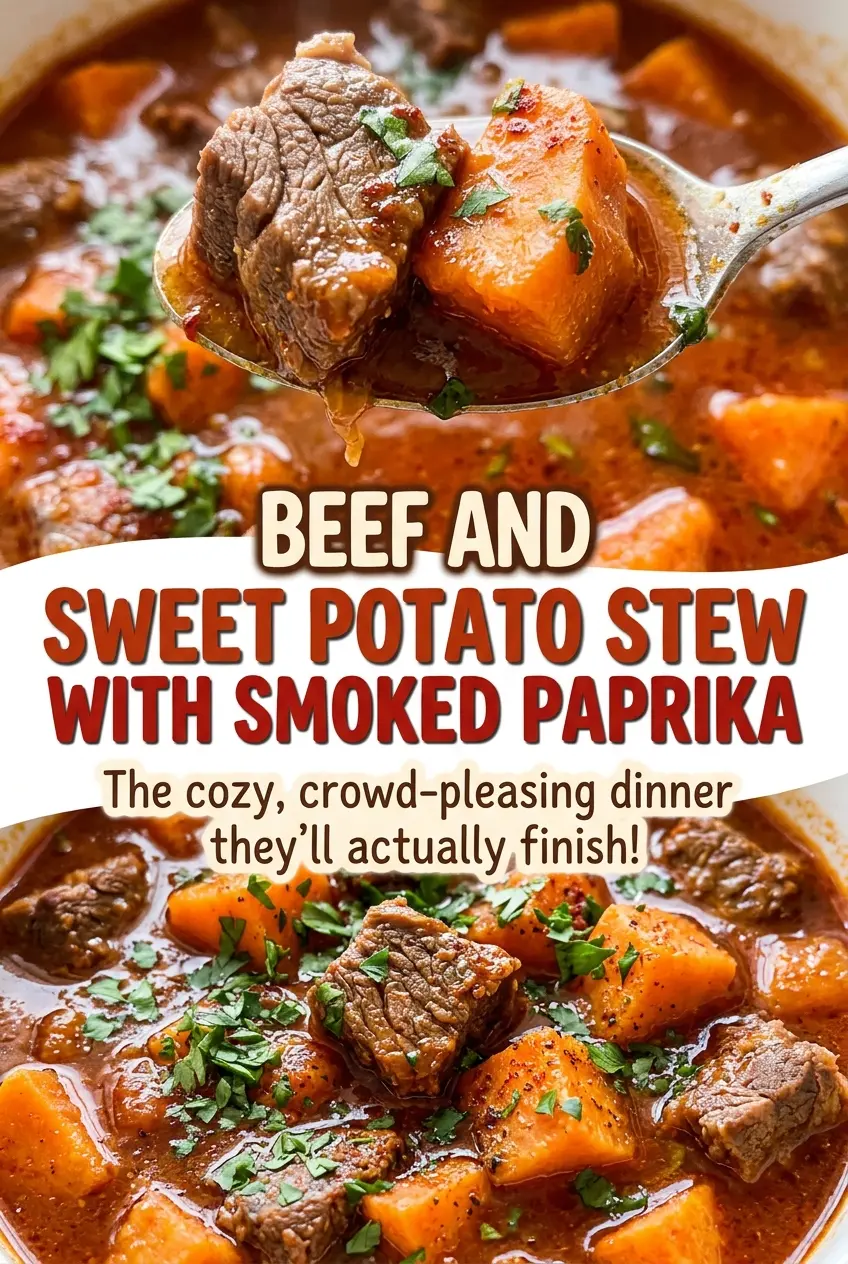
- Beef chuck roast — Chuck has enough connective tissue and marbling to stand up to a long braise; leaner cuts can turn dry before they become tender. Boneless beef short ribs cut into similar cubes are a good alternative, though their richness may make the broth feel fuller.
- Smoked paprika — This is where the stew gets its distinctive wood-smoke aroma, so a reasonably fresh jar matters more than an expensive brand. Regular sweet paprika works if that’s what you have, but the stew will lose its smoky character.
- Tomato paste — Canned and tube tomato paste both work; choose whichever is fresher and easier to use up. It adds concentrated savory depth, while tomato sauce is too thin to stand in for it here.
- All-purpose flour — Standard all-purpose flour thickens the broth as the stew simmers. Self-rising flour isn’t a useful swap because its added leavening isn’t needed in this pot.
- Low-sodium beef broth and Worcestershire sauce — Low-sodium broth leaves room for the seasoned beef without making the finished stew overly salty, and Worcestershire brings a subtle tang. If you leave out the Worcestershire, the stew will still braise well but will taste less rounded.
- Carrots and sweet potatoes — Choose firm vegetables so the pieces hold up during the final simmer. Parsnips can replace the carrots in the same cut size; they bring a sweeter, earthier note, while the sweet potatoes keep the broth mellow.
Building the Stew in Layers, Then Letting the Beef Turn Tender
Brown the Beef Without Crowding the Pot
Season the beef with kosher salt and black pepper, then heat the vegetable oil in a 6-quart Dutch oven over medium-high heat. Brown the beef in batches for 3 to 4 minutes per batch, turning as needed so the pieces develop color on more than one side. If the pot is packed, the beef will steam instead of brown, so give each batch room. Transfer the browned pieces to a plate while you finish the rest.
Soften the Onion and Wake Up the Aromatics
Reduce the heat to medium and add the chopped onion to the same pot. Cook for about 5 minutes, stirring occasionally, until it softens and picks up some of the browned flavor from the bottom. Add the minced garlic and cook for 30 seconds; it should smell fragrant, not toasted. If the garlic starts to darken, move on to the next step promptly so it doesn’t turn bitter.
Coat the Base Before Adding Broth
Stir in the smoked paprika, tomato paste, and flour, and cook the mixture for 1 minute. The paste should spread through the onions, with the flour no longer looking dry. Gradually stir in the beef broth, Worcestershire sauce, dried thyme, and bay leaf, scraping the browned bits from the bottom as the liquid loosens them. Return the beef and any accumulated juices, then bring the pot to a simmer.
Simmer the Beef, Then Finish with the Vegetables
Cover the pot and simmer gently over low heat for 1½ to 2 hours, until the beef is nearly fork-tender. Keep the heat low enough for a gentle simmer rather than a hard boil. Stir in the carrots and sweet potatoes, cover again, and simmer for 25 to 35 minutes. The vegetables should be tender and the beef fork-tender; remove the bay leaf before serving.
Three Useful Ways to Adapt This Beef and Sweet Potato Stew
Make the Stew Gluten-Free
Replace the all-purpose flour with the same amount of a 1:1 gluten-free all-purpose flour blend. Use gluten-free beef broth and replace the Worcestershire sauce with the same amount of gluten-free tamari; the broth will taste a little more soy-forward and less tangy.
Turn Up the Smoke and Heat
Use hot smoked paprika instead of regular smoked paprika, keeping the amount the same. You’ll get the same smoky character with a noticeable kick, so this is a better fit for anyone who likes a little heat in a bowl of stew.
Make It Less Sweet with Yukon Gold Potatoes
Swap the sweet potatoes for peeled Yukon Gold potatoes cut into the same-size cubes. The stew will taste more savory and less sweet, with a creamy, familiar potato texture.
Storage and Reheating
- Refrigerator: Cool and refrigerate within 2 hours, then keep in a covered container for 3 to 4 days. The sweet potatoes soften a little as they sit.
- Freezer: Freeze in airtight, freezer-safe containers for up to 3 months. Thaw overnight in the refrigerator; the vegetables may be softer after freezing.
- Reheating: Warm gently in a saucepan over medium-low heat, stirring occasionally, until the stew reaches 165°F throughout. Avoid a hard boil, which can toughen the beef.
Questions That Come Up While This Stew Simmer
Beef and Sweet Potato Stew with Smoked Paprika
Ingredients
Equipment
Method
- Season the beef with the salt and pepper.
- Heat the oil in a 6-quart Dutch oven over medium-high heat.
- Brown the beef in batches for 3 to 4 minutes per batch, then transfer it to a plate.
- Reduce the heat to medium, add the onion, and cook for about 5 minutes until softened, stirring occasionally.
- Add the garlic and cook for 30 seconds.
- Stir in the smoked paprika, tomato paste, and flour and cook for 1 minute.
- Gradually stir in the beef broth, Worcestershire sauce, thyme, and bay leaf, scraping up browned bits.
- Return the beef and any accumulated juices to the pot and bring to a simmer.
- Cover and simmer gently over low heat for 1 1/2 to 2 hours, until the beef is nearly fork-tender.
- Stir in the carrots and sweet potatoes.
- Cover and simmer for 25 to 35 minutes, until the vegetables are tender and the beef is fork-tender.
- Remove the bay leaf before serving.