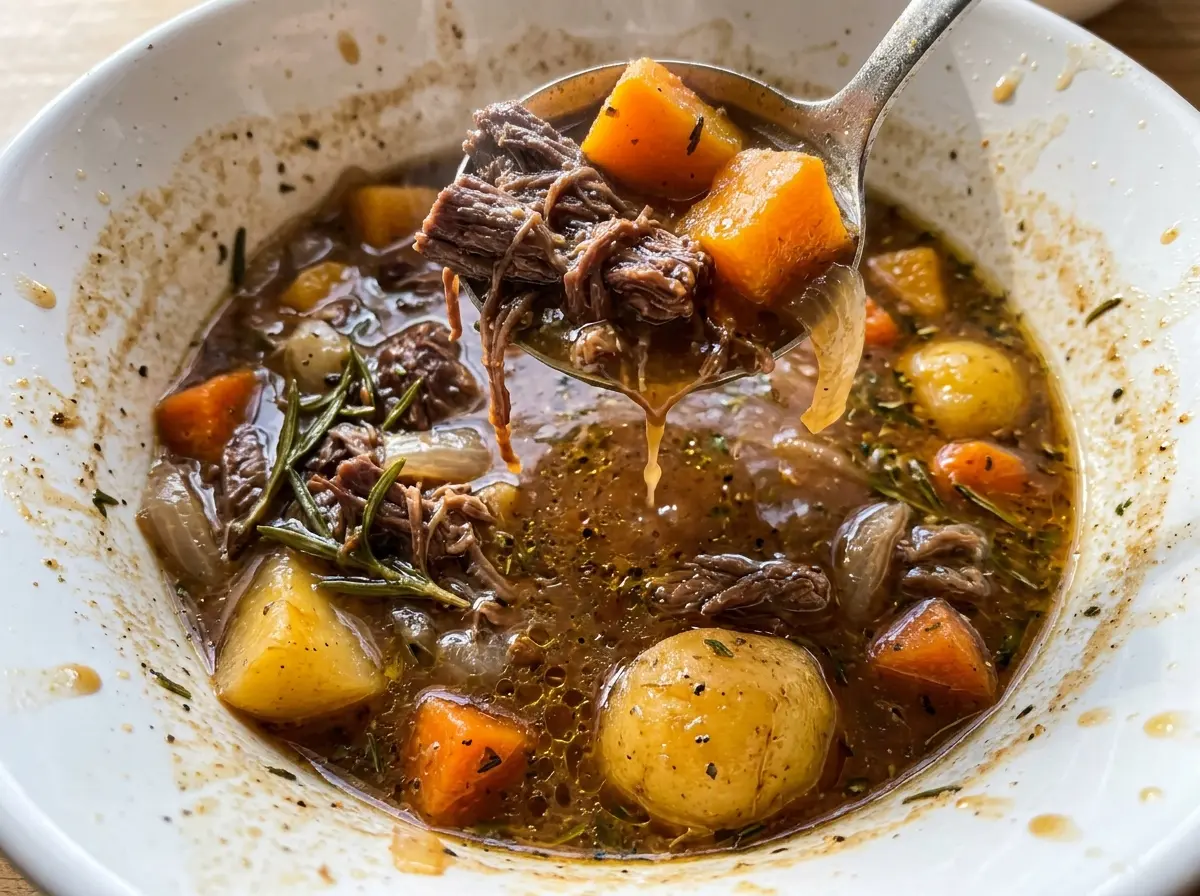
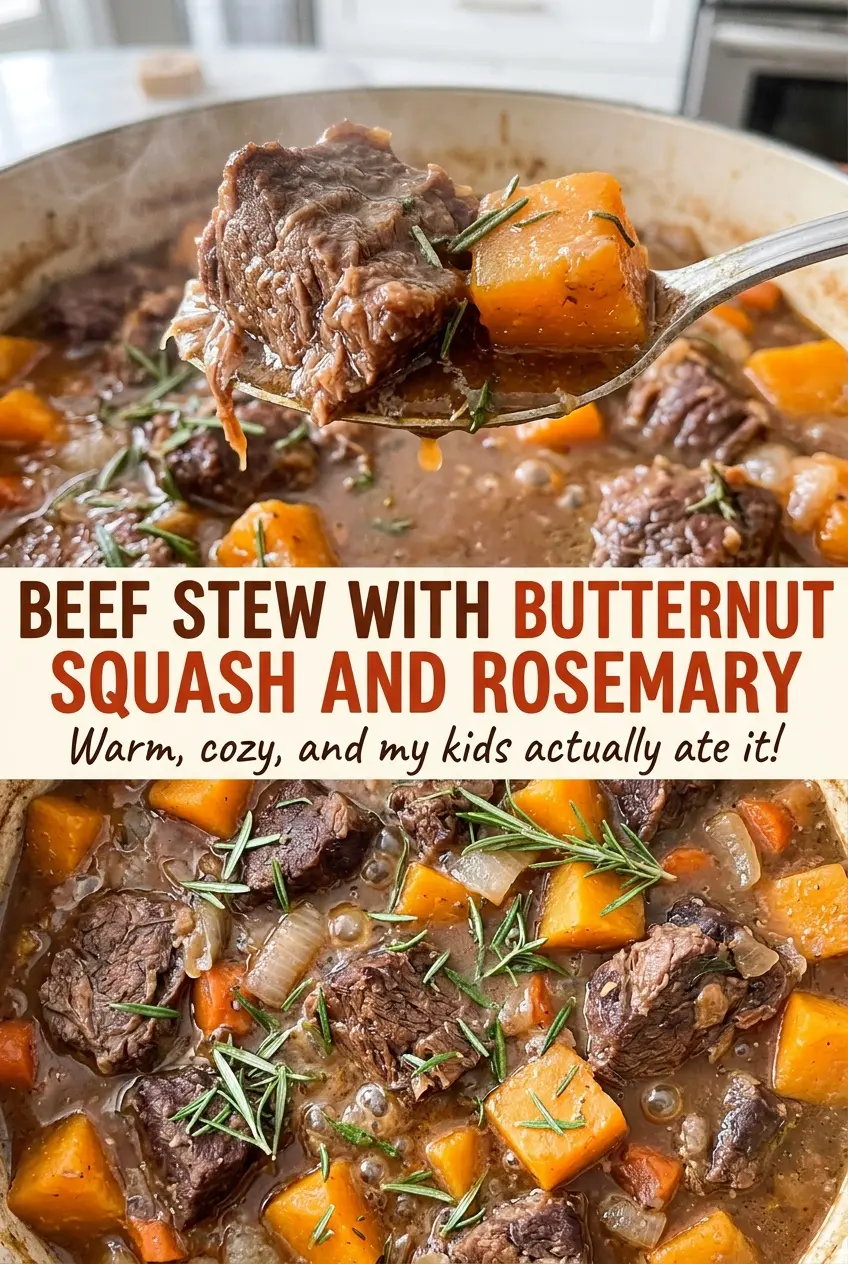
When the lid comes off, rosemary rises first, followed by the sweet smell of squash softening in the broth. This beef stew with butternut squash and rosemary has the familiar, cozy feel of a long-braised pot, but the squash gives each bowl a little sweetness alongside the savory beef and potatoes. I like that the ingredients become a full meal in one Dutch oven, with enough to serve eight.
The broth starts with browned beef, onion, tomato paste, and dry red wine, so it has more depth than a pot built from broth alone. The vegetables go in at different points rather than all at once, which lets the potatoes and carrots soften while the squash keeps its shape. The finished stew is rich without needing a separate sauce, and the beef should yield easily to a fork.
Kitchen Note
Let the finished stew stand uncovered for five minutes before serving. That short pause gives the broth a chance to settle around the vegetables, and it’s easier to lift out the rosemary and bay leaf before ladling.
Save this beef stew with butternut squash and rosemary for its tender chuck, savory wine-braised broth, and all-in-one Dutch oven cooking.
Why Crowding the Beef Makes a Weaker Stew
Beef needs direct contact with the hot pot to develop browned edges. When too many pieces go in at once, they release moisture into a crowded pan and begin to steam before a crust can form. The flour coating can turn damp and pasty instead of helping the beef brown. Taking time to work in three batches gives each piece room to color on several sides.
Those deep brown patches on the beef and the browned bits left on the bottom of the Dutch oven are worth keeping. They build the savory base that carries through the whole pot, especially once the wine loosens them into the liquid. The beef doesn’t need to cook through during this first sear; the long, covered simmer is what makes it tender. At this stage, look for browned surfaces rather than a particular internal doneness.
What the Chuck, Wine, and Squash Bring to This Pot
- Beef chuck — Its connective tissue softens during the long braise and gives the stew a more tender, full-bodied result than a lean cut. Choose well-marbled chuck; trimming away the large exterior pieces of fat keeps the broth from feeling heavy.
- All-purpose flour — The light coating helps the beef brown and gives the broth a little body as it simmers. A fresh, ordinary all-purpose flour is all you need; the stew doesn’t rely on a specialty flour.
- Dry red wine — It brings acidity and depth, and its liquid loosens the browned bits from the pot. Pick a dry red you’d be happy to drink; a sweet wine would push the broth in a different direction.
- Low-sodium beef broth and Worcestershire sauce — Low-sodium broth leaves more room to control the seasoning, while Worcestershire adds a savory, slightly tangy note. A familiar grocery-store brand works well here.
- Fresh rosemary and bay leaf — The rosemary gives the broth a woodsy aroma, while the bay leaf adds a quiet background flavor. Fresh rosemary sprigs are easy to remove before serving, so you don’t end up with woody pieces in the bowl.
- Yukon Gold potatoes — They become tender and creamy without falling apart as readily as a starchy russet. Choose firm potatoes without soft spots.
- Butternut squash — A firm squash with an intact skin is easier to peel and cut, and its sweetness balances the beef. The flesh should feel dense rather than spongy.
The Stovetop Stages That Turn Chuck into Stew
Brown the Beef Without Steaming It
Pat the beef dry, then toss it with the flour, kosher salt, and black pepper until evenly coated. Heat one tablespoon of olive oil in a 6-quart Dutch oven over medium-high heat and brown one-third of the beef for 5 to 7 minutes, turning it to color several sides. Transfer that batch to a plate and repeat with the remaining oil and beef in two batches. If the pieces are pale and releasing lots of liquid, give the pot more room by keeping to those batches.
Build the Onion and Wine Base
Add the diced onion to the pot and cook over medium heat for 5 minutes, stirring occasionally, until it begins to soften. Stir in the garlic and tomato paste and cook for 1 minute. Pour in the dry red wine and scrape the bottom of the pot to loosen the browned bits; let it simmer for 2 to 3 minutes. Stir in the beef broth and Worcestershire sauce, return the beef and any accumulated juices, then add the rosemary and bay leaf.
Braise Until the Beef Is Nearly Tender
Bring the liquid to a gentle simmer, cover the pot, and cook over low heat for 1 1/2 to 2 hours. The surface should bubble quietly rather than roll hard, and the beef should be nearly fork-tender before the vegetables go in. If a piece still feels firm when you press it with a fork, keep the stew at a gentle simmer for another 15 to 30 minutes. A tough piece needs more time, not a higher burner setting.
Add the Vegetables in Their Stages
Stir in the carrots and potatoes, cover, and simmer gently for 15 minutes. Add the butternut squash, cover again, and simmer for 20 to 25 minutes, until the vegetables are tender and the beef gives easily to a fork. The squash should yield when pierced without dissolving into the broth. Remove the rosemary stems and bay leaf before serving.
Three Practical Ways to Adapt This Beef Stew
Make the stew gluten-free
Replace the all-purpose flour with the same amount of a gluten-free 1-to-1 flour blend, and choose gluten-free beef broth and Worcestershire sauce. The coating and gravy may be a little less smooth depending on the blend, but the beef still browns and braises the same way.
Skip the wine without losing the browned bits
Use one additional cup of low-sodium beef broth in place of the dry red wine. Pour it into the pot and scrape up the browned bits as you would with wine; the broth will taste less bright and complex, but the stew will still have a savory base.
Trade the carrots for parsnips
Use three medium parsnips cut into pieces the same size as the carrots. They’ll bring a sweeter, earthier flavor and soften on the same schedule, giving the stew a slightly more pronounced root-vegetable character.
Storage and Reheating
- Refrigerator: Store in a covered container for 3 to 4 days. The potatoes and squash will soften a little as they sit in the broth.
- Freezer: Freeze airtight portions for up to 2 to 3 months. The stew is still good after thawing, though the squash and potatoes may be softer.
- Reheating: Warm gently in a saucepan over medium-low heat, stirring occasionally, until the center reaches 165°F. Avoid a hard boil, which can break the vegetables apart.
Questions That Come Up While This Stew Simmeres
Beef Stew with Butternut Squash and Rosemary
Ingredients
Equipment
Method
- Pat the beef dry.
- Toss the beef with the flour, salt, and pepper until evenly coated.
- Heat 1 tablespoon of oil in a 6-quart Dutch oven over medium-high heat.
- Brown one-third of the beef for 5 to 7 minutes, turning to brown several sides, then transfer it to a plate.
- Repeat with the remaining oil and beef in two batches.
- Add the onion to the pot and cook over medium heat for 5 minutes, stirring occasionally.
- Add the garlic and tomato paste and cook for 1 minute, stirring.
- Pour in the wine and scrape up the browned bits from the bottom of the pot.
- Simmer for 2 to 3 minutes.
- Stir in the broth and Worcestershire sauce.
- Return the beef and any accumulated juices to the pot, then add the rosemary and bay leaf.
- Bring the stew to a gentle simmer, cover, and cook over low heat for 1 1/2 to 2 hours, until the beef is nearly fork-tender.
- If the beef is still firm, continue simmering for 15 to 30 minutes.
- Stir in the carrots and potatoes, cover, and simmer gently for 15 minutes.
- Stir in the squash, cover, and simmer for 20 to 25 minutes, until the vegetables are tender and the beef is fork-tender.
- Remove the rosemary stems and bay leaf.
- Let the stew stand uncovered for 5 minutes before serving.