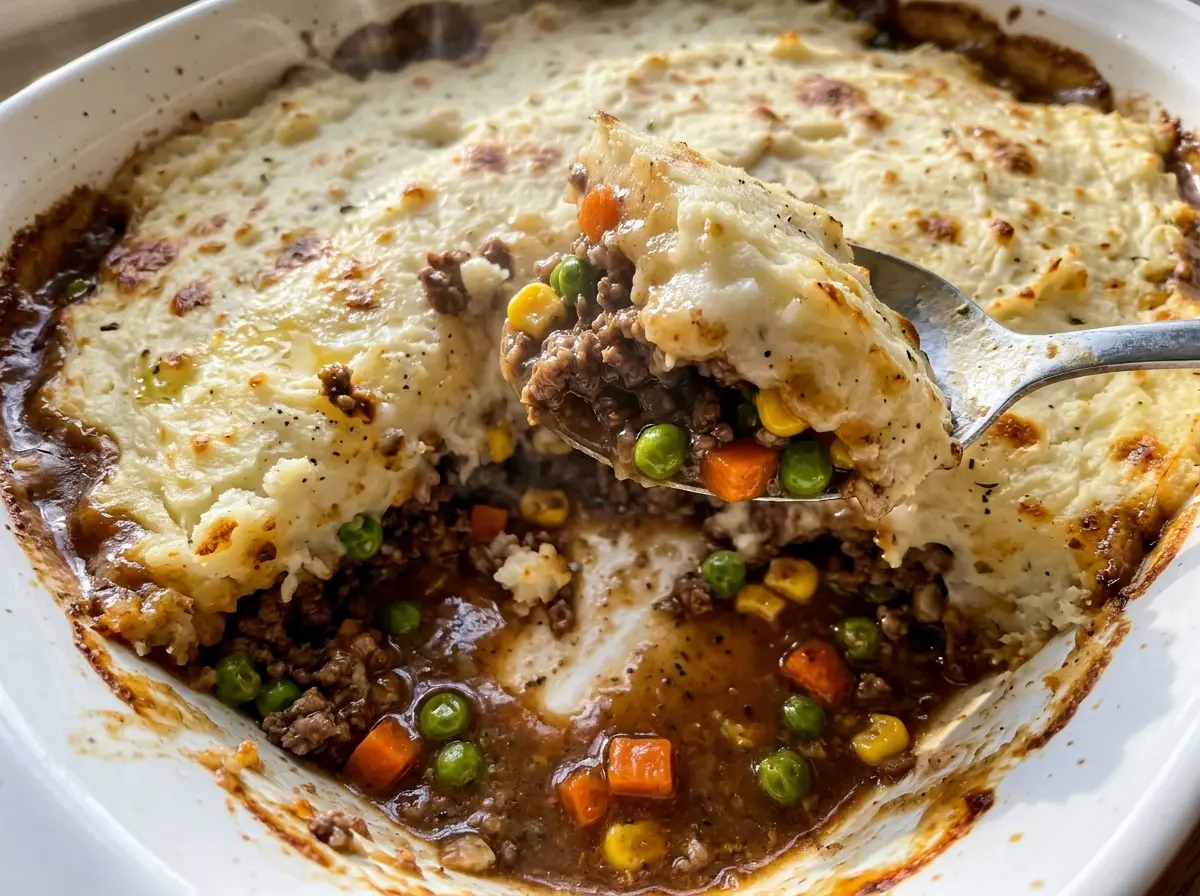
The beef should sizzle when it hits the hot skillet, then turn into a savory, browned base for the carrots and onion. The part that makes shepherd’s pie tricky is getting the filling thick enough to sit under the potatoes without drying it out. In this ground beef shepherd’s pie, a short simmer builds a gravy that clings to the meat and bubbles around the edges as it bakes.
I keep the garlic in two places: minced into the beef filling, then simmered whole with the russet potatoes. The first gives the meat layer a savory lift; the second leaves the mash fragrant without sharp bits of raw garlic. Spread that smooth, buttery topping over the beef, and you get a cozy 9×13-inch pie with a golden top and enough for eight servings.
Kitchen Note
After draining the potatoes and garlic, give them that full minute back in the hot pot before adding butter and milk. The steam carries off surface moisture, so the mash stays plush instead of loose.
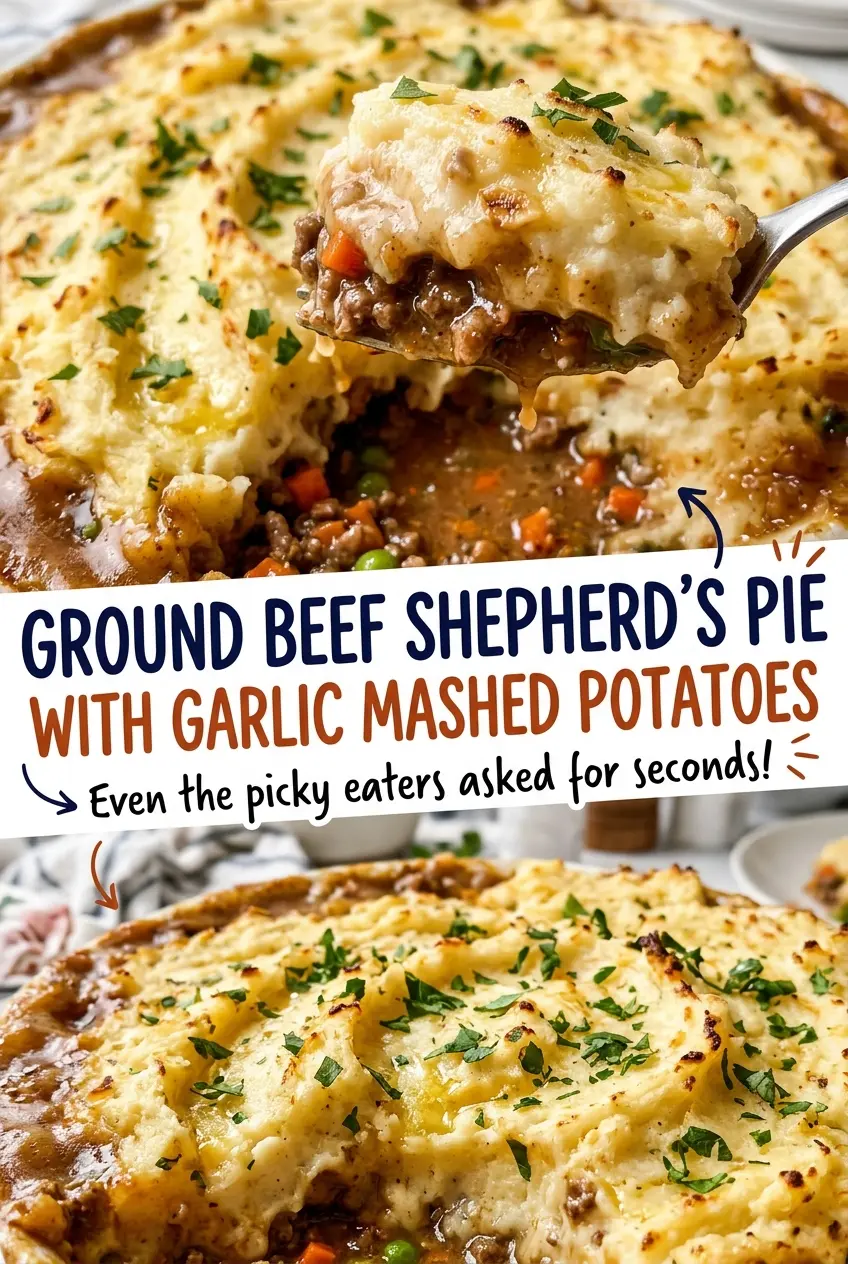
Save this ground beef shepherd’s pie for its savory beef filling and smooth garlic mashed potato topping.
A Watery Beef Layer Can Sink the Potato Topping
Shepherd’s pie needs a filling that’s moist but not soupy. The potatoes make a soft lid, and a loose layer underneath can push through it as the dish bakes. Instead of relying on the oven to reduce excess liquid, build the gravy in the skillet first. Tomato paste deepens the beefy base, while flour gives the broth enough body to coat the meat and vegetables.
Pay attention to how the liquid behaves as it simmers. A filling that still looks thin in the skillet won’t magically become thick just because it’s covered with potatoes; it can leave you with a puddle when you serve it. Stirring as the broth goes in helps the flour disperse evenly, and the brief simmer gives the sauce time to tighten. The goal isn’t a dry filling or a stiff paste. You want the beef and vegetables held together by gravy, with enough moisture left for the edges to bubble in the oven.
Why Russets and Two Kinds of Garlic Matter Here
- 85% lean ground beef — This ratio gives the filling plenty of beef flavor without making it excessively greasy. A premium grind isn’t necessary; choose fresh beef and break it into small pieces as it browns. Ground lamb works in its place if you want a richer, more distinctly savory pie.
- Russet potatoes — Their starchy texture mashes into a fluffy topping that spreads easily. Yukon Gold potatoes will work, but the mash will be denser and creamier. Peel them and cut the chunks evenly so they cook at about the same pace.
- Fresh garlic — Minced garlic cooks briefly with the beef, while whole peeled cloves soften alongside the potatoes. Keeping those jobs separate gives the filling a stronger garlic note and the topping a mellow one. Fresh cloves give the cleanest flavor here.
- Tomato paste, flour, and beef broth — These make the filling’s savory gravy, so use beef broth rather than water for a fuller taste. If you use a gluten-free 1:1 flour blend, the gravy may be slightly less silky; the adaptation is explained below. Stir the paste into the meat before the flour so both are worked through the filling.
- Whole milk and unsalted butter — Warm milk blends into the potatoes without cooling them, and unsalted butter lets you control the seasoning. Two-percent milk works if that’s what you have, though the mash won’t be quite as rich. Frozen peas can go straight into the filling; there’s no need to thaw them first.
Build the Beef Layer Before the Potatoes Go On
Brown the beef and soften the vegetables
Heat the oven to 400°F and grease a 9×13-inch baking dish. Warm the olive oil in a 12-inch skillet over medium-high heat, then add the ground beef and break it up as it cooks. Give it 7–9 minutes, until browned and at 160°F. Add the diced onion and carrots and cook for 5–7 minutes, stirring occasionally, until softened.
Turn the browned bits into gravy
Stir in the minced garlic and tomato paste and cook for 1 minute. Sprinkle in the flour and stir for another minute so it’s worked into the beef rather than left in dry pockets. Gradually stir in the beef broth, Worcestershire sauce, dried thyme, 1 teaspoon of the kosher salt, and black pepper. Simmer for 3–5 minutes, stirring, until the gravy thickens; then stir in the frozen peas and spread the filling in the prepared dish.
Boil and mash the garlic potatoes
Put the peeled, cut russets and the four whole garlic cloves in a 6-quart pot with 8 cups of water and 1 teaspoon of the salt. Bring the water to a boil, then lower it to a simmer for 15–20 minutes. The potatoes are ready when a fork pierces them easily; if the centers still feel firm, give them more time. Drain the potatoes and garlic, return them to the pot, and let them steam for 1 minute before mashing with the butter, warmed milk, and remaining 1 teaspoon of salt until smooth.
Top, bake, and let the layers settle
Spread the mashed potatoes over the beef filling, reaching the edges of the dish so the filling is covered. Bake for 25–30 minutes, until you see bubbles around the edges and the potato topping is golden. If the top browns before the filling bubbles, use the edge bubbles as your cue that the layers are hot. Let the pie rest for 10 minutes before serving so the filling settles under the potatoes.
Three Changes That Keep the Pie’s Comforting Layers
Make the gravy gluten-free
Replace the all-purpose flour with the same amount of a gluten-free 1:1 flour blend, stirring it into the filling in the same way. Use gluten-free Worcestershire sauce as well if you need the whole dish to be gluten-free. The gravy may be a touch less glossy, but it will still hold the beef layer together.
Use ground lamb instead of beef
Swap in the same amount of ground lamb and brown it in the skillet just as you would the beef. Lamb brings a richer, more pronounced flavor, while the carrots, peas, gravy, and garlic potatoes keep the familiar layered pie structure.
Leave out the peas
Skip the peas if you prefer a meat-and-carrot filling. The pie will lose their little pops of sweetness and color, but the gravy and softened carrots still make a complete filling; no other change is needed.
Storage and Reheating
- Refrigerator: Refrigerate leftovers within 2 hours and keep them covered for 3–4 days. The potato topping may firm up as it chills.
- Freezer: Freeze the baked pie once it has cooled, tightly covered or in airtight portions, for up to 3 months. Thaw it overnight in the refrigerator for more even reheating.
- Reheating: Reheat covered in a 350°F oven until the center reaches 165°F. Keeping it covered helps the mashed potato topping stay moist; reheating uncovered can dry it out.
Questions That Come Up Before This Pie Goes in the Oven
Ground Beef Shepherd's Pie with Garlic Mashed Potatoes
Ingredients
Equipment
Method
- Heat the oven to 400°F.
- Grease a 9x13-inch baking dish.
- Heat the olive oil in a 12-inch skillet over medium-high heat, add the ground beef, and cook for 7–9 minutes, breaking it up, until browned and it reaches 160°F.
- Add the onion and carrots and cook for 5–7 minutes, stirring occasionally, until softened.
- Stir in the minced garlic and tomato paste and cook for 1 minute.
- Sprinkle in the flour and stir for 1 minute.
- Gradually stir in the beef broth, Worcestershire sauce, thyme, 1 teaspoon of the salt, and the black pepper; simmer for 3–5 minutes, stirring, until thickened.
- Stir in the peas, then spread the filling evenly in the prepared baking dish.
- Combine the potatoes, peeled garlic cloves, water, and 1 teaspoon of the salt; bring to a boil, then simmer for 15–20 minutes, until the potatoes are easily pierced with a fork.
- Drain the potatoes and garlic, return them to the pot, and let them steam for 1 minute.
- Mash the potatoes and garlic with the butter, warm milk, and remaining 1 teaspoon salt until smooth.
- Spread the mashed potatoes over the filling.
- Bake for 25–30 minutes, until the filling bubbles at the edges and the potato topping is golden.
- Let the pie rest for 10 minutes before serving.