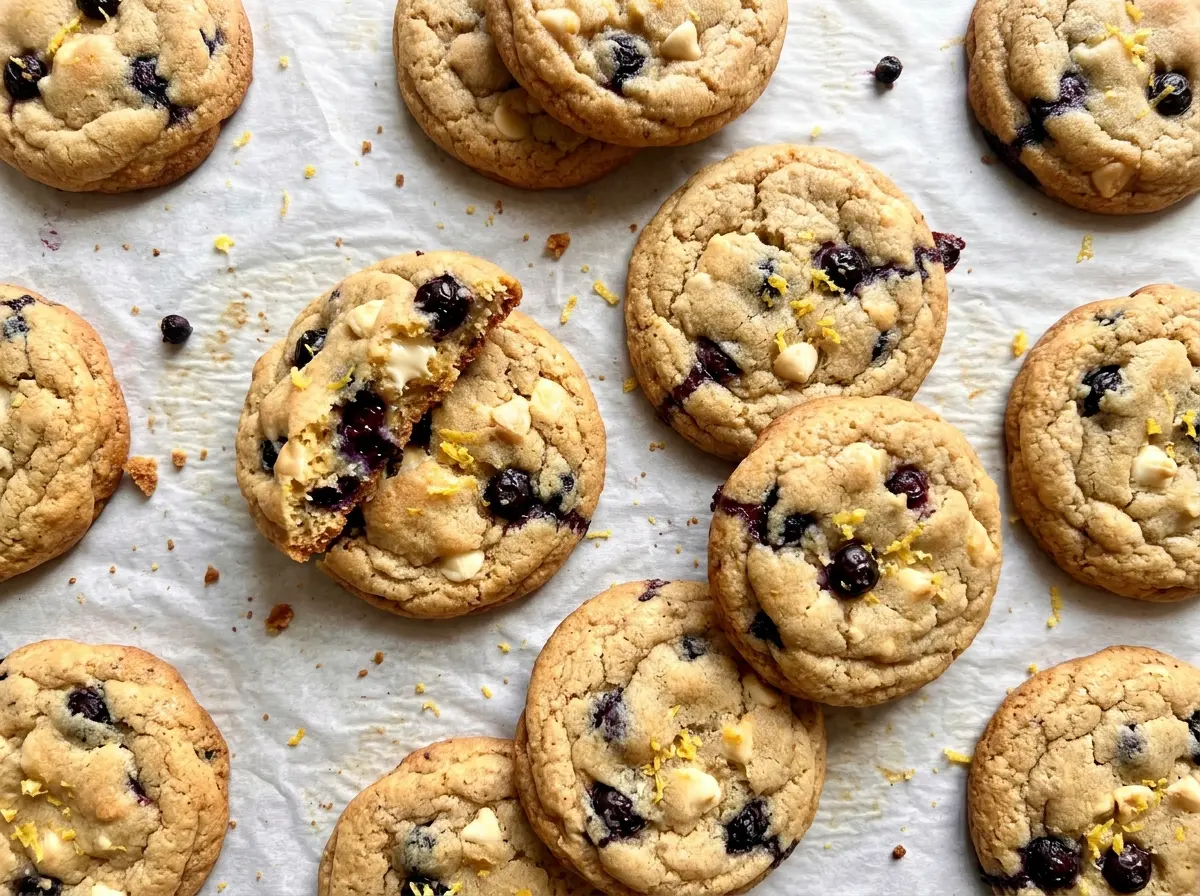
The first bite gives you a little tart blueberry, followed by a creamy white chocolate pocket. That balance is what I wanted from these blueberry lemon white chocolate chip cookies: bright enough to taste like lemon, but still buttery and sweet. The centers stay soft while the edges turn lightly golden.
The extra egg yolk is a small choice that makes a noticeable difference. It gives the cookies a richer, tender center without adding more egg white, which can make a cookie’s crumb firmer. Room-temperature eggs also blend into the creamed butter more smoothly, so the dough comes together without a struggle.
Finely grated lemon zest brings fragrance rather than a sharp sour note, and dried blueberries give each cookie a concentrated fruit bite. With the white chocolate melting into little creamy spots, every bite has a bit of contrast.
Kitchen Note
I don’t skip the 30-minute chill. The dough firms enough to portion cleanly, and the cookies hold their shape instead of spreading into thin, crowded rounds.
Save these blueberry lemon white chocolate chip cookies for a soft-centered bake with bright berry bites and creamy white chocolate.
Why the Full Two-Minute Creaming Time Matters for These Cookies
Butter and sugar need more than a quick stir here. Beating them on medium until they look light and fluffy, about two minutes, works air into the mixture. That gives the dough a lighter starting texture and helps the cookies bake up tender instead of dense. If the butter is still cold and firm, it won’t cream evenly; softened butter should give slightly when pressed but shouldn’t look melted or greasy.
Once the egg and yolk go in, keep beating only until they’re combined. The airy butter mixture is useful, but it can’t compensate for flour that’s mixed too long: extra mixing after the flour goes in develops gluten and can make the cookies tough. Add the dry mixture on low and stop when the last dry streaks disappear. That quick stop protects the soft crumb you worked into the dough.
What the Lemon Zest, Extra Yolk, and Mix-Ins Bring to the Dough

- All-purpose flour and baking soda — Flour gives the cookies enough structure to hold the fruit and chips, while baking soda helps them spread and brown. A standard all-purpose flour is the right choice here; a cup-for-cup gluten-free blend is the useful alternative if you need one, though the texture may be a little more delicate.
- Unsalted butter and both sugars — Softened butter creams properly, and unsalted butter lets the kosher salt stay in control. Light brown sugar brings moisture and a deeper sweetness; granulated sugar balances it with a cleaner sweetness. Keep the butter softened rather than melted, since melted butter won’t build the same base.
- Egg and egg yolk — Room-temperature eggs blend more easily into the creamed butter than cold ones. Set them out before you start mixing; the extra yolk contributes richness without adding another white.
- Lemon zest — Freshly grated zest gives the dough its fragrant citrus note. Grate only the yellow outer peel; the white pith underneath tastes bitter. A fresh lemon matters more here than an expensive one.
- Dried blueberries — Plump, flexible berries stay pleasantly chewy in the finished cookie; old, leathery ones can be tough. Dried fruit is also easier to distribute through dough than fresh berries, which bring extra moisture.
- White chocolate chips — The chips keep their shape enough to leave creamy pockets through the cookie. Use a brand you enjoy eating, but there’s no need to seek out specialty chocolate for this bake. Semisweet chips are a good swap if you’d rather have less sweetness.
Building the Dough for Evenly Baked Cookies
Whisk the dry ingredients evenly
Whisk the flour, baking soda, and kosher salt in a medium bowl until no small pockets of baking soda or salt remain. This spreads the leavener through the flour before it reaches the butter mixture. If you see a clump, break it up with the whisk rather than leaving it to land in one cookie. Set the bowl aside while you cream the butter and sugars.
Cream the butter and sugars until fluffy
Beat the softened butter with the light brown and granulated sugars on medium speed for about two minutes. The mixture should look lighter and fluffier than it did at the start, not just blended into a dense paste. Scrape down the bowl if butter or sugar is stuck to the sides. Cold butter won’t aerate as evenly, while melted butter can leave you with a heavier dough.
Add the eggs, lemon, and flour gently
Beat in the room-temperature egg and yolk until combined, then mix in the finely grated lemon zest and vanilla. Add the flour mixture on low speed and stop as soon as you no longer see dry streaks. Don’t keep mixing to make the dough look perfectly smooth; that extra work can make the baked cookies firm. The dough should look cohesive before the fruit and chips go in.
Fold in the fruit and chill
Fold in the dried blueberries and white chocolate chips so they’re spread through the dough rather than concentrated in one spot. Cover the bowl and refrigerate the dough for 30 minutes. Once chilled, it should feel firmer and be easier to portion. This short rest also gives the flour time to hydrate before baking.
Portion, bake, and let the cookies set
Heat the oven to 350°F and line two baking sheets with parchment paper. Scoop the dough into 2-tablespoon portions, leaving about 2 inches between them. Bake for 10 to 12 minutes, switching the sheets between racks and rotating them halfway through; look for lightly golden edges with centers that still seem a little soft. Cool the cookies on the sheets for 5 minutes, then move them to a wire rack to cool completely.
Three Swaps That Keep the Cookie’s Balance
Trade the blueberries for dried cranberries
Use the same volume of dried cranberries in place of the dried blueberries. The cookies will taste tangier and less berry-sweet, while keeping the same chewy fruit texture. Stick with dried fruit so extra moisture doesn’t change how the dough bakes.
Use semisweet chips for a less-sweet cookie
Swap the white chocolate chips for the same volume of semisweet chocolate chips. The darker chocolate makes the lemon and berries taste more pronounced and gives the cookie a less-sweet finish without changing the mixing method.
Make a gluten-free batch
Replace the all-purpose flour with the same volume of a cup-for-cup gluten-free baking blend that includes xanthan gum. The cookies may have a slightly more delicate crumb, so let them cool on the baking sheets before moving them to the rack.
Storage and Reheating
- Room temperature: Keep the cooled cookies in an airtight container for up to 4 days. They soften a little as they sit.
- Freezer: Freeze cooled cookies in an airtight container for up to 2 months, with parchment between layers. Thaw at room temperature.
- Reheating: Warm one cookie briefly in the microwave in short bursts, stopping when it’s just warm. Heating until the white chocolate gets hot and slick can make the cookie messy.
Questions That Come Up With These Blueberry Lemon Cookies
Blueberry Lemon White Chocolate Chip Cookies
Ingredients
Equipment
Method
- Whisk the flour, baking soda, and salt together in a medium bowl.
- Beat the butter, brown sugar, and granulated sugar in a large bowl with an electric mixer on medium speed until light and fluffy, about 2 minutes.
- Beat in the egg and egg yolk until combined, then mix in the lemon zest and vanilla.
- Add the flour mixture and mix on low just until no dry streaks remain.
- Fold in the dried blueberries and white chocolate chips, cover the bowl, and refrigerate the dough for 30 minutes.
- Heat the oven to 350°F and line two baking sheets with parchment paper.
- Scoop the dough into 2-tablespoon portions onto the prepared sheets, spacing them about 2 inches apart.
- Bake for 10 to 12 minutes, switching the sheets between racks and rotating them halfway through, until the edges are lightly golden and the centers still look slightly soft.
- Cool the cookies on the baking sheets for 5 minutes, then transfer them to a wire rack to cool completely.