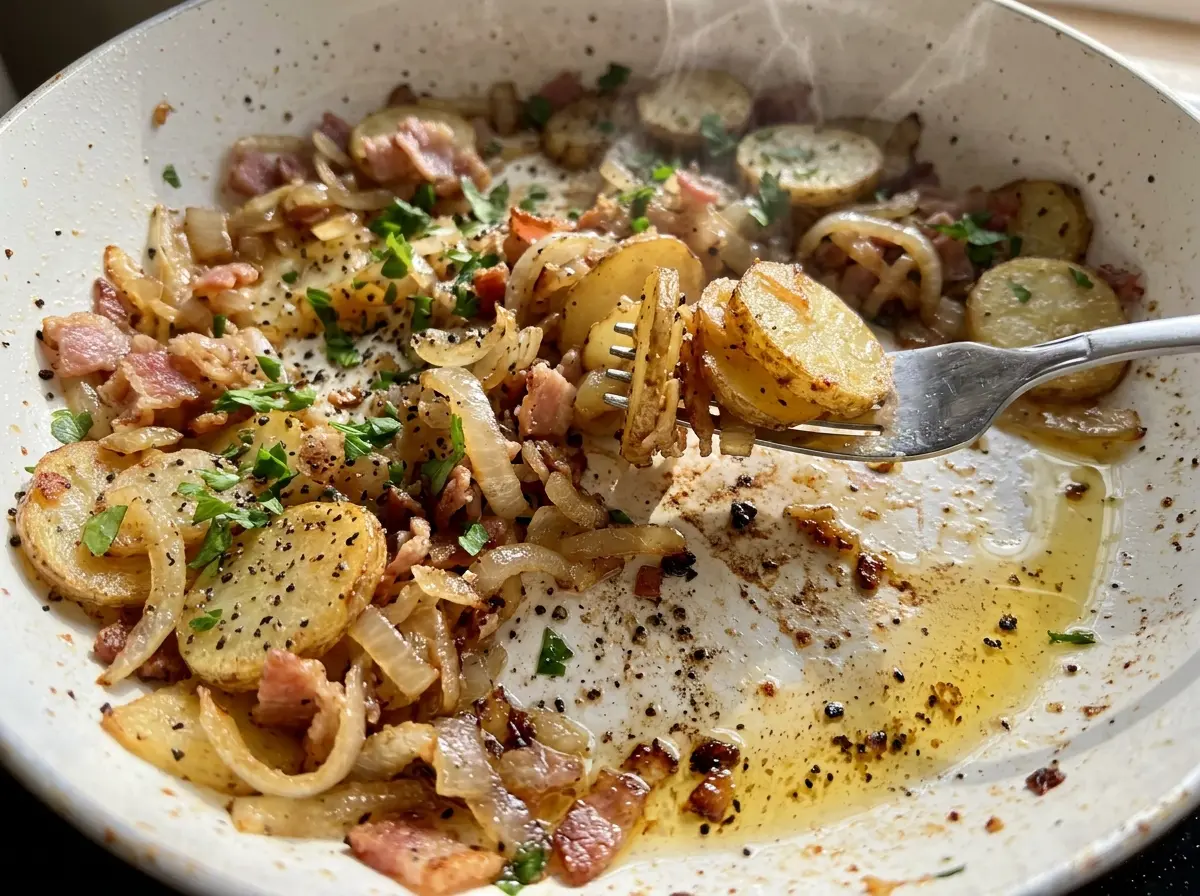
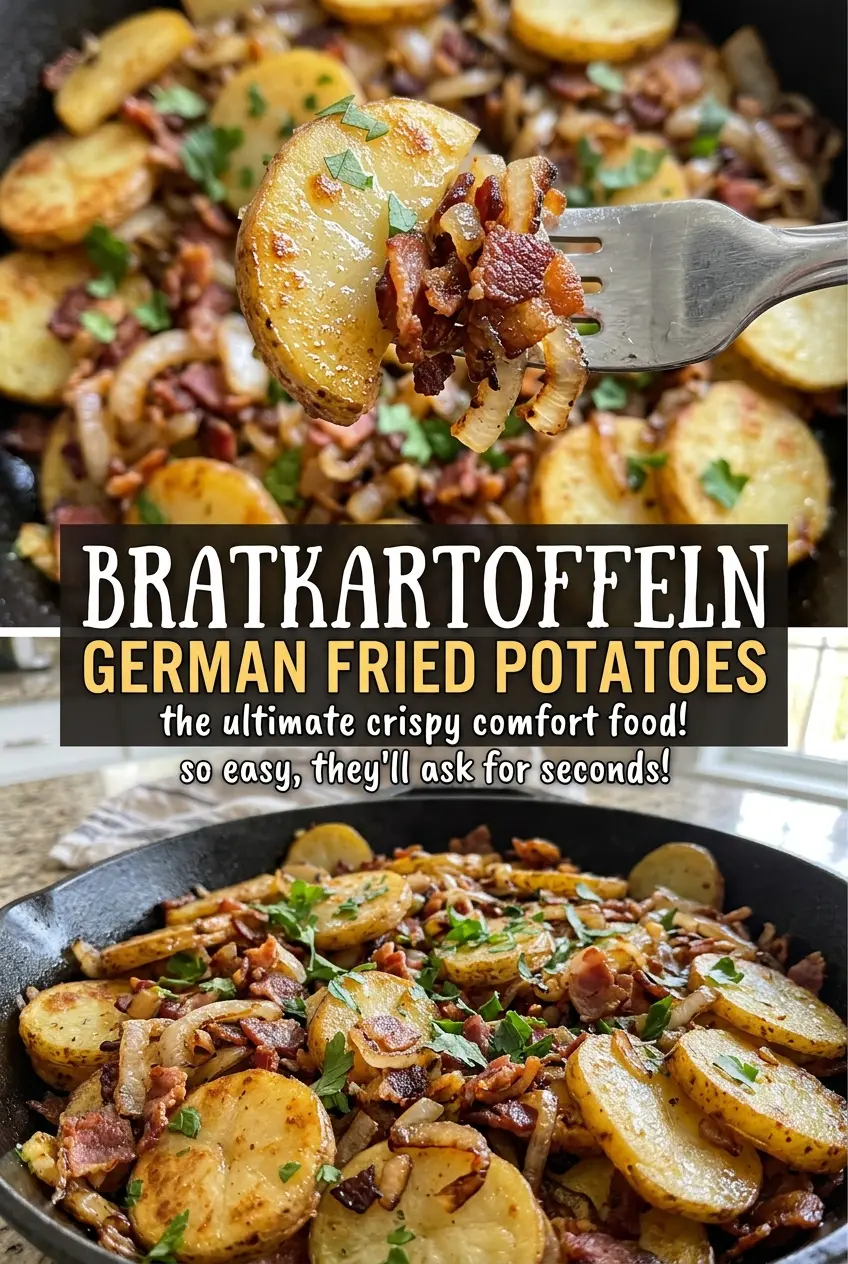
The first sign these potatoes are browning is a deep, toasty smell from the skillet. If I try to rush the batch and pile the slices together, though, they steam instead of turning crisp. Bratkartoffeln German fried potatoes are worth giving the pan room: you get browned edges, soft centers, and little bites of crisp bacon throughout.
I boil the Yukon Golds first, then let them get completely cold before peeling and slicing. That bit of advance planning gives the potatoes time to firm up, so they’re easier to handle when they hit the hot skillet. The bacon cooks first, and its drippings help soften the onion before the potatoes go in. Cook the potatoes in two batches, and each slice has a chance to turn a deep golden color. Finish with the bacon, onion, black pepper, and parsley, and the skillet is full of crisp-edged potatoes with a savory, tender middle.
Kitchen Note
Wait until the potatoes are completely cold before peeling and slicing them. Warm potatoes are much more likely to tear under the knife, and those ragged slices are harder to turn neatly in the skillet.
Save these Bratkartoffeln for a skillet dinner with crisp bacon, golden potato edges, and a tender center.
Why Bratkartoffeln Need Two Frying Batches, Not One Crowded Pan
These potatoes need direct contact with the skillet to develop their browned underside. When too many slices overlap, trapped moisture softens the surfaces instead, and the potatoes can turn pale before they get a chance to crisp. A single layer lets the hot pan do its job. It’s a small detail, but it changes the whole texture of the finished dish.
Use a 12-inch skillet and fry half the potatoes at a time. Leave the slices alone for the first stretch of cooking; lifting and nudging them interrupts the contact that builds the crust. Once the underside is deeply golden, they’re ready to turn. The second batch gets the same open space and the remaining oil, rather than being crowded in beside the first. Keep the bacon and onion on a plate while you fry so they don’t overcook, then bring everything together at the end. You’ll get browned potato slices instead of a skillet full of steaming, broken pieces.
What Yukon Golds and Bacon Bring to Bratkartoffeln
- Yukon Gold potatoes — Their creamy texture and ability to hold together make them a good fit for slicing and pan-frying. Red potatoes work as a same-weight substitute, though they’re firmer and less creamy; russets tend to be more fragile once cooked. Scrub the potatoes before boiling, then peel them once they’re cold.
- Bacon — It gives the skillet rendered fat for cooking the onion and adds crisp, savory pieces to the finished potatoes. Regular bacon works well here; the main cue is to cook it until crisp before transferring it out of the pan. For a bacon-free version, see the variation below.
- Yellow onion — Finely diced onion softens quickly and turns lightly golden in the bacon fat. White onion can stand in, but its flavor is a little sharper; cut it just as finely so it softens in the same window.
- Canola oil — Its neutral taste lets the browned potatoes, bacon, and onion come through. A neutral frying oil can replace it in the same amount, but strongly flavored oils will change the taste of the finished dish.
- Fresh parsley and black pepper — Pepper seasons the potatoes as they finish, while fresh parsley adds a clean, herbal note off the heat. Parsley is best chopped just before adding; dried parsley won’t give the same fresh finish.
From Tender Boiled Potatoes to Deeply Golden Bratkartoffeln
Simmer the Potatoes Until a Knife Slips In Easily
Put the scrubbed potatoes in a 4-quart saucepan with the water and half the salt. Bring the water to a boil over high heat, then reduce the heat and simmer for 15 to 20 minutes. A knife should pierce the potatoes easily, but they shouldn’t be collapsing in the water. Drain them as soon as they reach that point.
Cool, Chill, and Slice
Let the drained potatoes cool for 30 minutes, then refrigerate them for at least 1 hour, until completely cold. Peel them and cut them into 1/4-inch-thick slices. Try to keep the slices close in thickness so they brown at a similar pace. Set them aside while you cook the bacon and onion.
Render the Bacon and Soften the Onion
Cook the bacon in a 12-inch skillet over medium heat for 6 to 8 minutes, stirring occasionally, until crisp. Transfer it to a plate, then pour off all but 1 tablespoon of the bacon fat. Add the finely diced onion and cook over medium heat for 4 to 5 minutes, until softened and lightly golden; move it to the plate with the bacon.
Brown the Potatoes in Uncrowded Batches
Add 1 tablespoon of canola oil to the skillet and arrange half the slices in a single layer. Cook over medium-high heat without moving them for 5 to 7 minutes, until deeply golden underneath, then turn and cook for 4 to 5 minutes more. Transfer that batch to the plate. Add the remaining oil and potatoes, keeping them in a single layer, and repeat.
Toss Everything Together Just Long Enough to Heat
Return the potatoes, bacon, and onion to the skillet. Add the remaining salt and the black pepper, then toss gently over medium heat for 1 to 2 minutes, until hot. Remove the skillet from the heat before stirring in the chopped parsley. Gentle tossing keeps the slices intact while the bacon and onion work their way through the pan.
Three Practical Ways to Adapt Bratkartoffeln
Make a vegetarian skillet
Leave out the bacon and use the canola oil in place of the bacon fat to cook the onion and potato batches. Divide the listed oil between the onion and potatoes as needed. The potatoes will still brown, but the dish won’t have bacon’s crisp, savory bites or its rendered-fat flavor.
Leave the potato skins on
Scrub the potatoes well and skip peeling them after chilling. The browned slices will have a more rustic look and a slightly chewier edge, while the potato centers stay tender. Keep the slices at the same thickness so the skins don’t distract from even browning.
Make it without onion
Skip the diced onion and cook the potatoes in the bacon fat and canola oil as usual. You’ll lose the onion’s soft sweetness, but the dish still has crisp bacon and browned potatoes. There’s no need to change the potato batches or their skillet time.
Storage and Reheating
- Refrigerator: Store in a covered container for 3 to 4 days. The potato edges soften as they sit.
- Freezer: Freeze in an airtight container for up to 1 month. Thaw overnight in the refrigerator; the potatoes will be softer after freezing.
- Reheating: Warm in a skillet over medium heat, turning gently until hot throughout. Avoid stirring hard or often, which can break the slices; the microwave works for convenience but won’t bring back crisp edges.
Questions That Come Up When Making Bratkartoffeln
Bratkartoffeln German Fried Potatoes
Ingredients
Equipment
Method
- Put the potatoes in a 4-quart saucepan with the water and 1/2 teaspoon of the salt. Bring to a boil over high heat, then reduce the heat and simmer for 15 to 20 minutes, until a knife easily pierces the potatoes.
- Drain the potatoes and let them cool for 30 minutes, then refrigerate them for at least 1 hour, until completely cold.
- Peel the cold potatoes and cut them into 1/4-inch-thick slices.
- Cook the bacon in a 12-inch skillet over medium heat for 6 to 8 minutes, stirring occasionally, until crisp. Transfer it to a plate.
- Pour off all but 1 tablespoon of bacon fat from the skillet, add the onion, and cook over medium heat for 4 to 5 minutes, until softened and lightly golden; transfer it to the plate with the bacon.
- Add 1 tablespoon of the oil to the skillet and arrange half the potatoes in a single layer. Cook over medium-high heat without moving them for 5 to 7 minutes, until deeply golden on the underside, then turn and cook for 4 to 5 minutes more.
- Transfer the potatoes to the plate and repeat with the remaining oil and potatoes.
- Return the bacon, onion, and potatoes to the skillet, add the remaining 1/2 teaspoon salt and the pepper, and toss gently over medium heat for 1 to 2 minutes, until hot. Remove from the heat and stir in the parsley.