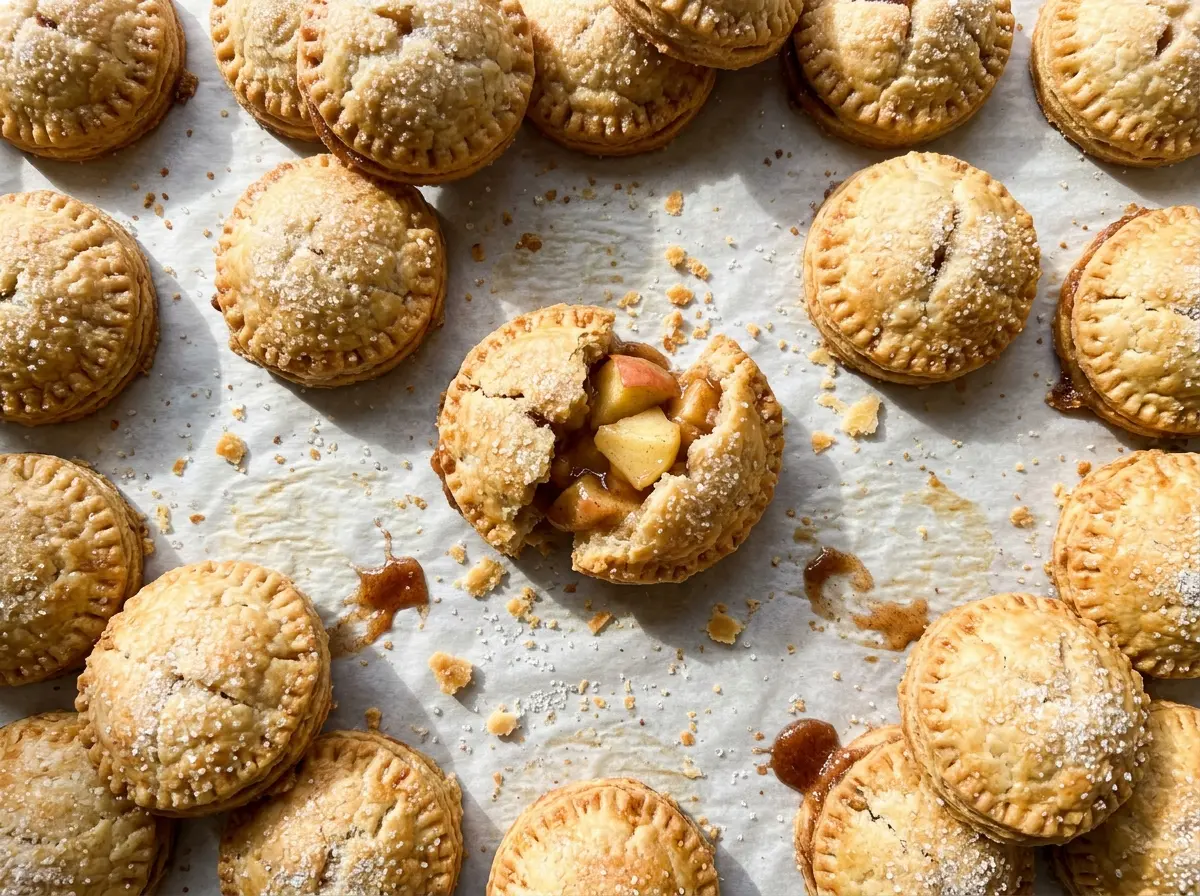
A spoonful of apple filling looks harmless until it reaches the edge of a pastry round; then even a careful fork crimp can turn into a leak in the oven. I keep the filling centered and measured in these apple pie cookies, so every bite has apple without making the dough work too hard to stay sealed.
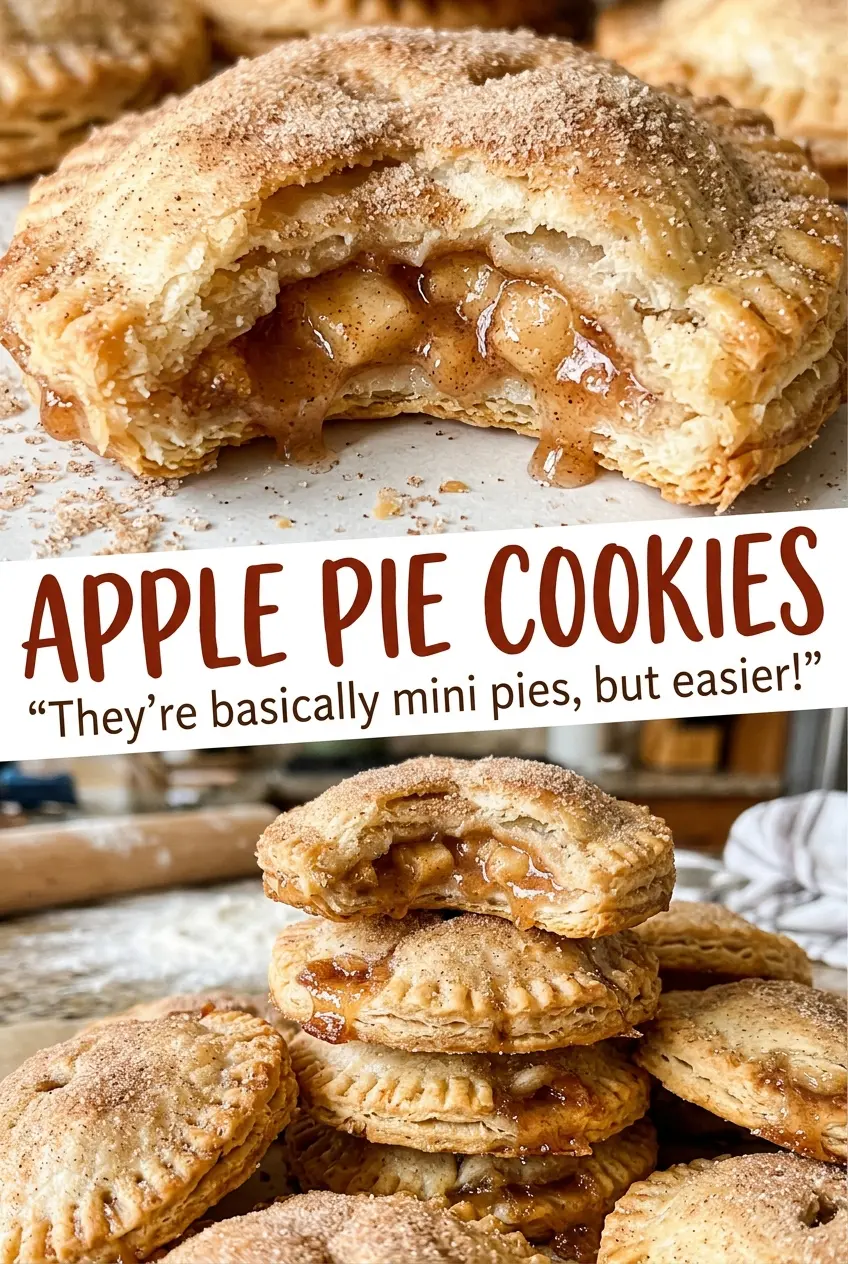
The pastry gets its flaky texture from cold butter cut into pea-size pieces, not from a long knead. I stir in the ice water only until the dough holds when pressed, then give it a full hour in the refrigerator. That keeps the butter firm while the dough rests, making it easier to roll into thin, tender rounds. The finished cookies have golden pastry tops and a soft cinnamon apple center.
Kitchen Note
Let the apple filling cool completely before it goes onto the pastry. Warm filling softens the butter in the dough before the cookies even reach the oven, and that makes sealing them harder.
Save these apple pie cookies for a bake day when you want flaky pastry wrapped around cinnamon apples.
Why a thick apple filling matters before you seal the pastry
These little pastries have two chances to leak: filling that is too loose and filling that sits too close to the edge. Cooking the diced apple first softens it and releases its juices, but those juices need to thicken before they’re tucked between pastry rounds. The cornstarch slurry does that job without turning the filling into a paste. Stir the cornstarch and water together before adding them, then cook the mixture for a full minute so the juices visibly thicken.
The small, even apple pieces help, too. At a quarter inch, they soften quickly and fit neatly beneath the top circle instead of making a tall mound that pushes against the seam. Keep the filling to one tablespoon per cookie, right in the center. If the juices still look thin, the pastry has to contain more liquid as it heats, and a fork-crimped edge is more likely to open. A glossy, thickened filling gives you a much better chance of getting a tidy little pie with a clear apple center.
Why cold butter and a firm apple matter more than fancy pastry
- Cold unsalted butter — Butter pieces should still be cold when they go into the flour; the pea-size pieces create flaky layers as the pastry bakes. The brand matters less than the temperature, so a standard grocery-store butter works well. I wouldn’t replace it with spread, which has a different texture and won’t behave like a cold butter block.
- All-purpose flour — It gives the dough enough structure to hold a filling while staying tender. Regular all-purpose flour is the right choice here; there’s no need for specialty pastry flour. A gluten-free flour blend isn’t a dependable one-for-one swap for this hand-rolled dough.
- The apple — Choose a firm baking apple so the pieces hold some shape after cooking. Granny Smith gives the filling a tarter edge; Honeycrisp makes it sweeter and gentler. Whichever you pick, peel it and dice it evenly so it softens at the same pace.
- Cornstarch — It thickens the apple juices so they stay tucked inside the pastry instead of running out onto the baking sheet. Mixing it with water first prevents dry clumps. There isn’t a direct substitute in this recipe that gives the same clear, smooth thickening.
- Egg and coarse sugar — The beaten egg brushed over the tops helps the pastry brown, while the coarse sugar gives a little crunch. Coarse sugar is worth keeping if you want that distinct finish; finer sugar won’t provide the same texture.
From pea-size butter to golden tops: the stages that protect the filling
Bring the pastry together without working it hard
Whisk the flour, kosher salt, and granulated sugar in a large bowl, then cut in the cold butter with a pastry cutter until the pieces are about pea-sized. Sprinkle the ice water over the mixture and stir just until it holds together when pressed. If it still looks shaggy, press a bit between your fingers before adding anything else; the dough doesn’t need to look smooth. Divide it into two disks, wrap them, and refrigerate for 1 hour.
Cook the apples until the juices thicken
Melt the butter in a small saucepan over medium heat, then stir in the diced apple, brown sugar, cinnamon, lemon juice, and salt. Cook for 5 to 7 minutes, stirring often, until the apple is tender. Stir the cornstarch and water together, add that mixture to the pan, and cook for 1 minute until the juices are thick. Transfer the filling to a bowl and let it cool completely before assembling.
Roll, fill, and close each little pie
Heat the oven to 375°F and line a large baking sheet with parchment paper. Roll each dough disk between sheets of parchment to 1/8-inch thickness, then cut out 24 circles with a 3-inch cutter, rerolling scraps as needed. Set 12 circles on the baking sheet and place 1 tablespoon of cooled filling in the center of each. Cover with the remaining circles and press the edges closed with a fork.
Chill the assembled cookies, then bake until golden
Beat the egg with the teaspoon of water and brush it over the pastry tops. Cut two small vents in each cookie, sprinkle with coarse sugar, and refrigerate the assembled cookies for 15 minutes. Bake for 18 to 22 minutes, until the pastry is golden brown. Let them cool on the baking sheet for 10 minutes before transferring them to a rack; the pastry is delicate while hot.
Choose your apple for a tarter or sweeter little pie
Use Granny Smith for a sharper filling
A Granny Smith apple gives the brown sugar and cinnamon a tart counterpoint, so the center tastes more like classic apple pie than candy-sweet pastry. Keep the same dice and cook it until tender; the firmer fruit holds its shape well in the filling.
Choose Honeycrisp for a sweeter center
Honeycrisp makes a milder, naturally sweeter filling alongside the brown sugar. The difference is in the apple’s flavor, not the method, so keep the rest of the filling and assembly the same.
Storage and Reheating
- Refrigerator: Store cooled cookies in an airtight container for up to 4 days. The pastry gradually softens around the moist filling.
- Freezer: Freeze completely cooled cookies in an airtight container with parchment between layers for up to 2 months. Thaw in the refrigerator before reheating.
- Reheating: Warm in a 300°F oven for 6 to 8 minutes, until the pastry feels crisp and the center is warm. The microwave is faster but softens the pastry.
Questions that come up while assembling these little pies
Apple Pie Cookies – Homemade Recipe
Ingredients
Equipment
Method
- Whisk the flour, kosher salt, and granulated sugar in a large bowl.
- Cut in the cold unsalted butter with a pastry cutter until the pieces are about pea-sized.
- Sprinkle the ice water over the mixture and stir just until the dough holds together when pressed.
- Divide the dough in half and shape each half into a disk.
- Wrap the disks and refrigerate for 1 hour.
- Melt the unsalted butter in a small saucepan over medium heat.
- Stir in the apple, brown sugar, cinnamon, lemon juice, and kosher salt.
- Cook for 5 to 7 minutes, stirring often, until the apple is tender.
- Stir the cornstarch and water together, then add the mixture to the saucepan.
- Cook for 1 minute until the juices are thick.
- Transfer the filling to a bowl and cool completely.
- Heat the oven to 375°F.
- Line a large baking sheet with parchment paper.
- Roll each dough disk between sheets of parchment to 1/8-inch thickness.
- Cut out 24 circles with a 3-inch cutter, rerolling scraps as needed.
- Place 12 circles on the prepared baking sheet and add 1 tablespoon of cooled filling to the center of each.
- Cover with the remaining circles and press the edges closed with a fork.
- Beat the egg with the teaspoon of water.
- Brush the tops of the cookies with the egg mixture.
- Cut two small vents in each cookie and sprinkle with coarse sugar.
- Refrigerate the assembled cookies for 15 minutes.
- Bake for 18 to 22 minutes, until the pastry is golden brown.
- Cool on the baking sheet for 10 minutes before transferring to a rack.