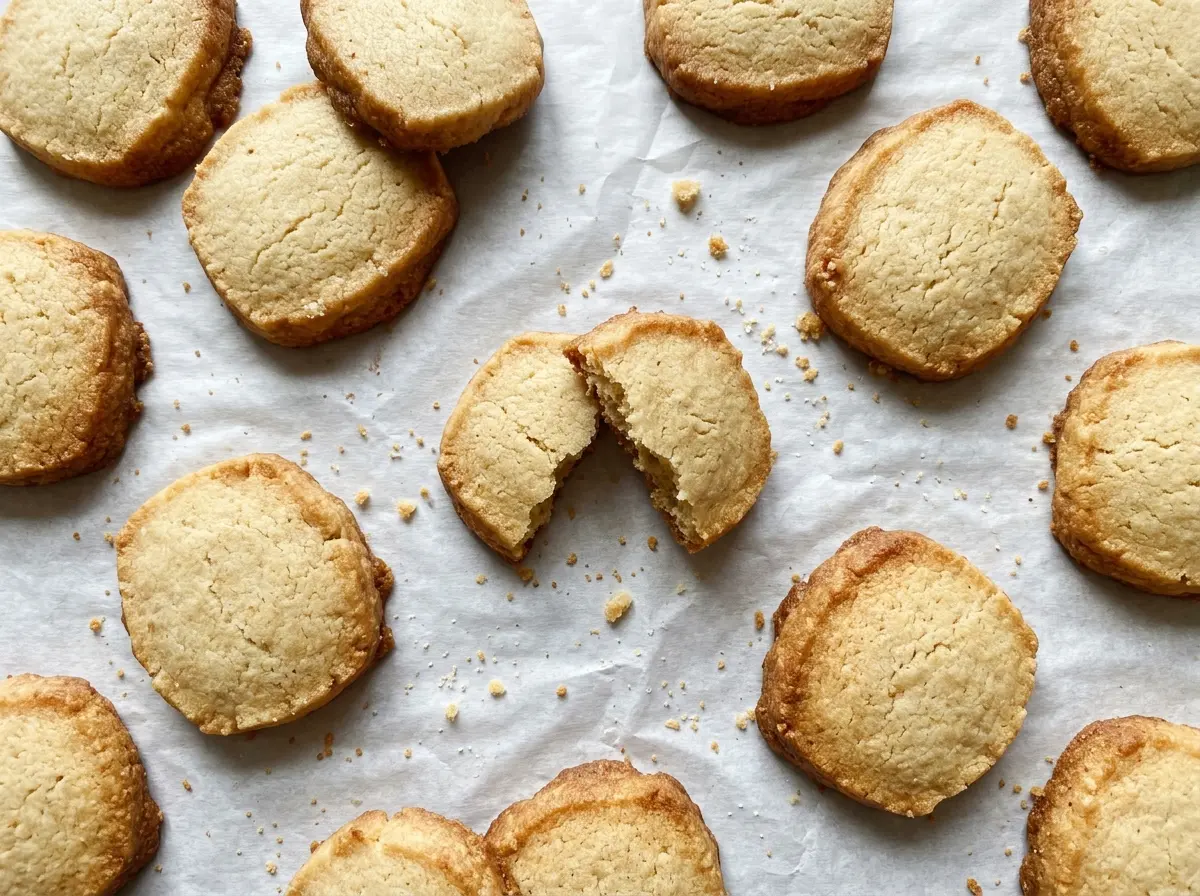
When the dough first comes together, it doesn’t look like the smooth, pliable dough most cookie bakers expect. That’s normal for these Brown Sugar Maple Shortbread Cookies: the mixture is tender and a little crumbly before it’s pressed into disks and chilled. Once baked, each cookie has a delicate bite, a buttery center, and edges that just begin to turn golden.
I like the way light brown sugar gives the shortbread a soft caramel note, while pure maple syrup adds a quieter maple flavor instead of making the cookies taste like candy. The dough is easy to shape between parchment, and the finished cookies are sturdy enough to stack once they’ve cooled. They’re a lovely choice when you want a simple cutout cookie with a little more character than plain shortbread.
Kitchen Note
Reroll the scraps just once. Press them together gently rather than kneading them smooth; extra handling can make the last cookies less tender than the first batch.
Save these Brown Sugar Maple Shortbread Cookies for a bake-ahead treat with tender centers and delicate golden edges.
Why Maple Shortbread Shouldn’t Bake Up Like a Soft Sugar Cookie
These cookies aren’t meant to puff or spread into a soft, cakey round. Shortbread gets its tender, sandy crumb from the balance of butter and flour, not from a leavening ingredient. The brown sugar and maple syrup add sweetness and a little moisture, but they don’t turn the dough into a typical drop-cookie batter. Expect a neat cutout with a delicate bite, not a thick, pillowy cookie.
That difference is useful when you’re judging the dough. Before chilling, it may look rough instead of elastic, and the baked cookies stay fairly close to the shape you cut. Adding extra flour to make the dough look smoother can leave the shortbread dry; pressing the crumbs together gives you a workable dough without changing that balance. A clean cut and an even thickness matter more here than making the mixture look perfectly smooth in the bowl.
What the Butter, Brown Sugar, and Maple Each Bring

- Unsalted butter — Butter provides the rich, tender texture that defines shortbread, so use softened butter rather than melted butter. It should give slightly when pressed but still hold its shape; melted or greasy butter won’t cream properly with the sugar. Unsalted butter also lets you control the salt in the dough.
- Light brown sugar — Pack it firmly into the measuring cup so the sweetness and moisture stay consistent from batch to batch. Its mild molasses note sits behind the maple instead of competing with it. Fresh, soft brown sugar is easiest to cream; if yours has hardened into a lump, break it up before mixing.
- Pure maple syrup — The syrup brings the signature maple note as well as a small amount of liquid to the dough. Use real maple syrup rather than pancake syrup, which is a different product and won’t give the same flavor. A darker maple syrup makes the maple taste more pronounced, while a lighter one keeps it subtle.
- Vanilla extract — Vanilla rounds out the maple and brown sugar without taking over. Pure extract is a nice choice, but this is a good place to use the bottle you already keep in the pantry; the maple remains the more noticeable flavor.
- All-purpose flour — Flour gives the dough enough structure to roll and hold a cut edge. Measure it without packing it into the cup, since excess flour is one of the quickest ways to make shortbread dry and crumbly. A specialty flour swap isn’t a direct one-for-one here.
- Fine salt — Fine salt disperses evenly through the flour, so the sweetness doesn’t taste flat. Keep the salt fine rather than using coarse crystals, which can leave uneven salty bites in a delicate cookie.
From Creamed Butter to Neat, Golden Cutouts
Cream the Butter and Brown Sugar
Heat the oven to 325°F and line two large baking sheets with parchment paper. Beat the softened butter and packed brown sugar in a large bowl with an electric mixer on medium speed for about 2 minutes, until creamy. Stop to scrape down the bowl if sugar is clinging to the sides. The mixture should look evenly blended, not melted or oily.
Mix the Dough Without Overworking It
Beat in the maple syrup and vanilla until combined. In a separate bowl, whisk the flour and fine salt together, then add them to the butter mixture and mix on low speed just until no dry flour remains. The dough can look crumbly at this point; press it together rather than beating it until smooth. Divide it in half, shape each portion into a disk, wrap, and refrigerate for 30 minutes.
Roll and Chill the Cut Cookies
Roll each chilled disk between sheets of parchment until it’s 1/4 inch thick. Cut the dough with a 2 1/2-inch cutter, then reroll the scraps once. Arrange the cookies on the prepared baking sheets and refrigerate them for 15 minutes before baking. If a disk cracks as you roll, give it a moment to soften slightly instead of forcing the rolling pin through it.
Bake Until the Edges Just Turn Golden
Bake for 15 to 19 minutes, swapping and rotating the baking sheets halfway through so the cookies bake evenly. Look for cookies that are set, with edges just beginning to turn golden; don’t wait for the whole surface to brown. Let them cool on the sheets for 5 minutes, then transfer them to a wire rack to cool completely. They’re fragile while hot, so moving them too soon can break the edges.
Small Changes That Still Let the Maple Shine
A Deeper Brown Sugar Note
Swap the light brown sugar for dark brown sugar in the same amount. The extra molasses makes the cookies taste richer and shifts the maple into the background a little; the dough may also feel slightly softer before chilling.
Using Salted Butter Instead
If salted butter is what you have, use it in place of the unsalted butter and leave out the fine salt. The cookies will have a slightly more noticeable salty edge, but the dough still creams and rolls the same way.
Cut Squares Instead of Rounds
For a simple square shortbread, roll the dough to the same thickness and use a knife to cut even squares rather than using a round cutter. Keeping the pieces close in size helps them bake at a similar pace, and you won’t have shaped scraps to reroll.
Storage and Reheating
- Refrigerator: Store cooled cookies in an airtight container for up to 1 week. Chilling firms the butter, so the shortbread will taste a little less tender straight from the fridge.
- Freezer: Freeze baked, completely cooled cookies in an airtight container for up to 2 months, separating layers with parchment so the edges don’t chip. Thaw them in the closed container to limit condensation on the cookies.
- Reheating: These cookies don’t need reheating. Let refrigerated cookies sit at room temperature until the butter softens; avoid microwaving, which can make the shortbread greasy and unevenly warm.
Questions That Come Up When Baking Maple Shortbread
Brown Sugar Maple Shortbread Cookies Recipe
Ingredients
Equipment
Method
- Heat the oven to 325°F.
- Line two large baking sheets with parchment paper.
- In a large bowl, beat the butter and brown sugar with an electric mixer on medium speed until creamy, about 2 minutes.
- Beat in the maple syrup and vanilla extract until combined.
- Whisk the flour and salt together in a separate bowl.
- Mix the flour mixture into the butter mixture on low speed just until no dry flour remains.
- Press the crumbly dough together.
- Divide the dough in half and shape each half into a disk.
- Wrap the disks and refrigerate for 30 minutes.
- Roll each disk between sheets of parchment to 1/4-inch thickness.
- Cut the dough with a 2 1/2-inch cutter and reroll scraps once.
- Arrange the cookies on the prepared sheets and refrigerate for 15 minutes.
- Bake for 15 to 19 minutes, swapping and rotating the sheets halfway through, until the cookies are set and their edges are just beginning to turn golden.
- Cool the cookies on the baking sheets for 5 minutes.
- Transfer them to a wire rack to cool completely.