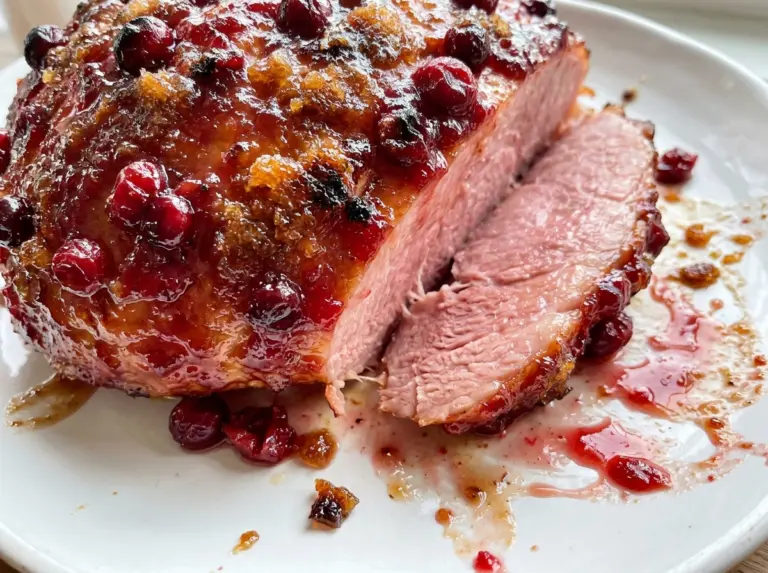
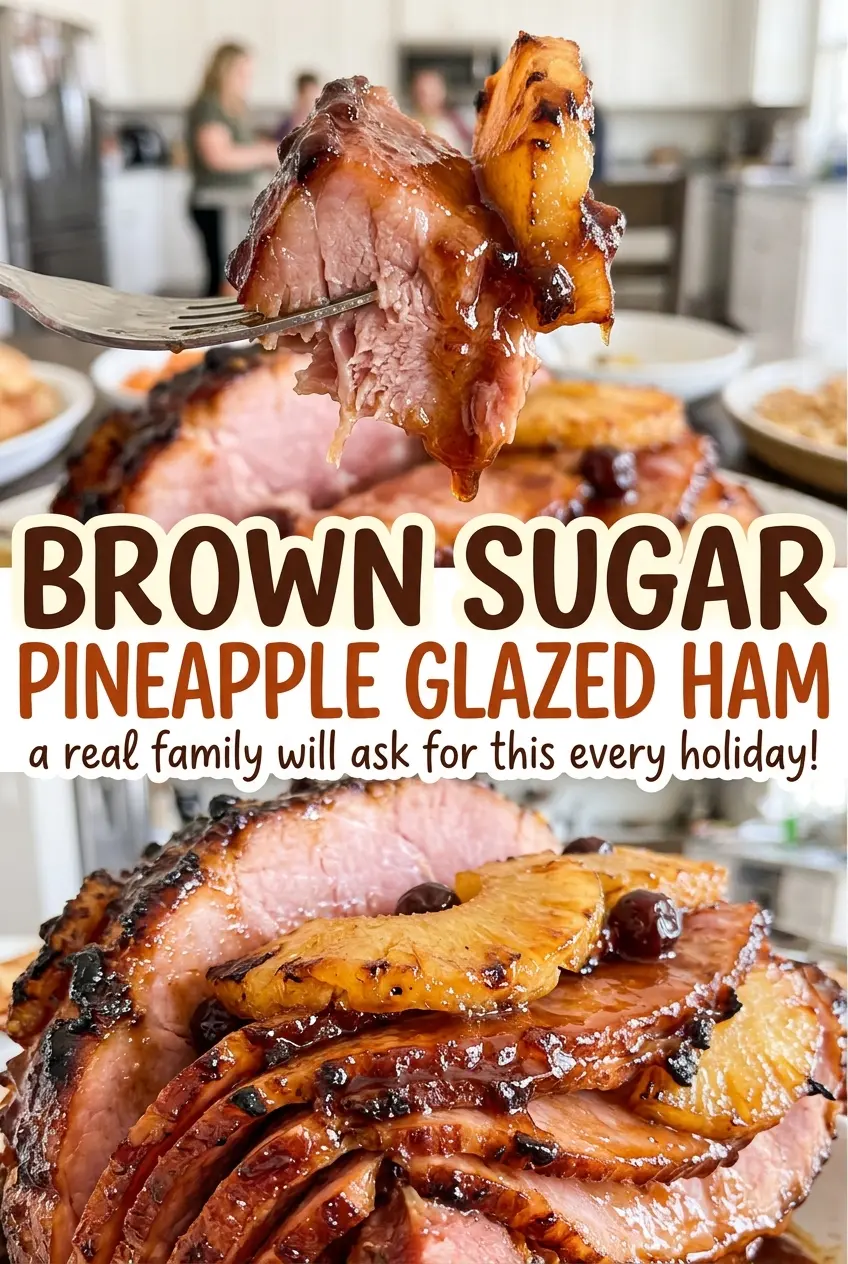
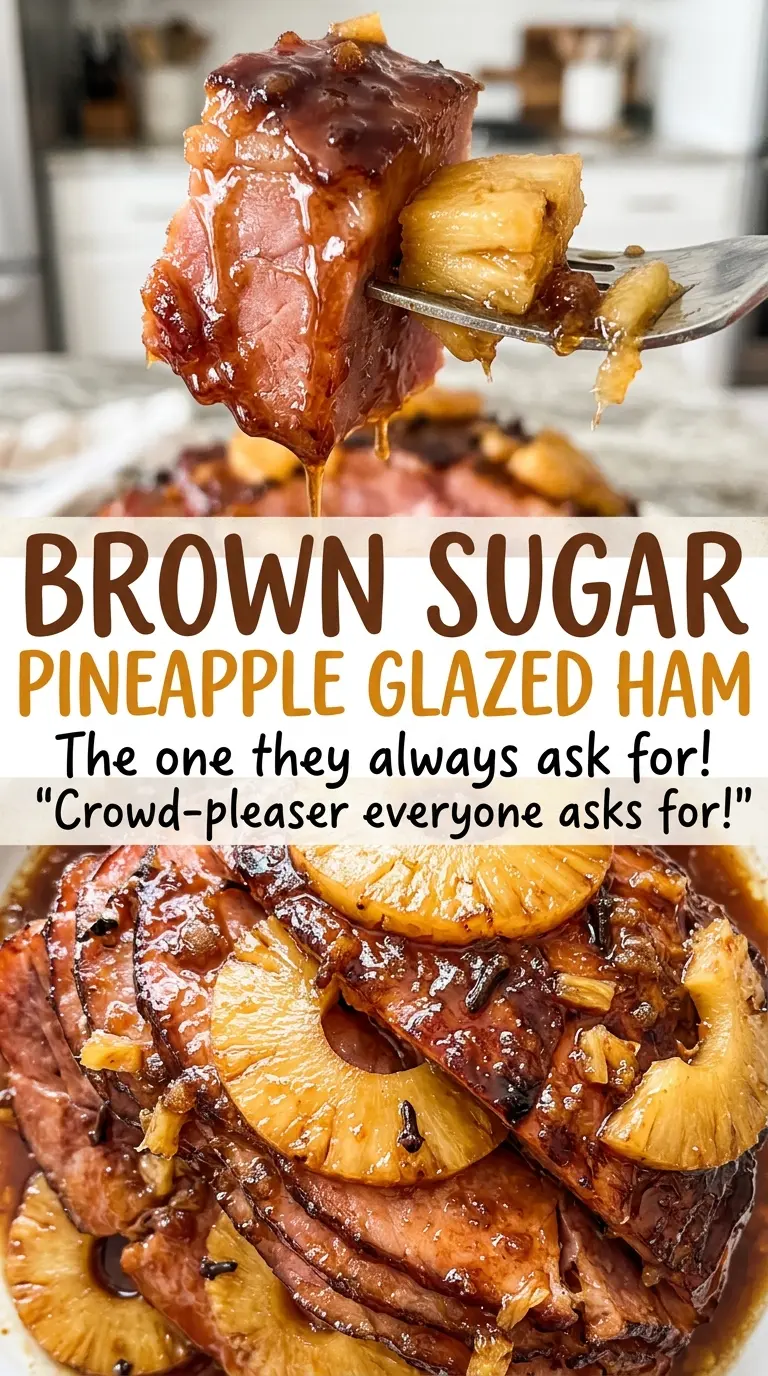
The foil comes off and the ham is warm, but the brown sugar glaze still needs time to turn sticky. That last stretch in the oven is what gives this Brown Sugar Pineapple Glazed Ham its glossy finish without leaving the pineapple rings pale and watery. I like this approach for an 8-pound fully cooked bone-in ham because the covered bake warms the meat gently before the glaze goes on.
The glaze simmers on the stovetop while the ham bakes, so it has a head start thickening before it meets the heat of the oven. Reserved pineapple juice keeps the brown sugar from becoming a dry crust, and Dijon mustard balances its sweetness. When the ham is ready to carve, the pineapple is tender and the glaze clings to the outside in a thin, shiny layer.
Kitchen Note
Set the ham cut-side down and cover the roasting pan tightly with foil. A snug cover holds in the moisture during the first bake, before the glaze has a chance to protect the surface.
Save this Brown Sugar Pineapple Glazed Ham for a centerpiece with tender slices, pineapple rings, and a glossy sweet-tangy finish.
Why a Fully Cooked Ham Still Needs Two Temperature Checks
Fully cooked describes the ham before it goes into the oven; it doesn’t mean the center will be warm enough to serve straight from the refrigerator. The covered bake gently brings the meat up in temperature, and the uncovered finish gives the glaze time to turn sticky. Those are separate jobs, so I check the center before removing the foil and again after glazing.
A thermometer reading near the bone can be misleading because the bone heats differently from the surrounding meat. Insert an instant-read thermometer into the thickest part of the ham without touching bone. If you rely only on the clock, the center may still be cool when the glaze looks finished, or the ham may spend longer in the oven than it needs. The two checks let the warming stage and the glazed finish each reach their own endpoint.
What Makes the Pineapple Glaze Taste Balanced
- Bone-in ham — A fully cooked, unsliced ham is easiest to warm without drying out, and the bone gives you a clear landmark to avoid when checking the center. Choose one that fits comfortably in a 12×16-inch roasting pan. A spiral-sliced ham has more exposed edges, so it won’t hold moisture in quite the same way.
- Pineapple rings and juice — Canned rings in juice give you both the topping and the liquid for the glaze. Drain the can but reserve the juice; syrup-packed pineapple would make the glaze sweeter and change its balance. Standard canned rings work well here, so there’s no need to seek out a specialty brand.
- Light brown sugar — Its molasses notes deepen as the glaze simmers and help it turn glossy. Pack it into the measuring cup, and break up any hard clumps before it goes into the saucepan so it dissolves evenly.
- Dijon mustard — Dijon adds a gentle tang that keeps the sugar and pineapple from tasting one-note. A familiar grocery-store Dijon is fine. If you leave it out, the glaze will be sweeter and less sharp; there isn’t a close replacement in this ingredient list.
- Ground cloves — A small amount brings warm spice that suits the brown sugar without taking over. Measure carefully and keep the jar tightly closed; stale ground cloves lose the aroma that makes them useful in a glaze.
Warm the Ham First, Then Give the Glaze Its Turn
Warm It Gently Under Foil
Heat the oven to 325°F and set the ham cut-side down in a 12×16-inch roasting pan. Pour the water into the pan, then cover it tightly with foil so steam stays inside. Bake for 1 to 1 1/2 hours, checking the thickest part with an instant-read thermometer and keeping the probe away from the bone. Take the foil off when the center reaches 120°F.
Simmer Until the Glaze Turns Glossy
While the ham bakes, combine the brown sugar, reserved pineapple juice, Dijon mustard, and ground cloves in a small saucepan. Bring the mixture to a simmer over medium heat, stirring so the sugar dissolves rather than settling on the bottom. Cook for 6 to 8 minutes, until it looks glossy and slightly thickened. If it still looks thin, give it the full simmering time rather than brushing on a watery glaze.
Arrange the Pineapple and Brush in Two Passes
Remove the foil and arrange the pineapple rings over the ham, using toothpicks to secure any rings that slide. Brush the ham with about half the glaze, then return it to the oven uncovered. After 10 minutes, brush on the remaining glaze; this second coat adds shine without leaving all the sugar on the ham from the start. Bake for 20 to 30 minutes, until the glaze is sticky and the center reaches 140°F, continuing in 10-minute increments if needed.
Rest Before Carving
Move the ham out of the oven and let it rest for 15 minutes before carving. That pause gives the juices time to settle, making it easier to cut neat slices instead of having them crumble at the edges. Remove any toothpicks before serving, and check the pineapple rings as you carve so none are left behind by mistake.
Small Changes That Shift the Glaze
A Gentler Spice Note
Leave out the ground cloves if you prefer a simpler brown sugar and pineapple flavor. The glaze will lose its warm, spiced edge, but it will still simmer and coat the ham as usual.
A Sweeter, Milder Glaze
Skip the Dijon for a glaze with less tang. Keep the brown sugar, reserved pineapple juice, and cloves together; without the mustard, the sweetness will come through more clearly.
Pineapple Glaze Without the Ring Topping
Leave the pineapple rings off the ham but still use the reserved juice in the glaze. You’ll keep the sweet-tangy pineapple flavor while getting a smooth, uninterrupted glazed surface instead of fruit-topped slices.
Storage and Reheating
- Refrigerator: Refrigerate leftover ham in a covered container for 3 to 4 days. The glaze will lose its sticky finish as it chills, and the pineapple will soften.
- Freezer: Freeze carved portions, wrapped well or packed airtight, for up to 1 to 2 months for best quality. The pineapple softens further after thawing, so freeze slices separately if you want to leave the topping behind.
- Reheating: Warm slices covered in a 325°F oven until they reach 165°F. Keep them covered to limit drying; reheating uncovered can make the edges tough before the center is hot.
Questions That Come Up Before the Ham Goes in the Oven
Brown Sugar Pineapple Glazed Ham
Ingredients
Equipment
Method
- Preheat the oven to 325°F.
- Set the ham cut-side down in a 12x16-inch roasting pan.
- Pour the water into the pan and cover tightly with foil.
- Bake for 1 to 1 1/2 hours, until the center reaches 120°F when checked with an instant-read thermometer, avoiding the bone.
- While the ham bakes, combine the brown sugar, reserved pineapple juice, Dijon mustard, and ground cloves in a small saucepan.
- Bring to a simmer over medium heat, stirring, and cook for 6 to 8 minutes, until glossy and slightly thickened.
- Remove the foil and arrange the pineapple rings over the ham, securing them with toothpicks if needed.
- Brush the ham with about half the glaze.
- Bake uncovered for 20 to 30 minutes, brushing with the remaining glaze after 10 minutes, until the glaze is sticky and the center reaches 140°F; if needed, continue baking in 10-minute increments.
- Rest the ham for 15 minutes before carving, then remove any toothpicks.