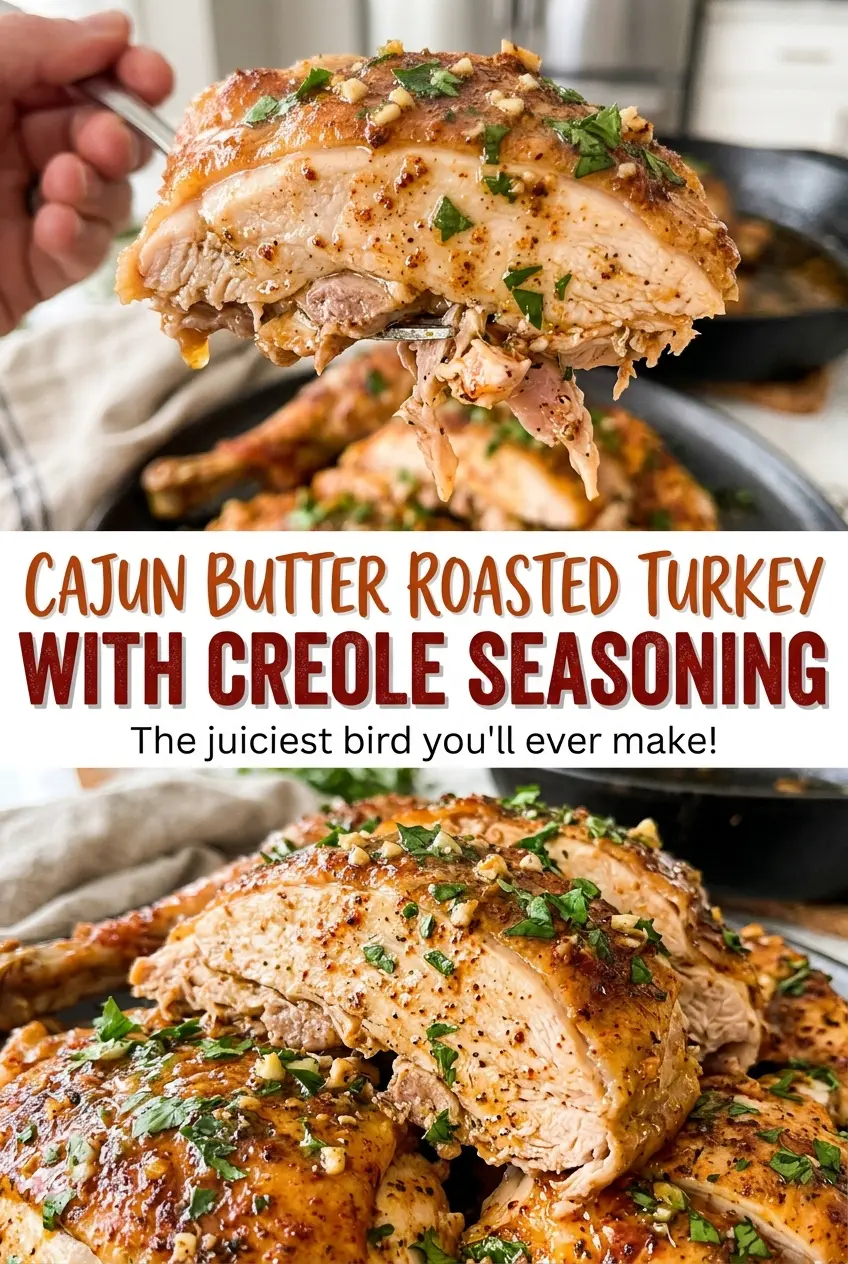
The skin starts turning golden long before a turkey is ready to carve, and that can make the last stretch feel uncertain. With this Cajun butter roasted turkey, I watch the thermometer rather than the color alone; if the breast gets ahead of the rest of the bird, a loose foil tent slows the browning while the turkey finishes roasting.
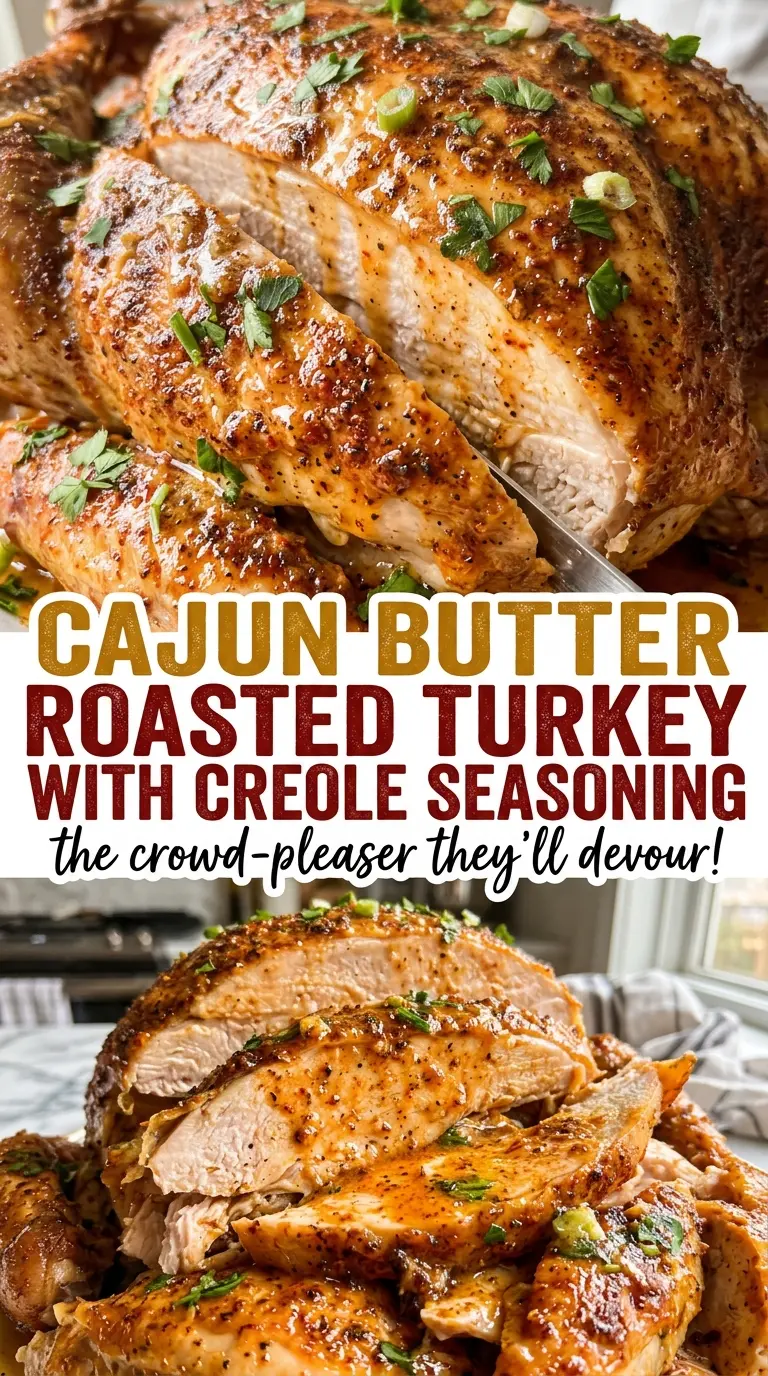
The butter goes in two places for a reason: some slips beneath the breast and thigh skin, and the rest coats the outside. That puts the Creole seasoning close to the meat as well as on the skin, without asking the cavity aromatics to do the seasoning work. I use softened butter so it spreads without tearing the skin, and keep the onion, lemon, and thyme simple inside the bird. The result is a generously seasoned roast with crisp-looking, buttery skin and a fragrant pan beneath it.
Kitchen Note
Loosen the skin with your fingertips, working slowly over the breast and thighs. If you rush and tear it, the butter has an easier path out of the pocket you’re trying to season.
Save this Cajun butter roasted turkey for a roast with Creole-seasoned butter under the skin and golden color on top.
Why the Butter Goes Under the Skin as Well as Over It
A coating on the outside gives the skin its seasoned finish, but it doesn’t put much flavor directly against the breast and thigh meat. Sliding some of the butter beneath the skin solves that. As it melts, the seasoned butter stays close to the meat instead of all running down into the roasting pan.
That split also gives you more control as the turkey roasts. The butter on the surface can brown ahead of the meat, which is why I keep an eye on the breast and tent it loosely with foil if it darkens too quickly. The foil is a pause button for surface browning, not a signal that the turkey is ready. For a bird in this size range, the listed roasting time is a useful estimate; the thermometer reading is what settles the question. Give the probe a clear path into the meat, away from bone, so the reading reflects the thick part rather than a hot spot beside the bone.
What the Butter, Creole Seasoning, and Aromatics Each Bring
- Unsalted butter — Softened butter is easy to spread under the skin and across the outside without melting away before it reaches the bird. Unsalted butter also leaves the seasoning blend in charge of the salt level. For a dairy-free version, choose a firm, stick-style plant-based butter rather than a soft tub spread; it may brown differently and won’t taste exactly like dairy butter.
- Creole seasoning — This is the defining flavor of the butter, so use a blend you already enjoy. Different brands vary in heat and saltiness, which can change the result; a milder Creole blend is the simplest way to soften the spice without changing the other ingredients. Garlic powder and black pepper round out the butter and distribute evenly through it, unlike fresh chopped garlic, which can brown on the skin.
- Whole turkey — The recipe is sized for a fully thawed bird in the 12- to 14-pound range. A fully thawed turkey is important for even roasting and a reliable temperature check. Remove the giblets and neck before seasoning, as they aren’t part of the roast.
- Yellow onion, lemon, and fresh thyme — These go in the cavity for a gentle aromatic note rather than a heavy stuffing. Orange quarters can stand in for lemon if you want a sweeter citrus aroma, though the result will be less tart. Fresh thyme gives a brighter herbal scent than dried thyme; if dried thyme is what you have, use a light pinch instead of trying to match the sprigs one-for-one.
- Low-sodium chicken broth — It sits in the roasting pan beneath the rack while the turkey cooks. Low-sodium broth keeps the pan liquid from adding as much salt to any drippings as regular broth might. There’s no need to buy an expensive brand for this use.
How to Roast the Turkey Without Guessing at Doneness
Mix a Spreadable Cajun Butter
Stir the softened butter with the Creole seasoning, garlic powder, and black pepper in a small bowl. Keep mixing until the spices are evenly distributed and you don’t see streaks of plain butter. If the butter is cold and stiff, it will be harder to spread beneath the skin; if it has melted, it can run off instead of staying where you put it. A soft, spreadable texture is what you’re after.
Set Up the Bird and Roasting Pan
Heat the oven to 325°F and position a rack in the lower third. Pat the turkey dry inside and out, then place it breast-side up on a rack in a 16×13-inch roasting pan. Tuck the wing tips behind the back and tie the legs loosely with kitchen twine. The broth belongs in the pan, not poured over the turkey.
Season Beneath the Skin and Fill the Cavity
Carefully loosen the skin over the breast and thighs, then spread half the Cajun butter beneath it. Rub the remaining butter over the outside so the seasoning covers the skin too. Put the quartered onion and lemon with the thyme in the cavity. Take your time spreading the butter into the spaces you’ve loosened instead of pushing hard and tearing the skin.
Roast Until Both Checks Reach Temperature
Roast for 3 to 3 1/2 hours. If the breast is browning faster than you want, lay foil loosely over it; don’t wrap it tightly. Check the thickest part of the breast and the innermost thigh with a thermometer, keeping the probe away from bone. Both spots should read 165°F before you take the turkey out.
Rest Before Carving
Transfer the turkey to a carving board and leave it undisturbed for 30 minutes before carving. Cutting too soon lets more of the juices escape onto the board instead of staying in the meat. Use the resting time to get your carving area ready, then slice when the bird has had the full rest.
Simple Ways to Adapt the Cajun Butter Turkey
Use a Milder Creole Blend
Choose a milder Creole seasoning if you want the butter less spicy, keeping the rest of the ingredients and method unchanged. The turkey will still have its characteristic seasoned-butter coating, with less heat coming through in each bite.
Swap Orange for the Lemon
Put quartered orange in the cavity in place of the lemon. It gives the roasting aromatics a rounder, sweeter citrus note; the lemon version is brighter and more tart.
Make the Cajun Butter Dairy-Free
Use a firm, stick-style dairy-free butter in place of the unsalted butter, then stir in the same seasonings and use it in the same two places. Avoid soft tub spreads, which are wetter and less likely to stay put beneath the skin. Expect a slightly different browning and a less buttery flavor.
Storage and Reheating
- Refrigerator: Refrigerate leftover turkey within 2 hours and use it within 3 to 4 days. Sliced meat may lose some of its crisp-skin texture as it sits.
- Freezer: Freeze sliced or carved turkey in airtight portions for up to 4 months for best quality. Thaw it in the refrigerator before reheating.
- Reheating: Warm covered portions in the oven or microwave until steaming hot throughout, checking that the thickest pieces reach the same safe internal temperature used for roasting. Reheat only what you plan to serve so the turkey doesn’t dry out through repeated warming.
Questions That Come Up Before This Turkey Goes in the Oven
Cajun Butter Roasted Turkey with Creole Seasoning
Ingredients
Equipment
Method
- Stir the butter, Creole seasoning, garlic powder, and black pepper together in a small bowl until evenly combined.
- Preheat the oven to 325°F and position a rack in the lower third of the oven.
- Pat the turkey dry inside and out.
- Set the turkey breast-side up on a rack in a 16x13-inch roasting pan.
- Tuck the wing tips behind the back and tie the legs loosely with kitchen twine.
- Carefully loosen the skin over the breast and thighs.
- Spread half the Cajun butter underneath the skin and the rest over the skin.
- Put the onion, lemon, and thyme in the cavity.
- Pour the broth into the roasting pan.
- Roast for 3 to 3 1/2 hours, tenting the breast loosely with foil if it browns too quickly, until a thermometer inserted into the thickest part of the breast and the innermost thigh, away from bone, reads 165°F.
- Transfer the turkey to a carving board and let it rest for 30 minutes before carving.