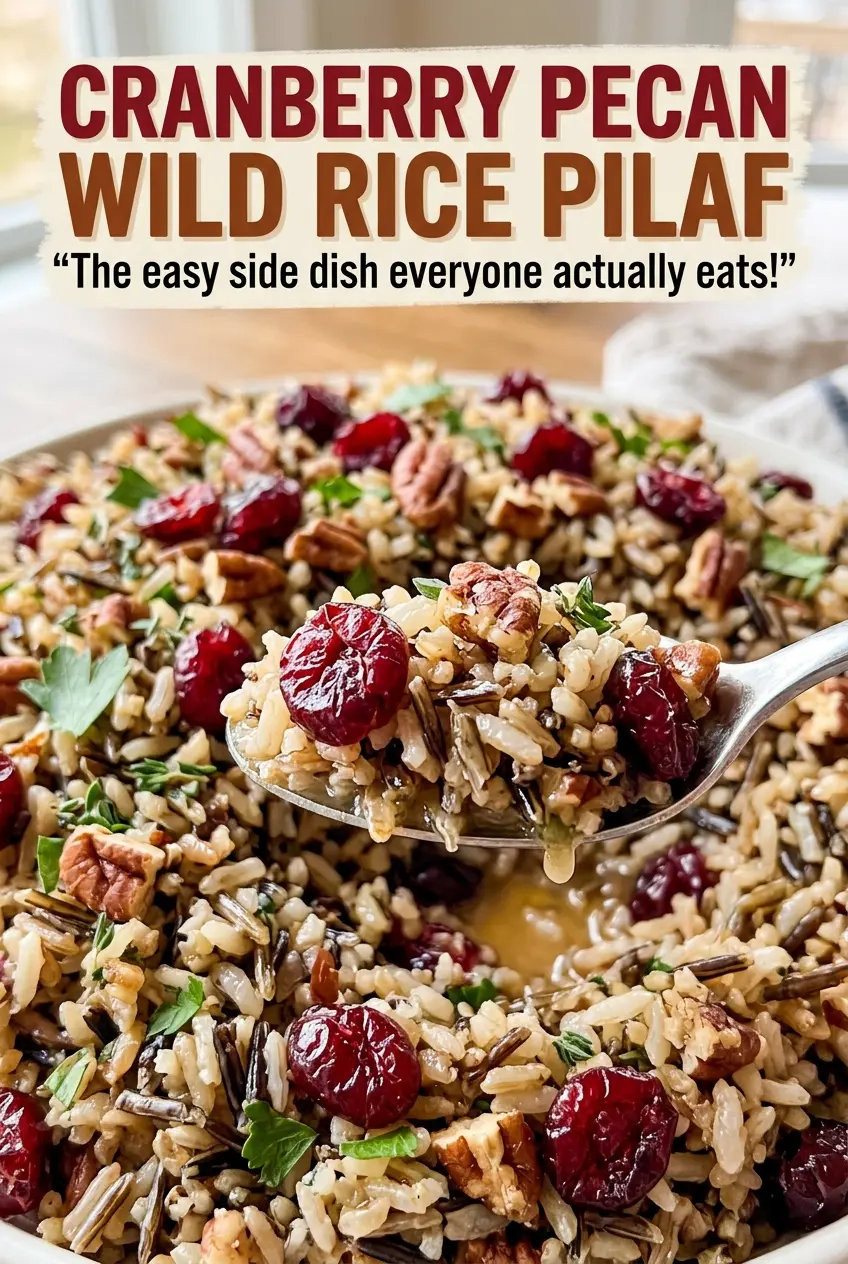
As the wild rice simmers, the grains slowly open and the broth takes on a savory, onion-rich smell. I like how this Cranberry Pecan Wild Rice Pilaf balances that hearty chew with tart dried cranberries and pecans that toast in the same pan before anything else goes in.
Wild rice needs a longer, gentler cook than a quick side of white rice, and it doesn’t always absorb every bit of liquid by the time it turns tender. I cook it until most grains have split, then drain any broth that’s left rather than keep simmering and risk softening the rice too far. The cranberries get a short covered rest at the end, which lets them soften without cooking through the whole pot. Each spoonful has chewy grains, a little sweetness, and the fresh lift of parsley.
Kitchen Note
Keep the pecans coarsely chopped, not crushed into little crumbs. Bigger pieces hold their crunch against the chewy rice, so you get a bit of toasted pecan in each bite.
Save this cranberry pecan wild rice pilaf for a savory side with chewy wild rice, tart cranberries, and toasted pecans.
Why the Dried Cranberries Wait Until the Rice Is Tender
Dried cranberries don’t need the full wild-rice simmer to soften. Adding them after the rice is tender gives them a brief covered rest in the pot’s residual heat and moisture, so they plump without spending 50 to 60 minutes cooking alongside the grains. That keeps their sweet-tart flavor distinct instead of blending it into every mouthful.
The order also makes the finish easier to control. Wild rice can take a while to become tender, and its grains don’t all split at exactly the same moment. If the cranberries were already in the saucepan, they’d have to sit through that variable cooking time. Stirring them in after draining any remaining broth lets the rice finish first, then gives the fruit a gentle 10-minute rest while you get the rest of the meal ready. The result is a pilaf where you can taste the rice, fruit, and toasted nuts separately.
What Gives This Pilaf Its Chewy Base and Bright Finish
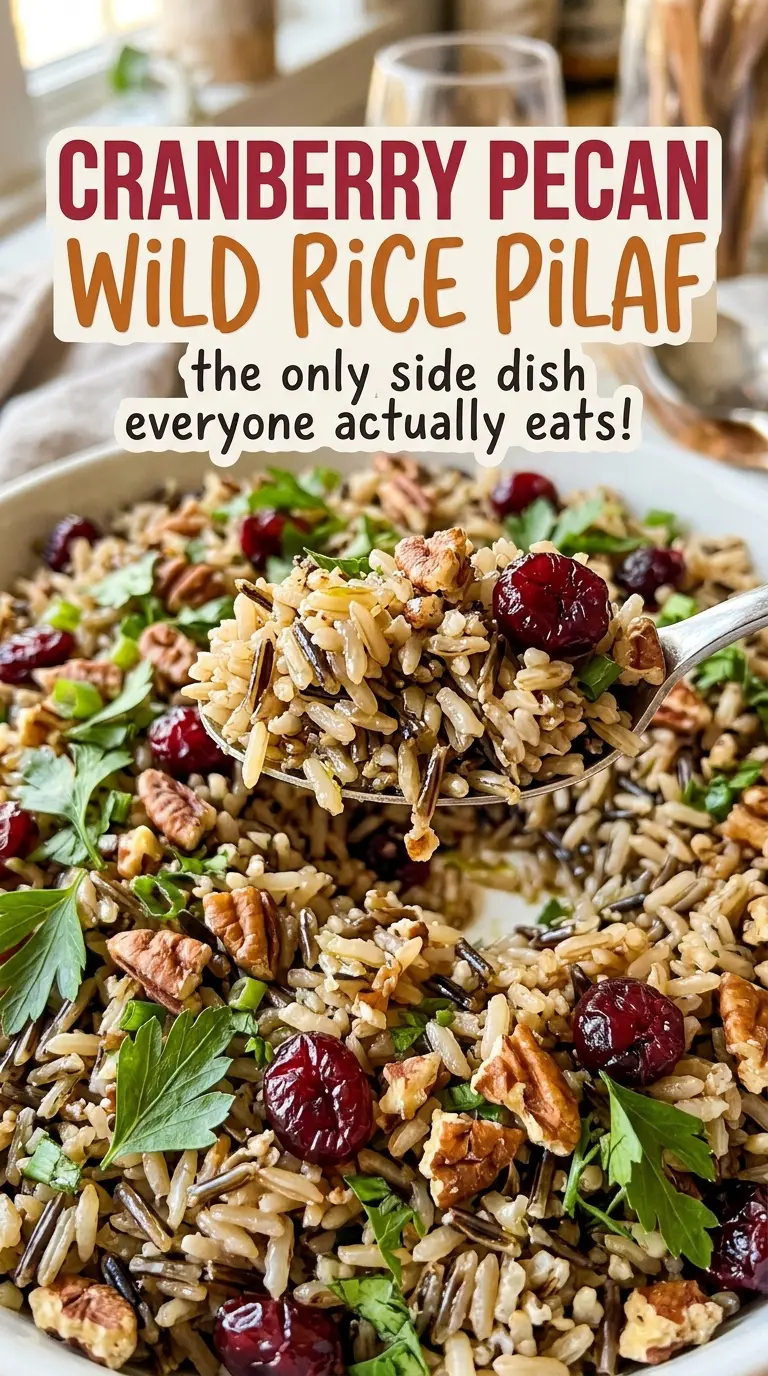
- Wild rice — This is the hearty backbone, with a distinct chewy texture that a quick-cooking white rice won’t reproduce. Rinse and drain it before it goes into the pan; the recipe’s simmer time is for uncooked wild rice, not a blend with different grains.
- Low-sodium chicken broth — It gives the rice a savory base while leaving room to season with the measured salt. Low-sodium broth is useful here because regular broth can make the finished pilaf saltier than intended. For a vegetarian version, vegetable broth works in its place and gives the rice a slightly different, less meaty savor.
- Unsalted butter and yellow onion — Butter carries the onion’s mellow, savory flavor into the rice. Finely chopping the onion helps it soften evenly in the short cooking time; for a dairy-free version, olive oil can stand in for the butter, though the base won’t have quite the same buttery richness.
- Pecans — Toasting brings out their nutty aroma and gives the finished pilaf a crisp contrast to the soft fruit and chewy rice. Fresh-tasting pecans matter more than an expensive brand; stale nuts can taste flat or rancid, and no other ingredient in the list gives the same buttery crunch.
- Dried cranberries and fresh parsley — The cranberries bring concentrated sweetness and tartness, while parsley adds a clean, herbal note at the finish. Dried cranberries are the right choice for the brief covered rest; fresh cranberries aren’t a direct swap because they bring more moisture and a sharper bite.
Build the Pilaf in Stages, Then Let the Rice Settle
Toast the Pecans Until Fragrant
Set a 4-quart saucepan over medium heat and toast the coarsely chopped pecans, stirring often, for 3–5 minutes. Watch for a light brown color and a nutty fragrance; the pieces can darken quickly near the end. Transfer them to a bowl as soon as they’re toasted so they don’t keep cooking in the hot pan. Leave the saucepan ready for the onion.
Soften the Onion in Butter
Melt the butter in that same saucepan, then add the finely chopped onion. Cook, stirring occasionally, for 4–5 minutes, until the onion has softened. It should look glossy and tender, not browned or crisp at the edges. If it starts taking on color before it softens, lower the heat so the onion stays mellow.
Coat the Rice Before Simmering
Add the rinsed, drained wild rice and stir for 1 minute so the grains get coated with the butter and onion. Stir in the broth, salt, and black pepper, then bring the mixture to a boil. Cover the saucepan, reduce the heat to low, and simmer for 50–60 minutes. The rice is ready when most grains have split and the grains are tender but still chewy.
Drain, Rest, and Finish with the Toasted Nuts
If broth remains after the rice is tender, pour the rice into a fine-mesh strainer to drain it, then return it to the saucepan. Stir in the dried cranberries, cover, and let the pot stand for 10 minutes. That covered rest softens the fruit without putting it through another simmer. Stir in the toasted pecans and chopped fresh parsley just before serving.
Simple Swaps for a Different Table
Make It Vegetarian with Vegetable Broth
Replace the chicken broth with vegetable broth, keeping the rest of the ingredients and method the same. The pilaf will still be savory, with a lighter broth flavor and no chicken in the dish.
Go Dairy-Free with Olive Oil
Use the same amount of olive oil in place of the butter when softening the onion. It keeps the onion-rich base moist and savory, but the finished rice will taste less buttery.
Leave Out the Pecans for a Nut-Free Pilaf
Skip the pecans and their toasting step. The rest of the pilaf cooks the same way, though you’ll lose the crisp, nutty contrast against the tender rice and cranberries.
Storage and Reheating
- Refrigerator: Refrigerate leftovers within 2 hours in an airtight container and use them within 3–4 days. The rice will firm up as it chills, and the pecans will lose some crunch.
- Freezer: Freeze in an airtight freezer-safe container for up to 2–3 months. Thaw overnight in the refrigerator for more even reheating.
- Reheating: Reheat covered on the stovetop over low heat with a small splash of broth, stirring gently, until hot throughout (165°F). High heat can dry out the rice or catch it on the bottom of the pan.
Questions That Come Up While Making Wild Rice Pilaf
Cranberry Pecan Wild Rice Pilaf
Ingredients
Equipment
Method
- In a 4-quart saucepan over medium heat, toast the pecans, stirring often, for 3–5 minutes until fragrant and lightly browned.
- Transfer the pecans to a bowl.
- Melt the butter in the same saucepan.
- Add the onion and cook, stirring occasionally, for 4–5 minutes until softened.
- Add the wild rice and cook, stirring, for 1 minute.
- Stir in the broth, salt, and black pepper, then bring to a boil.
- Cover, reduce the heat to low, and simmer for 50–60 minutes until most grains have split and the rice is tender but still chewy.
- If broth remains, drain the rice in a fine-mesh strainer and return it to the saucepan.
- Stir in the cranberries, cover, and let stand for 10 minutes.
- Stir in the toasted pecans and parsley, then serve.