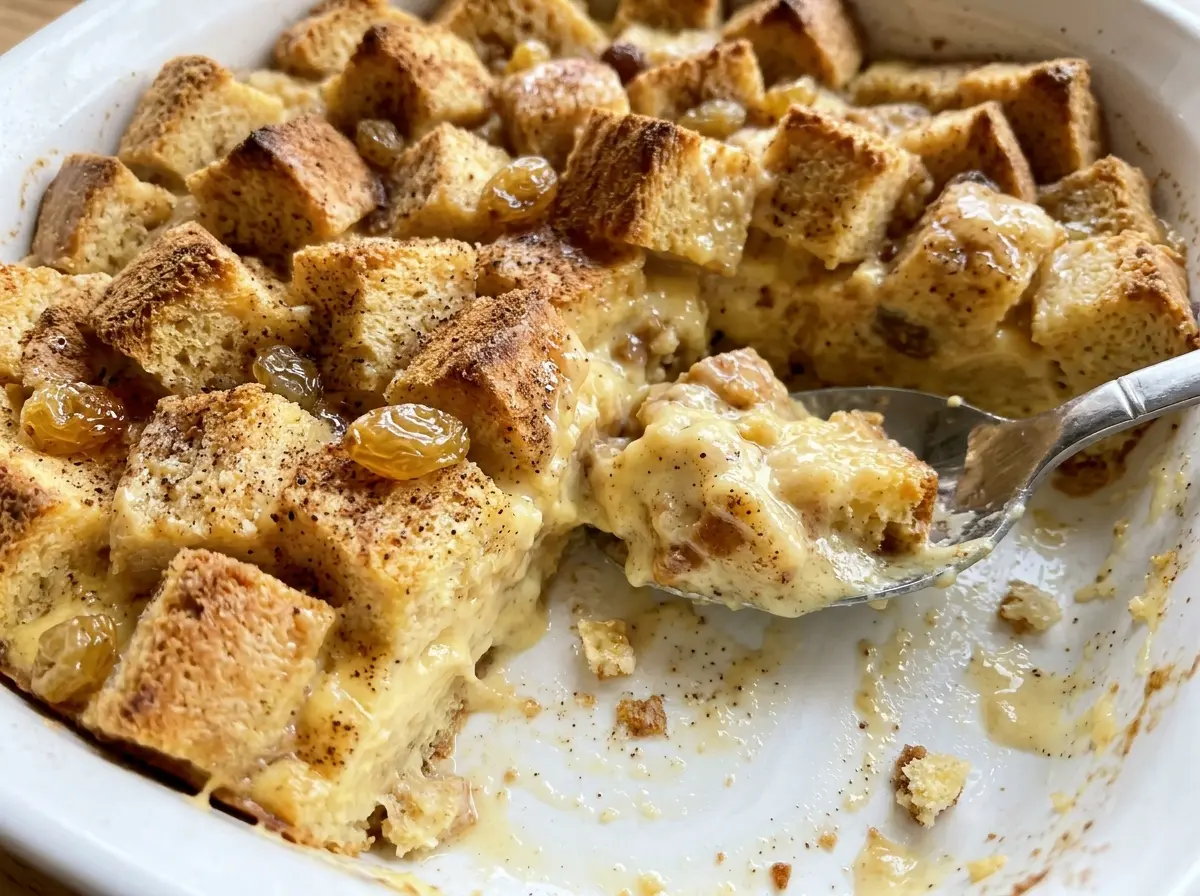
The bread cubes come out of the oven pale and dry, not toasted, and that small distinction is what gives this pudding its soft, custardy middle without turning it to mush. I like how the eggnog settles into the little gaps between the cubes while the cranberries bring a tart bite to the sweet custard. Christmas eggnog bread pudding is comforting without being fussy, and the 9×13-inch dish makes enough to serve eight.
Eggnog already brings a creamy texture and warm holiday spice, so the custard needs only eggs, a little sugar, vanilla, cinnamon, nutmeg, and salt. I whisk everything until combined, then give the bread a full 20 minutes to soak before it goes into the oven. The top turns golden as the center sets, and a short rest makes it easier to serve generous portions of soft bread and fruit.
Kitchen Note
After pouring in the custard, press the bread down gently so the top cubes get their share, too. Let the dish sit for the full 20 minutes; rushing that soak leaves you with a softer bottom and dry patches on top.
Save Christmas eggnog bread pudding for a golden, custardy dessert with tart cranberries in every serving.
Why the Bread Should Dry Out, Not Toast
Bread pudding can go wrong in two opposite ways: cubes that stay too fresh turn soggy, while toasted cubes can become tough before the custard has time to soften them. Drying the bread at a low oven temperature gives it room to absorb the eggnog mixture without browning the edges. The cubes should feel dry on the outside when they come off the baking sheet, but still look pale.
That pale color matters because the bread gets another bake after it soaks. If the cubes are already browned, their edges have less time to take in the custard before they firm up in the dish. French bread works well here because its sturdy crumb holds its shape as it absorbs the mixture. Cut the loaf into even 1-inch cubes so the pieces dry at a similar pace and bake into a consistent, tender pudding.
Keep an eye on the baking sheet near the end of the first bake. You’re looking for dry cubes, not croutons; a little extra color at this stage changes the final texture more than it improves the flavor.
What Eggnog, Bread, and Cranberries Each Bring

- French bread — Its sturdy crumb gives the custard something substantial to soak into, while the crust adds a little structure. Cut the cubes evenly; large, uneven pieces don’t absorb at the same rate. A fresh loaf works because the brief oven drying prepares it to take up the custard.
- Eggnog and eggs — Eggnog supplies the creamy base and its own sweetness, while eggs help the mixture set into a sliceable custard. Choose eggnog you enjoy drinking; its flavor carries through the finished pudding. Whisk just until everything is combined rather than beating air into the mixture.
- Dried cranberries — Their tartness cuts through the rich custard, and their chewy texture contrasts with the soft bread. Scatter them across the bread rather than dropping them in one spot, so the fruit is spread through the dish.
- Cinnamon, nutmeg, and vanilla — These season the custard without covering up the eggnog. Freshly opened spices have a more distinct aroma, but ordinary ground cinnamon and nutmeg work well. Measure the nutmeg carefully; a little goes a long way in a creamy custard.
- Granulated sugar and butter — The sugar rounds out the custard’s sweetness, while softened butter greases the baking dish and helps the pudding release for serving. Coat the bottom and sides of the dish rather than leaving dry patches in the corners.
From Dry Bread to a Set, Golden Center
Dry the cubes while they stay pale
Heat the oven to 300°F and spread the 1-inch bread cubes across a rimmed baking sheet. Bake for 12 to 15 minutes, checking that the cubes feel dry rather than toasted. They should still look pale when you take them out. If the edges are browning, pull the sheet from the oven instead of waiting for a deeper color.
Butter the dish and layer the fruit
Raise the oven temperature to 350°F and grease a 9×13-inch baking dish with the softened butter. Transfer the dried cubes into the dish, then sprinkle the dried cranberries over them. Spread the fruit around so you don’t end up with a dense cluster in one corner. The cubes should sit in an even layer, not be packed down.
Whisk and soak the custard
In a large bowl, whisk together the eggnog, eggs, sugar, vanilla, cinnamon, nutmeg, and salt until combined. Pour the mixture evenly over the bread, then gently press the cubes into the custard. Let the dish soak for 20 minutes before baking. Avoid crushing the bread as you press; the cubes should take up the liquid while keeping their shape.
Bake until the center sets, then rest
Bake uncovered for 45 to 55 minutes, until the top is golden and the center is set. Check the middle with a thermometer; it should read 160°F. If the top looks ready but the center hasn’t reached that temperature, give it more time and check again rather than relying on color alone. Rest the pudding for 15 minutes before serving so the custard settles and portions hold together.
Three Thoughtful Ways to Adapt the Pudding
Make it gluten-free
Replace the French bread with a 16-ounce gluten-free French-style loaf and keep the remaining ingredients and method the same. Gluten-free bread can dry more quickly, so begin checking it at the earlier end of the drying window; the finished pudding may have a slightly softer, more delicate structure.
Leave out the cranberries
For a simpler eggnog-forward pudding, omit the dried cranberries and keep the rest of the recipe unchanged. The custard and bread stay just as rich, but you’ll lose the tart, chewy bites that balance the sweetness.
Let cinnamon lead
For a more cinnamon-forward version, increase the cinnamon and reduce or omit the nutmeg. The pudding will taste warmer and less nutmeg-heavy; keep the changes modest so the eggnog still comes through.
Storage and Reheating
- Refrigerator: Cover and refrigerate leftovers within 2 hours; they keep for 3 to 4 days. The custard firms up as it chills.
- Freezer: Freeze portions in an airtight container for up to 2 months for best quality. Thaw in the refrigerator before reheating; the bread may be a little softer after thawing.
- Reheating: Warm individual portions in a 325°F oven, covered, until heated through to 165°F. Don’t leave the dish uncovered for a long reheat, which can dry the bread before the center warms.
Questions That Come Up When Baking Eggnog Bread Pudding
Christmas Eggnog Bread Pudding
Ingredients
Equipment
Method
- Heat the oven to 300°F.
- Spread the bread cubes on a rimmed baking sheet.
- Bake for 12 to 15 minutes, until dry but not browned.
- Increase the oven temperature to 350°F.
- Grease a 9x13-inch baking dish with the butter.
- Transfer the bread cubes to the baking dish.
- Sprinkle the dried cranberries over the bread cubes.
- Whisk together the eggnog, eggs, sugar, vanilla, cinnamon, nutmeg, and salt in a large bowl until combined.
- Pour the eggnog mixture evenly over the bread.
- Press the bread gently into the custard.
- Let it soak for 20 minutes.
- Bake uncovered for 45 to 55 minutes, until golden and set in the center and a thermometer inserted in the center reads 160°F.
- Let the bread pudding rest for 15 minutes before serving.