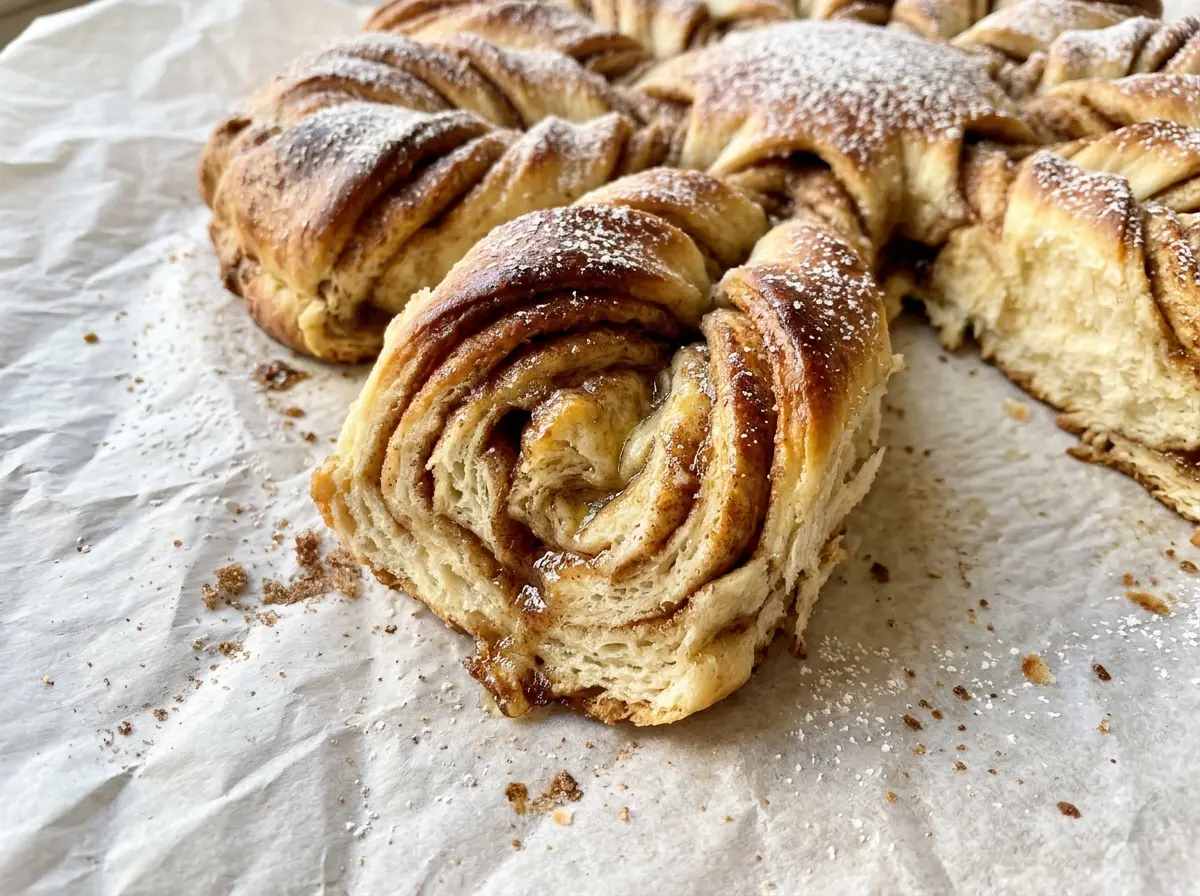
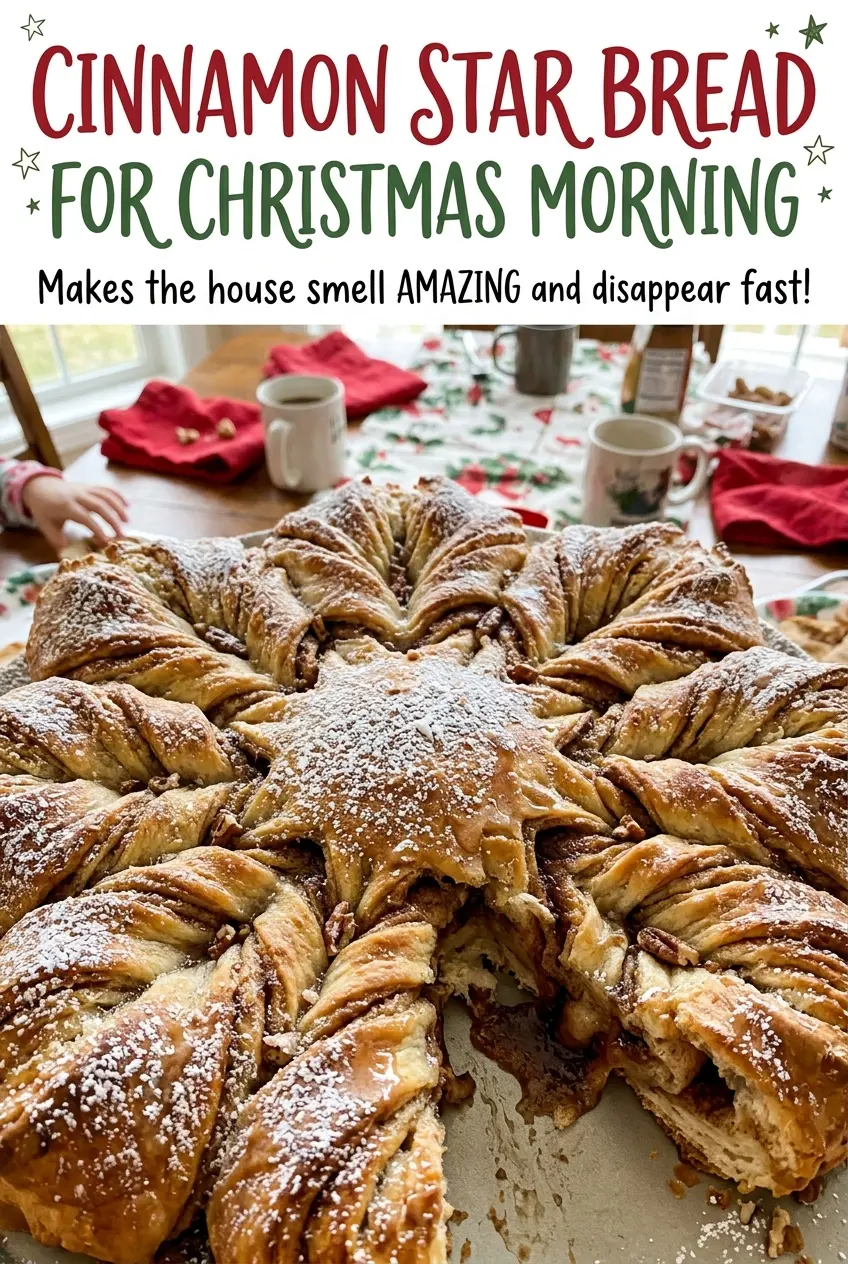
When the dough rounds are stacked, the cinnamon filling makes each layer look like a little bull’s-eye. The shape comes together once the dough is cut and twisted, but the first time I made a star bread, I rushed that part and ended up with uneven points. Taking a moment to divide the dough evenly and mark the center makes a big difference. This Cinnamon Star Bread for Christmas Morning has tender, yeasted layers and a cinnamon-brown-sugar filling tucked between them.
The dough is soft and workable, and you don’t need special equipment to knead or shape it. I like that the star is baked on a standard sheet pan, then served right from the parchment. Each person can pull off a twist, so the bread feels special without needing to be sliced. Once it comes out of the oven, the top is golden and the cinnamon scent is right there at the table.
Kitchen Note
The filling spreads best when the butter is soft enough to stir smoothly with the brown sugar and cinnamon. If it’s cold and firm, it can drag across the dough instead of making an even layer.
Save this cinnamon star bread for Christmas morning, when its golden twists and soft cinnamon layers make breakfast feel a little more special.
Why the First Rise Matters Before You Shape the Star
This dough has milk, egg, and butter in it, so it’s richer than a basic lean bread dough. Give it the full first rise and the yeast has time to build the airy structure that makes the finished twists tender instead of dense. The dough should roughly double in size in its covered bowl; going by the clock alone can lead you astray if your kitchen is cool.
Kneading first develops the elasticity that lets you roll the dough into rounds without it crumbling. If the dough still feels rough or tears as you work it, keep kneading until it’s smooth and stretchy. A warm place helps the yeast do its job, but “warm” doesn’t mean hot: too much heat can slow or damage the yeast. After the first rise, the dough is easier to divide and roll, and the star keeps its soft, pull-apart texture through baking.
How the Dough and Cinnamon Filling Shape Every Layer
- All-purpose flour — It gives the dough enough structure to hold the star shape while keeping the baked layers tender. A regular grocery-store bag works well; there’s no need for specialty flour. Bread flour makes a chewier result, while gluten-free flour isn’t a reliable one-for-one swap for this yeast dough.
- Whole milk and active dry yeast — Whole milk adds richness, and active dry yeast creates the lift. A lower-fat milk can stand in measure for measure, though the crumb may be a little less tender. Check that the yeast foams after it sits in the warmed milk; a packet that won’t activate won’t give the dough the rise it needs.
- Egg and unsalted butter — The egg helps bind the dough, while butter gives it a soft, rich crumb. Unsalted butter lets you control the dough’s salt level, and an everyday brand is fine. Salted butter can work, but it will make the bread taste saltier; there isn’t a simple replacement for the egg that keeps the same texture.
- Light brown sugar and ground cinnamon — Brown sugar brings a soft, caramel-like sweetness to the filling, and cinnamon provides its familiar warm flavor. Use fresh, fragrant cinnamon if yours has been open for a long time. Granulated sugar can replace brown sugar in the filling, but the layers will have less depth and may feel a little drier.
From Foamy Yeast to a Golden, Twisted Star
Wake the yeast and bring the dough together
Warm the milk to 105–110°F, stir in the active dry yeast, and let it stand for 5–10 minutes until foamy. If it stays flat, check the milk temperature and the freshness of the yeast before mixing the dough. Stir the flour, granulated sugar, and salt together in a 4-quart bowl, then add the yeast mixture, room-temperature egg, and melted, cooled butter. Mix until you have a shaggy dough with no dry pockets of flour.
Knead until smooth, then let the dough double
Turn the dough onto a lightly floured surface and knead for 8–10 minutes. It’s ready when it feels smooth and elastic rather than rough or sticky. Grease the bowl with the neutral oil, return the dough to it, cover, and leave it in a warm place for 1–1 1/2 hours. Look for the dough to double in size; if it hasn’t, give it more time rather than shaping it while it’s still compact.
Layer the rounds with an even cinnamon filling
Stir the softened butter, brown sugar, and cinnamon until the filling is evenly combined and spreadable. Line an 18×13-inch baking sheet with parchment and divide the risen dough into four equal pieces. Roll one piece into a 10-inch round on the sheet and spread one-third of the filling over it, leaving a 1/2-inch border. Roll each remaining piece into a 10-inch round, stacking the next round with another third of the filling between the layers. Place the final round on top without adding filling to its surface.
Cut the rays, twist in pairs, and bake
Lightly mark a 2-inch circle in the center of the top round, then cut from the outside edge to that circle to make 16 equal strips. Working around the bread in eight pairs, twist each pair away from each other twice and pinch the ends together. Cover the shaped bread loosely and let it rise for 20–30 minutes, until slightly puffy. Beat the egg with the water, brush it over the surface, and bake at 350°F for 25–30 minutes, until golden brown. Let the bread rest on the baking sheet for 10 minutes before serving.
Three Practical Ways to Adapt the Cinnamon Star
Make it dairy-free
Use unsweetened oat milk in place of the whole milk, and use the same amounts of dairy-free stick butter for both the dough and filling. The bread will be a little less rich, but it will still have soft, layered twists. The dough and egg wash still contain egg, so this change is dairy-free, not vegan.
Use granulated sugar in the filling
Swap the brown sugar for granulated sugar in the filling, keeping the same amount. The cinnamon layers will taste cleaner and less caramel-like, with a slightly drier texture than the brown-sugar version.
Leave off the egg wash
Bake the shaped bread without brushing on the egg-and-water mixture. The twists will still bake through, but the crust will look more matte and less glossy. The egg wash is only on the surface; the dough itself still contains egg.
Storage and Reheating
- Room temperature: Keep the cooled bread in an airtight container for up to 2 days. The twists will gradually lose some of their softness.
- Freezer: Once completely cool, wrap the bread tightly and freeze for up to 2 months. Thaw it at room temperature while still wrapped to keep it from drying out.
- Reheating: Warm it in a 300°F oven, loosely covered with foil, until heated through. Avoid a long microwave reheat, which can make the bread tough.
Questions That Come Up While Making Cinnamon Star Bread
Cinnamon Star Bread for Christmas Morning
Ingredients
Equipment
Method
- Warm the whole milk to 105-110°F, stir in the active dry yeast, and let stand for 5-10 minutes until foamy.
- In a 4-quart bowl, stir together the all-purpose flour, granulated sugar, and fine salt.
- Add the yeast mixture, room-temperature egg, and melted butter, and mix until a shaggy dough forms.
- Knead on a lightly floured surface for 8-10 minutes, until smooth and elastic.
- Grease the bowl with the neutral oil, return the dough to the bowl, cover, and let rise in a warm place for 1-1 1/2 hours, until doubled in size.
- Stir together the softened butter, packed light brown sugar, and ground cinnamon until evenly combined and spreadable.
- Line an 18x13-inch baking sheet with parchment paper and divide the dough into 4 equal pieces.
- Roll one piece into a 10-inch round, place it on the baking sheet, and spread one-third of the filling over it, leaving a 1/2-inch border.
- Roll each remaining piece into a 10-inch round.
- Stack the first two rounds with another third of the filling between them.
- Top with the final round without adding filling on top.
- Lightly mark a 2-inch circle in the center of the top round, then cut the dough from the outer edge to the circle into 16 equal strips.
- Working around the bread in 8 pairs, twist each pair away from each other twice and pinch the ends together.
- Cover loosely and let rise for 20-30 minutes, until slightly puffy.
- Beat the egg with the water and brush the mixture over the bread.
- Bake at 350°F for 25-30 minutes, until golden brown.
- Let the bread rest on the baking sheet for 10 minutes before serving.