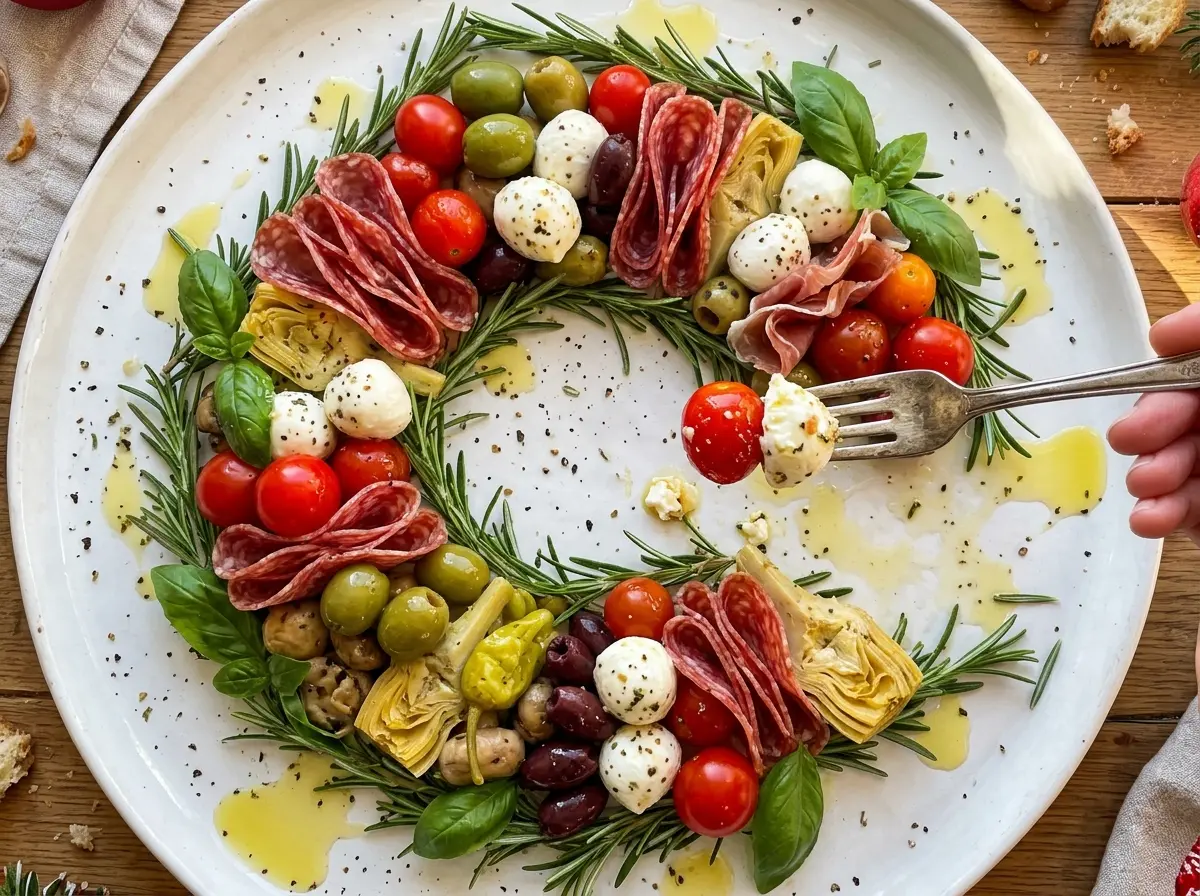
The rosemary looks like a wreath until the first skewer goes down; then the whole platter starts to read like a little antipasto garden. I like this Christmas Antipasto Wreath because every pick already has a bit of everything, so guests don’t have to assemble a bite from a crowded platter. It also turns familiar party ingredients into a centerpiece without asking you to cook more than the tortellini.
The one detail that makes these picks easier to handle is giving the tortellini a cold rinse and drying it well before threading. Warm or damp pasta can make the other ingredients slide around, and moisture collects on the platter while it chills. The rosemary goes down first, then the skewers sit in an overlapping ring just inside it. Once assembled, the wreath needs at least 30 minutes in the refrigerator, which gives you a little breathing room before serving. The finished platter is colorful, tidy, and ready to share.
Kitchen Note
Fold each salami slice into a compact shape before threading it, rather than leaving it flat. A snug fold stays tucked between the mozzarella and olive instead of flopping over the edge of the pick.
Save this Christmas Antipasto Wreath for a party platter that puts tortellini, mozzarella, salami, and briny bites on every pick.
Why Every Pick Needs the Same Six-Part Bite
Antipasto platters are forgiving: everyone can choose a little more cheese or skip an olive. This wreath works differently. Each of the 24 picks carries one tortellini, tomato, mozzarella ball, folded salami slice, olive, and artichoke piece, so the bite is balanced before it reaches the platter. That consistency is what makes the wreath feel composed rather than like a pile of skewers arranged in a circle.
It also makes portioning straightforward. There are 24 picks for 8 servings, or 3 picks per person if divided evenly. Keep the ingredient order consistent as you assemble them, and the wreath will look more uniform when the picks overlap. If a skewer looks crowded, check that the salami is folded close to the other pieces instead of sticking out like a loose flap. The platter can still look relaxed; matching the little bites is what gives the ring its clean, finished look.
What Each Ingredient Brings to the Antipasto Picks

- Refrigerated cheese tortellini — The pasta makes each pick feel substantial and gives the sharper, saltier ingredients a mild, tender counterpoint. Use refrigerated tortellini so the cooking time stays short and predictable; cook it just until tender, not soft enough to split during threading. There isn’t another ingredient in this list that gives the same pasta bite, so leaving it off makes a lighter, less filling skewer.
- Cherry tomatoes — Their juicy, fresh taste cuts through the richer cheese and salami. Choose tomatoes that feel firm and have unbroken skins; a soft tomato is more likely to collapse when pierced. Keep them whole, as the recipe uses one tomato per pick.
- Ciliegine fresh mozzarella — These small balls are already sized for the picks and bring a soft, milky bite. Drain them well so their packing liquid doesn’t wet the other ingredients. The small format matters more than a premium label here; use fresh mozzarella balls close in size to the other pieces.
- Genoa salami — Thin slices fold easily and add a savory, seasoned layer without making the picks bulky. The slices need to be thin enough to fold neatly, not thick deli chunks. For a meat-free version, leave the salami off rather than trying to thread a thick substitute.
- Green olives — Their firm texture and briny flavor give the picks a distinct savory pop. Buy them pitted and drained; pits make appetizer picks awkward to eat, and excess brine can leave the platter wet. No extra seasoning is needed to make their flavor stand out.
- Marinated artichoke hearts — These add a tender, tangy finish that contrasts with the pasta and mozzarella. Drain them before cutting into bite-size pieces, since oily marinade can coat the other ingredients and make the picks slick. Cut the pieces to a similar size so they sit securely on the picks.
- Fresh rosemary — The sprigs make the green base of the wreath and bring a piney aroma to the platter. Fresh, flexible sprigs are easier to arrange in a circle than brittle ones. They frame the skewers; they aren’t threaded onto each pick.
Cooking, Threading, and Building a Neat Wreath
Cook and Dry the Tortellini
Bring a pot of water to a boil and cook the refrigerated cheese tortellini according to the package directions, usually 2 to 3 minutes, until tender. Drain it, rinse under cold water, and pat it dry before you start threading. The cold rinse stops the cooking and cools the pasta for a chilled appetizer. If the pieces still look wet, take another moment to dry them; damp pasta can make the assembled picks slippery.
Thread All 24 Picks in the Same Order
Set out 24 appetizer picks and thread each with one tortellini, one cherry tomato, one ciliegine mozzarella ball, one folded slice of Genoa salami, one drained green olive, and one bite-size artichoke piece. Keep the order the same from pick to pick so each bite looks consistent. Thread through the center of the softer pieces gently; pressing too hard can split the tortellini or squash a tomato. If an ingredient spins loosely, reposition it rather than forcing it farther down the pick.
Shape the Rosemary Ring and Fan the Skewers
Arrange the rosemary sprigs in a circle on a 14-inch round platter. Set the skewers in an overlapping ring just inside the rosemary, with the pointed ends facing the center. Let the pick ends sit close enough to make a continuous wreath, but don’t pile them so tightly that the ingredients are hidden. Cover the platter loosely and refrigerate it for at least 30 minutes and up to 2 hours before serving.
Two Simple Ways to Adapt the Wreath
Make a Meat-Free Wreath
Leave the salami off the picks and thread the tortellini, tomato, mozzarella, olive, and artichoke in the same order. The bites will be less savory and a little lighter, while the olives and marinated artichokes still give each one a briny edge. This keeps the same wreath format without adding another ingredient.
Skip the Tortellini for a Lighter Pick
For a lower-carb version, leave the tortellini off each skewer and thread the tomato, mozzarella, folded salami, olive, and artichoke. The picks will be less filling and have a more pronounced antipasto taste, with no pasta in the way. Keep the remaining pieces in the same order for a tidy ring.
Storage and Reheating
- Refrigerator: Keep the assembled wreath covered and refrigerated. For the best texture, serve it within the 2-hour make-ahead window; leftover tomatoes and mozzarella can release moisture as they sit.
- Freezer: Don’t freeze the assembled picks. The fresh tomatoes and mozzarella lose their texture after thawing, and the tortellini can turn soft.
- Reheating: Serve this appetizer chilled; reheating isn’t needed and would soften the mozzarella and tomatoes. After serving, return perishable leftovers to the refrigerator promptly and don’t leave them at room temperature for more than 2 hours.
Questions I Get Asked About This Antipasto Wreath
Christmas Antipasto Wreath
Ingredients
Equipment
Method
- Cook the tortellini in boiling water according to the package directions, usually 2 to 3 minutes, until tender.
- Drain the tortellini, rinse under cold water, and pat dry.
- Thread each of 24 appetizer picks with one tortellini, tomato, mozzarella ball, folded salami slice, olive, and artichoke piece.
- Arrange the rosemary sprigs in a circle on a 14-inch round platter.
- Fan the skewers in an overlapping ring just inside the rosemary, with their pointed ends facing the center.
- Cover loosely and refrigerate for at least 30 minutes and up to 2 hours before serving.