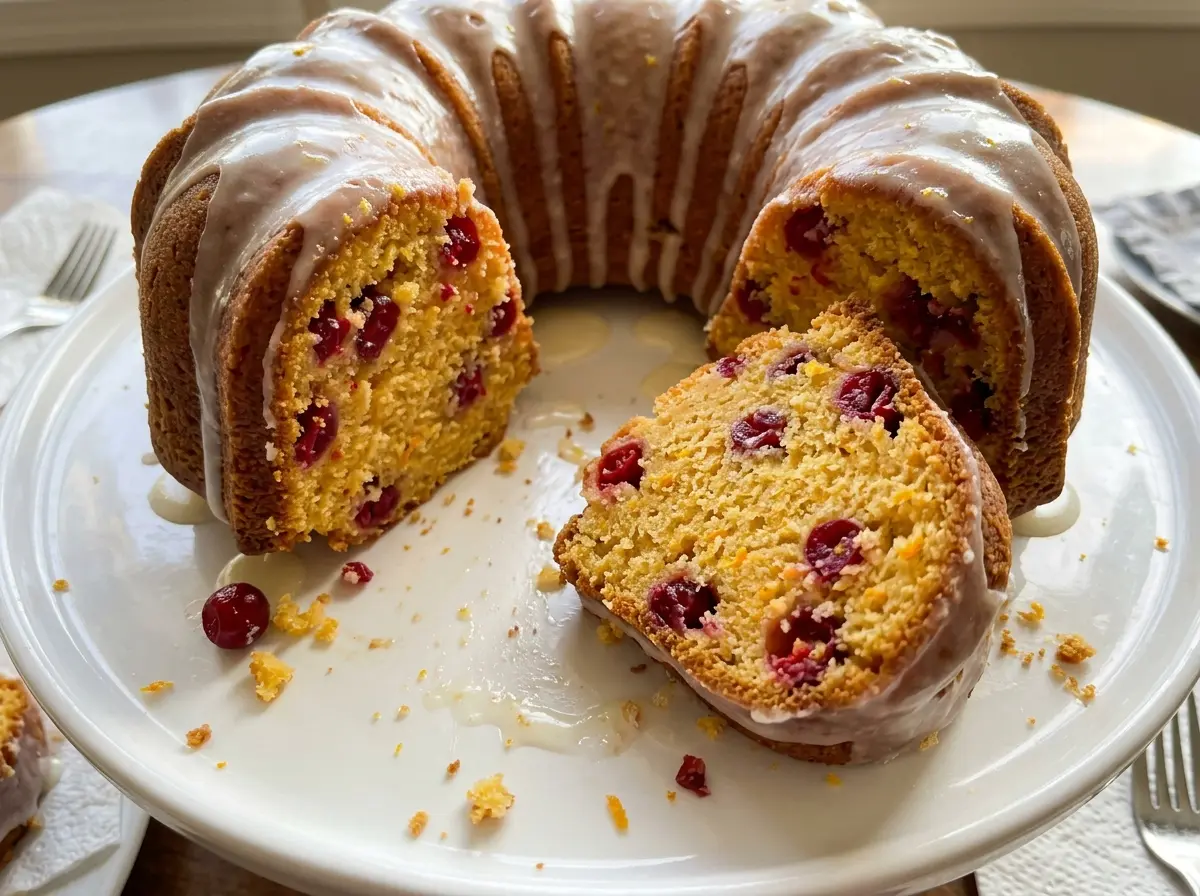
The first bite has a little snap of cranberry before the soft, buttery crumb takes over. I fold the berries in coarsely chopped, so their tartness shows up throughout the cake instead of hiding in a few oversized pockets. The orange zest is rubbed into the sugar as the butter is creamed, and that puts a bright citrus aroma right through this cranberry orange Bundt cake.
Sour cream keeps the crumb tender, while orange juice brings a second layer of citrus without making the cake taste sharp. I add the flour and sour cream mixtures in alternating portions, and stop mixing as soon as the batter comes together. That gives the finished cake a close, soft crumb rather than a tough one. Each slice is buttery and bright, with cranberry tang tucked into the orange-scented cake.
Kitchen Note
Coat the center tube and every groove of the Bundt pan, not just the wide sides. The flour in the baking spray helps the cake release cleanly, but any bare patch can catch a tender edge.
Save this cranberry orange Bundt cake for a bake with a soft citrus crumb and bright, tart berries in every slice.
Why the Batter Gets Flour First and Last
The order of the additions does more than keep the mixer moving. Sour cream and orange juice bring plenty of moisture to the batter, and adding that mixture gradually gives it a chance to blend into the creamed butter and eggs instead of pooling in one spot. The flour goes in before and after the wet mixture, so the batter finishes with flour rather than a final splash of liquid.
That last flour addition is also where a tender cake can turn dense if you keep beating. Flour develops gluten as it’s mixed with liquid; a little mixing brings the batter together, but prolonged mixing makes the crumb firmer. Use low speed for the alternating additions and stop when you no longer see dry flour. The cranberries get folded in afterward, which distributes them without running the mixer long enough to toughen the cake. You’re looking for a thick, cohesive batter, not a perfectly smooth one.
What the Orange, Sour Cream, and Cranberries Contribute

- All-purpose flour — It gives the cake enough structure to hold its shape in the Bundt pan. A standard grocery-store brand works well here; self-rising flour isn’t a direct swap because the batter already has baking powder and baking soda.
- Unsalted butter and granulated sugar — Beating them together creates the base for the cake’s fine crumb, and ordinary store-brand butter and sugar are fine. The butter should be soft enough to cream smoothly, not melted; melted butter won’t trap air in the same way.
- Orange zest and orange juice — The zest carries the fragrant orange oils, while the juice adds citrus flavor and moisture. Freshly grated zest makes the biggest difference; bottled orange juice works in place of fresh-squeezed juice, but it can’t replace the zest.
- Sour cream — Its richness and tang help keep the crumb moist without making the cake heavy. Full-fat plain Greek yogurt is the closest easy swap; use it in the same amount and bring it to room temperature along with the other refrigerated ingredients.
- Eggs — They bind the batter and help it rise into a sturdy cake. Room-temperature eggs blend more easily into the creamed butter, and there isn’t a dependable one-for-one egg-free substitute that preserves this Bundt’s structure.
- Cranberries — Their tart flavor balances the sweet, buttery cake. Coarsely chopping them gives you smaller fruit pockets throughout the crumb; if cranberries aren’t available, chopped tart cherries make a good fruit swap with a softer, less sharp flavor.
From Creamed Butter to a Clean Skewer: Building the Bundt
Whisk the Dry and Tangy Mixtures
Heat the oven to 350°F and thoroughly coat a 12-cup Bundt pan with baking spray. Whisk the flour, baking powder, baking soda, and salt together in a medium bowl so the leaveners are evenly distributed. In a small bowl, whisk the sour cream and orange juice until smooth. Keeping these mixtures separate makes it easy to add them in the right order later.
Cream the Butter, Sugar, and Zest
Beat the softened butter, sugar, and finely grated orange zest with an electric mixer on medium speed for about 3 minutes. The mixture should look pale and fluffy, rather than glossy or greasy. Add the eggs one at a time, beating after each addition so they blend into the butter mixture. Mix in the vanilla once the eggs are incorporated.
Alternate the Flour and Sour Cream Mixtures
Turn the mixer to low before adding anything else. Add the flour mixture in three additions, alternating with the sour cream mixture in two additions, and begin and end with flour. Scrape down the bowl if dry flour is clinging to the sides, then mix just until the last streaks disappear. If the batter looks slightly uneven before the cranberries go in, stop rather than beating it smooth.
Fold, Bake, and Cool
Fold in the coarsely chopped cranberries, then spread the batter evenly in the prepared pan. Bake for 55 to 65 minutes, until a wooden skewer inserted into the center comes out clean or with a few moist crumbs. Wet batter on the skewer means the center needs more time. Cool the cake in the pan for 15 minutes, then invert it onto a wire rack and let it cool completely.
Three Useful Swaps for a Different Cranberry Orange Bundt
A Gluten-Free Cake with a Similar Crumb
Replace the all-purpose flour with the same quantity of a cup-for-cup gluten-free baking blend formulated for cakes. Choose a blend that already includes xanthan gum or another binder, rather than trying to build a blend from single flours. The cake may have a slightly more delicate crumb, so let it cool fully before slicing.
A Dairy-Free Version
Use unsalted plant-based baking sticks in place of the butter and an unsweetened dairy-free sour cream in place of the sour cream, keeping each swap one-for-one. Choose baking sticks rather than a soft tub spread, which can contain more water and change the cake’s texture. The result is still citrusy and tender, though it won’t have quite the same buttery richness.
Swap in Tart Cherries
Replace the cranberries with the same amount of coarsely chopped tart cherries. They keep the cake’s juicy fruit pockets but taste softer and less sharp, so the orange comes through more clearly. Chop the fruit into small pieces so it folds through the batter evenly.
Storage and Reheating
- Refrigerator: Keep the cake tightly covered for up to 5 days. The crumb firms as it chills, so let slices come to room temperature for a softer texture.
- Freezer: Freeze individual slices tightly wrapped, then place them in a freezer-safe container for up to 2 months. Thaw while wrapped to help keep the cake moist.
- Reheating: Warm an individual slice in the microwave for 10 to 15 seconds. Avoid heating the whole cake; the outside can dry before the center warms.
Questions That Come Up While Baking This Cranberry Orange Bundt
Cranberry Orange Bundt Cake
Ingredients
Equipment
Method
- Heat the oven to 350°F.
- Thoroughly coat a 12-cup Bundt pan with baking spray.
- Whisk the flour, baking powder, baking soda, and salt together in a medium bowl.
- In a large bowl, beat the butter, sugar, and orange zest with an electric mixer on medium speed until pale and fluffy, about 3 minutes.
- Beat in the eggs one at a time.
- Mix in the vanilla.
- Whisk the sour cream and orange juice together in a small bowl.
- With the mixer on low, add the flour mixture in three additions, alternating with the sour cream mixture in two additions; begin and end with the flour mixture, mixing just until combined.
- Fold in the cranberries.
- Spread the batter evenly in the prepared pan.
- Bake for 55 to 65 minutes, until a wooden skewer inserted into the center comes out clean or with a few moist crumbs.
- Cool the cake in the pan for 15 minutes.
- Invert it onto a wire rack.
- Cool completely.