The dough releases from the cookie press in a neat little shape, then lands on the baking sheet with its ridges still sharp. That’s the moment spritz cookies either look like spritz cookies or turn into a soft, lopsided blob. For these classic spritz butter cookies, I press the dough as soon as it’s mixed and bake it on a clean, ungreased sheet.
The dough is rich with butter, but it’s firm enough to hold the shapes made by the press. I keep the mixing gentle once the flour goes in, so the cookies stay tender instead of tough. A little almond extract gives the vanilla dough its familiar, bakery-style aroma, while the pale tops and barely golden bottoms keep the butter flavor front and center.
Kitchen Note
Use an egg that’s at room temperature before it goes into the butter. A cold egg can make the butter look lumpy as you mix, and the batter won’t come together as smoothly.
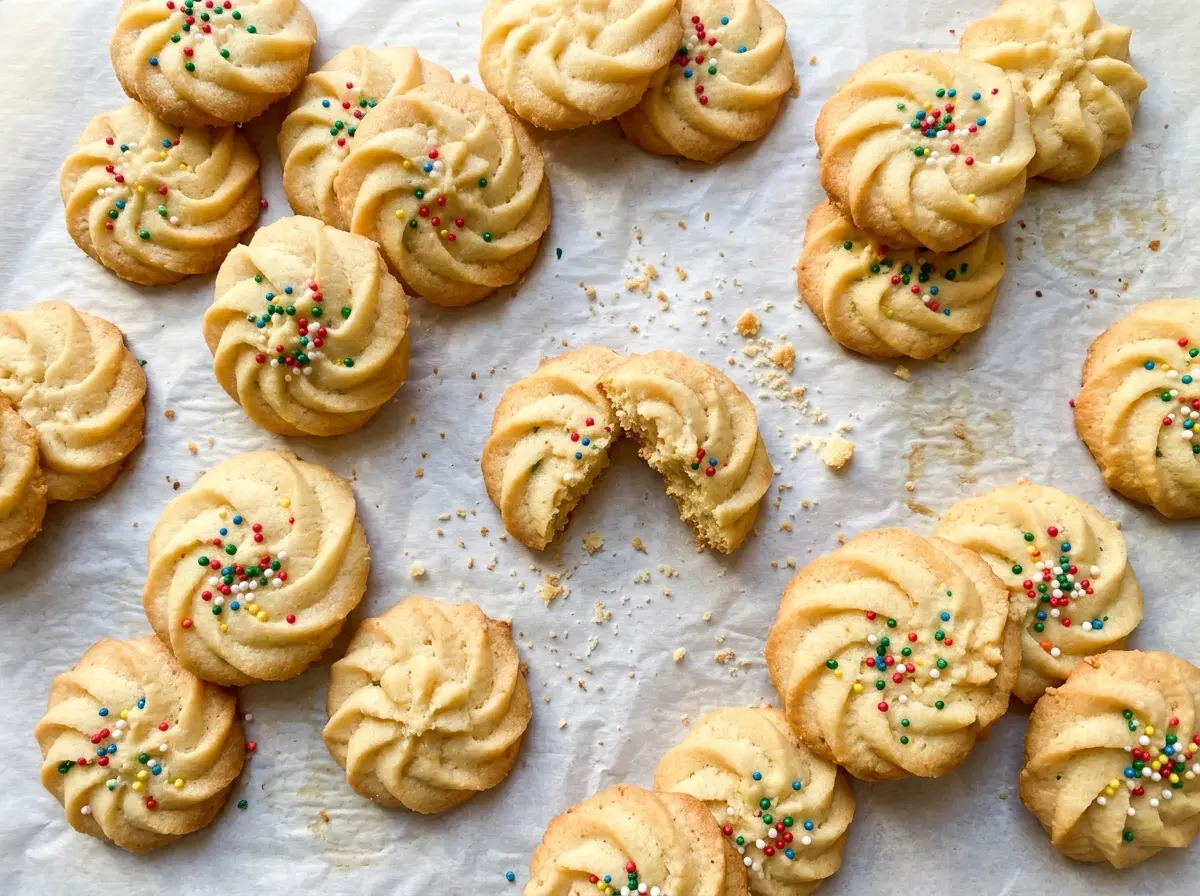
Save these classic spritz butter cookies for their delicate pressed shapes, pale tops, and just-golden bottoms.
Why Spritz Dough Goes Straight From the Bowl to the Press
Spritz dough is meant to be pressed while it’s soft enough to move through the cookie press but sturdy enough to keep the pattern. Chilling it first firms the butter and can make the dough hard to press, especially when the dough has to travel through the press barrel. Once the flour is mixed in, move on to shaping rather than treating this like a dough that needs a rest in the refrigerator.
The other detail that helps the shapes hold is the bare baking sheet. Grease or parchment can leave the dough with less grip as it’s pressed, making it harder to form clean, defined cookies. Start with a clean, ungreased sheet, and give the press a moment to form each cookie before moving on. You want distinct edges and ridges before the tray goes into the oven, not dough that has slumped into a smooth mound.
What Butter, Flour, and Extracts Contribute to These Cookies

- Butter — Butter gives these cookies their tender bite and rich taste, and it’s the base that lets the pressed ridges bake into a delicate pattern. Use unsalted butter so the salt level stays controlled. It should be softened, not melted; melted butter makes a much looser dough that won’t hold its shape as well. Margarine isn’t a reliable swap here because its moisture and fat content can change how the dough presses.
- Granulated sugar — Regular granulated sugar keeps the dough’s texture suited to pressing and gives the cookies a lightly crisp finish. Brown sugar brings extra moisture and a deeper flavor, so it won’t produce the same pale, defined spritz cookie.
- Egg — The egg binds the butter and flour into dough that can pass through the press and hold together. Bring it to room temperature for a smoother mixture. Egg substitutes don’t reliably give this butter-rich dough the same structure for clean shapes.
- Vanilla and almond extracts — Vanilla rounds out the butter, while almond extract gives the cookies their recognizable spritz aroma. Good extracts matter because their flavor is easy to notice in a simple dough. You can leave out the almond extract for a milder, vanilla-forward cookie, but the flavor won’t be quite as classic.
- All-purpose flour — This flour gives the dough enough structure to keep the press pattern. A standard all-purpose flour works well; swapping in a gluten-free blend isn’t a dependable one-for-one change for this particular press dough, since the texture and shape-holding can vary by blend.
Mixing and Pressing the Dough Without Losing the Pattern
Cream the Butter and Sugar Until Smooth
Beat the softened butter and granulated sugar with an electric mixer on medium speed for about 2 minutes. The mixture should look creamy and evenly combined, without large streaks of butter. If the butter is still too firm, it won’t blend smoothly with the sugar; if it’s melted, the dough will be too slack for crisp press shapes. Keep the butter softened rather than warming it until glossy.
Blend in the Egg and Extracts
Beat in the room-temperature egg, vanilla extract, and almond extract until the mixture looks smooth. Scrape down the bowl if a streak of butter or egg is clinging to the sides, then mix just until it’s incorporated. A smooth base helps the extracts distribute evenly through the dough. Don’t worry if the mixture looks a little softer at this stage; the flour will give it body.
Add the Flour in Two Parts
Whisk the flour and salt together, then mix them into the butter mixture in two additions on low speed. Stop as soon as no dry flour remains. If you keep beating after the flour disappears, the cookies can become firmer than you want. The finished dough should be cohesive and soft enough to load into the press, not crumbly or streaked with dry flour.
Press, Bake, and Cool in Batches
Heat the oven to 350°F and use a clean, ungreased 13×18-inch baking sheet. Fit your chosen plate into the cookie press, press the cookies onto the cool sheet with about 1 inch between them, and bake one sheet at a time for 8 to 10 minutes. Look for set cookies with bottoms just beginning to turn golden; keep the tops pale. Cool them on the sheet for 2 minutes, transfer them to a wire rack, and let the sheet cool completely before pressing the next batch.
Two Easy Ways to Change the Look or Flavor
Make a Mixed Plate of Pressed Shapes
Use more than one cookie press plate across the batch to create a mix of shapes from the same dough. The flavor and texture stay the same, but each shape gives the finished plate a different look. Change plates as you load the press rather than altering the dough.
Make Them Vanilla-Forward
Leave out the almond extract for a simpler butter-and-vanilla flavor. The cookies will lose that familiar almond note, but the dough still presses and bakes the same way. This is the easiest adjustment if you prefer a less pronounced extract flavor.
Storage and Reheating
- Refrigerator: These cookies don’t need refrigeration. Keep them in an airtight container at room temperature for up to 1 week; refrigeration can make them firmer.
- Freezer: Freeze baked, completely cooled cookies in an airtight container for up to 2 months. Separate layers with parchment so the pressed shapes don’t rub against one another.
- Reheating: Reheating isn’t necessary. Let frozen cookies thaw at room temperature before serving; microwaving can soften their delicate texture.
Questions That Come Up When Making Spritz Cookies
Classic Spritz Butter Cookies
Ingredients
Equipment
Method
- Heat the oven to 350°F.
- Set out a clean, ungreased 13x18-inch baking sheet.
- Beat the butter and sugar in a large bowl with an electric mixer on medium speed until creamy, about 2 minutes.
- Beat in the egg, vanilla extract, and almond extract until smooth.
- Whisk the flour and salt together.
- Add the flour mixture to the butter mixture in two additions, mixing on low just until no dry flour remains.
- Load the dough into a cookie press fitted with the desired plate.
- Press cookies onto the cool baking sheet, leaving about 1 inch between them.
- Bake one sheet at a time for 8 to 10 minutes, until the cookies are set and their bottoms are just beginning to turn golden; keep the tops pale.
- Cool the cookies on the baking sheet for 2 minutes, then transfer them to a wire rack.
- Let the sheet cool completely before pressing and baking the next batch.