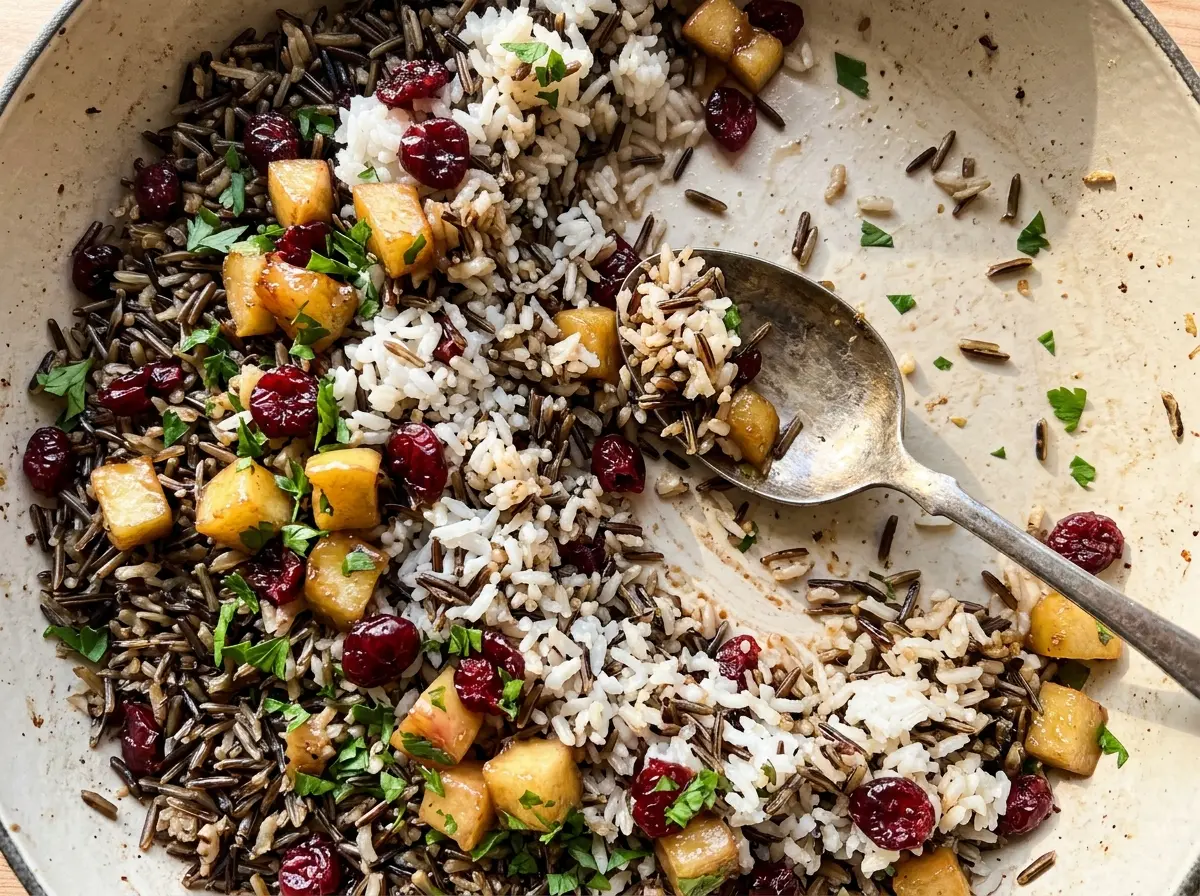
When you lift the lid on a pot of wild rice, the grains don’t all look alike: some have split open, while others still hold their long shape. That’s a better doneness clue than expecting every grain to turn soft and fluffy. In this cranberry apple wild rice pilaf, the rice simmers in broth until most grains open and the centers are tender, while the cranberries soften in the last stretch.
I cook the pecans and apple separately, then bring them back to the saucepan at the end. That keeps the nuts crisp and the apple pieces distinct instead of letting them soften through the full rice-cooking time. The onion and celery build a savory base, and the dried cranberries bring little pockets of tart sweetness. It’s a warm, hearty side with a mix of textures in every spoonful.
Kitchen Note
Cook the diced apple only until it’s just tender, then transfer it out with the pecans. Adding it back after the rice cooks keeps the apple pieces distinct instead of letting them soften through the long simmer.
Save this cranberry apple wild rice pilaf for its tender grains, tart cranberries, and toasted pecans.
Why Wild Rice Needs a Texture Check, Not Just a Timer
Wild rice doesn’t cook into the same uniform softness as white rice. The grains open at different points, so using the clock alone can leave you with a pot that’s either still firm or cooked past the texture you want. Start with the covered simmer, then judge the rice by its appearance and bite: most grains should have split open, and the centers should be tender.
The first 40 minutes give the rice time to cook in the broth before the dried cranberries go in. After that, the covered simmer can take another 5 to 15 minutes. That range is useful, not a sign that something has gone wrong. Check the grains toward the shorter end, then give them more time if they’re still too firm. Keeping the lid on between checks helps the pot maintain a steady simmer instead of losing heat and moisture every few minutes.
Once the rice is tender, the final covered rest lets the apple and parsley settle into the pilaf without another round of direct heat. The grains remain the main event, with the fruit and herbs distributed through them rather than cooked down into the base.
What the Wild Rice, Fruit, and Nuts Bring to the Pot

- Wild rice — This is the foundation of the dish, with a firmer, chewier bite than white rice. Rinsing and draining it before it goes into the pan clears away loose surface starch and keeps the grains ready to toast briefly in the buttered vegetables.
- Apple — Choose a firm apple that won’t collapse during its brief cook. Since it’s cooked separately and stirred in near the end, it keeps a recognizable bite alongside the rice instead of disappearing into the pot.
- Dried cranberries — They add a concentrated sweet-tart note and soften during their short simmer with the rice. Use dried cranberries you enjoy eating on their own; a sweeter variety will make the finished pilaf noticeably sweeter.
- Pecans — Toasting brings out their nutty aroma and gives the finished dish a crisp contrast to the chewy rice. Whole or chopped pecans both work here; use chopped ones as listed so they’re easy to scatter over the top.
- Chicken broth — Low-sodium broth gives the rice a savory base while leaving room for the measured kosher salt. A carton from the pantry is fine; the most useful choice is one labeled low-sodium so the finished dish doesn’t become overly salty as it simmers.
- Butter, onion, celery, and parsley — Butter carries the flavor of the softened vegetables and toasted rice, while onion and celery give the pilaf its savory backbone. Fresh parsley goes in at the end, where its clean herbal taste stays brighter than it would after a long simmer.
Build the Pilaf in Stages, Then Let the Rice Finish
Toast the Pecans and Soften the Apple
Set a 3-quart saucepan over medium heat and toast the pecans in the dry pan for 3 to 4 minutes, stirring often. They’re ready when fragrant; keep them moving so they don’t scorch on the hot bottom. Transfer them to a plate, then melt 1 tablespoon of butter in the same saucepan. Cook the diced apple for 2 to 3 minutes, just until tender, and move it to the plate with the pecans.
Soften the Vegetables and Toast the Rice
Melt the remaining butter in the saucepan, then add the onion and celery. Cook for 4 to 5 minutes, stirring, until the vegetables have softened; they shouldn’t be browned. Stir in the rinsed, drained wild rice and cook it for 2 minutes so the grains are coated in butter. Add the broth, kosher salt, and black pepper, then bring the pot to a boil.
Simmer Until Most Grains Split
Cover the saucepan, reduce the heat to low, and simmer for 40 minutes. Keep the lid in place during this first stretch so the rice cooks steadily. Stir in the dried cranberries, cover again, and simmer for 5 to 15 minutes more. The rice is ready when it’s tender and most of the grains have split open; if they’re still firm, continue toward the longer end of that range.
Rest, Finish, and Add the Crunch
Take the saucepan off the heat and stir in the reserved apple and the chopped parsley. Cover the pot and let it stand for 5 minutes so the finish settles into the rice. Sprinkle the toasted pecans over the top just before serving. Adding the pecans last keeps their texture from getting lost in the warm pilaf.
Two Easy Ways to Adapt This Cranberry Apple Pilaf
Make It Vegetarian With Vegetable Broth
Use low-sodium vegetable broth instead of chicken broth, keeping the same amount and cooking method. The pilaf stays savory, though the broth’s flavor will be a little less rich than chicken broth.
Leave Out the Pecans for a Nut-Free Version
Skip the pecans if you need a nut-free pilaf. You’ll lose the crisp, toasted finish, but the wild rice, fruit, and softened vegetables still make a complete side dish.
Storage and Reheating
- Refrigerator: Cool the pilaf promptly, transfer it to a shallow airtight container, and refrigerate within 2 hours. It keeps for 3 to 4 days; the rice will firm up as it chills.
- Freezer: It freezes well. Pack cooled portions in airtight freezer containers and use within 2 to 3 months for the best texture.
- Reheating: Reheat covered in the microwave, stirring midway, until the center reaches 165°F. Don’t leave cooked rice sitting at room temperature for an extended stretch.
Questions About Making Wild Rice Pilaf
Cranberry Apple Wild Rice Pilaf
Ingredients
Method
- Toast the pecans in a dry 3-quart saucepan over medium heat for 3 to 4 minutes, stirring often, until fragrant.
- Transfer the toasted pecans to a plate.
- Melt 1 tablespoon of the butter in the saucepan.
- Add the apple and cook for 2 to 3 minutes until just tender.
- Transfer the apple to the plate with the pecans.
- Melt the remaining 2 tablespoons butter in the saucepan.
- Add the onion and celery and cook for 4 to 5 minutes until softened.
- Stir in the wild rice and cook for 2 minutes.
- Add the broth, salt, and pepper and bring to a boil.
- Cover, reduce the heat to low, and simmer for 40 minutes.
- Stir in the cranberries.
- Cover and simmer for 5 to 15 minutes, until the rice is tender and most grains have split open.
- Remove the saucepan from the heat and stir in the apple and parsley.
- Cover and let stand for 5 minutes.
- Sprinkle with the toasted pecans and serve.