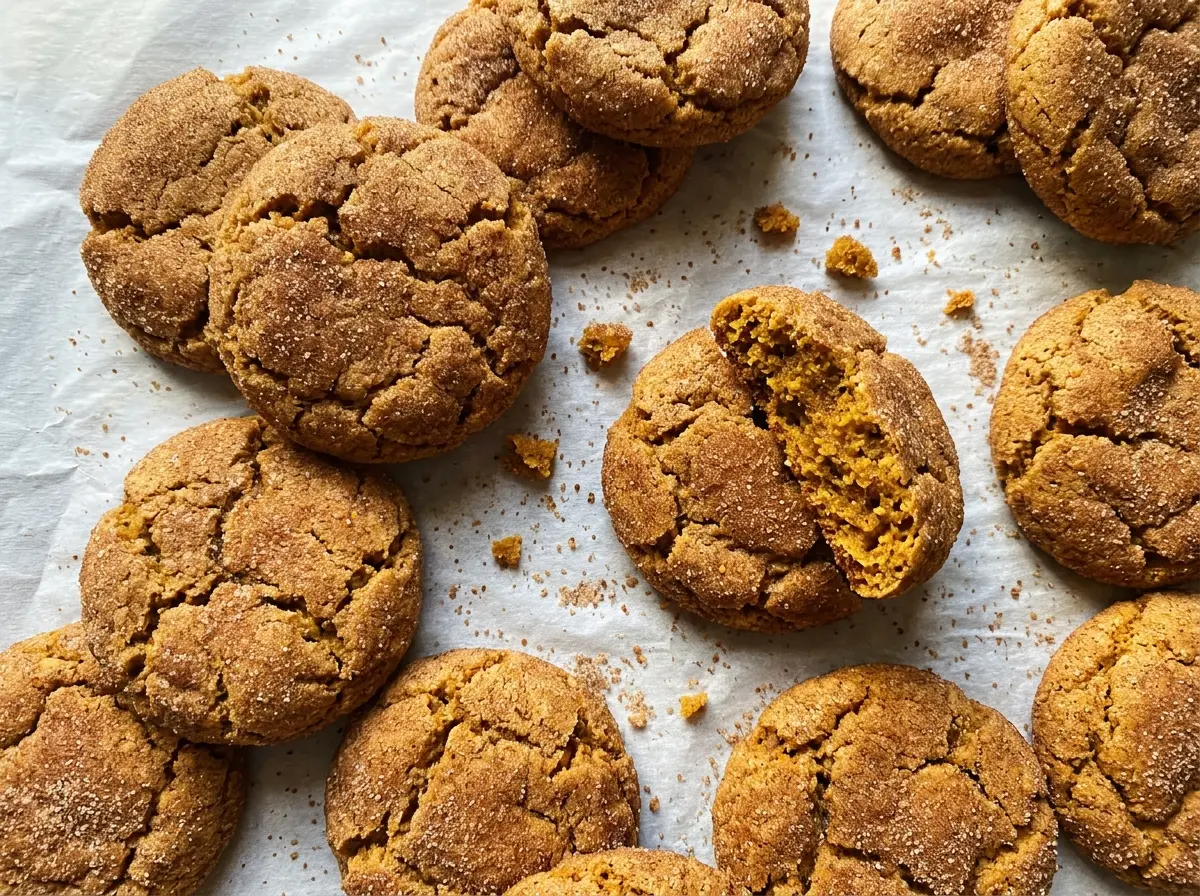
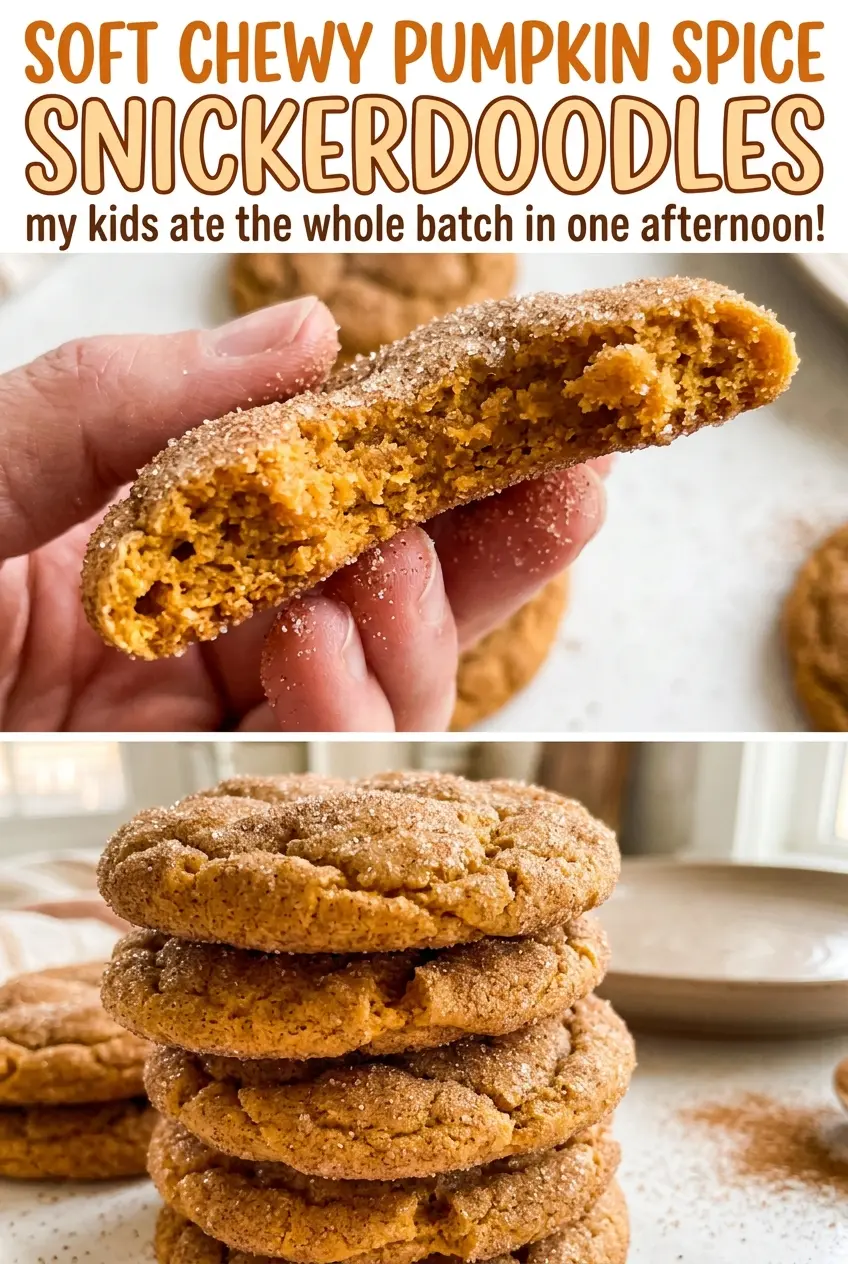
When the first tray comes out, the tops look crackled and the centers still feel soft if you tap them lightly. That’s exactly what I want from these pumpkin spice snickerdoodles: a tender middle, a little chew around the edges, and cinnamon sugar on every bite. Pumpkin can make cookie dough feel softer than a classic snickerdoodle dough, so the texture cues matter more than a quick glance at the timer.
I use canned pumpkin puree, not pumpkin pie filling, and keep the egg to a yolk. The puree brings moisture and pumpkin flavor; the yolk adds richness without the extra liquid of a whole egg. After a good chill, the dough rolls neatly in cinnamon sugar and bakes into soft cookies with those familiar snickerdoodle cracks.
Kitchen Note
Let the baking sheet cool completely between batches. A warm sheet starts softening the next round of dough before it reaches the oven, and the cookies won’t bake as evenly.
Save these soft pumpkin spice snickerdoodles for a bake when you want chewy centers and cinnamon-sugar crackled tops.
Why These Pumpkin Cookies Use a Yolk Instead of a Whole Egg
Pumpkin puree adds moisture to cookie dough, and that extra moisture is what makes the texture different from a plain snickerdoodle. The egg yolk gives the dough richness and helps it hold together without adding the additional liquid and protein that come with an egg white. That balance helps keep the finished cookies soft and chewy rather than pushing them toward a puffier, more cake-like texture.
Cream of tartar also matters here. It gives snickerdoodles their gentle tang and works alongside the baking soda to help the cookies rise and crack as they bake. The pumpkin pie spice goes into the dough, while cinnamon in the coating gives the outside its familiar warm, sugary finish. Each part has a separate job, so the pumpkin flavor comes through without losing the character of a snickerdoodle.
What Pumpkin, Butter, and Cream of Tartar Bring to the Dough
- Pumpkin puree — Use plain canned puree, which gives the dough its pumpkin flavor and moisture. It doesn’t need to be drained. If you’re using homemade puree, choose a thick one; watery puree can leave the dough much softer and harder to shape.
- Butter — Softened unsalted butter creams smoothly with the sugars and gives the cookies their rich, tender bite. A standard grocery-store butter works well; it doesn’t need to be a specialty brand. The butter should give slightly when pressed but shouldn’t look oily or melted.
- Egg yolk — The yolk enriches the dough and helps bind it without adding the extra moisture of a whole egg. Separate it cleanly, since even a little white changes the balance of this pumpkin-heavy dough.
- All-purpose flour — This gives the dough enough structure to roll and hold its shape. For a gluten-free version, use a cup-for-cup gluten-free baking flour blend made for cookies; expect a slightly different, sometimes more delicate texture.
- Cream of tartar and baking soda — Together, they help create the lift and slight tang that distinguish snickerdoodles from ordinary sugar cookies. Cream of tartar is worth keeping on hand for this recipe; leaving it out changes both the flavor and the way the cookies bake.
- Pumpkin pie spice and cinnamon — Pumpkin pie spice seasons the dough, while ground cinnamon makes the coating taste like a classic snickerdoodle. Fresh, fragrant spices make a noticeable difference, but everyday supermarket spices work just fine.
From Creamed Butter to Crackled Cookie Tops
Cream the Butter and Sugars Until Fluffy
Beat the softened butter with the granulated sugar and brown sugar for about 2 minutes, until the mixture looks lighter and fluffy. If the butter is too cold, it will stay in firm pieces instead of blending evenly; if it’s melted, the dough can turn greasy. Beat in the pumpkin puree, egg yolk, and vanilla until they’re combined. The mixture may look softer than a standard cookie base, which is expected.
Mix the Dough Without Overworking It
Add the flour, cream of tartar, baking soda, salt, and pumpkin pie spice. Mix on low just until no dry flour remains, then stop; beating longer can make the cookies tougher. Scrape the sides of the bowl if you see flour hiding there, but don’t keep mixing once it’s incorporated. Cover the dough and refrigerate it for at least 1 hour, until firm enough to scoop and roll.
Coat Each Ball in Cinnamon Sugar
Stir the remaining granulated sugar with the ground cinnamon in a small bowl. Scoop the chilled dough into 2-tablespoon portions and roll each portion between your hands to make a ball. Turn each ball in the cinnamon sugar until it has an even coating. If the dough feels sticky, give it more time in the refrigerator rather than working extra flour into it.
Bake Until the Edges Set and the Tops Crack
Heat the oven to 350°F and line an 18×13-inch baking sheet with parchment paper. Arrange 12 cookies about 2 inches apart and bake for 10–12 minutes, until the edges are set and the tops are crackled. The centers will still be soft when the cookies come out; they firm as they cool. Leave them on the sheet for 5 minutes, then transfer them to a wire rack.
Easy Ways to Change the Spice or Make These Cookies Gluten-Free
Use a Gluten-Free Baking Blend
Replace the all-purpose flour with a cup-for-cup gluten-free baking flour blend designed for baking. The cookies may be a little more delicate, so let them cool on the sheet before moving them to the rack.
Make Them Dairy-Free
Use an unsalted dairy-free baking stick in place of the butter, keeping the amount the same. Choose a stick made for baking rather than a soft tub spread, which can contain more water and make the dough harder to handle.
Give the Coating More Pumpkin Spice
Swap the ground cinnamon in the coating for pumpkin pie spice. The outside will taste more deeply spiced and less like a traditional cinnamon-sugar snickerdoodle, while the dough itself stays unchanged.
Storage and Reheating
- Refrigerator: Keep the cookies in an airtight container for up to 5 days. They’ll feel firmer when cold; let them come to room temperature for a softer bite.
- Freezer: Once completely cool, freeze the baked cookies in an airtight container for up to 2 months. Thaw at room temperature before serving.
- Reheating: Warm one cookie in the microwave for about 8 seconds if you want it soft and warm. Longer heating can make the edges tough as the cookie cools.
Questions That Come Up When Baking Pumpkin Snickerdoodles
Pumpkin Spice Snickerdoodles Soft Chewy Recipe
Ingredients
Equipment
Method
- In a large bowl, beat the softened butter with 3/4 cup of the granulated sugar and the brown sugar until light and fluffy, about 2 minutes.
- Beat in the pumpkin puree, egg yolk, and vanilla extract until combined.
- Add the flour, cream of tartar, baking soda, salt, and pumpkin pie spice, and mix on low just until no dry flour remains.
- Cover the dough and refrigerate for at least 1 hour, until firm.
- Stir the remaining 1/4 cup granulated sugar with the cinnamon in a small bowl.
- Heat the oven to 350°F.
- Line an 18x13-inch baking sheet with parchment paper.
- Scoop the dough into 2-tablespoon portions.
- Roll each portion into a ball and coat it in the cinnamon sugar.
- Arrange 12 cookies on the baking sheet, spacing them about 2 inches apart.
- Bake for 10–12 minutes, until the edges are set and the tops are crackled.
- Bake in batches, letting the sheet cool completely between batches.
- Let the cookies cool on the baking sheet for 5 minutes.
- Transfer the cookies to a wire rack to cool.