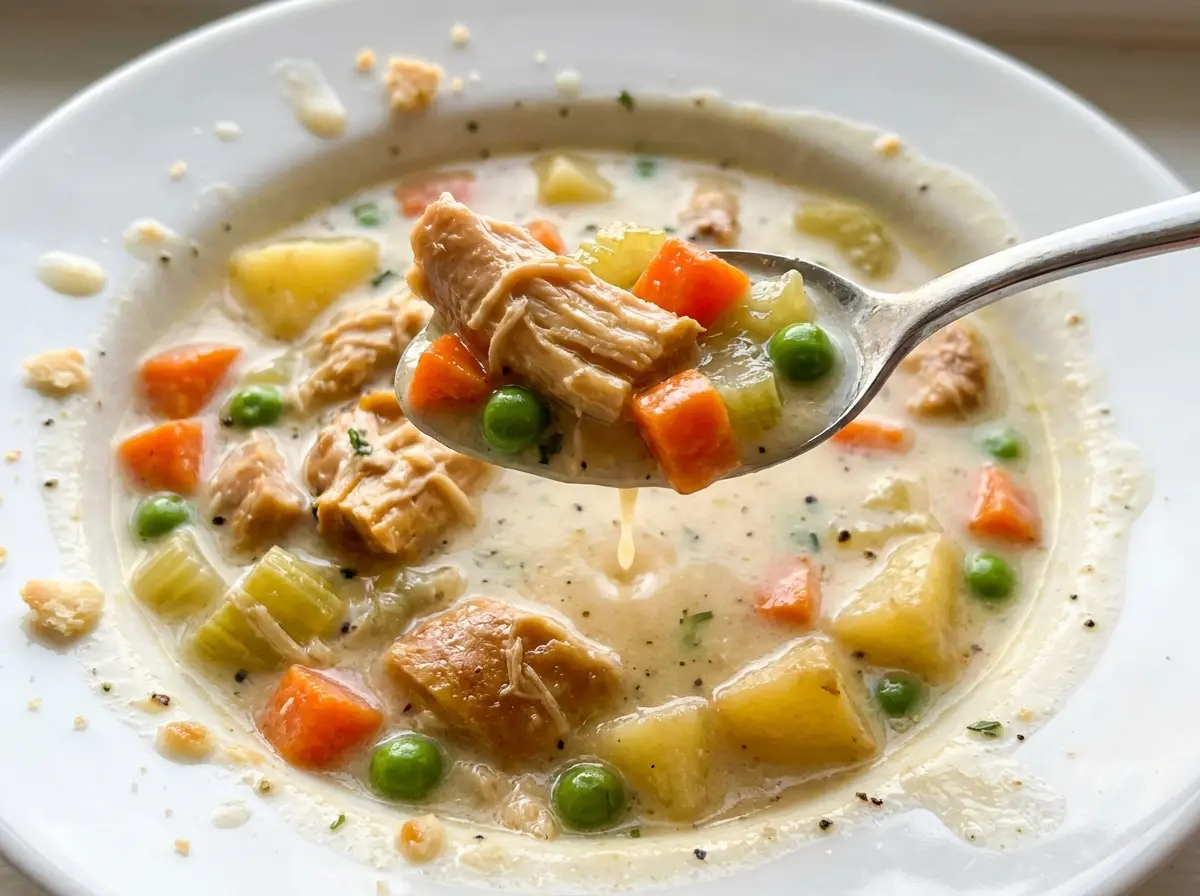
When the broth first meets the flour-coated vegetables, it turns cloudy and starts to look like the beginning of a proper pot pie filling. That’s the moment this creamy chicken pot pie soup gets its body without needing a separate sauce pan. The potatoes simmer right alongside the chicken, and every spoonful has the soft vegetables and tender pieces I want in a pot pie filling.
I keep the chicken breasts whole while they cook, then shred them once they’re tender. It saves an extra cutting step and lets the potatoes cook in the same broth. The cream and peas go in near the end, so the soup stays silky instead of boiling hard after the dairy is added.
It’s cozy and filling, but still easy to ladle into bowls on a weeknight. The broth clings to the chicken and potatoes, with sweet peas tucked into each creamy bite.
Kitchen Note
Keep the potatoes close to the same size as you cut them. Half-inch cubes cook through together, while a few oversized pieces can still be firm when the rest are ready.
Save this creamy chicken pot pie soup for a night when you want tender chicken, potatoes, and a rich, spoon-coating broth in one pot.
Why the Flour Goes In Before the Broth
A pot pie soup needs enough body to hold onto the chicken and vegetables, but a heavy, pasty broth can make it feel more like gravy than soup. Here, the flour gets stirred into the softened vegetables before any broth goes into the pot. It coats the vegetables and cooks briefly in the butter, which helps it blend into the liquid rather than leave raw-flour taste behind.
Adding the broth gradually is what keeps that thickening base smooth. Pouring it all in at once can leave flour clumps suspended in the soup, and they’re hard to whisk out once the potatoes and chicken are in the pot. I whisk in the first portions until smooth, then continue adding broth while whisking. The result is a creamy broth that still pours easily from a ladle, with enough structure to make each bite feel like pot pie.
This order also gives you a useful visual check: before the broth, the flour should coat the vegetables; after the broth is whisked in, the liquid should look even, with no dry flour pockets around the bottom or corners of the pot.
The Ingredients That Give This Soup Its Pot-Pie Character

- Onion, carrots, and celery — This trio gives the broth its familiar savory-sweet base. Dice them evenly so they soften at about the same pace; standard grocery-store vegetables work well here.
- Garlic — It adds a sharper savory note to the mellow vegetables. Mince it finely so it blends into the soup, and add it after the vegetables have started softening so it doesn’t scorch in the butter.
- All-purpose flour — Flour thickens the broth and gives the soup its pot-pie-like consistency. If you need a gluten-free version, use a cup-for-cup gluten-free flour blend in the same measure; blends vary, so whisk the broth in gradually and check that the base is smooth.
- Low-sodium chicken broth — Low-sodium broth leaves room for the kosher salt to season the vegetables without making the finished soup too salty. A basic boxed broth is fine; a broth you already enjoy drinking will make the chicken-and-herb flavor more noticeable.
- Boneless, skinless chicken breasts — They cook directly in the broth and shred neatly into bite-size pieces. Use breasts that are similar in thickness so they cook at a similar pace; the method is built around boneless, skinless pieces rather than bone-in chicken.
- Yukon Gold potatoes — Their creamy centers soften while the cubes hold their shape in the soup. Red potatoes can stand in at the same cut size, though the finished soup will have a slightly firmer, less buttery potato texture.
- Dried thyme and bay leaf — Thyme brings an earthy note, while the bay leaf quietly seasons the broth as everything simmers. The bay leaf is removed before serving, so remember to fish it out before the shredded chicken goes back in.
- Heavy cream and frozen peas — Heavy cream gives the broth its rounded finish, and frozen peas add a little sweetness and color. There’s no need to thaw the peas first; adding them near the end keeps them from cooking to mush.
The Stovetop Stages That Keep the Broth Silky
Soften the Vegetables Without Browning Them
Melt the butter in a 6-quart Dutch oven over medium heat, then add the diced onion, carrots, celery, salt, and pepper. Cook for 6–8 minutes, stirring occasionally, until the vegetables begin to soften. They should look glossy and give slightly when pressed, not develop dark edges. If they start sticking or browning before they soften, lower the heat a little.
Coat the Vegetables, Then Whisk in the Broth
Stir in the minced garlic and cook for 30 seconds, just until fragrant. Add the flour and stir for 1 minute, until it coats the vegetables rather than sitting in dry patches. Gradually whisk in the chicken broth, working out any small lumps before adding more. Keep scraping the bottom and corners of the pot as you whisk so the thickened base stays even.
Simmer the Chicken and Potatoes Together
Add the chicken breasts, potato cubes, dried thyme, and bay leaf, then bring the soup to a boil. Reduce the heat promptly to maintain a gentle simmer and cook uncovered for 18–22 minutes. A steady, quiet simmer cooks the chicken without beating up the potatoes; a hard boil can make the outside of the chicken tough before the center is ready. Check that the potatoes are tender and that the thickest part of each chicken breast reaches 165°F.
Shred the Chicken and Finish on Low
Transfer the chicken to a plate and discard the bay leaf. Shred the chicken into bite-size pieces, then stir the heavy cream and frozen peas into the soup. Return the chicken to the pot and cook over low heat for 3–5 minutes, until the peas are hot. Don’t let the soup boil after the cream goes in; a gentle finish keeps the broth smooth.
Simple Changes That Still Work in This Pot
Make It Gluten-Free
Replace the all-purpose flour with the same measure of a cup-for-cup gluten-free flour blend. The blend is doing the thickening, so add the broth gradually and whisk until the base looks smooth; the soup may thicken a little differently depending on the blend.
Leave Out the Peas
For a pea-free bowl, skip the frozen peas and keep the rest of the soup unchanged. You’ll lose their sweet little pops, but the chicken, potatoes, and creamy broth still make a complete, satisfying soup.
Use Half-and-Half for a Lighter Finish
Swap the heavy cream for the same amount of half-and-half if you’d like a less rich broth. It won’t feel quite as velvety, so keep the pot over low heat for the final few minutes and don’t let it boil.
Storage and Reheating
- Refrigerator: Cool promptly, refrigerate within 2 hours, and use within 3–4 days. The potatoes will soften a little as they sit.
- Freezer: Freeze in airtight containers for up to 2 months. The cream and potatoes may turn a little grainy or softer after thawing; thaw overnight in the refrigerator for the most even texture.
- Reheating: Warm it slowly in a saucepan over low heat, stirring gently until hot. Avoid a hard boil, which can make the creamy broth separate.
Questions That Come Up While Making Chicken Pot Pie Soup
Creamy Chicken Pot Pie Soup
Ingredients
Equipment
Method
- Melt the butter in a 6-quart Dutch oven over medium heat.
- Add the onion, carrots, celery, salt, and pepper and cook for 6–8 minutes, stirring occasionally, until the vegetables begin to soften.
- Stir in the garlic and cook for 30 seconds.
- Stir in the flour and cook for 1 minute until it coats the vegetables.
- Gradually whisk in the chicken broth until smooth.
- Add the chicken breasts, potatoes, thyme, and bay leaf and bring the soup to a boil.
- Reduce the heat to maintain a gentle simmer and cook uncovered for 18–22 minutes, until the potatoes are tender and the chicken reaches 165°F in the thickest part.
- Transfer the chicken to a plate.
- Discard the bay leaf.
- Shred the chicken into bite-size pieces.
- Stir the heavy cream and frozen peas into the soup.
- Return the shredded chicken to the pot.
- Cook over low heat for 3–5 minutes, until the peas are hot; do not let the soup boil.