The potato skin should feel dry before it goes into the oven; if it’s still damp, the oil and salt won’t cling as well. That small bit of prep sets up the crisp outside and fluffy center that make these loaded baked potatoes with steak bites worth the wait.
I bake the russets while the bacon cooks, then use the same skillet for the steak. The beef gets browned in two batches, which gives the pieces room to sear instead of crowding them into a steamy pile. Sharp cheddar melts over the hot potato, and cool sour cream, crisp bacon, and green onions finish each one with a little contrast in every bite.
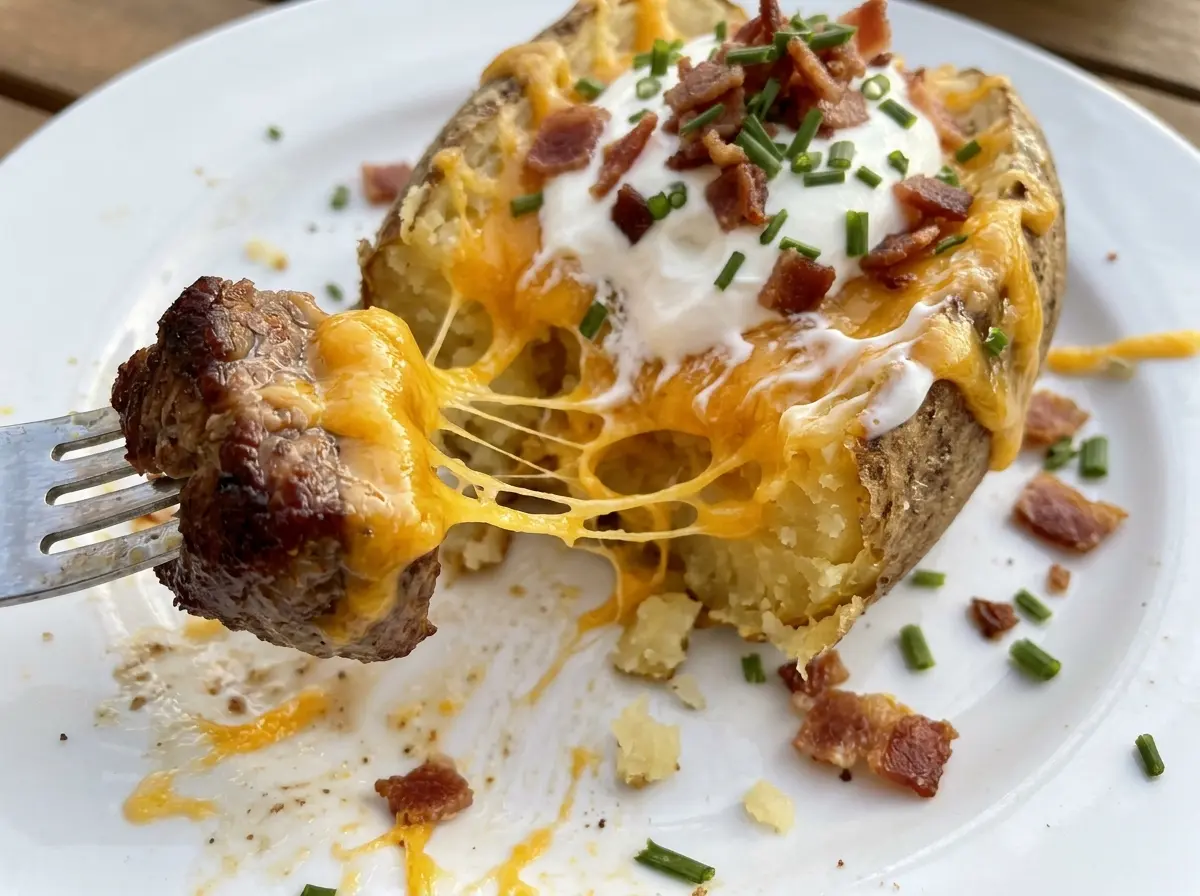
It’s a hearty dinner built from familiar ingredients, but the order matters: bake the potatoes until a knife slides easily into the center, and let the steak rest before tossing it with garlic. The finished potato is tender inside, with buttery cheddar under savory bites of steak.
Kitchen Note
Let the steak rest on a clean plate for the full 3 minutes before tossing it with the garlic and pan juices. That pause gives the juices time to settle back into the bites instead of running onto the plate.
Save these loaded baked potatoes with steak bites for a dinner that pairs fluffy russets with browned sirloin, crisp bacon, and sharp cheddar.
Why Dry Potato Skins Bake Up Better
Russets go into a hot oven after a quick scrub, but taking the time to dry them first is more than a housekeeping step. Moisture on the outside can turn to steam against the skin, leaving it softer than you want. A dry surface lets the canola oil coat the potato evenly, while the kosher salt clings instead of sliding off.
That matters in a loaded potato because the skin has to hold up under butter, melted cheddar, steak, and sour cream. A russet’s fluffy interior gives you the contrast you want: tender flesh to fluff with a fork and a sturdier outside to keep the toppings in place. Pierce each potato several times with a fork before baking, too. The potatoes bake whole, so those openings give steam a way out as the centers heat.
Skip the urge to wrap the potatoes in foil. They bake directly on a rimmed baking sheet, which leaves their skins exposed to the oven’s heat. When the knife slides easily into the center, the potato is ready for its short rest and then the toppings.
What Sirloin, Russets, and Sharp Cheddar Bring to the Plate

- Russet potatoes — Their starchy flesh turns fluffy when baked, making them a good base for the butter and toppings. Choose large potatoes that are close in size so they’re likely to finish baking at about the same time.
- Sirloin steak — Sirloin is tender enough for quick-cooked bites and has a beefy flavor that stands up to cheddar and bacon. Cut the cubes evenly and pat them dry; damp surfaces brown less readily in the skillet.
- Sharp cheddar — Sharpness keeps the cheese noticeable alongside the steak and bacon. Shred it before you start assembling so it’s ready to scatter over the hot, fluffed potato.
- Canola oil — Its neutral taste works for both coating the potatoes and searing the steak. The recipe uses it at two different stages, so keep the portions separate as you prep.
- Bacon and garlic — Crisp bacon brings a salty crunch, while minced garlic goes into the skillet only after the steak has been removed. That brief, low-heat finish gives the pan juices a garlicky lift without leaving the garlic in the skillet during the high-heat sear.
- Sour cream, butter, and green onions — Butter melts into the potato first, sour cream adds a cool tang, and thinly sliced green onions bring a fresh bite at the end. Keep the green onions thin so they’re easy to get in a forkful with the steak.
The Order That Gets the Potato, Bacon, and Steak Ready Together
Start the russets in a hot oven
Heat the oven to 425°F. Scrub and dry the potatoes, pierce each several times with a fork, then rub them with canola oil and kosher salt. Set them on a rimmed baking sheet and bake for 50 to 65 minutes, until a knife slides easily into the center. Remove them from the oven and let them rest for 5 minutes before splitting.
Crisp the bacon while the potatoes bake
Cook the bacon in a 12-inch skillet over medium heat, turning it occasionally for 8 to 12 minutes. Look for crisp slices rather than pale, flexible ones, since they’ll crumble over the potatoes later. Transfer the bacon to a paper towel-lined plate and crumble it once it’s cool. Wipe the skillet clean before moving on to the steak.
Sear the steak in two batches
Season the steak with kosher salt and black pepper. Heat 1 tablespoon of canola oil in the skillet over high heat until it shimmers, then cook half the steak for 4 to 6 minutes, turning occasionally, until browned. Repeat with the remaining oil and steak rather than crowding the pan; a crowded skillet can steam the cubes instead of browning them. Check the center of a larger piece with a thermometer and take the steak out when it reads 145°F.
Finish with garlic and load the potatoes
Transfer the steak to a clean plate and let it rest for 3 minutes. Reduce the skillet heat to low, add the minced garlic, and stir constantly for 30 seconds. Toss the garlic and pan juices with the rested steak. Split each potato lengthwise, fluff the inside with a fork, and top with butter, cheddar, steak bites, sour cream, crumbled bacon, and green onions.
Two Easy Ways to Change Up the Loaded Potato
Make steak-and-potato bowls
For a bowl-style dinner, split and fluff the potatoes in shallow bowls instead of serving them in their skins, then pile on the same toppings. You get the same mix of steak, cheddar, bacon, and sour cream, but each serving is easier to mix together with a fork.
Skip the bacon for a steak-and-cheddar version
Leave the bacon off and keep the steak, butter, cheddar, sour cream, and green onions. The potato will have less salty crunch, while the sirloin and sharp cheddar become the main savory toppings.
Storage and Reheating
- Refrigerator: Refrigerate leftovers within 2 hours in airtight containers, keeping the toppings separate where possible. They’ll keep for 3 to 4 days; the potato skin softens after storage.
- Freezer: Freeze cooked steak bites separately in an airtight container for up to 2 months. The assembled potatoes don’t freeze well because the potato texture can turn mealy and sour cream can separate.
- Reheating: Reheat the potato and steak separately in the microwave until they reach 165°F. Add sour cream and green onions after reheating; heating those toppings can make them watery and wilted.
Questions That Come Up When Making Steak-Topped Potatoes
Loaded Baked Potato with Steak Bites
Ingredients
Equipment
Method
- Heat the oven to 425°F.
- Scrub and dry the potatoes, then pierce each several times with a fork.
- Rub the potatoes with the canola oil and kosher salt.
- Set the potatoes on a rimmed baking sheet and bake for 50 to 65 minutes, until a knife slides easily into the center.
- Remove the potatoes from the oven and let them rest for 5 minutes.
- While the potatoes bake, cook the bacon in a 12-inch skillet over medium heat, turning occasionally, for 8 to 12 minutes until crisp.
- Transfer the bacon to a paper towel-lined plate, then crumble when cool.
- Wipe the skillet clean.
- Season the steak with the kosher salt and black pepper.
- Heat 1 tablespoon of the canola oil in the skillet over high heat until shimmering.
- Cook the steak in two batches, using the remaining oil for the second batch, for 4 to 6 minutes per batch, turning occasionally, until browned and a thermometer inserted into the center of a larger piece reads 145°F.
- Transfer the steak to a clean plate and rest for 3 minutes.
- Reduce the heat to low, add the garlic to the skillet, and cook for 30 seconds, stirring constantly.
- Toss the garlic and pan juices with the rested steak.
- Split each potato lengthwise and fluff the inside with a fork.
- Top each potato with 1 tablespoon butter, cheddar, steak bites, sour cream, crumbled bacon, and green onions.