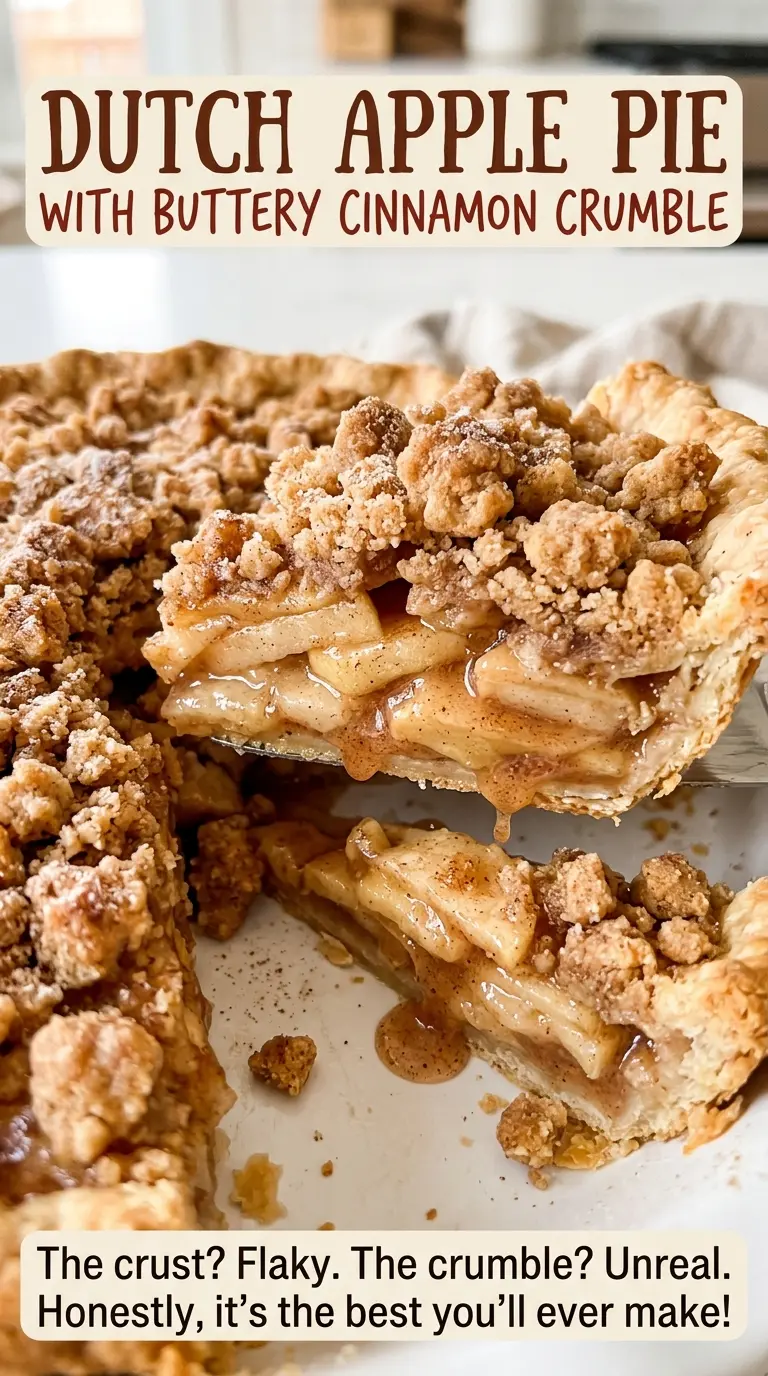
When a knife slips through a tender apple slice and the filling bubbles at the edge, the pie is close—but it still needs time to cool before it will cut cleanly. I like this Dutch apple pie with buttery cinnamon crumble because the top gives you that crisp, sandy contrast without covering up the tart Granny Smith apples underneath.
The apples go straight into the crust, so there’s no extra pan to wash and no guessing when to stop cooking them on the stove. A little cornstarch helps their juices set, while lemon keeps the filling bright against the brown-sugar crumble. Slice the apples evenly, and they’ll soften at the same pace.
Once the crumble turns golden, the cinnamon smells warm and buttery, and the filling is bubbling around the edges, the pie is ready for its long rest. Give it at least three hours before slicing; the wait is what turns a soft, bubbling filling into neat wedges tucked under crisp crumbs.

Kitchen Note
Don’t judge the pie by the topping alone. I wait until the filling bubbles around the edges, then give it the full three hours at room temperature; cutting sooner leaves the center too loose to hold a tidy slice.
Save this Dutch apple pie with buttery cinnamon crumble for a bake with tart apples, a golden crumb top, and slices that hold their shape after cooling.
Why the Filling Has to Bubble, Even After the Crumble Turns Golden
A golden top is an easy cue to spot, but it doesn’t tell you whether the apples have softened or the filling has thickened. Cornstarch needs the filling to get hot enough to bubble before it can do its job. That’s why I look for bubbling around the edges as well as tender apples when pierced with a knife.
The edge bubbles matter because they show the fruit mixture is hot throughout, not just warm beneath the topping. Pulling the pie as soon as the crumbs look browned can leave the filling loose, even if the crust looks ready. Bake within the stated time range and use those visual and knife-test cues together rather than relying on color alone.
Then leave the pie undisturbed while it cools. The filling is still settling as the temperature drops, so a hot slice will be softer and more likely to slump. Once cooled, the apple layers stay in place beneath the cinnamon crumble.
Why Granny Smith Apples and Cold Butter Matter in This Pie
- Granny Smith apples — Their tartness keeps the filling from tasting one-note sweet, and their firm flesh holds up as the pie bakes. Choose firm apples without bruises; there’s no need to spend extra for a specialty grade. Braeburn apples are a good swap if that’s what you have, though the filling will taste sweeter.
- Cornstarch — This thickens the juices released by the apples so the filling can hold together after cooling. If you need a replacement, use tapioca starch in the same amount; the finished filling may have a slightly more gelled texture.
- Lemon juice — Its acidity balances the sugar and helps keep the apple flavor lively. Fresh or bottled lemon juice both work here; toss the slices with it promptly instead of leaving cut apples exposed while you prepare the rest.
- Cinnamon in two places — A portion seasons the fruit, while the larger share goes into the crumble, so the spice comes through in both the soft filling and the crisp top. Ground cinnamon from an everyday pantry jar is fine; use a fresh jar if yours has lost its aroma.
- Refrigerated pie crust — A ready-made 9-inch crust keeps this pie practical and fits the pie plate used here. Use one that’s pliable enough to fit and crimp without cracking; a deep-dish crust changes the amount of filling the shell can hold.
- Flour and brown sugar — All-purpose flour gives the topping its crumb structure, while packed light brown sugar adds a mellow molasses note. Standard pantry flour and brown sugar work well; break up any hard sugar lumps before mixing.
- Cold unsalted butter — Butter gives the crumble its rich taste and helps form distinct clumps. Cold butter is easier to work into the dry ingredients without turning the mixture into a paste, and unsalted butter lets you control the salt already added to the topping.
Build the Pie in Three Stages Without Losing the Crumble
Fit the Crust and Coat the Apples
Heat the oven to 375°F, then fit the refrigerated crust into a 9-inch pie plate and crimp the edges. Peel, core, and slice the Granny Smith apples 1/4 inch thick so the pieces cook at a similar pace. Toss them in a large bowl with the granulated sugar, cornstarch, lemon juice, and 1/2 teaspoon cinnamon until the slices are evenly coated. Transfer the filling to the crust without packing it down hard.
Mix the Cinnamon Crumbs
In a medium bowl, stir together the flour, packed light brown sugar, fine salt, and remaining 1 teaspoon cinnamon. Cut in the cold butter with a pastry blender or your fingertips. Stop when you have coarse, clumpy crumbs; a bowl of fine, uniform sand won’t give the topping the same chunky texture. If you’re using your hands, work briskly so the butter doesn’t soften too much.
Top, Bake, and Let the Pie Set
Sprinkle the crumble evenly over the apples, then set the pie on a rimmed baking sheet to catch any drips. Bake at 375°F for 65 to 75 minutes, until the topping is golden, the apples are tender when pierced with a knife, and the filling bubbles around the edges. If the crust edges brown too quickly, cover them loosely with foil. Cool the pie at room temperature for at least 3 hours before slicing.
Two Changes That Keep This Apple Pie in Balance
Make It Gluten-Free with a Matching Crust and Crumble
Use a 9-inch gluten-free refrigerated pie crust and replace the all-purpose flour with a measure-for-measure gluten-free flour blend. The topping may be a little more delicate, so let the pie cool fully before cutting; the tart apple filling stays the same.
Add Pecans for a Toasty, Nutty Crumble
Fold chopped pecans into the finished crumble before scattering it over the apples. They add crunch and a toasted flavor that plays well with brown sugar and cinnamon, though the topping will be less uniform and naturally contains nuts.
Storage and Reheating
- Refrigerator: Cover the cooled pie and refrigerate for up to 4 days. The crumble softens gradually as it sits.
- Freezer: Freeze the cooled pie whole or in slices, wrapped tightly, for up to 2 months. Thaw it in the refrigerator before serving.
- Reheating: Warm slices in the oven until heated through. A microwave is quicker, but it softens the crumble, so use it only if a softer topping doesn’t bother you.
Questions That Come Up Before the First Slice
Dutch Apple Pie with Buttery Cinnamon Crumble
Ingredients
Equipment
Method
- Heat the oven to 375°F.
- Fit the pie crust into a 9-inch pie plate and crimp the edges.
- In a large bowl, toss the apples with the granulated sugar, cornstarch, lemon juice, and 1/2 teaspoon of the cinnamon until evenly coated.
- Transfer the filling to the crust.
- In a medium bowl, mix the flour, brown sugar, salt, and remaining 1 teaspoon cinnamon.
- Cut in the butter with a pastry blender or your fingertips until the mixture forms coarse, clumpy crumbs.
- Sprinkle the crumble evenly over the apples.
- Set the pie on a rimmed baking sheet.
- Bake at 375°F for 65 to 75 minutes, loosely covering the crust edges with foil if they brown too quickly. The topping should be golden, the apples tender when pierced with a knife, and the filling bubbling around the edges.
- Cool the pie at room temperature for at least 3 hours before slicing.