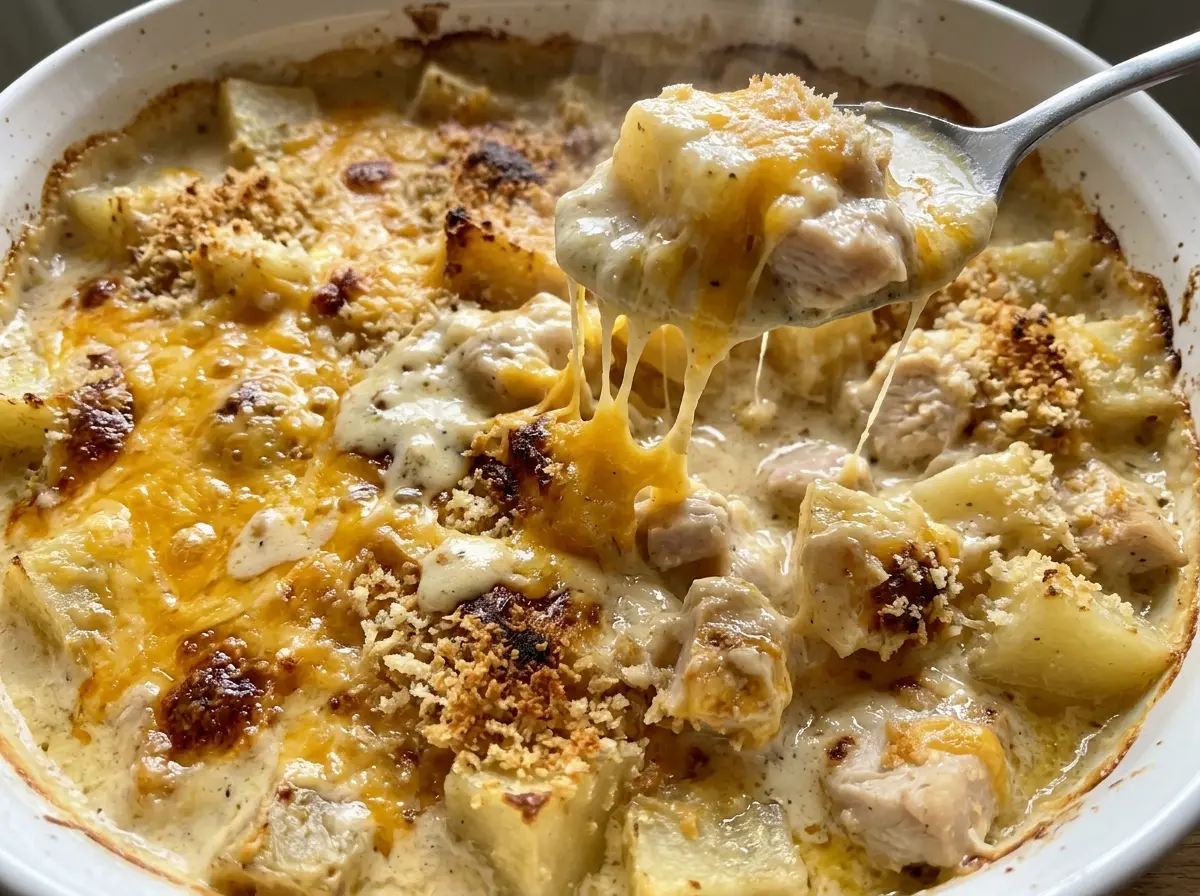
The casserole can be bubbling around the edges while the center is still catching up, so I pay attention to more than the golden top. This chicken and potato casserole is built for a simple, dependable dinner: cooked chicken and diced potatoes get folded into a creamy mixture, then baked in one dish. It’s hearty without asking you to cook a separate sauce or start with raw chicken.
Covering the dish for the first part of baking gives the potatoes time to heat through before the cheese and buttery cracker topping go on. Then the foil comes off, the top gets its turn in the oven, and the edges turn pleasantly crisp. The casserole is at its best after a short rest, when the creamy filling settles enough to scoop neatly and the top still has a little crunch.
Kitchen Note
Keep the cracker topping off until the covered bake is finished. The first stretch in the oven is for heating the casserole through; adding the crumbs after uncovering gives them a chance to turn golden instead of sitting under foil.
Save this creamy chicken and potato casserole for an easy dinner with a bubbling center and a golden, buttery cracker top.
Why Thawed Potatoes Make a Better Casserole Than Frozen Ones
Frozen diced potatoes are convenient, but they carry ice and extra moisture into the dish. If they go into the creamy mixture still frozen, that moisture releases as the casserole heats and can leave the filling thinner than you want. Thawing first gives the excess water a chance to drain away before the potatoes meet the sauce.
Check the potatoes after thawing: if they look wet or have liquid in the bottom of the bag or bowl, drain them before folding them in. You’re not trying to dry them out completely; you’re just keeping loose water from diluting the soup, sour cream, and milk. That matters in a casserole because the potatoes and chicken are mixed throughout the sauce rather than sitting above it. Starting with drained potatoes helps the filling stay creamy and lets the cheese and cracker topping finish the dish instead of trying to cover for a watery base.
What the Creamy Base and Crunchy Top Each Bring

- Condensed cream of chicken soup — This is the concentrated base of the sauce, so use condensed soup rather than ready-to-serve soup; the latter has more liquid and won’t give the filling the same body. A standard store brand works well here, since the sour cream and seasonings round out its savory flavor.
- Sour cream and milk — Sour cream adds tang and a thicker texture, while milk loosens the mixture enough to coat the chicken and potatoes. Use plain milk rather than a sweetened or flavored milk; there’s no need for a specialty product.
- Cooked shredded chicken — Already-cooked chicken keeps the assembly quick and distributes easily through the casserole. Shred it into bite-size pieces rather than leaving large chunks, so each scoop gets chicken alongside the potatoes and sauce.
- Cheddar cheese — Cheddar brings a savory, familiar sharpness to the filling and the top. A block you shred yourself tends to melt smoothly, though packaged shredded cheddar is a convenient option and works in this casserole.
- Buttery round crackers — Their crisp, salty crumbs make a richer topping than plain breadcrumbs. Crush them into small, uneven pieces; powdery crumbs won’t give you the same distinct crunch.
How to Assemble and Bake the Casserole in Two Stages
Whisk a smooth, seasoned sauce
Heat the oven to 375°F and grease a 9×13-inch baking dish. In a large bowl, whisk together the condensed soup, sour cream, milk, onion powder, garlic powder, salt, and black pepper until the mixture looks even. Break up any thick streaks of sour cream before adding the filling ingredients. A smooth base coats the potatoes more evenly than one with dense pockets of sour cream.
Fold in the chicken, potatoes, and cheese
Add the shredded cooked chicken, thawed potatoes, and 1 cup of cheddar to the bowl. Fold gently until the pieces are coated; stirring too forcefully can break up the potatoes. Spread the mixture evenly in the prepared dish so the center and edges have a similar depth. Cover the dish tightly with foil.
Give the covered casserole its first bake
Bake covered for 25 to 30 minutes. The foil holds in heat while the casserole warms, and the filling should be bubbling around the edges by the time it’s ready for its topping. Keep the foil on for this stage rather than uncovering early. That way, the top doesn’t brown before the middle has had time to heat through.
Add the topping and bake until golden
While the casserole finishes its covered bake, mix the crushed buttery round crackers with the melted butter until the crumbs are coated. Remove the foil, scatter the remaining cheddar over the casserole, and add the cracker mixture. Bake uncovered for 15 to 20 minutes, until the topping is golden and the casserole bubbles around the edges. Check the center with a thermometer; it should reach 165°F before you take the dish out of the oven.
Let the filling settle before serving
Set the hot dish aside to rest for 10 minutes before serving. The filling is loose straight from the oven, and that brief pause helps it settle so portions hold together better. Use a wide spoon to scoop through the browned topping and down to the creamy potatoes below. The casserole should still be hot when you serve it.
Three Easy Ways to Change the Flavor or Fit a Gluten-Free Table
Use Monterey Jack for a milder cheese layer
Replace the cheddar with the same amount of shredded Monterey Jack. It melts smoothly and has a gentler flavor, so the casserole tastes less sharp while keeping its creamy, cheesy texture.
Make a gluten-free version with two swaps
Choose a gluten-free condensed cream of chicken soup and gluten-free buttery crackers in place of the standard versions. The creamy filling and crisp topping still work; the cracker texture may vary a little by brand.
Trade cream of chicken soup for cream of mushroom
Use a same-size can of condensed cream of mushroom soup for a more earthy, mushroom-forward casserole. The sauce remains creamy, but the mushroom flavor becomes more noticeable than the chicken-soup version.
Storage and Reheating
- Refrigerator: Store cooled leftovers in a covered container for 3 to 4 days. The cracker topping will soften in the refrigerator.
- Freezer: Freeze portions in an airtight container for up to 2 to 3 months. The potatoes may soften and the creamy sauce may change texture slightly after thawing.
- Reheating: For a larger portion, cover and warm it in a 350°F oven until steaming hot throughout; uncover near the end if you’d like to bring back some crunch on top. Avoid reheating uncovered for the whole time, which can dry out the edges.
Questions That Come Up When Making Chicken and Potato Casserole
Easy Creamy Chicken and Potato Casserole
Ingredients
Equipment
Method
- Heat the oven to 375°F.
- Grease a 9x13-inch baking dish.
- In a large bowl, whisk together the soup, sour cream, milk, onion powder, garlic powder, salt, and pepper.
- Fold in the chicken, potatoes, and 1 cup of the cheddar.
- Spread the mixture evenly in the prepared dish.
- Cover tightly with foil.
- Bake covered for 25 to 30 minutes.
- Mix the crushed crackers with the melted butter.
- Remove the foil.
- Scatter the remaining cheddar and cracker mixture over the casserole.
- Bake uncovered for 15 to 20 minutes, until the topping is golden, the casserole is bubbling around the edges, and the center reaches 165°F.
- Let the casserole rest for 10 minutes before serving.