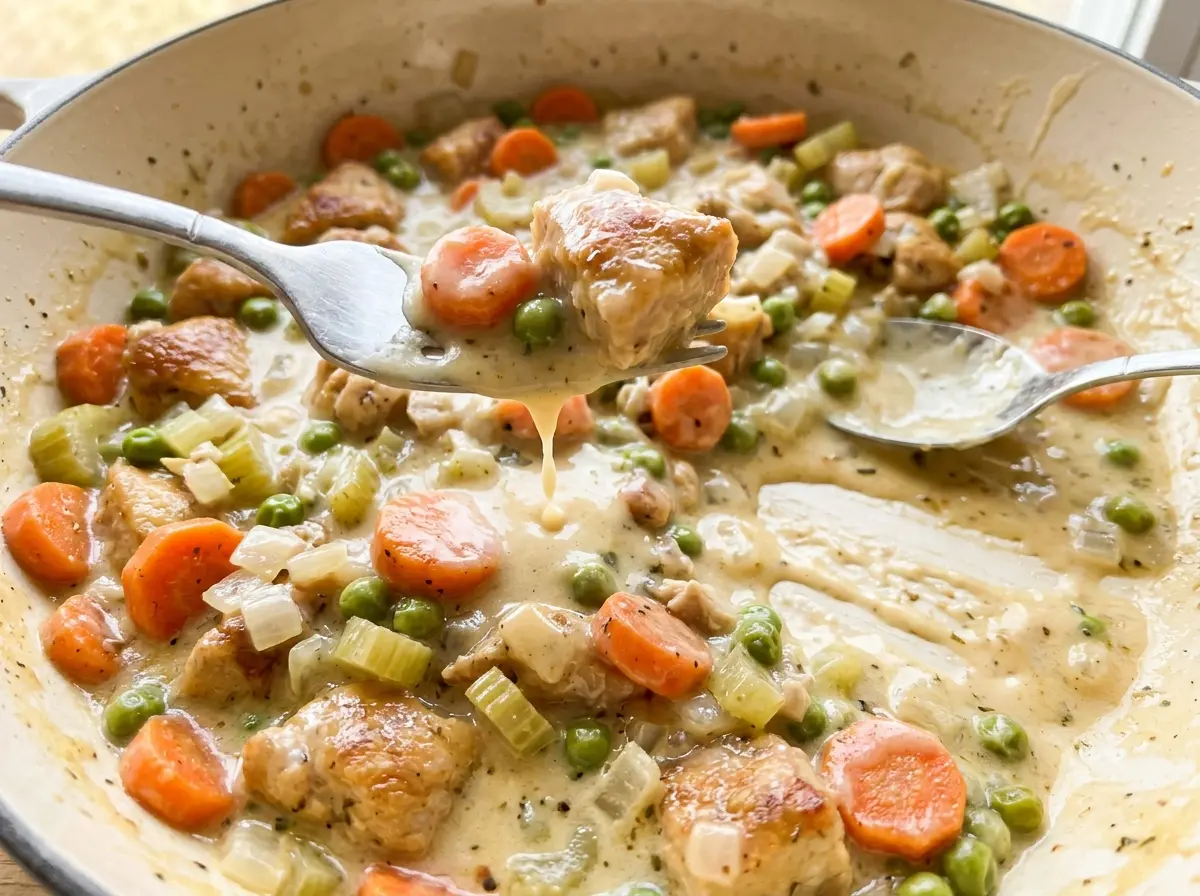
The onion, carrots, and celery start to soften in the skillet, and the kitchen already smells like the beginning of a comforting dinner. I make this creamy turkey and vegetable skillet when I want a one-pan meal with tender vegetables and a sauce that’s thick enough to cling instead of pooling at the bottom. The ground turkey breaks into small pieces as it cooks, while frozen peas go in at the end for a sweet, tender finish.
Cooking the flour briefly with the turkey and vegetables gives the broth and cream something to thicken against. I add the liquids gradually and scrape up the browned bits as I stir, so they become part of the sauce rather than sticking to the pan. The result is creamy without needing a separate pot or a complicated sauce-making step, with carrots and celery that still have a little shape in each spoonful.
Kitchen Note
When the peas go in, the sauce should still stir easily; it thickens as they simmer. I watch for the sauce to coat the turkey and vegetables, rather than waiting for it to look completely finished before adding the peas.
Save this Easy Creamy Turkey and Vegetable Skillet for a cozy one-pan dinner with tender vegetables and a sauce that clings.
Why the Flour Goes In Before the Broth and Cream
It’s easy to think of flour as something you whisk into cold liquid, but that isn’t how this skillet builds its sauce. Here, the flour is sprinkled over the cooked turkey and vegetables, then stirred for a full minute before any broth or cream goes in. That brief cooking time lets the flour coat the ingredients and lose its raw, dusty taste.
Adding the liquid gradually matters just as much. Pouring it all in at once can leave little flour pockets that are hard to smooth out; a steady addition gives you time to stir the flour into the broth and cream as they enter the pan. Scraping the bottom as you stir also loosens browned bits from the turkey and vegetables. They dissolve into the sauce and bring savory depth without needing another ingredient. Keep the heat at medium and let the mixture reach a gentle simmer, not a hard boil, while it thickens.
What Gives This Skillet Its Savory Base and Creamy Finish

- Onion, carrots, and celery — This trio gives the skillet its aromatic, gently sweet base. Dice the vegetables fairly evenly so they soften at a similar pace. Standard grocery-store vegetables work well; there’s no need to seek out specialty produce.
- Ground turkey — Ground turkey cooks into small, tender pieces that distribute through the sauce. Break it up as it cooks rather than leaving it in large clumps, so it browns and cooks evenly. Freshly packaged ground turkey is a good choice here; the recipe relies on its texture, not on a particular brand.
- Garlic and dried thyme — Garlic adds a rounded savory note, while dried thyme gives the creamy sauce an herb flavor that holds up through simmering. Mince the garlic before it goes into the hot pan so it’s ready to stir in without delay.
- All-purpose flour — Flour thickens the broth and cream into a spoon-coating sauce. It needs that brief cook in the pan before the liquids are added. For a gluten-free version, use a one-to-one gluten-free flour blend in its place.
- Chicken broth and heavy cream — Broth brings savory flavor and gives the flour liquid to thicken; heavy cream makes the finish rich and smooth. A regular store-brand broth works fine. Use heavy cream rather than a low-fat milk if you want the sauce to keep its body during the simmer.
- Frozen peas — Frozen peas are convenient and go straight into the skillet without thawing. They add a little sweetness and a soft pop of color at the end, so there’s no need to buy fresh peas for this dish.
- Olive oil — This is for softening the vegetables and starting the skillet. A basic everyday olive oil is enough; a premium finishing oil won’t make a noticeable difference in a cooked sauce.
From Softened Vegetables to a Sauce That Clings
Soften the Diced Vegetables
Heat the olive oil in a 12-inch skillet over medium heat, then add the onion, carrots, and celery. Stir occasionally as they cook for 5–7 minutes. Look for the onion to turn translucent and the carrots and celery to begin softening, while still holding their diced shape. If the vegetables start browning quickly, keep them moving around the pan.
Cook the Turkey Until No Pink Remains
Add the ground turkey, kosher salt, and black pepper. Break the meat into small pieces as it cooks, stirring and turning it so larger clumps don’t stay pink in the middle. Cook for 6–8 minutes, until no pink remains and the turkey reaches 165°F. The turkey should look opaque throughout before you move on.
Coat the Skillet with Garlic, Thyme, and Flour
Stir in the minced garlic and dried thyme, then sprinkle the flour over the turkey and vegetables. Stir continuously for 1 minute so the flour coats the mixture instead of collecting in dry patches. The garlic should smell fragrant, but don’t let it sit unstirred long enough to brown. This short step prepares the skillet to thicken the liquids.
Stir in the Broth and Cream Gradually
Pour in the chicken broth and heavy cream a little at a time, stirring as you go. Scrape the bottom of the skillet to loosen the browned bits and blend them into the liquid. Bring the mixture to a gentle simmer over medium heat, which takes about 2–3 minutes. If the sauce isn’t smooth yet, keep stirring as it warms rather than raising the heat to a boil.
Let the Peas Finish in the Sauce
Stir in the frozen peas and simmer for 3–5 minutes, stirring occasionally. The peas should be tender, and the sauce should thicken enough to coat the turkey and vegetables. Keep the simmer gentle; a vigorous boil isn’t needed. Once the peas are tender and the sauce has thickened, take the skillet off the heat.
Simple Swaps for the Turkey, Flour, and Peas
Make the skillet gluten-free
Replace the all-purpose flour with the same amount of a gluten-free flour blend labeled for one-to-one baking. Stir it into the turkey and vegetables and cook it for the same minute before adding the liquids. The sauce may have a slightly different finish depending on the blend, so let it simmer until it reaches the thickness you like.
Use ground chicken instead
Swap in the same amount of ground chicken for the ground turkey and break it into small pieces as it cooks. The method stays the same, though the finished skillet will have a milder, less turkey-forward flavor. Cook the chicken until no pink remains and it reaches 165°F.
Leave out the peas
For a skillet without peas, simply leave them out and let the sauce simmer until thickened. The dish will be less sweet and colorful, but the turkey, carrots, and celery still make a hearty combination. Keep an eye on the sauce as it simmers since there won’t be peas to check for tenderness.
Storage and Reheating
- Refrigerator: Store leftovers in a covered container for 3–4 days. The sauce will thicken as it chills.
- Freezer: Freeze in an airtight container for up to 2 months for best quality. The creamy sauce may separate or look slightly grainy after thawing, even though the skillet is still fine to eat.
- Reheating: Reheat gently in a skillet over low heat, stirring often, until steaming hot throughout. If the sauce has tightened, stir in a small splash of chicken broth; avoid boiling it, which can make the cream sauce look separated.
Questions That Come Up with This Turkey Skillet
Easy Creamy Turkey and Vegetable Skillet
Ingredients
Equipment
Method
- Heat the olive oil in a 12-inch skillet over medium heat.
- Add the onion, carrots, and celery, and cook, stirring occasionally, for 5-7 minutes, until the vegetables begin to soften.
- Add the ground turkey, salt, and pepper, breaking the turkey into small pieces as it cooks for 6-8 minutes, until no pink remains and it reaches 165°F.
- Stir in the garlic and thyme.
- Sprinkle in the flour and cook, stirring, for 1 minute.
- Gradually stir in the chicken broth and heavy cream, scraping up any browned bits.
- Bring the mixture to a gentle simmer over medium heat, about 2-3 minutes.
- Stir in the frozen peas and simmer for 3-5 minutes, stirring occasionally, until the peas are tender and the sauce has thickened.