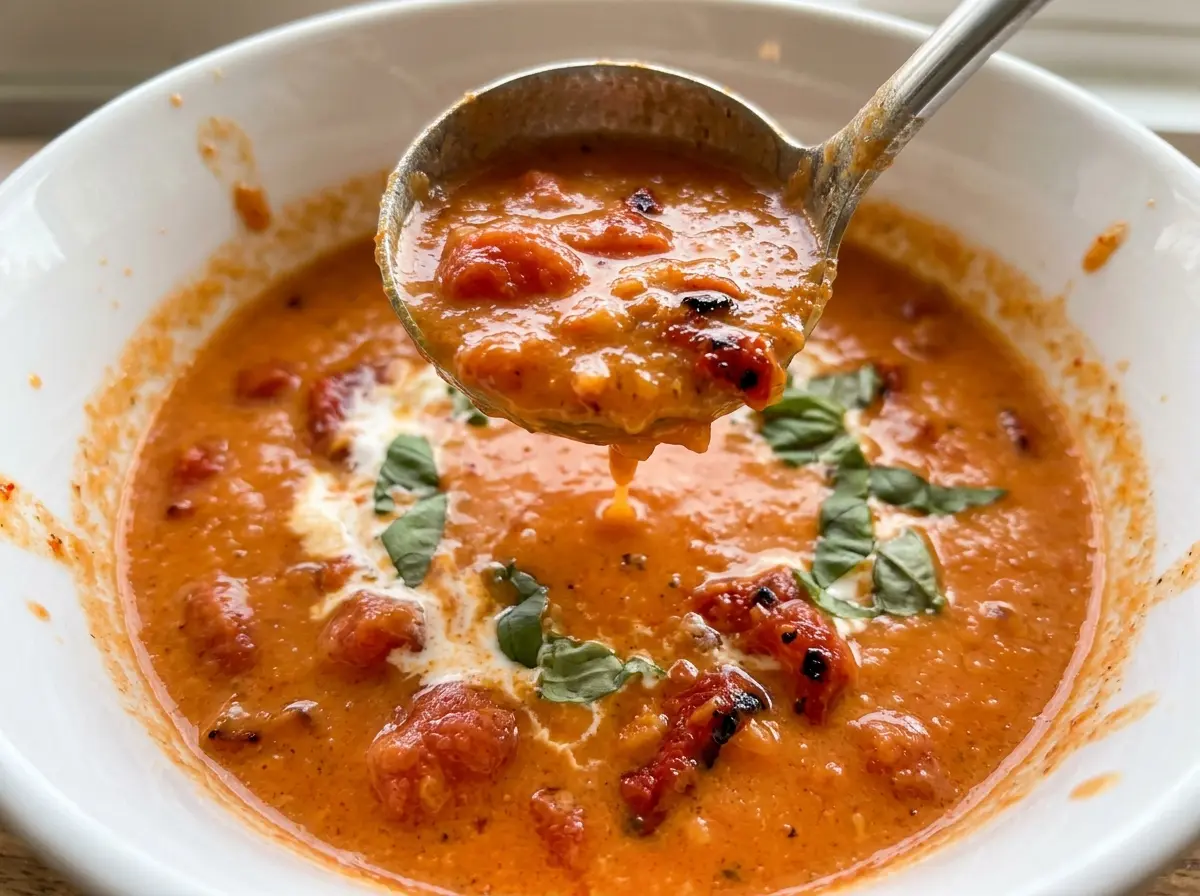
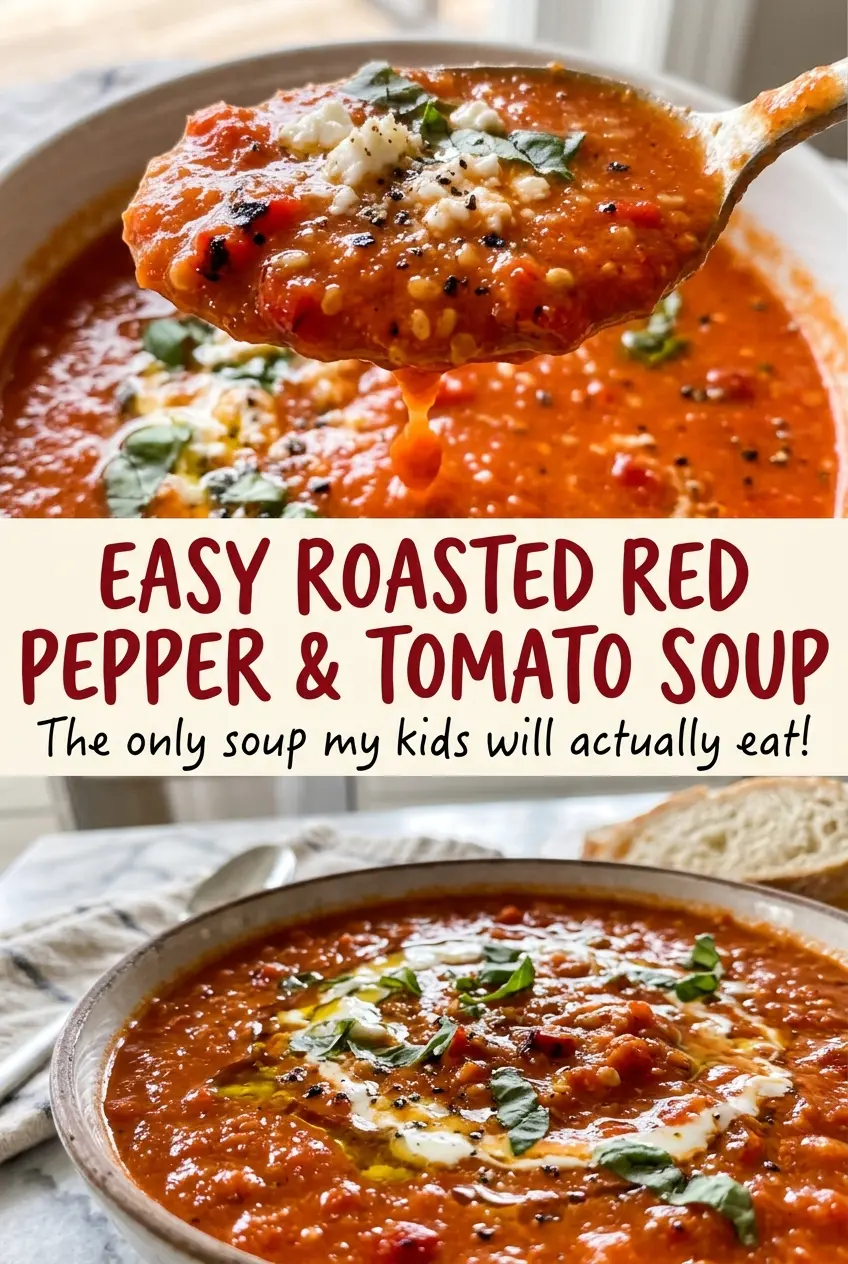
The peppers are the first thing I watch when this soup roasts. Their skins blister while the tomatoes collapse and leave their juices on the pan, and those different cues are what turn a few trays of vegetables into a deep, full-tasting pot of soup. I make this easy roasted red pepper and tomato soup when I want a smooth bowl with plenty of roasted flavor, not a soup that tastes like it came straight from a can.
Roasting the vegetables before they meet the broth gives each one time in the oven to soften and concentrate. I keep the garlic in its papery skin for that roast, then squeeze the tender cloves into the pot. Fresh basil goes in before the soup is blended, and the cream goes in after, so the finished soup stays smooth and has a gentle, rounded finish. The bowl is silky, bright with tomato, and still unmistakably full of roasted peppers.
Kitchen Note
Keep the garlic cloves in their skins while they roast. When they’re tender, squeeze from one end and the soft garlic slips out, leaving the papery skins behind.
Save this roasted red pepper and tomato soup for a cozy, creamy bowl built from oven-roasted vegetables and fresh basil.
Why the Peppers Roast Apart From the Tomatoes
The peppers get their own baking sheet, cut side down, while the tomatoes, onion, and garlic share a second one. That separation gives you room to judge each group by its own finish: the pepper skins should blister, the tomatoes should collapse, and the onion and garlic should turn tender. Trying to use one crowded tray makes those cues harder to read, especially when the tomatoes release their juices.
The two sheets also let you move the vegetables through the oven evenly. Swapping their rack positions and rotating them halfway through gives both trays time on each level rather than asking the peppers and tomatoes to roast in one fixed hot spot. Don’t wait for every vegetable to look identical; they won’t. The peppers are ready by their skins, while the tomatoes are ready when they have softened and slumped. Keeping those signs separate helps you stop roasting at the right point for each ingredient, and the juices from the tomato tray go right into the pot.
What Ripe Tomatoes, Fresh Basil, and Cream Bring to the Pot
- Red bell peppers — Their roasted sweetness gives this soup its defining flavor and color. Choose firm peppers with smooth skins so they roast and peel cleanly.
- Ripe tomatoes — Ripe fruit softens readily in the oven and brings both body and a fresh, tangy edge. Use tomatoes that smell fragrant and yield slightly when pressed; underripe ones won’t bring the same rounded flavor.
- Yellow onion — Roasting the wedges softens their sharpness and gives the blended base a mellow savory note. Keep the pieces in wedges so they are easy to arrange and turn with the other vegetables.
- Garlic — The cloves roast in their skins, which protect them in the oven; the tender insides then blend into the soup. Leave them unpeeled until after roasting.
- Olive oil — It coats the vegetables for roasting and carries their juices into the soup. A standard olive oil works well here; there isn’t a need to use an expensive finishing oil.
- Vegetable broth — Low-sodium broth lets the roasted vegetables stay in the foreground and gives you more control over the seasoning. The salt and pepper season the vegetables before roasting.
- Fresh basil — The leaves go into the pot before blending, lending a fresh herbal note throughout rather than only on top. Fresh leaves are the right fit for this method.
- Heavy cream — Stirred in after blending, cream softens the tomato’s tang and makes the texture feel silkier. For a dairy-free version, leave it out; the soup will be less rich.
From Two Roasting Sheets to a Smooth Pot of Soup
Set Up the Vegetables for Roasting
Heat the oven to 425°F. Arrange the halved, seeded peppers cut side down on a rimmed 18×13-inch baking sheet. Put the halved tomatoes, onion wedges, and unpeeled garlic cloves on a second sheet, then drizzle the vegetables with olive oil and season with kosher salt and black pepper.
Roast Until Each Vegetable Shows Its Own Cue
Roast for 35–45 minutes, swapping the sheets between racks and rotating them halfway through. Look for blistered pepper skins, collapsed tomatoes, and tender onion and garlic. The vegetables don’t need to match in appearance; use those individual signs rather than waiting for everything to brown in the same way. Keep the juices from the tomato sheet for the pot.
Steam and Peel the Peppers
Transfer the roasted peppers to a bowl, cover it, and let them steam for 10 minutes. The short covered rest makes the skins easier to pull away. Peel off the skins and discard them before blending; leaving them behind can affect the soup’s smooth texture. Set the peeled peppers aside while you start the pot.
Simmer, Blend, and Finish With Cream
Squeeze the roasted garlic from its skins into a 4-quart pot. Add the roasted tomatoes, onion, their juices, peeled peppers, vegetable broth, and basil, then bring the mixture to a simmer over medium-high heat and simmer for 5 minutes. Blend with an immersion blender until smooth, then stir in the heavy cream. Heat over medium-low for 2–3 minutes, until hot but not boiling.
Two Simple Ways to Adapt the Soup
Leave Out the Cream for a Dairy-Free Bowl
Skip the heavy cream and blend the roasted vegetables, broth, and basil until smooth. The soup remains dairy-free without a replacement ingredient, though it will taste lighter and won’t have the same creamy finish.
Roast the Vegetables Ahead
Roast and peel the vegetables earlier in the day, keeping the tomato juices with them, then refrigerate until you’re ready to finish the soup. Bring them to a simmer in the pot with the broth and basil, blend, and stir in the cream as usual. This divides the work without changing the roasted-vegetable base.
Storage and Reheating
- Refrigerator: Store leftovers in an airtight container for 3–4 days.
- Freezer: Freeze in airtight, freezer-safe containers for up to 2 months. The cream may separate a little after thawing, so the texture might be less silky.
- Reheating: Warm gently in a pot over medium-low heat, stirring, until hot. Avoid boiling the soup; high heat can make a cream-based soup separate.
Questions That Come Up When Making This Roasted Soup
Easy Roasted Red Pepper and Tomato Soup
Ingredients
Equipment
Method
- Heat the oven to 425°F.
- Arrange the peppers cut side down on one rimmed 18x13-inch baking sheet, and arrange the tomatoes, onion, and garlic on a second sheet; drizzle everything with the olive oil and season with the salt and pepper.
- Roast for 35–45 minutes, swapping the sheets between racks and rotating them halfway through, until the pepper skins are blistered, the tomatoes have collapsed, and the onion and garlic are tender.
- Transfer the peppers to a bowl, cover, and let them steam for 10 minutes, then peel away and discard the skins.
- Squeeze the garlic from its skins into a 4-quart pot, then add the roasted tomatoes, onion, their juices, peeled peppers, broth, and basil; bring to a simmer over medium-high heat, then simmer for 5 minutes.
- Blend the soup with an immersion blender until smooth.
- Stir in the heavy cream and heat over medium-low for 2–3 minutes, until hot but not boiling.