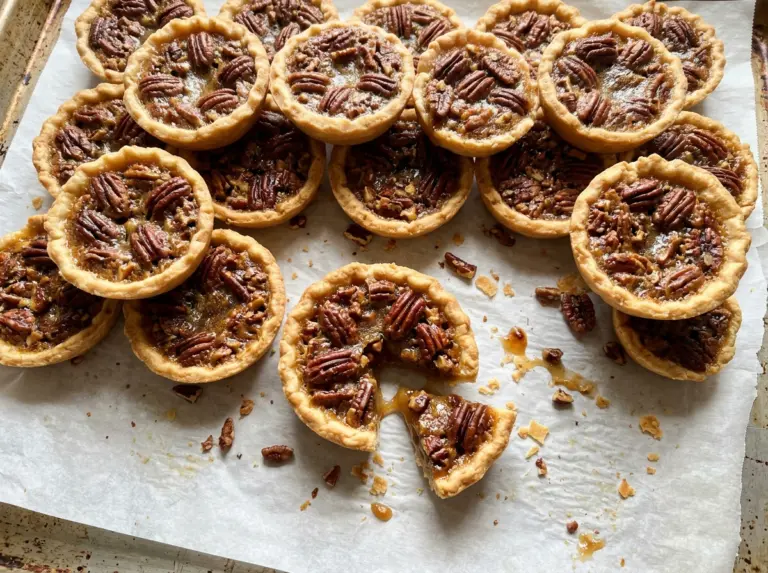
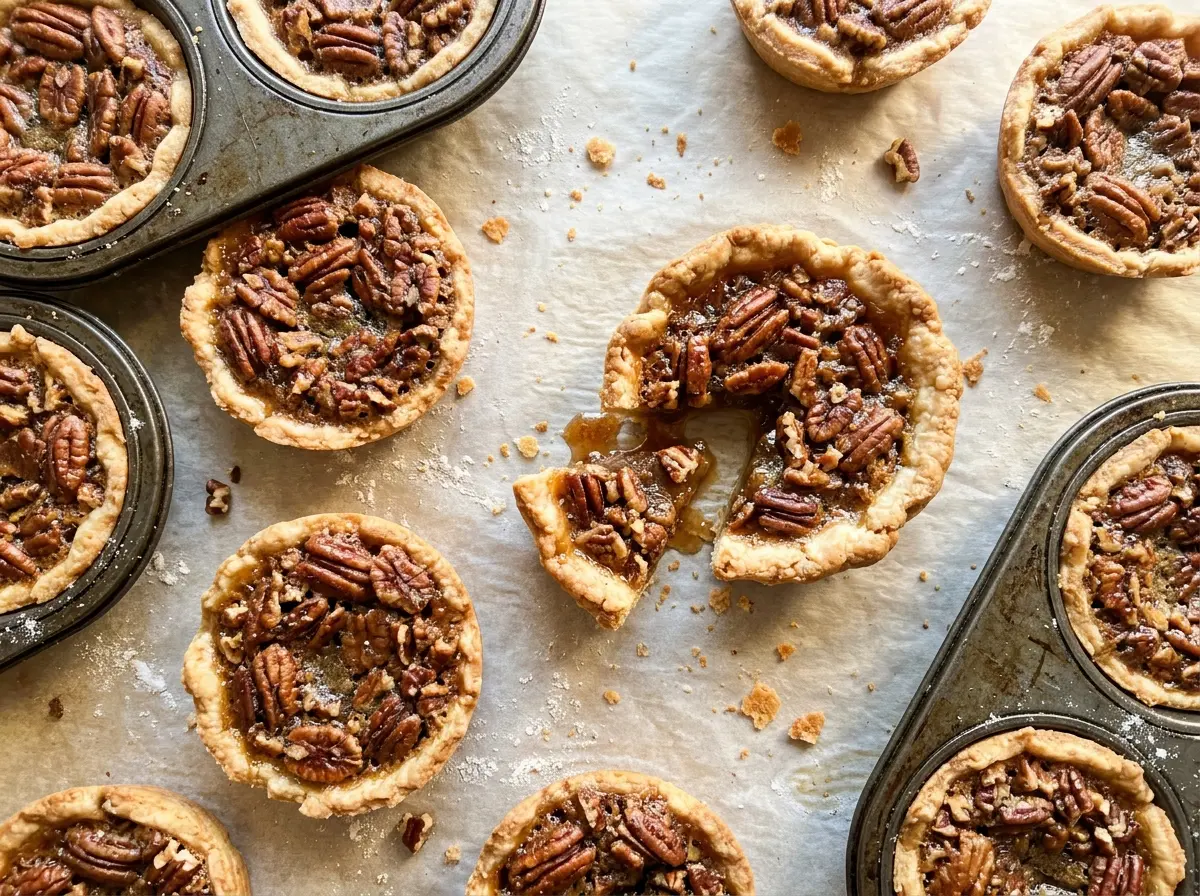
When the muffin pan comes out of the oven, the pecan centers are puffed and the crust edges are golden. The little pies look ready to move, but a few minutes in the pan help them release without losing their shape. That small pause is what makes these mini pecan pies feel like proper individual pies, not filling tucked into a pastry cup.
I like this muffin-tin version because each portion gets its own tender, buttery crust and a generous layer of pecans. The filling is sweet and rich, with vanilla rounding out the brown sugar and corn syrup. Finely chopped nuts make each bite easy to portion, while the standard 12-cup muffin pan keeps the pies a manageable size. They’re especially satisfying once completely cool, when the filling has settled and the crust is easy to pick up.
Kitchen Note
Ease each pastry round into its muffin well instead of tugging the dough to fit. Stretched dough tends to pull back as it bakes, leaving you with a thinner rim than you planned.
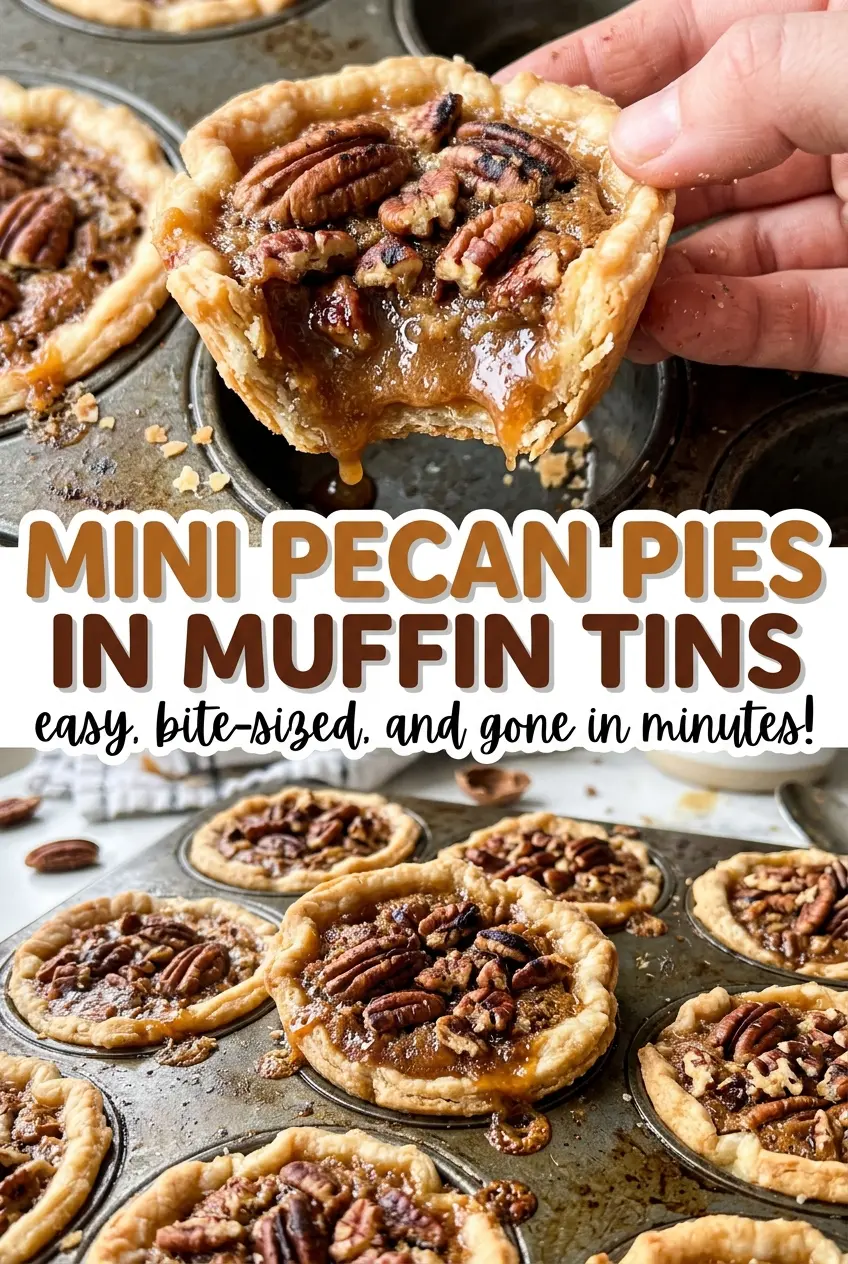
Save these mini pecan pies for a dessert tray: golden pastry cups hold a rich brown-sugar filling in tidy individual portions.
Why These Muffin-Tin Pies Need Two Separate Pastry Chills
Small pastry shells have less room to hide uneven dough, so the dough needs to be easy to roll and then settled again after shaping. The first chill gives the flour time to absorb moisture and firms the butter, which makes the dough less sticky and easier to roll evenly. Skip that rest and you may find yourself pressing warm, soft dough into the pan instead of fitting neat rounds.
There’s a second reason to chill the shells after they’re in the muffin pan: rolling and shaping warm the pastry. Cooling the formed shells before they meet the filling helps them hold their shape in the oven. Think of the two rests as doing different jobs, not as extra waiting for its own sake. The result is a pastry cup with a sturdier base and defined edges, ready to hold the filling without turning into a thick, tough crust.
This matters even more when you reroll the scraps. The first roll gives the dough its smoothest texture; each extra pass works it more. Reroll once, as needed to get the twelve rounds, and keep the scraps together rather than kneading them into a new ball. The dough should feel cool and pliable when you cut it, not soft enough to smear across the parchment.
What the Flour, Butter, and Syrup Each Bring to These Pies
- All-purpose flour — It gives the pastry enough structure to hold a filling without making the shell bready. A standard store-brand flour works well here; measure it consistently and avoid packing it tightly into the cup. A cup-for-cup gluten-free baking blend is the most practical alternative, though the dough will be more delicate to handle.
- Cold unsalted butter — Cold pieces leave small pockets in the dough that help create a tender, flaky crust. Unsalted butter lets you control the salt, and a regular grocery-store brand is fine. Keep it cold until you cut it into the flour; softened butter blends in too thoroughly for the same pastry texture.
- Ice water — Cold water brings the dough together without warming the butter. Start with the smaller amount and add more only if the mixture still falls apart when pressed. The dough should just begin to hold together; adding extra water out of caution can make the crust harder.
- Light corn syrup — This gives the filling its smooth, sticky body and helps it set into a cohesive center. It’s worth using here rather than swapping in a thinner liquid syrup, which can change how the filling bakes. The syrup doesn’t need to be a specialty brand.
- Light brown sugar and eggs — Packed brown sugar brings a gentle molasses note, while the eggs bind the filling as it bakes. Fresh eggs are all you need; bring the melted butter down from hot before whisking it in so the mixture stays smooth.
- Finely chopped pecans — Small pieces distribute through each shell instead of leaving a few large chunks in one bite and none in the next. Choose nuts that smell fresh, not stale or bitter. Chopping them yourself gives you control over the texture, but pre-chopped pecans are convenient if they’re fresh.
- Vanilla extract — Vanilla softens the sharp sweetness of the syrup and brown sugar. Pure extract is lovely, but a standard imitation vanilla works in a baked filling too. Measure it before adding so it doesn’t spill into the bowl.
From Cold Dough to Puffed, Set Pecan Centers
Bring the pastry together without overworking it
Whisk the flour and fine salt in a large bowl, then cut in the cold butter with a pastry blender or your fingertips until the pieces are about pea-size. Drizzle in 6 tablespoons of ice water and toss the mixture; it should begin clumping when you press it. Add up to 2 more tablespoons only if it still won’t hold, then press the dough into a disk, wrap it, and refrigerate for 1 hour.
Roll and fit the muffin-pan shells
Roll the chilled dough between sheets of parchment to 1/8-inch thickness, then cut twelve 4-inch rounds. Reroll the scraps once if you need to, keeping the dough as cool as you can. Lightly coat the wells of a standard 12-cup muffin pan with nonstick cooking spray, then press one round into each well without stretching it. Refrigerate the shells for 15 minutes while the oven heats to 350°F.
Whisk a smooth filling and portion it carefully
In a medium bowl, whisk the eggs, corn syrup, packed light brown sugar, melted butter, and vanilla until smooth. Fold in the finely chopped pecans so they’re spread through the mixture rather than left in a pile at the bottom. Divide the filling evenly among the chilled shells, leaving room at the top. Filling right to the edge makes it more likely to spill as the centers puff.
Bake until the centers are set, then cool
Bake for 25 to 30 minutes, until the crusts are golden and the filling is puffed and set; check that the centers reach at least 160°F. A puffed center alone isn’t enough to judge doneness, so use the temperature along with the visual cues. Cool the pies in the pan for 10 minutes, loosen the edges with a small knife, and transfer them to a wire rack. Let them cool completely before serving so the filling has time to settle.
Easy Changes for a Different Batch of Mini Pecan Pies
Use dark brown sugar for a deeper filling
Swap the packed light brown sugar for the same amount of packed dark brown sugar. Its stronger molasses flavor makes the filling taste a little more caramel-like, while keeping the same soft, set texture.
Try walnuts in place of pecans
Use the same volume of finely chopped walnuts for a less buttery, slightly earthier nut flavor. Chop them to a similar size as the pecans so they distribute evenly through the filling and fit comfortably in the small shells.
Make the crust gluten-free
Replace the all-purpose flour with the same amount of a cup-for-cup gluten-free baking blend formulated for pastry or baking, preferably one that includes xanthan gum. Keep the butter cold and add the ice water gradually until the dough holds together. Expect a more fragile dough when rolling and fitting the shells.
Storage and Reheating
- Refrigerator: Store completely cooled pies in an airtight container for 3 to 4 days. The crust softens a little as it sits but stays sturdy enough to pick up.
- Freezer: Freeze the cooled pies in a single layer until firm, then wrap them individually and place them in a freezer-safe container for up to 2 months. Thaw overnight in the refrigerator.
- Reheating: Warm refrigerated or thawed pies in a 300°F oven for about 8 to 10 minutes. The microwave is quick, but it softens the pastry instead of bringing back its crisp edges.
Questions That Come Up When Baking Mini Pecan Pies
Mini Pecan Pies in Muffin Tins
Ingredients
Equipment
Method
- Whisk the flour and salt together in a large bowl.
- Cut in the cold butter with a pastry blender or your fingertips until the pieces are about pea-size.
- Drizzle in 6 tablespoons ice water and toss until the dough begins to hold together, adding up to 2 more tablespoons as needed.
- Press the dough into a disk, wrap it, and refrigerate for 1 hour.
- Roll the dough between sheets of parchment to 1/8-inch thickness and cut out twelve 4-inch rounds, rerolling scraps once.
- Lightly coat the wells of a standard 12-cup muffin pan with nonstick cooking spray.
- Press a round into each well without stretching the dough.
- Refrigerate the pastry shells for 15 minutes while you preheat the oven to 350°F.
- Whisk the eggs, corn syrup, brown sugar, melted butter, and vanilla in a medium bowl until smooth.
- Fold in the pecans.
- Divide the filling evenly among the chilled shells, leaving room at the top so it does not overflow.
- Bake for 25 to 30 minutes, until the crusts are golden and the filling is puffed and set, with the centers reaching at least 160°F.
- Cool the pies in the pan for 10 minutes.
- Loosen the edges with a small knife and transfer them to a wire rack to cool completely.