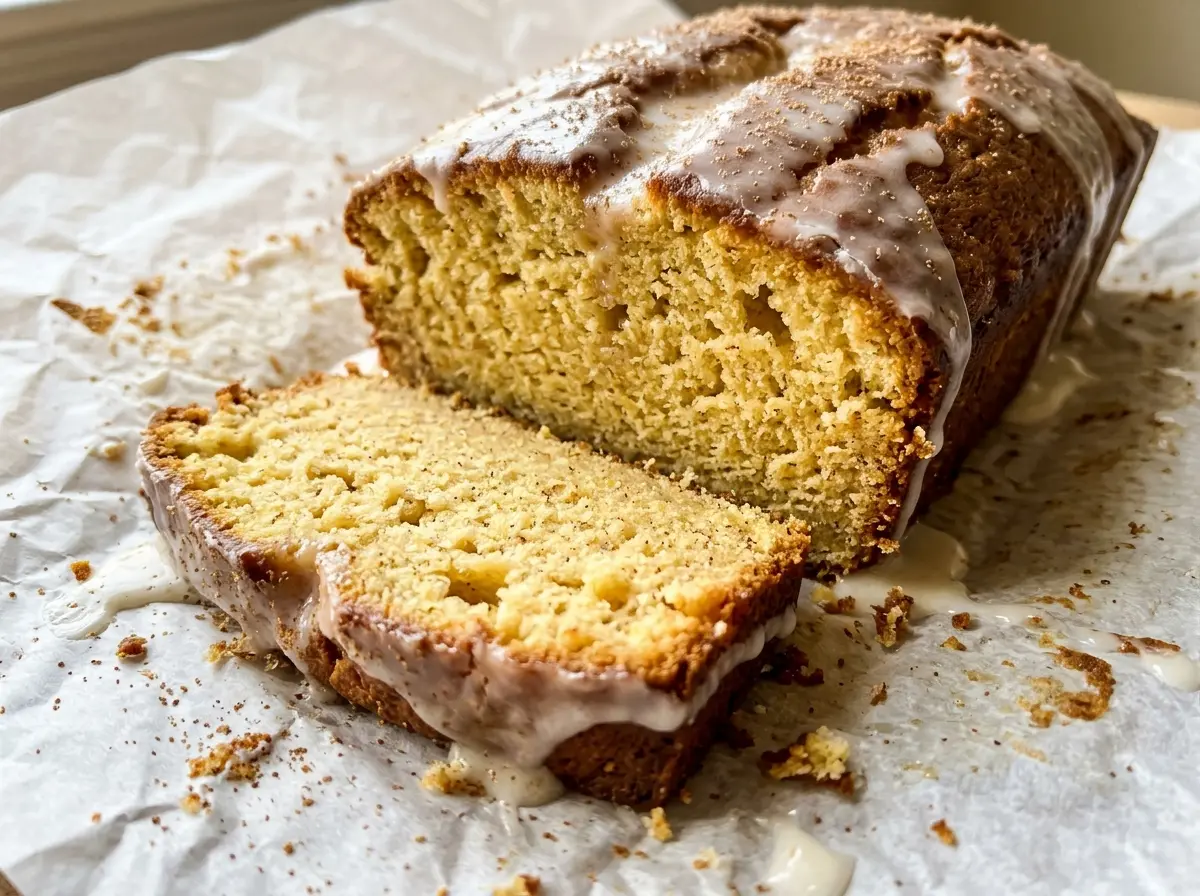
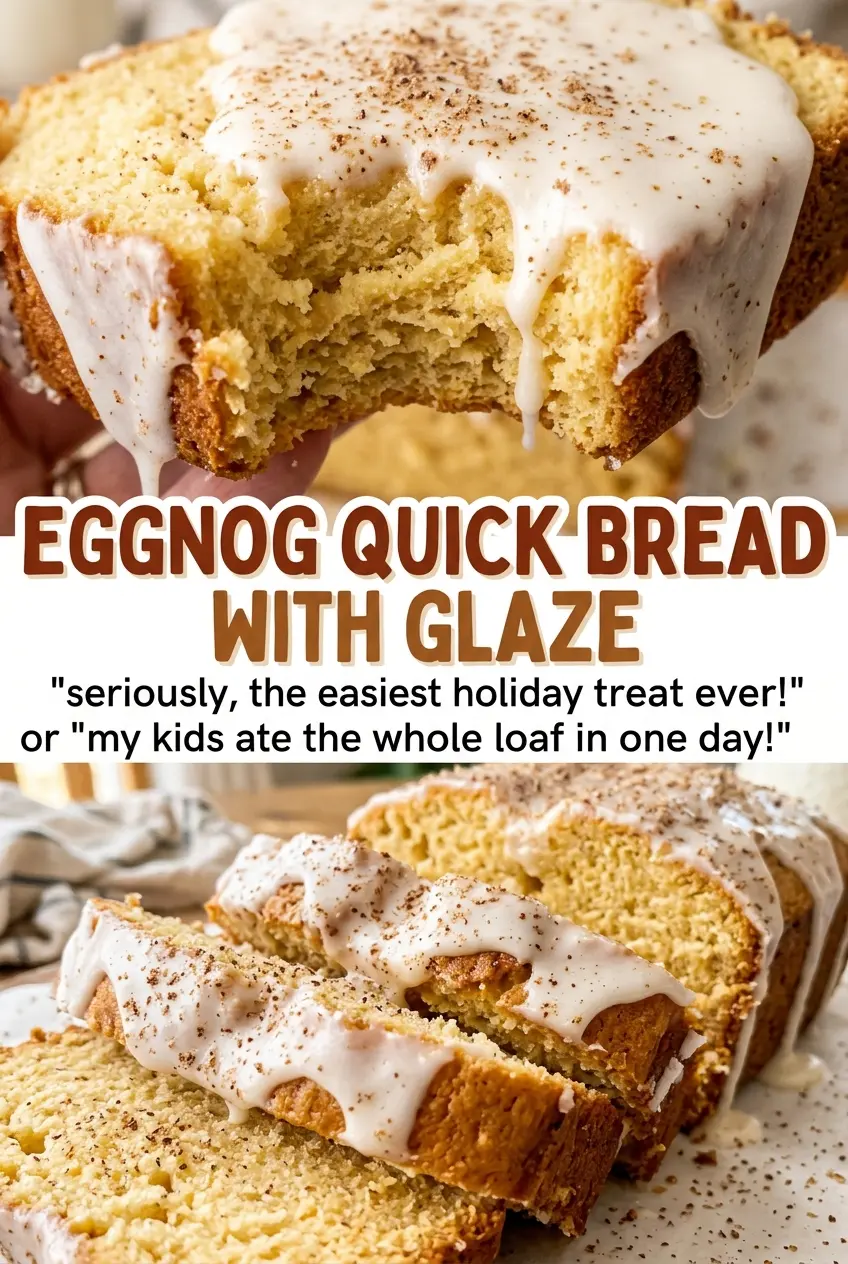
The top of this loaf turns golden while the middle still needs time in the oven, so I don’t judge it by color alone. A toothpick is more useful here: a few moist crumbs mean the eggnog quick bread is baked without drying out. The crumb should stay soft, and the nutmeg gives each slice a gentle warmth.
Eggnog brings dairy richness and a little sweetness to the batter, while melted butter keeps the loaf tender. I pair those flavors with vanilla and ground nutmeg rather than adding a long list of spices; the eggnog still gets to come through clearly.
A simple powdered sugar glaze adds a smooth, sweet finish without hiding the bread underneath. Let it set before slicing, and you’ll get neat pieces with a tender center and a thin ribbon of glaze on top.
Kitchen Note
Let the melted butter cool slightly before whisking it with the eggs. Butter that’s still hot can cook the eggs in little bits, and you want a smooth wet mixture before it meets the flour.
Save this eggnog quick bread with its soft crumb and simple eggnog glaze for a cozy bake that doesn’t need a mixer.
Why Folding Stops This Eggnog Loaf From Turning Tough
Quick bread batter doesn’t need to be perfectly smooth. Once flour gets wet, mixing develops gluten, and too much of it can leave a loaf chewy or tight instead of tender. That’s why I fold the wet mixture into the dry ingredients only until the last dry streaks disappear. A few small lumps are fine; chasing them with extra stirring is more likely to hurt the texture than help it.
Use a broad spatula and scrape along the bottom of the bowl as you fold, because pockets of flour can hide there. Turn the batter over itself rather than beating it in circles. The finished batter will look thick and somewhat uneven, not airy like cake batter. Transfer it to the pan as soon as it’s combined so the baking powder can do its work in the oven.
This light touch matters especially in a loaf, where the center takes longer to bake than the surface. A well-mixed batter rises evenly and gives you a soft slice; an overworked one can bake up dense even when the outside looks just right.
What Eggnog, Butter, and Nutmeg Each Bring to the Loaf
- Eggnog — It supplies moisture, richness, and the signature flavor, so it does more than make the batter wet. Use eggnog you enjoy drinking; a version with a flavor you dislike will still be noticeable in the finished loaf. For a dairy-free adaptation, use dairy-free eggnog in the same amount, though its sweetness and thickness can vary by brand.
- Unsalted butter — Melted butter gives the crumb richness and keeps the mixing simple. The flavor of an everyday butter works well here, so there’s no need for a specialty brand. For a dairy-free loaf, use an unsalted plant-based butter in the same amount; salted varieties can make the bread taste saltier than intended.
- All-purpose flour — It gives the loaf enough structure to hold its shape without making the crumb as delicate as cake. Spoon the flour into your measuring cup and level it rather than packing it down; too much flour can make the loaf dry and heavy. This recipe is built around all-purpose flour, so a direct swap to a different flour can change the texture.
- Baking powder — This is the loaf’s leavening, so it helps the batter rise without yeast. If the container has been open for a long time, check that it’s still fresh; weak baking powder can leave the center dense. There isn’t a useful substitute to recommend here without changing the recipe’s balance.
- Ground nutmeg and vanilla — Nutmeg gives the bread its warm, familiar aroma, while vanilla rounds out the eggnog flavor. Freshly opened ground nutmeg has a clearer scent, but the standard jar from the spice aisle is fine. If you prefer a more vanilla-forward loaf, leave out the nutmeg rather than adding another spice.
- Powdered sugar — Its fine texture makes a smooth glaze that drizzles over the loaf instead of crunching like granulated sugar. A standard bag works; clumps are the main thing to watch for as you whisk it with the eggnog.
The Mixing, Baking, and Glazing Cues That Matter
Whisk the dry ingredients evenly
Heat the oven to 350°F and coat a 9×5-inch loaf pan with nonstick cooking spray. In a large bowl, whisk the flour, granulated sugar, baking powder, salt, and nutmeg until the nutmeg looks evenly distributed. This gives the leavening a chance to spread through the flour instead of sitting in one pocket. Set the bowl aside while you combine the wet ingredients.
Combine the wet mixture without overworking the flour
In a medium bowl, whisk the room-temperature eggs with the eggnog, slightly cooled melted butter, and vanilla until combined. Pour that mixture into the dry ingredients and fold just until no dry streaks remain. Scrape the bottom of the bowl once or twice so flour isn’t left behind, but stop before the batter turns smooth from repeated stirring. Transfer it to the prepared pan.
Bake to moist crumbs, not just a golden top
Bake for 55 to 65 minutes, until the loaf is golden and a toothpick inserted in the center comes out with a few moist crumbs. Start checking near the beginning of that window, since ovens can vary. If the toothpick has wet batter on it, the center needs more time; if it comes out completely clean and the loaf has baked past the window, the crumb may be drier. The top should look set rather than glossy.
Cool the loaf before adding the glaze
Leave the loaf in its pan for 15 minutes, then turn it out onto a wire rack and let it cool completely. Whisk the powdered sugar and eggnog in a small bowl until the glaze is smooth. Drizzle it over the cooled loaf and give it time to set before slicing. Glazing a warm loaf makes the topping run off instead of resting neatly on top.
Simple Ways to Change the Finish or Flavor
Leave off the glaze
For a less-sweet finish, serve the loaf without the powdered sugar glaze. The bread still has its eggnog and vanilla flavor, but the top won’t have the extra sweetness or smooth finish of the drizzle.
Make it more vanilla-forward
Leave out the ground nutmeg if you want the eggnog and vanilla to stand out without the warm spice note. The loaf will taste milder and less traditionally spiced, while the texture stays the same.
Make a dairy-free loaf
Replace the eggnog with dairy-free eggnog and the unsalted butter with unsalted plant-based butter, keeping the same amounts. The eggs remain in the recipe, and the exact flavor and richness will depend on the replacements you choose.
Storage and Reheating
- Refrigerator: Keep the glazed loaf covered in the refrigerator for up to 4 days. The chilled crumb will feel firmer than it does at room temperature.
- Freezer: Freeze the completely cooled, unglazed loaf tightly wrapped for up to 2 months. Thaw it in the refrigerator, then add the glaze once it’s fully thawed.
- Reheating: Warm an individual slice briefly in the microwave if you like it soft and warm. Avoid heating it for too long, since the crumb can dry out and the glaze will melt.
Questions That Come Up With Eggnog Quick Bread
Eggnog Quick Bread with Glaze
Ingredients
Equipment
Method
- Preheat the oven to 350°F.
- Coat a 9x5-inch loaf pan with nonstick cooking spray.
- Whisk the all-purpose flour, granulated sugar, baking powder, salt, and ground nutmeg in a large bowl.
- Whisk the eggs, eggnog, melted butter, and vanilla extract in a medium bowl until combined.
- Pour the egg mixture into the flour mixture.
- Fold just until no dry streaks remain.
- Transfer the batter to the prepared pan.
- Bake for 55 to 65 minutes, until the loaf is golden and a toothpick inserted in the center comes out with a few moist crumbs.
- Cool the loaf in the pan for 15 minutes.
- Turn it out onto a wire rack.
- Cool completely.
- Whisk the powdered sugar and eggnog in a small bowl until smooth.
- Drizzle the glaze over the cooled loaf.
- Let the glaze set before slicing.