The batter in this cake is thinner than a cookie dough, and that’s exactly what makes it easy to spread into the corners of the pan. The eggnog brings its familiar warm-spice flavor right into the crumb, while a cinnamon frosting gives each square a soft, sweet finish. I like that it bakes in one 9×13-inch pan, so there’s no stacking or fussing with layers.
Eggnog does more than lend a seasonal flavor here: it’s part of the wet mixture that brings the cake together. Whisk it with the oil, eggs, and vanilla first, then combine that mixture with the dry ingredients just until no dry streaks remain. The result is a tender sheet cake with a gentle nutmeg note, topped with a frosting that’s easy to spread once the cake has cooled completely.
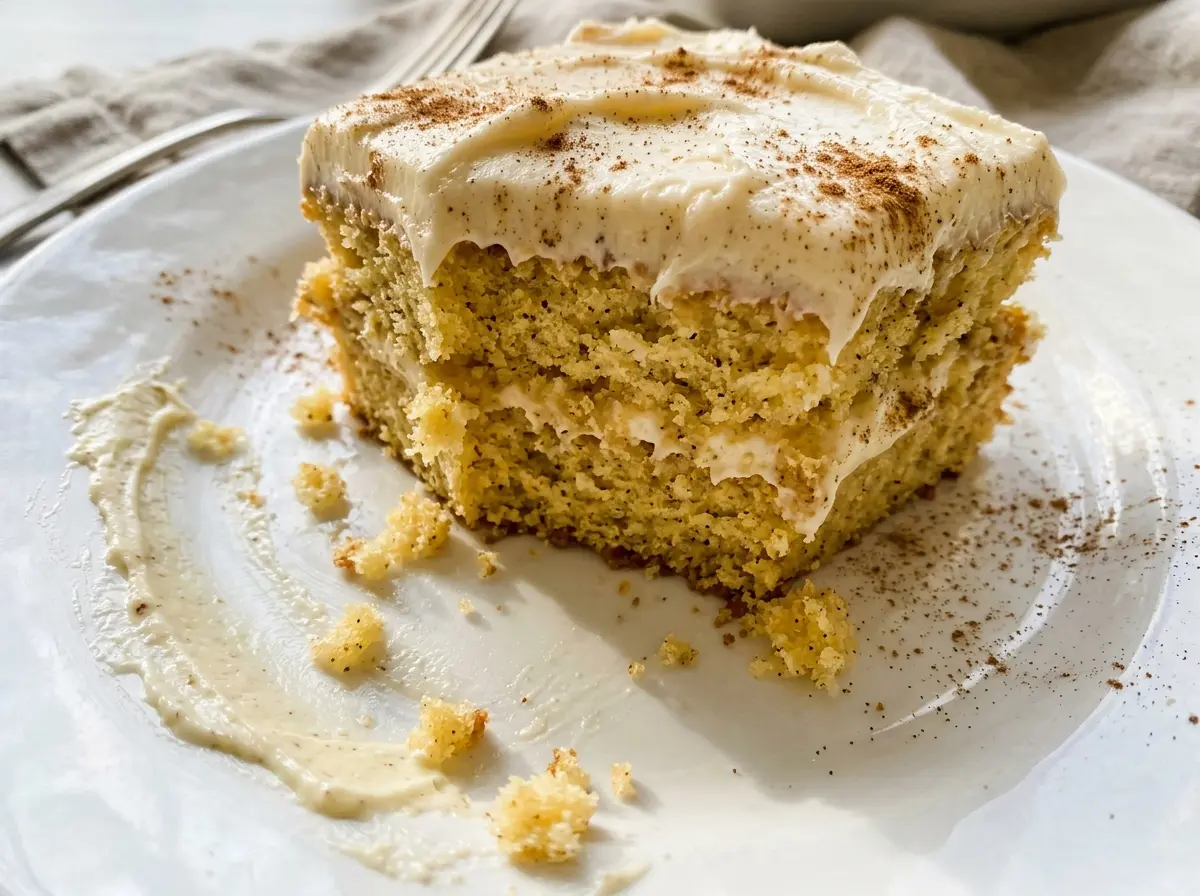
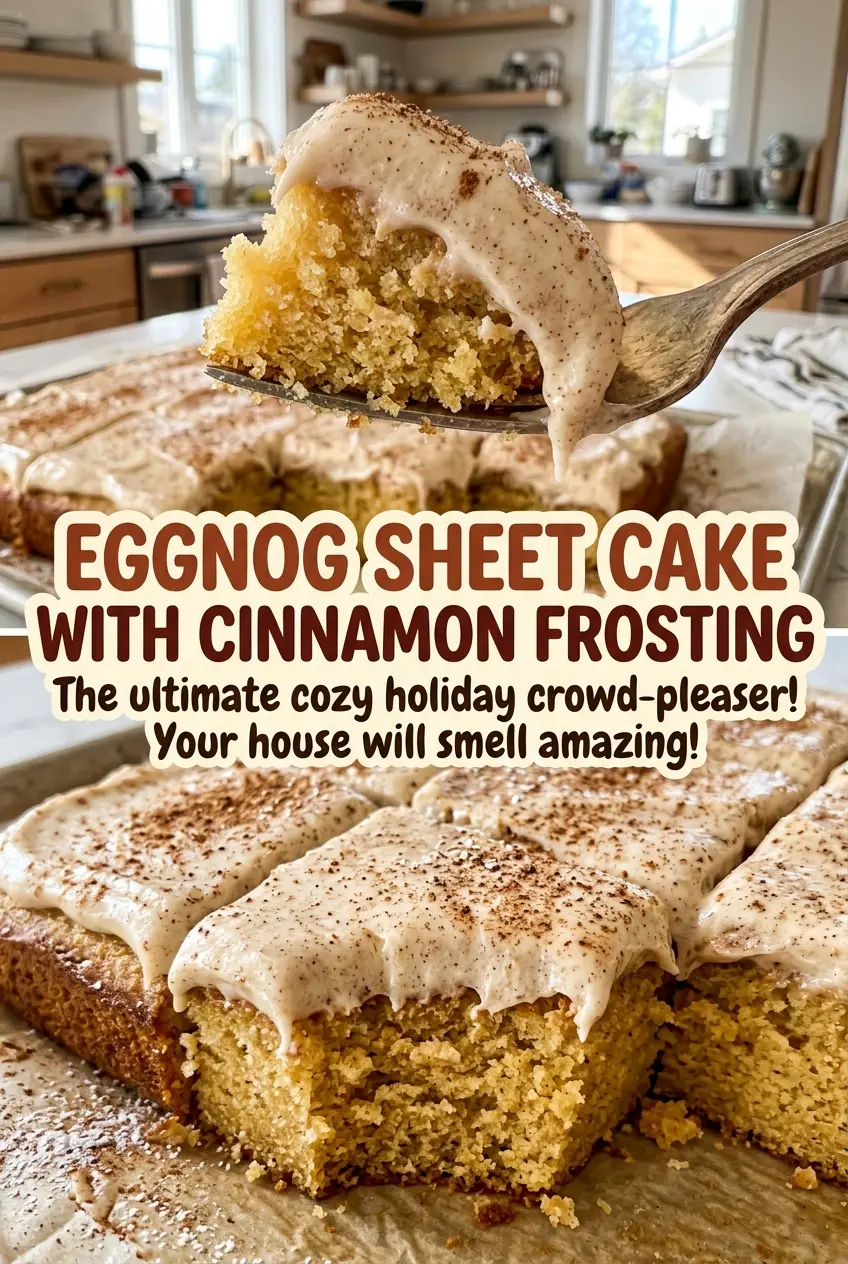
Cut into squares, the cake has a soft crumb under a smooth layer of cinnamon frosting.
Kitchen Note
Let the cake cool completely in the pan before the frosting goes on. Even a slightly warm center can soften the butter frosting and make it harder to spread neatly.
Save this eggnog sheet cake with cinnamon frosting for a soft, warmly spiced cake that’s easy to cut and share.
Why the Eggnog Goes Into the Cake, Not Just the Frosting
Putting eggnog in the batter means its flavor is carried through the cake, rather than relying on the frosting to supply all the spice. The nutmeg in the dry mixture reinforces that warm note, while vanilla keeps the flavor rounded. A little cinnamon in the frosting gives you a second, distinct layer of spice instead of making the whole cake taste like one flat seasoning.
That balance is useful in a sheet cake, where each square gets both crumb and topping in the same bite. The frosting is sweet and cinnamon-forward; the cake itself stays gently spiced. I wouldn’t load the batter with more spices just to make the flavor stronger, because the frosting already adds a clear cinnamon finish. If you want the eggnog to stand out, let the cake and frosting keep their separate roles.
What Each Ingredient Brings to This Eggnog Sheet Cake
- Eggnog — It supplies the cake’s signature flavor and liquid for the batter. Use eggnog you enjoy drinking, since its spice and sweetness will come through; the recipe doesn’t depend on a particular brand.
- All-purpose flour — This gives the cake enough structure to hold its shape when cut into squares. Measure it without packing it tightly into the cup, which can leave the batter heavier than intended.
- Vegetable oil — Oil keeps the cake tender without needing to cream butter into the batter. Stick with a neutral vegetable oil so it doesn’t compete with the eggnog and spices.
- Eggs — They help bind the wet and dry mixtures and support the cake as it bakes. Bring them out while you gather the other ingredients so they aren’t fridge-cold when you whisk the wet mixture.
- Nutmeg and cinnamon — Nutmeg gives the cake a quiet warmth, while cinnamon makes the frosting’s spice more noticeable. Ground spices are convenient here; fresh, fragrant jars make the difference, especially in the frosting.
- Unsalted butter — Softened butter beats into a creamy base for the frosting. If it’s still cold and firm, it won’t combine as smoothly with the powdered sugar.
- Powdered sugar — It creates the frosting’s body and smooth texture. Sifting isn’t required by this method, but break up any stubborn clumps before adding it to the bowl.
- Milk — Milk loosens the frosting so it can be spread over the cake. Add it with the other frosting ingredients, then let the mixer bring everything together until smooth and spreadable.
- Vanilla extract — A small amount rounds out the cake’s sweet, spiced flavor. A standard pure or imitation vanilla works; there’s no need to use an expensive bottle for this batter.
The Mixing and Baking Cues That Keep This Sheet Cake Tender
Whisk the dry ingredients evenly
Heat the oven to 350°F and grease a 9×13-inch baking pan. Whisk the flour, granulated sugar, baking powder, salt, and nutmeg in a large bowl until the nutmeg is distributed through the flour. Break up any lumps as you whisk so you don’t find pockets of baking powder or spice in the finished cake.
Bring the two mixtures together gently
In a medium bowl, whisk the eggnog, vegetable oil, eggs, and vanilla until combined. Pour that mixture into the flour mixture and whisk just until no dry streaks remain. Stop there; continuing to beat after the flour disappears can make the cake less tender. Spread the batter across the pan so it reaches the corners.
Bake until the center springs back
Bake for 28–33 minutes. The top should spring back lightly when touched, and a toothpick inserted in the center should come out clean or with a few moist crumbs. A few crumbs are fine; wet batter on the toothpick means the center needs more time. Set the pan aside to cool.
Beat the frosting smooth before spreading
Beat the softened butter in a large bowl with an electric mixer until creamy. Add the powdered sugar, cinnamon, salt, and milk, then beat on low until combined so powdered sugar doesn’t fly out of the bowl. Increase to medium and beat until the frosting looks smooth and spreadable. Spread it over the cooled cake.
Three Easy Ways to Change the Spice and Finish
Make the cake without nutmeg
Leave the nutmeg out of the dry mixture for a milder, less spiced cake. The eggnog still gives the crumb its characteristic flavor, and the cinnamon frosting remains the strongest spice note.
Use a cinnamon-free frosting
Leave out the cinnamon in the frosting for a plain butter frosting that lets the eggnog and nutmeg in the cake lead. The topping will be sweeter and less warmly spiced, but it will still spread over the cooled cake.
Serve it as an unfrosted eggnog cake
Skip the frosting for a simpler cake with a lighter finish. The slices won’t have the cinnamon-sugar contrast of the full version, but the eggnog and nutmeg still flavor the crumb.
Storage and Reheating
- Refrigerator: Cover the cake and refrigerate it for up to 4 days. The frosting will firm up when cold, so let a slice sit briefly before serving for a softer texture.
- Freezer: Freeze frosted slices in a single layer until firm, then wrap them well and store in an airtight container for up to 2 months. Thaw in the refrigerator before serving.
- Reheating: Skip the microwave; it can soften the frosting unevenly. Let refrigerated slices come closer to room temperature instead.
Questions That Come Up With Eggnog Sheet Cake
Eggnog Sheet Cake with Cinnamon Frosting
Ingredients
Equipment
Method
- Heat the oven to 350°F.
- Grease a 9x13-inch baking pan.
- Whisk the flour, granulated sugar, baking powder, salt, and nutmeg in a large bowl.
- Whisk the eggnog, vegetable oil, eggs, and vanilla in a medium bowl until combined.
- Pour the eggnog mixture into the flour mixture and whisk just until no dry streaks remain.
- Spread the batter in the prepared pan.
- Bake for 28–33 minutes, until the top springs back lightly and a toothpick inserted in the center comes out clean or with a few moist crumbs.
- Cool the cake completely in the pan.
- Beat the butter in a large bowl with an electric mixer until creamy.
- Add the powdered sugar, cinnamon, salt, and milk, then beat on low until combined and on medium until smooth and spreadable.
- Spread the frosting over the cooled cake.