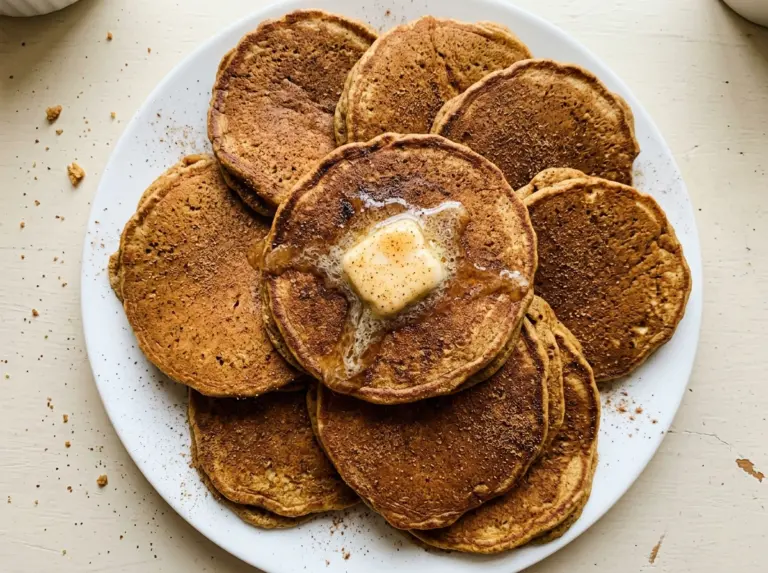
The first time I made a baked French toast, the top browned before the middle had a chance to set. Brioche is soft and rich, so it needs time to take in the custard before it goes into the oven. For this French toast casserole with brioche, I let the bread soak in the egg mixture in the refrigerator, then add a separate brown sugar topping just before baking.
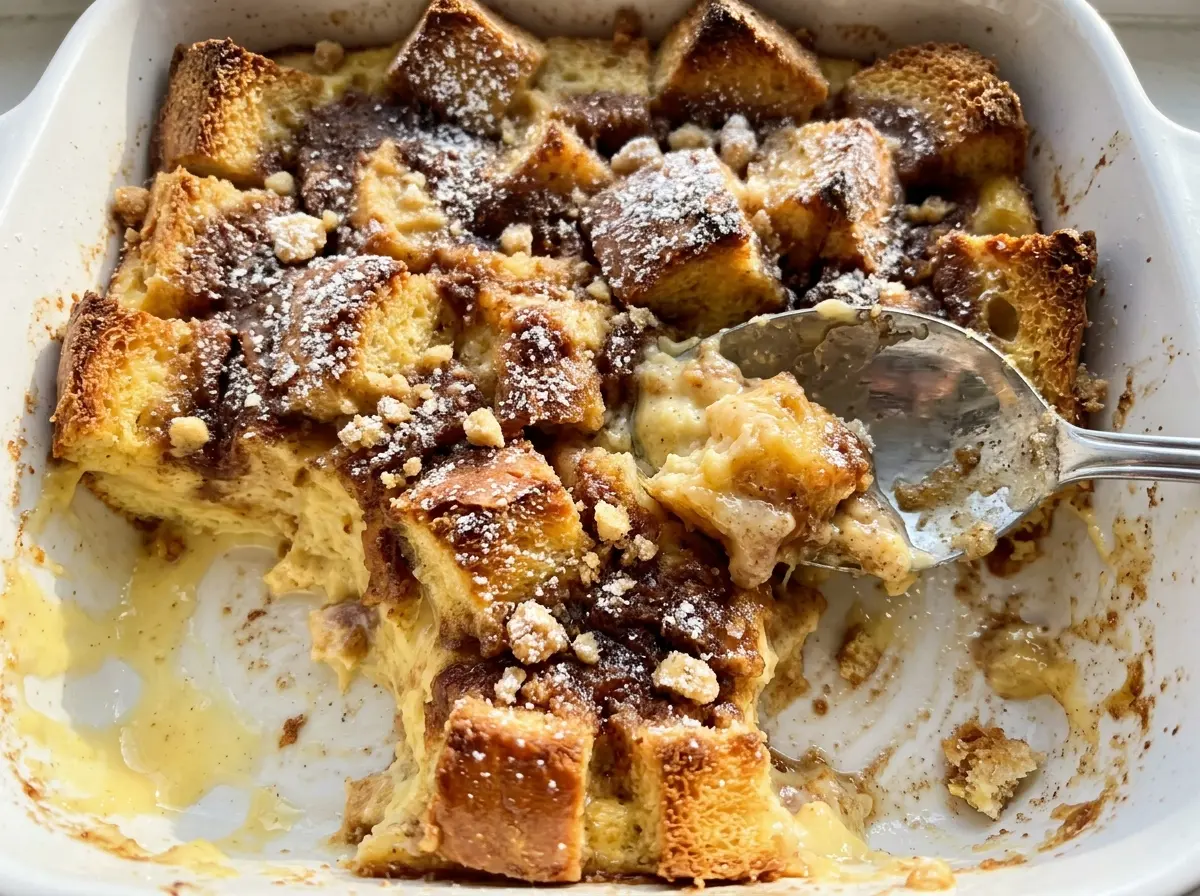
That little bit of planning pays off on a busy morning: most of the hands-on work happens ahead, and the casserole bakes in one dish. The custard settles into the cubes while they chill, and the topping stays crumbly instead of turning damp. After baking, the center is tender and the top has a golden, cinnamon-scented crunch.
Kitchen Note
Give the casserole its full 10-minute rest before serving. The custard settles during that pause, so the first scoop holds together instead of spreading across the plate.
Save this brioche French toast casserole for an easy-ahead brunch with a custardy center and crisp cinnamon topping.
Why the Streusel Should Stay Out of the Custard Overnight
It’s easy to think the topping can go on as soon as the bread is assembled, but the crumble behaves differently from the brioche. The bread needs a long, cool soak; the flour, brown sugar, and butter in the topping are meant to bake into coarse crumbs. If that mixture sits on the wet bread for hours, it loses the contrast that makes the top worth adding.
Keeping the two parts separate gives each one the conditions it needs. The brioche takes on the egg-and-cream custard, while the cold topping remains crumbly until it meets the oven. That contrast is especially noticeable in a casserole: the lower cubes bake up soft and rich, and the exposed top gets golden rather than blending into a sweet paste.
This also makes the schedule easier to manage. Assemble the bread and custard ahead, then keep the topping covered in the refrigerator until baking time. You don’t have to rush through a crumb topping in the morning, and it goes onto the casserole in an even layer when you’re ready to bake.
Why Brioche, Eggs, and Cream Make This Casserole Work

- Brioche — Its tender crumb absorbs custard while keeping a buttery, slightly sweet character. Cut the loaf into even cubes so they soak at a similar rate. Another bread won’t give quite the same rich texture, so brioche is the choice for this version.
- Eggs — They bind the milk and cream into a custard that sets as the casserole bakes. Whisk until the yolks and whites are fully combined; streaks of egg white can leave uneven patches through the dish.
- Whole milk and heavy cream — The milk loosens the custard, while the cream gives it a fuller texture. Both contribute to the balance here, so replacing one with the other changes the richness and consistency rather than making a like-for-like swap.
- Vanilla and cinnamon — Vanilla rounds out the sweet custard, and cinnamon brings warmth to both the bread and the topping. Ground cinnamon works well here; there’s no need to seek out a specialty version.
- Cold unsalted butter — Small pieces cut into the flour and brown sugar create the crumbly topping. Keep it cold while you work; softened butter smears into the dry ingredients instead of making coarse crumbs.
The Overnight Soak and Two-Stage Bake That Set the Center
Arrange the Brioche and Whisk the Custard
Coat a 9×13-inch baking dish with nonstick cooking spray and spread the brioche cubes evenly across it. Whisk the eggs, whole milk, heavy cream, granulated sugar, vanilla, cinnamon, and salt in a large bowl until the mixture looks uniform. Pour it over the bread, aiming for an even distribution rather than one puddle in the middle. Gently press the cubes down so they begin absorbing the custard.
Give the Bread Time to Absorb
Cover the dish and refrigerate it for at least 4 hours or overnight. This pause lets the liquid move into the bread instead of leaving the center dry when the casserole bakes. If a few cubes sit above the custard, press them gently back down before covering. The bread should be moistened throughout, not mashed into a paste.
Make a Crumbly Topping
Mix the flour, packed light brown sugar, cinnamon, and salt in a medium bowl. Work in the cold butter with your fingers or a pastry cutter until coarse crumbs form. Stop before the mixture turns into a smooth paste; small, irregular crumbs give the baked top its texture. Cover the topping and refrigerate it separately until it’s time to bake.
Bake Until the Center Sets
Set the casserole on the counter while the oven heats to 350°F, about 30 minutes. Sprinkle the topping over the bread, cover loosely with foil, and bake for 30 minutes. Remove the foil and continue baking for 20 to 30 minutes, until the top is golden and an instant-read thermometer inserted in the center reads 160°F. Let it rest before serving.
Two Simple Ways to Change the Sweetness and Spice
A lower-sugar casserole without streusel
For a less-sweet version, leave out the granulated sugar in the custard and omit the brown sugar topping altogether. The eggs, milk, cream, and brioche still bake into a tender casserole, but you’ll lose the crunchy, caramel-like top and the finished dish will taste noticeably less sweet.
A gentler cinnamon flavor
If you prefer the vanilla and buttery bread to stand out, leave the cinnamon out of both the custard and the topping. The casserole will still have the same soft center and crisp crumble, with a milder, less-spiced finish.
Storage and Reheating
- Refrigerator: Store leftovers covered for 3 to 4 days. The topping softens as it sits, though the custard stays tender.
- Freezer: Freeze cooled portions in an airtight container for up to 2 to 3 months. Thaw overnight in the refrigerator for more even reheating.
- Reheating: Cover a portion and warm it in the oven until the center reaches 165°F, or heat it in the microwave until steaming hot. Uncovered oven reheating can dry the bread before the middle is hot.
Questions That Come Up Before the Casserole Goes in the Oven
French Toast Casserole with Brioche
Ingredients
Equipment
Method
- Coat a 9x13-inch baking dish with the nonstick cooking spray and arrange the brioche cubes evenly in the dish.
- In a large bowl, whisk the eggs, milk, heavy cream, granulated sugar, vanilla, cinnamon, and salt until combined.
- Pour the egg mixture evenly over the brioche.
- Gently press the cubes down so they absorb the liquid.
- Cover and refrigerate for at least 4 hours or overnight.
- In a medium bowl, mix the flour, brown sugar, cinnamon, and salt.
- Cut in the butter with your fingers or a pastry cutter until the mixture forms coarse crumbs.
- Cover and refrigerate the topping separately until ready to bake.
- Set the casserole on the counter while the oven heats to 350°F, for about 30 minutes.
- Sprinkle the topping evenly over the casserole.
- Cover loosely with foil and bake for 30 minutes.
- Remove the foil and bake for 20 to 30 minutes more, until the top is golden and the center reaches 160°F on an instant-read thermometer.
- Let the casserole rest for 10 minutes before serving.