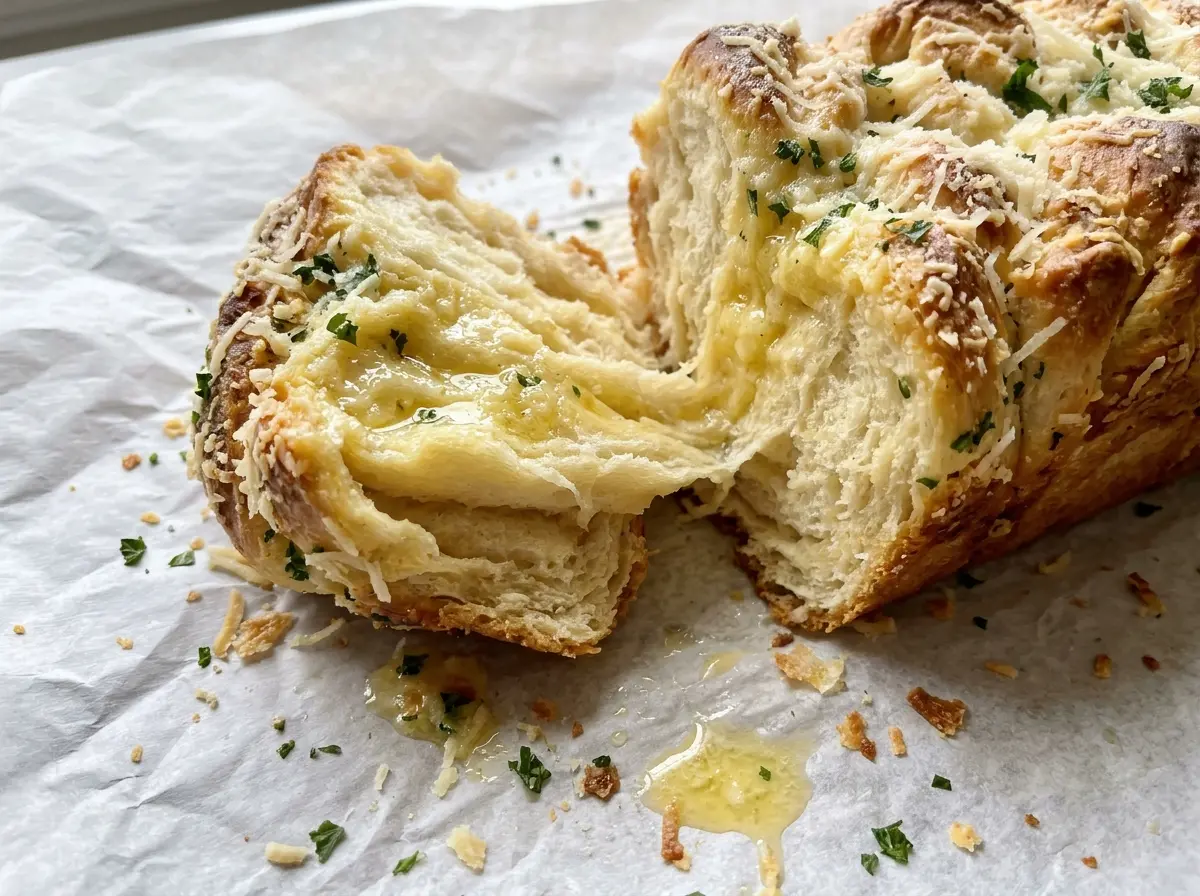
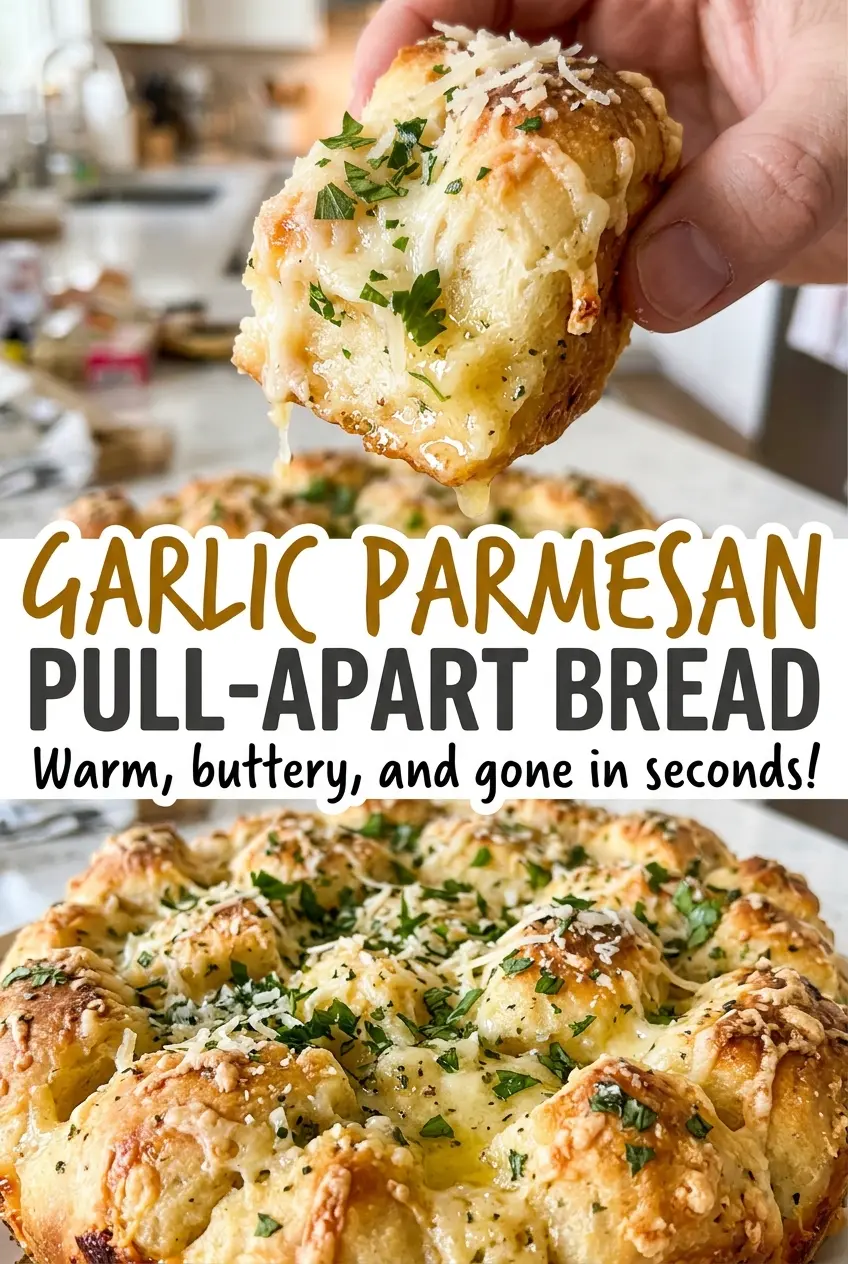
When the garlic butter hits warm dough, it starts to smell like the best part of garlic bread before the rolls even reach the oven. I like this pull-apart version because each piece gets its own coating of butter and Parmesan, so you don’t have to slice a loaf to serve it. The soft centers stay tucked together while the tops turn golden.
The dough needs enough kneading to become smooth and elastic before it rises. Then, instead of brushing the finished loaf with garlic butter, you dip each of the 24 dough balls in the butter mixture and roll it in finely grated Parmesan. That gives the pieces a savory coating all around, with plenty of edges to pull apart. Set out the warm rolls straight from the pan and let everyone reach for one.
Kitchen Note
Give the bread its full 10-minute rest in the pan before pulling it apart. The rolls are tender straight from the oven, and that short pause helps them hold their shape as you serve them.
Save Garlic Parmesan Pull Apart Bread for its buttery garlic coating and Parmesan-crusted rolls, ready to share warm from the pan.
Why Adding Extra Flour Can Leave These Pull-Apart Rolls Heavy
A shaggy dough can look rough at first, but that doesn’t mean it needs another handful of flour. Kneading on an unfloured surface for 8 to 10 minutes gives the dough time to become smooth and elastic without drying it out. If you keep dusting the counter, the dough can take on more flour than intended, and the finished rolls may feel dense instead of soft.
Start kneading while the dough still feels a little tacky. As you work it, the surface should become smoother and the dough should gather into a cohesive ball. If it sticks to your hands or the counter at first, keep kneading rather than immediately correcting it with flour. The first rise gives the dough time to expand; wait until it has doubled, rather than relying on the clock alone, since a cool room can slow the rise.
Those two cues—elastic dough before rising and a doubled dough afterward—set up the smaller rolls to bake evenly. When the dough is divided into equal pieces, they’ll puff at a similar pace instead of leaving a few oversized centers that take longer to cook.
How Milk, Yeast, and Finely Grated Parmesan Shape the Rolls
- Warm whole milk and active dry yeast — The milk wakes the yeast while adding richness to the dough. Keep it between 105 and 110°F; too-cool milk can delay foaming, and milk that’s too hot can damage the yeast. Let the mixture stand until it looks foamy before adding the other dough ingredients.
- All-purpose flour — It gives the dough the structure needed to hold its shape as 24 small rolls. Weighing isn’t required here, but measure without packing the flour into the cup so the dough doesn’t start out dry. The recipe relies on wheat flour for its elastic texture, so a one-for-one gluten-free swap won’t produce the same pull-apart crumb.
- Egg and olive oil — The room-temperature egg blends more readily into the yeast mixture, while the oil helps keep the dough tender. Use a mild olive oil so it supports the savory coating without taking over. Keep both in the dough; removing either changes its texture.
- Softened butter, garlic, and fresh parsley — Softened butter is easy to measure for greasing the pan, while the rest melts into the coating. Mince the garlic finely so small pieces cling to the rolls rather than falling into the bowl. Chop the parsley before stirring it in, and use fresh parsley for its bright color and clean flavor.
- Finely grated Parmesan — Fine shreds cling to the buttered dough more evenly than thick flakes, giving each roll a close coating. Freshly grated Parmesan has a tender texture, but finely grated packaged Parmesan is convenient if that’s what you have. Keep it in a shallow bowl so each dough ball can be rolled through it without a mess.
From Foamy Yeast to Golden Rolls: The Four Stages That Matter
Wake the Yeast and Knead Until Elastic
Stir the warm milk, sugar, and active dry yeast together in a large bowl, then let the mixture stand for 5 to 10 minutes. Look for foam on the surface; if it stays flat, the yeast hasn’t shown the activity you want before building the dough. Stir in the room-temperature egg and olive oil, then add the flour and salt until a shaggy dough forms. Knead on an unfloured surface for 8 to 10 minutes, until smooth and elastic.
Wait for the Dough to Double
Return the dough to the bowl, cover it, and let it rise in a warm place for 60 to 90 minutes. The useful cue is size: it should be doubled, not merely a little puffier. A drafty or cool spot can stretch the rise, so give the dough the time it needs rather than moving on while it’s still compact. This rise makes the rolls lighter once baked.
Coat and Arrange the 24 Pieces
Grease a 9×13-inch baking dish with 1 teaspoon of the softened butter. Melt the remaining butter, stir in the minced garlic and chopped parsley, and put the finely grated Parmesan in a shallow bowl. Divide the dough into 24 equal pieces, roll them into balls, dip each in the butter mixture, then coat it in Parmesan before arranging the balls in 4 rows of 6. If some pieces are much larger than others, they won’t bake at the same pace, so take a moment to even them out.
Proof Until Puffy, Then Bake Through the Center
Cover the arranged rolls and let them rise for 30 to 45 minutes, until they look puffy and are touching. Heat the oven to 350°F during the last 20 minutes of this rise. Bake for 20 to 25 minutes, until the tops are golden brown and a roll in the center registers 190°F; color alone can be misleading when the middle is still doughy. Let the pan rest for 10 minutes before serving.
Two Simple Ways to Change the Garlic-Parmesan Coating
A gentler, garlic-free coating
Leave the minced garlic out of the melted butter and parsley mixture, then dip and coat the rolls the same way. The bread keeps its buttery Parmesan finish, but without the sharp garlic bite.
A parsley-free, cheese-forward version
Skip the chopped parsley and stir the garlic directly into the melted butter. The coating loses its green flecks and tastes more focused on the garlic and Parmesan. Keep the dough and shaping method unchanged.
Storage and Reheating
- Room temperature: Keep leftover bread covered at room temperature for up to 2 days. The crust softens as it sits, but the rolls remain easy to pull apart.
- Freezer: Freeze cooled rolls in an airtight freezer-safe container for up to 2 months. Thaw them at room temperature before reheating.
- Reheating: Warm the rolls in a 300°F oven until heated through. Avoid a long microwave session, which can make the bread tough and chewy.
Questions That Come Up While Making Garlic Parmesan Pull Apart Bread
Garlic Parmesan Pull Apart Bread
Ingredients
Equipment
Method
- Stir the warm milk, sugar, and yeast together in a large bowl.
- Let stand for 5-10 minutes, until foamy.
- Stir in the egg and olive oil, then add the flour and salt.
- Mix until a shaggy dough forms, then knead on an unfloured surface for 8-10 minutes, until smooth and elastic.
- Return the dough to the bowl, cover, and let rise in a warm place for 60-90 minutes, until doubled in size.
- Grease a 9x13-inch baking dish with 1 teaspoon of the butter.
- Melt the remaining butter and stir in the garlic and parsley.
- Put the Parmesan in a shallow bowl.
- Divide the dough into 24 equal pieces and roll them into balls.
- Dip each ball in the butter mixture, roll in Parmesan, and arrange in the baking dish in 4 rows of 6.
- Cover and let rise for 30-45 minutes, until puffy and touching; heat the oven to 350°F during the last 20 minutes.
- Bake for 20-25 minutes, until golden brown and a roll in the center registers 190°F.
- Let rest in the pan for 10 minutes before serving.