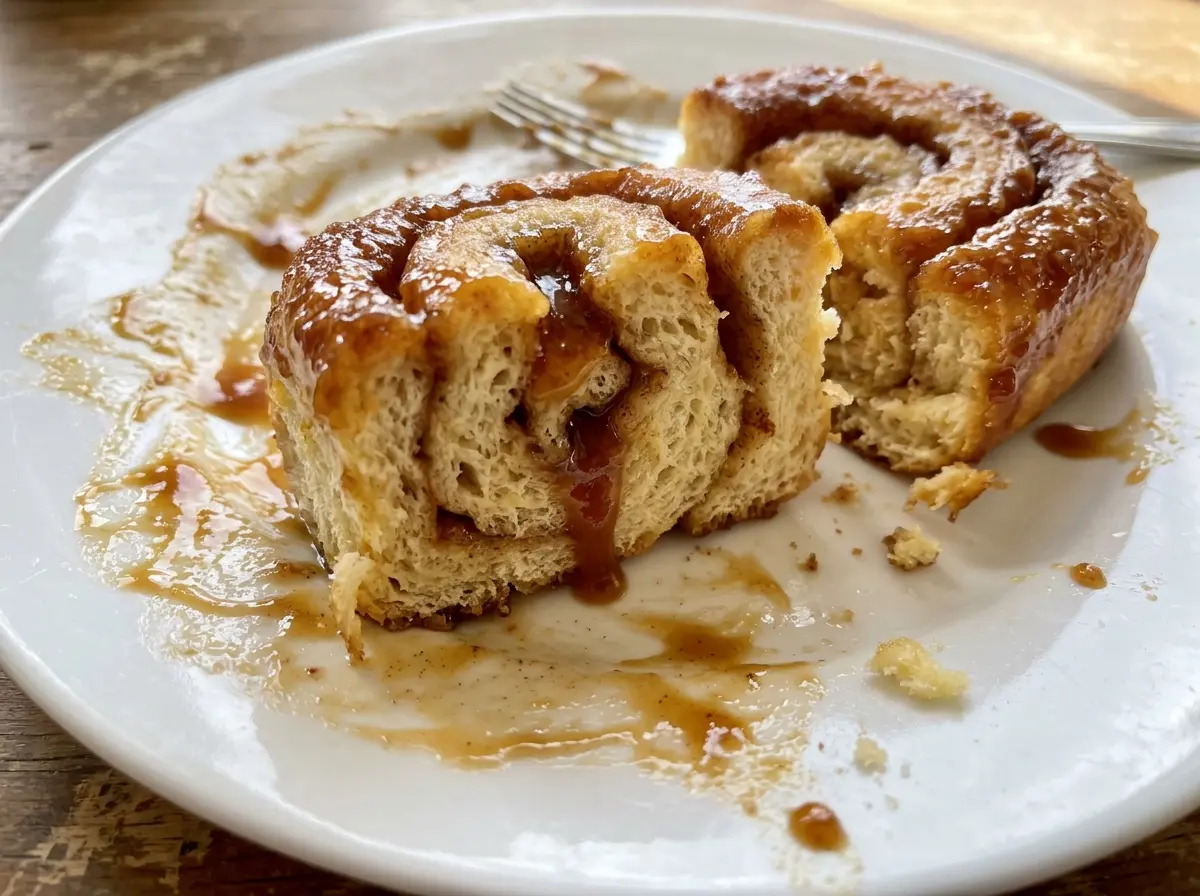
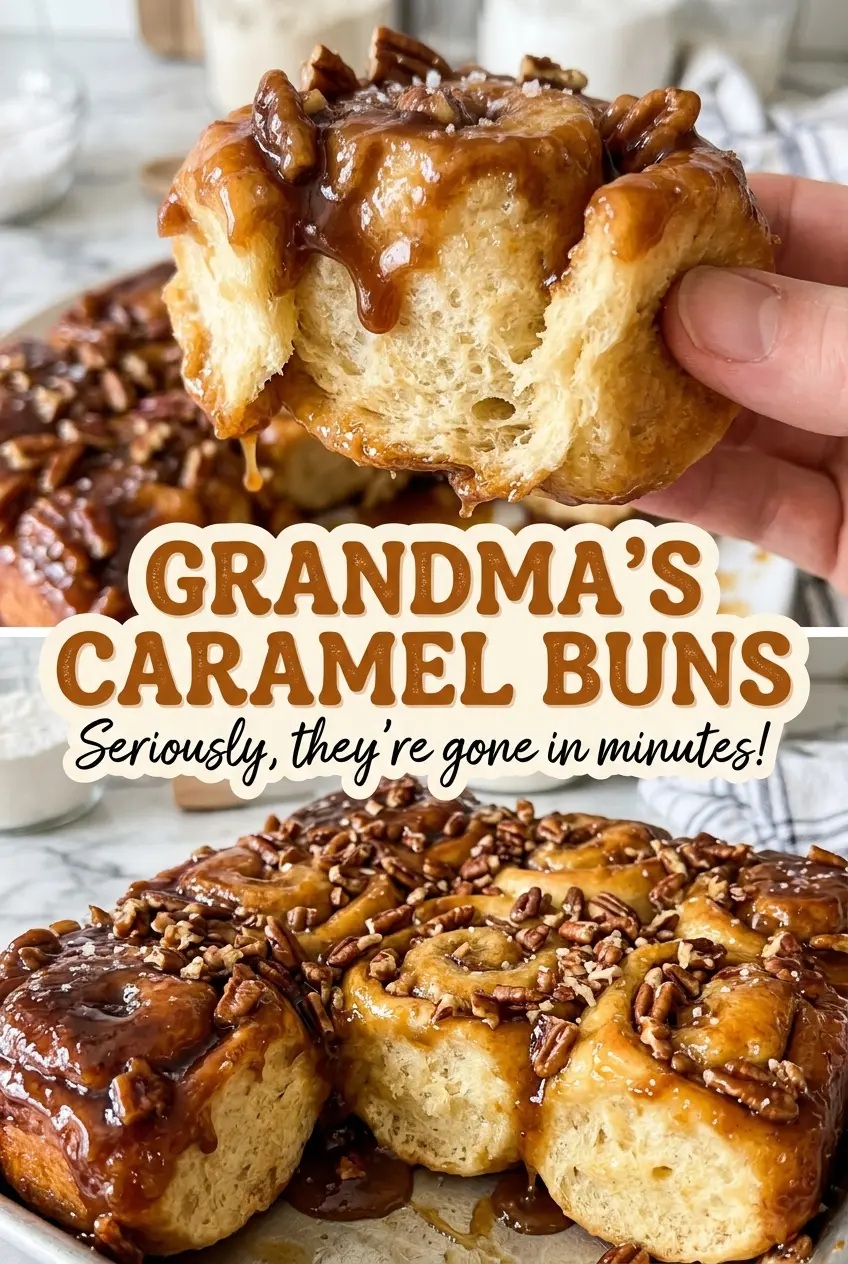
The caramel is still warm when the platter goes over the pan, and that quick flip is what turns these buns into the sticky, glossy kind you eat with a fork. I learned not to wait around once they’ve had their five-minute rest: the topping needs to be warm enough to release and flow over the spirals. Grandma’s Caramel Buns have a soft, enriched dough wrapped around cinnamon and brown sugar, with a buttery caramel layer that starts in the bottom of the baking dish.
The dough is tender, but it still needs a proper knead and two rises; rushing either one leaves you with dense buns instead of light spirals. I keep the dough’s rise cues in mind rather than watching the clock alone, especially when the kitchen is cool. Meanwhile, the topping gets a brief gentle boil before it goes into the pan, so it’s smooth and ready to coat the buns after baking. The finished buns are golden on top, soft through the middle, and covered in warm caramel.
Kitchen Note
I set a large serving platter beside the pan before the buns go in the oven. After their five-minute rest, invert the pan carefully while the caramel is still warm; waiting until it cools makes the topping less willing to release.
Save Grandma’s Caramel Buns for a bake when you want soft cinnamon spirals under a warm, buttery caramel topping.
Why the Caramel Starts Beneath the Buns
These buns bake on top of their caramel instead of getting frosting after they come out of the oven. The butter, brown sugar, corn syrup, and cream cook together into a smooth sauce, then spread across the bottom of the greased baking dish. As the buns bake, the sauce bubbles around their edges. Once you invert the pan, that caramel becomes the glossy topping rather than a separate drizzle.
The corn syrup is useful here because it helps the brown-sugar mixture stay smooth as it cooks. Whisk the sauce as it comes to a gentle boil, then give it just one minute on the heat. A hard, prolonged boil isn’t needed. Pour it into the dish and spread it evenly so each bun has caramel underneath it; a bare patch in the pan means some of that topping won’t land where you expect after the flip.
What Gives These Buns Their Soft Spiral and Sticky Top
- Active dry yeast — It gives the dough its rise and helps build the light, soft texture. Check that it foams after sitting with the warm milk and granulated sugar; that visible activity is a useful sign before you mix in the rest.
- Whole milk and eggs — These enrich the dough and make it tender rather than lean and bread-like. Bring the eggs to room temperature as listed, and warm the milk to the specified range; milk that’s too hot can interfere with the yeast.
- Unsalted butter — Butter has three jobs here: some goes into the dough, some is softened for spreading over the rolled dough, and some builds the caramel. Keep those portions separate so the melted butter for the dough has time to cool and the filling butter stays soft enough to spread.
- All-purpose flour — It gives the dough enough structure to hold the spiral while keeping the crumb tender. Add it to the wet mixture until a shaggy dough forms, then knead; adding extra flour too freely during kneading can make the finished buns heavier.
- Light brown sugar — Its molasses notes belong in both the caramel and the cinnamon filling. Keep the topping portion and filling portion separate, since one becomes the sauce and the other makes the sweet ribbon inside each bun.
- Heavy cream and light corn syrup — Together with butter and brown sugar, these make the topping pourable and smooth. Use heavy cream for the intended richness; a thinner liquid won’t give the caramel the same body.
- Ground cinnamon — Cinnamon gives the inner swirl its familiar warmth without changing the buttery caramel outside. Mix it thoroughly with the brown sugar so it doesn’t collect in a few concentrated spots.
Build the Dough, Caramel, and Spirals in the Right Order
Wake the Yeast and Knead Until Elastic
Grease a large bowl and a 9×13-inch baking dish with the neutral oil. Stir the warm milk, active dry yeast, and granulated sugar together, then let the mixture stand for 5–10 minutes until foamy. Whisk in the room-temperature eggs, cooled melted butter, and salt, then stir in the flour until the dough looks shaggy. Knead on a lightly floured surface for 8–10 minutes, until smooth and elastic; stop adding flour once the dough is manageable rather than dry.
Give the Dough Its First Rise
Return the dough to the greased bowl, cover it, and leave it in a warm place for 1–1 1/2 hours. Look for dough that has doubled in size, not just a lightly puffed surface. A cool room can slow the rise, so use the visual cue as well as the clock. This rise gives the dough room to expand before you roll and fill it.
Cook a Smooth Caramel Base
Melt the butter for the topping in a small saucepan over medium heat. Whisk in the topping portion of the brown sugar, the corn syrup, and heavy cream, then bring the mixture to a gentle boil while whisking. Cook it for 1 minute, until smooth, and pour it into the greased baking dish. Spread the caramel evenly across the bottom; if it looks lumpy, keep whisking over the heat until smooth before pouring.
Fill, Shape, and Let the Buns Puff
Mix the remaining brown sugar with the cinnamon. Roll the dough on a lightly floured surface into a 12×18-inch rectangle, spread it with the softened butter, and sprinkle the cinnamon-sugar mixture evenly over the surface. Roll tightly from a long side and cut into 12 equal pieces, then arrange them cut side up over the caramel. Cover loosely and let them rise for 30–45 minutes, until puffy and nearly touching, while the oven heats to 350°F.
Bake Until Golden, Then Turn Out
Bake the buns for 25–30 minutes, until golden brown and baked through in the centers. The tops should look set rather than pale, and the middle buns need to be cooked through, not just browned around the edges. Let them rest in the pan for 5 minutes, then carefully invert them onto a large serving platter while the caramel is warm. Lift the pan straight up once the buns release, and take care with the hot caramel.
Small Changes for a Different Cinnamon-Caramel Balance
Turn Up the Cinnamon
For a more pronounced cinnamon ribbon, add a little more ground cinnamon to the brown sugar filling. Keep the cinnamon-sugar mixture spread evenly over the butter so the flavor runs through the spiral instead of landing in one patch; the caramel topping stays unchanged.
Make the Center Less Sweet
Use less of the filling brown sugar if you prefer a gentler sweet layer inside the dough. The caramel topping still provides the sticky finish, while the cinnamon becomes more prominent in the spiral. Keep the butter spread across the dough so the filling has something to cling to as you roll it.
Storage and Reheating
- Refrigerator: Store cooled buns covered in the refrigerator for up to 3 days. The dough firms as it chills, and the caramel thickens.
- Freezer: Freeze cooled buns in an airtight container for up to 2 months. Thaw them in the refrigerator before reheating; the caramel may look less glossy after thawing but softens when warmed.
- Reheating: Warm an individual bun in the microwave in short bursts until heated through, or cover the baking dish with foil and warm it in a 300°F oven. Don’t heat uncovered for too long, or the edges can dry before the caramel loosens.
Questions That Come Up While Making Grandma’s Caramel Buns
Grandma's Caramel Buns
Ingredients
Equipment
Method
- Lightly grease a large bowl and a 9x13-inch baking dish with the oil.
- Stir the warm milk, yeast, and granulated sugar together in the bowl.
- Let the mixture stand for 5–10 minutes, until foamy.
- Whisk in the eggs, 6 tablespoons melted butter, and salt.
- Stir in the flour until a shaggy dough forms.
- Knead on a lightly floured surface for 8–10 minutes, until smooth and elastic.
- Return the dough to the greased bowl and cover it.
- Let the dough rise in a warm place for 1–1 1/2 hours, until doubled in size.
- Melt the remaining 6 tablespoons butter in a small saucepan over medium heat.
- Whisk in 1 cup brown sugar, the corn syrup, and heavy cream.
- Bring the mixture to a gentle boil, whisking, and cook for 1 minute, until smooth.
- Pour the mixture into the greased baking dish and spread evenly.
- Mix the remaining 1/2 cup brown sugar with the cinnamon in a small bowl.
- Roll the dough on a lightly floured surface into a 12x18-inch rectangle.
- Spread the rectangle with the remaining 4 tablespoons softened butter.
- Sprinkle evenly with the cinnamon-sugar mixture.
- Roll the dough up tightly from a long side.
- Cut the roll into 12 equal pieces.
- Arrange the pieces cut side up in the baking dish over the caramel.
- Cover loosely and let rise for 30–45 minutes, until puffy and nearly touching.
- Heat the oven to 350°F while the buns rise.
- Bake for 25–30 minutes, until the buns are golden brown and the centers are baked through.
- Let the buns rest in the pan for 5 minutes.
- Carefully invert the buns onto a large serving platter while the caramel is still warm.