The thin end of a tenderloin cooks faster than the center, so a roast that goes straight onto the pan can come out with one end dry before the thickest part reaches its target. Tucking that tail underneath and tying the roast into a more even shape gives the meat a better chance of cooking evenly. That small bit of prep makes a noticeable difference in this Garlic Rosemary Beef Tenderloin.
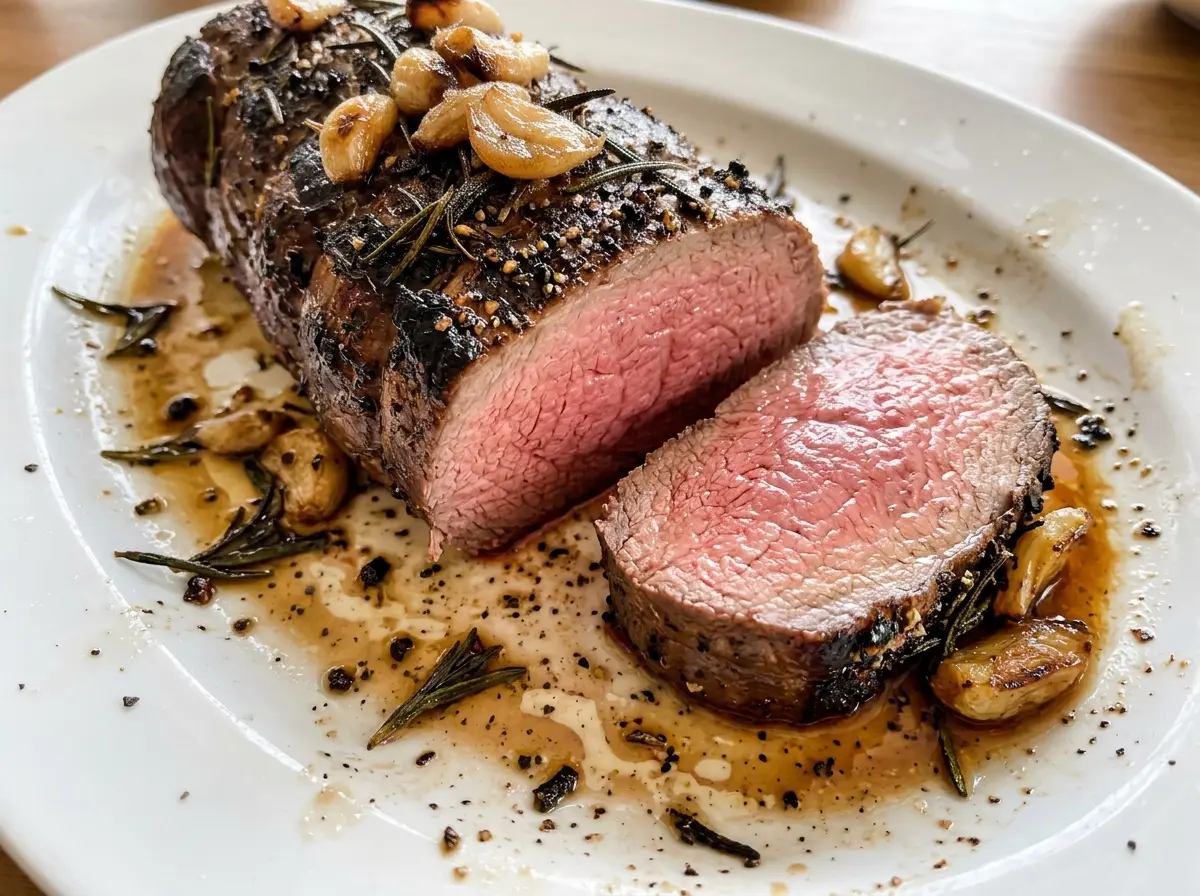
I coat the beef with olive oil, minced garlic, fresh rosemary, kosher salt, and black pepper, then let the oven do the work. The thermometer matters more than the clock here: tenderloins vary in shape, and the thickest part is the place to check. After the roast rests, the garlic and rosemary cling to the browned exterior, while the slices stay tender and rosy inside.
Kitchen Note
Set the rack inside the rimmed baking sheet before the tenderloin goes on. Lifting the roast off the pan lets hot air move around it, and the rim catches the drippings.
Save this Garlic Rosemary Beef Tenderloin for a roast with a fragrant garlic-herb crust and simple, reliable seasoning.
Why the Thin End Can Turn Dry Before the Center Is Ready
A tenderloin tapers, and that difference in thickness affects how it roasts. The thick center takes longer to heat through than the narrow end, so leaving the roast in its natural shape can give you uneven slices. Tucking the thin end underneath creates a more compact roast, and tying it at regular intervals helps keep that shape while it cooks.
Use kitchen twine at 1 1/2-inch intervals rather than tying only at the ends. The goal isn’t to squeeze the beef into a tight bundle; snug ties simply hold the folded tail and the rest of the roast in place. This also makes the tenderloin easier to handle when you transfer it to the cutting board. Once it’s tied, the seasoning rub has a more even surface to cover, too.
Keep the roast’s shape in mind when you judge doneness. The timing gives you a useful window, but the thermometer reading in the thickest part is what tells you when to take it out. That check accounts for differences in the roast’s proportions without asking you to guess from the outside.
How the Herb Rub Gets Its Fragrance and Staying Power
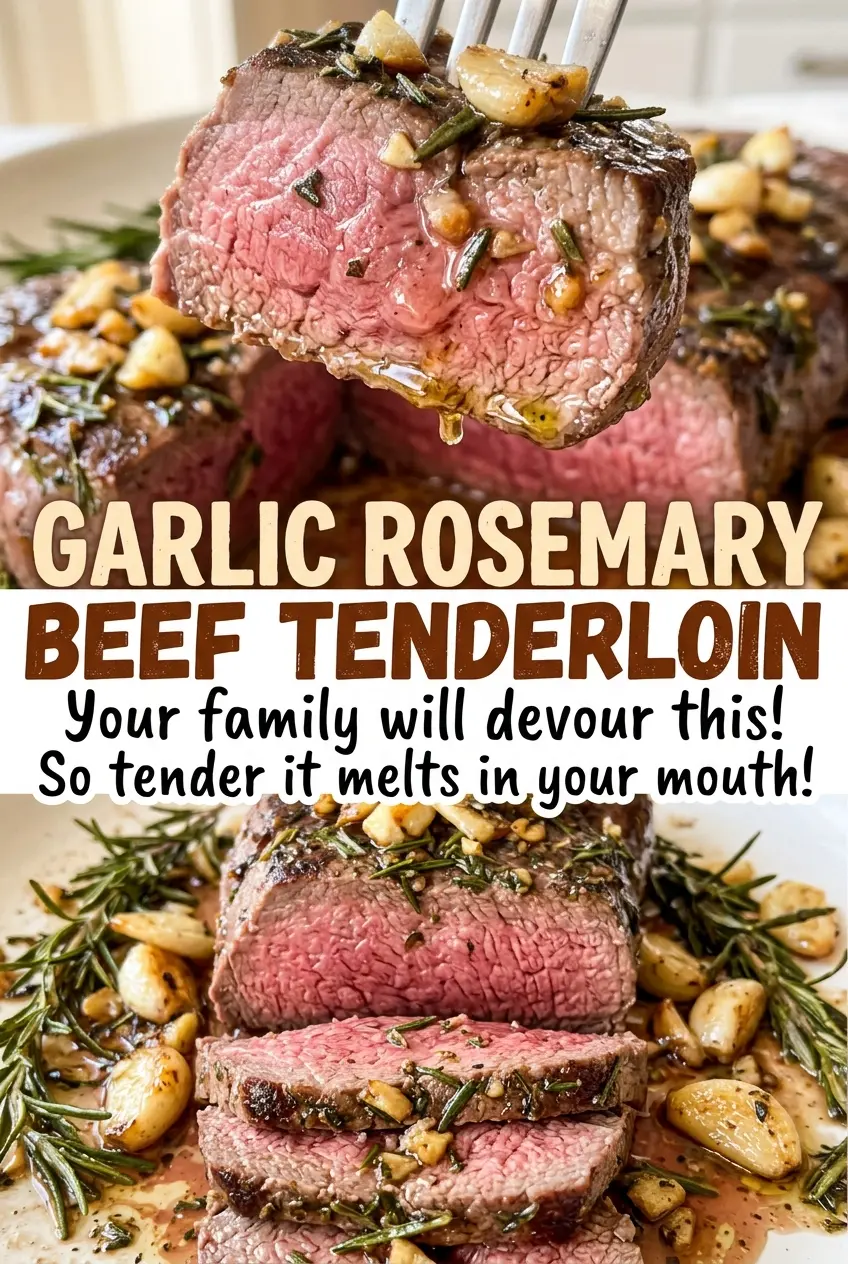
- Beef tenderloin — This cut is naturally tender, so the thermometer and the rest are more important than adding a long marinade. Choose a trimmed roast with a fairly even shape; the thin end can be folded under during tying.
- Olive oil — Oil helps the minced garlic and chopped rosemary spread across the beef instead of falling away in dry patches. A good everyday olive oil works well; a delicate finishing oil won’t add much once it’s roasted.
- Fresh garlic — Minced garlic distributes more evenly than large pieces and gives the surface its savory aroma. Mince it finely so it mixes into the oil and sticks to the roast.
- Fresh rosemary — Chopping the leaves finely lets their piney fragrance spread through the rub without leaving large, tough pieces on each slice. Choose fragrant green sprigs; limp, dried-out leaves will contribute less aroma.
- Kosher salt and freshly ground black pepper — Kosher salt seasons the beef, while freshly ground pepper gives the crust a more vivid bite than pre-ground pepper. Salt crystals vary by brand, so use kosher salt rather than swapping in fine table salt measure for measure.
From a Tied Roast to Evenly Cooked Slices
Get the Rack and Oven Ready
Heat the oven to 425°F and set a rack in an 18×13-inch rimmed baking sheet. The roast sits on the rack rather than directly on the pan, so the setup is ready before your hands are coated with the rub. Use the rimmed sheet to catch drippings during roasting. Keep the oven fully heated before the tenderloin goes in.
Fold and Tie the Tapered End
Tuck the tenderloin’s thin end underneath the roast. Tie it with kitchen twine at 1 1/2-inch intervals, keeping each tie snug enough to hold the shape without cutting into the meat. Look along the length of the roast and adjust any loose sections before seasoning. A more even cylinder helps avoid a narrow tail cooking much faster than the center.
Coat Every Side with the Garlic-Rosemary Rub
Stir together the olive oil, minced garlic, finely chopped fresh rosemary, kosher salt, and freshly ground black pepper. Rub the mixture over the tenderloin, turning it so the seasoning reaches the sides as well as the top. Press any garlic and rosemary that slide off back onto the surface. The oil should leave the roast lightly coated, not sitting in a puddle.
Roast to Temperature, Then Rest
Roast until a thermometer inserted into the thickest part reads 145°F, about 35–50 minutes. Begin checking as the roast approaches the shorter end of that window, since shape and oven performance affect timing. Transfer it to a cutting board and let it rest for 15 minutes before removing the twine and slicing. If you cut it right away, more of the juices run onto the board instead of staying in the meat.
Three Simple Ways to Change the Herb-Rubbed Roast
Use Dried Rosemary When Fresh Isn’t Available
Replace the fresh rosemary with dried rosemary at about one-third the volume, crushing it between your fingers before stirring it into the oil. The rub will be a little less bright and leafy, but it still brings a woodsy note to the beef. Give the dried leaves a moment in the oil so they’re distributed instead of clumping.
Make a Garlic-Free Rosemary Crust
Leave out the garlic and keep the rosemary, olive oil, salt, and pepper. The finished crust will taste cleaner and more focused on the rosemary, with less savory pungency. Mix and apply the remaining rub just as you would the original.
Swap in Avocado Oil
Use avocado oil in place of the olive oil in the rub, keeping the same amount. Its more neutral taste lets the rosemary and garlic stand out, while the method stays the same. Choose a plain oil rather than a flavored one so it doesn’t compete with the herbs.
Storage and Reheating
- Refrigerator: Refrigerate leftovers within 2 hours and keep them in an airtight container for 3–4 days. Sliced beef will lose some moisture as it sits, so store larger pieces when practical.
- Freezer: Freeze the cooked beef tightly wrapped or in an airtight container for up to 2–3 months. Thaw it in the refrigerator before serving or reheating; the texture is best when it hasn’t been frozen and thawed more than once.
- Reheating: Warm covered slices gently in a low oven until they reach 165°F, taking them out as soon as they’re hot. Reheating uncovered or for longer than needed dries out this lean cut.
Questions That Come Up While Roasting Beef Tenderloin
Garlic Rosemary Beef Tenderloin
Ingredients
Equipment
Method
- Heat the oven to 425°F.
- Set a rack in an 18x13-inch rimmed baking sheet.
- Tuck the tenderloin’s thin end under.
- Tie the roast with kitchen twine at 1 1/2-inch intervals.
- Stir the olive oil, garlic, rosemary, salt, and pepper together.
- Rub the mixture over the tenderloin.
- Roast until a thermometer inserted into the thickest part reads 145°F, about 35–50 minutes.
- Transfer the tenderloin to a cutting board and rest for 15 minutes.
- Remove the twine and slice.