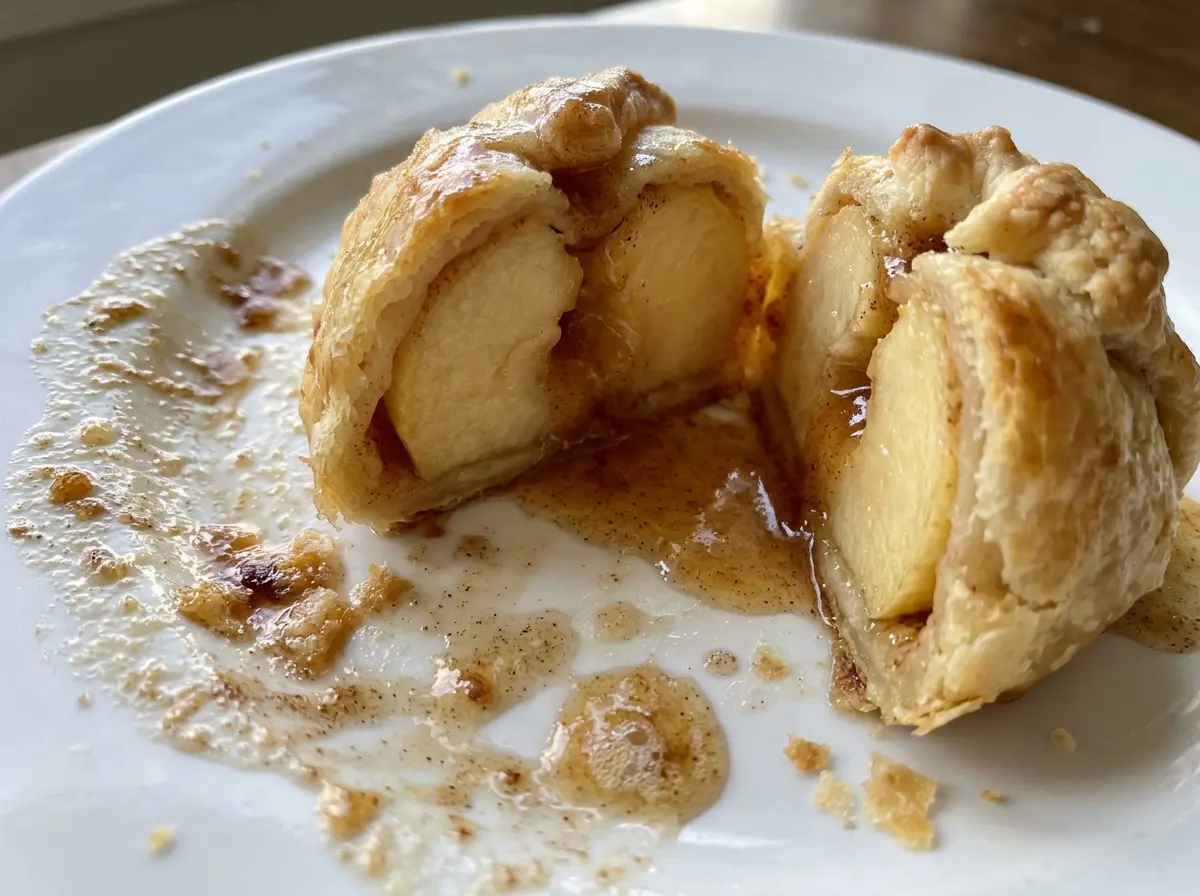
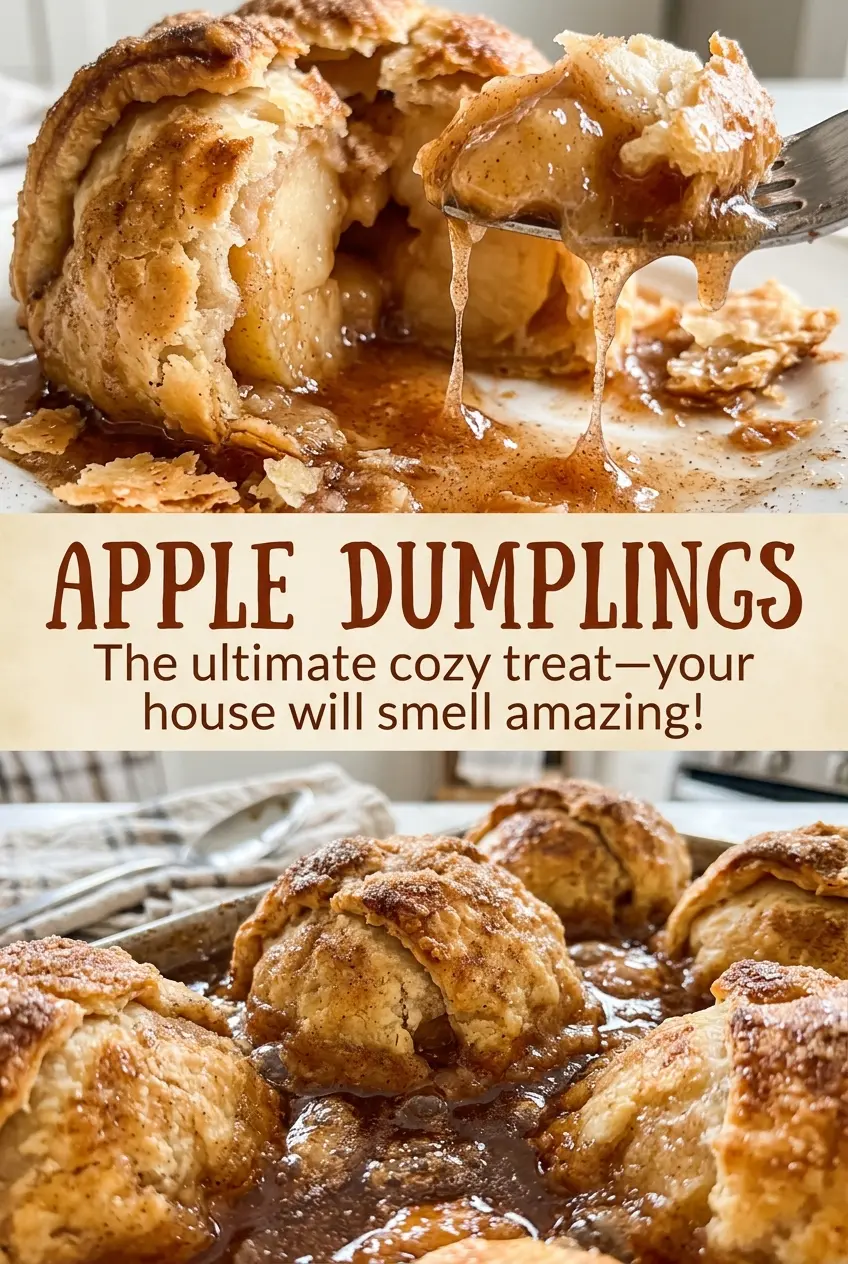
When the pastry turns golden, the apples underneath still need their own doneness check. That’s the part I keep in mind with apple dumplings: a crisp-looking crust can hide a firm center. These are wrapped whole apples filled with cinnamon sugar and butter, then baked in a sweet, buttery syrup that gathers in the dish.
The pastry comes together with shortening and ice water, so it stays tender without needing a long list of ingredients. I roll it between parchment sheets; that keeps the dough from sticking and makes the squares easier to lift around each apple. Granny Smith apples bring a tart edge that balances the syrup, while their firm flesh holds its shape as it bakes.
Give the dumplings a little room in the baking dish, and don’t rush the last test: a paring knife should slide easily into an apple. Spoon the pan syrup over each serving, and you get a tender apple, soft pastry at the bottom, and a golden top in every dumpling.
Kitchen Note
Let the dumplings rest in the dish for 10 minutes before serving. The syrup is piping hot when they come out, and that pause gives the pastry a moment to settle before you lift each apple and spoon on the sauce.
Save these apple dumplings for a cozy dessert: whole cinnamon-filled apples wrapped in tender pastry and baked with buttery syrup.
Why a Golden Crust Can Fool You With a Whole Apple Inside
Apple dumplings bake differently from a pie filled with slices. A whole apple has a thicker center, and the pastry hides the fruit while its outside browns. That means the crust can look ready before the apple has turned tender. I use two cues together: the pastry should be golden, and a paring knife should pierce the apple easily. Neither cue tells the whole story on its own.
The syrup is part of how this dessert is meant to bake, not a glaze that you add at the end. It goes into the dish around and over the wrapped apples, so the pastry that touches the pan turns softer than the exposed top. That contrast is normal. If you expect crisp pastry all the way around, the result may seem underbaked even when the apple is tender and the top is golden. Think of each dumpling as a little pastry parcel with a saucy base, rather than a sealed hand pie.
There’s also a useful balance built into the filling: cinnamon sugar and butter go inside each apple, while a separate portion of cinnamon, sugar, and butter flavors the syrup. The center gets its sweetness from within, and the pastry picks up the sauce around it. Keep those two parts in mind when you portion the filling so every apple gets some of each.
What the Apples, Shortening, and Syrup Each Bring
- Granny Smith apples — Their tartness balances the sweet syrup, and their firm flesh holds together as a whole apple bakes. Pick medium apples without bruises; there’s no need to buy a premium brand. Another firm, tart baking apple can work, but softer or extra-sweet apples may lose their shape or make the dessert taste sweeter.
- Vegetable shortening — Shortening helps the pastry stay tender and easy to handle. A standard grocery-store shortening is fine; the temperature and texture of the water matter more than the brand. Butter can replace it in the pastry, but the crust will be less tender and brown differently, so shortening gives the intended texture.
- All-purpose flour — Regular all-purpose flour gives the dough enough structure to wrap around each apple without making a heavy crust. An inexpensive bag works well here. For a gluten-free version, use a 1:1 gluten-free baking flour blend in the same amount; the dough is more fragile, which is why the parchment rolling method helps.
- Granulated sugar and cinnamon — The sugar sweetens both the apple centers and the syrup, while cinnamon gives each layer a warm, familiar flavor. Ordinary granulated sugar dissolves cleanly, so there’s no need for a specialty sugar. Light brown sugar can replace it for a deeper, molasses-like note, though it makes the syrup darker.
- Unsalted butter — Butter melts into the apple cavities and the syrup, giving both a rounded, buttery taste. Standard unsalted butter is all you need. Keeping it unsalted lets the salt in the pastry stay in balance; salted butter will make the syrup and apple filling taste saltier.
- Ice water — Cold water keeps the shortening from softening too much while you bring the dough together. If you don’t have ice, use very cold water from the refrigerator. Add it gradually; the dough should hold together rather than feel wet or sticky.
Wrap the Apples So the Pastry Stays Together
Bring the Dough Together Without Overworking It
Heat the oven to 375°F and coat a 9×13-inch baking dish with nonstick cooking spray. Whisk the flour and salt in a large bowl, then cut in the shortening with a pastry cutter or your fingertips until you see coarse, pea-size crumbs. Sprinkle 6 tablespoons ice water over the mixture and stir gently until the dough begins to hold together. Add up to 2 more tablespoons only if it still looks dry, then shape the dough into a disk, wrap it, and refrigerate for 30 minutes.
Fill Each Apple and Close the Seams
Mix the apple portion of the sugar and cinnamon, then divide it among the cavities of the peeled and cored apples. Divide the apple portion of the butter among the cavities, too. Roll the chilled dough between two sheets of parchment into an 18×12-inch rectangle and cut it into six 6-inch squares. Set an apple in the center of each square, bring the corners up over the fruit, and pinch the seams closed; place each dumpling seam-side down in the prepared dish.
Boil the Syrup Until the Sugar Dissolves
Combine the remaining sugar, water, remaining cinnamon, and remaining butter in a 2-quart saucepan. Bring the mixture to a boil over medium heat, stirring until the sugar dissolves and the butter melts. Watch the pan as it comes to a boil and stir along the bottom so undissolved sugar doesn’t linger there. The syrup should be hot and fluid when you pour it around and over the dumplings.
Bake Until the Apple Is Tender
Pour the hot syrup around and over the dumplings, then bake for 45 to 55 minutes. Look for golden pastry, but don’t judge the apples by color alone; pierce one with a paring knife to check that the fruit is tender. If the crust is browning but the knife still meets firm apple, continue baking and check again. Serve the dumplings with syrup from the pan.
Three Ways to Adjust the Apples and Pastry
Make the pastry gluten-free
Replace the all-purpose flour with the same amount of a 1:1 gluten-free baking flour blend. The dough can be more delicate, so keep it between the parchment sheets while rolling and lift the squares carefully around the apples. The crust may be a little less tender, but the filling and syrup stay the same.
Use light brown sugar for a deeper syrup
Swap light brown sugar for the granulated sugar in both the apple filling and syrup, keeping the same amounts. The sauce will taste more molasses-like and look darker, rather than having the clean sweetness of the original. Stir as it heats so the sugar dissolves evenly.
Try another firm, tart baking apple
A similarly sized firm, tart apple can stand in for Granny Smith. Keep the apples whole and use the same filling method; softer fruit is more likely to slump inside the pastry, while a sweeter apple makes the syrup taste richer and less tangy.
Storage and Reheating
- Refrigerator: Cover leftovers and refrigerate within 2 hours. They keep for 3 to 4 days; the pastry softens as it sits in the syrup.
- Freezer: Freeze cooled dumplings in an airtight container for up to 2 months. Thaw them in the refrigerator; expect softer pastry after freezing.
- Reheating: Warm an individual dumpling in the microwave until hot, with a little pan syrup spooned over it. The microwave softens the crust further, so avoid heating it longer than needed.
Questions That Come Up While Making Apple Dumplings
Apple Dumplings
Ingredients
Equipment
Method
- Heat the oven to 375°F.
- Coat a 9x13-inch baking dish with nonstick cooking spray.
- Whisk the flour and salt in a large bowl.
- Cut in the shortening with a pastry cutter or your fingertips until the mixture has coarse, pea-size crumbs.
- Sprinkle 6 tablespoons ice water over the flour mixture and stir gently until the dough begins to hold together.
- Add up to 2 more tablespoons as needed.
- Shape the dough into a disk, wrap it, and refrigerate for 30 minutes.
- Mix 1/3 cup sugar with 1 teaspoon cinnamon.
- Divide the mixture among the apple cavities.
- Divide 2 tablespoons butter among the apples.
- Roll the dough between two sheets of parchment paper into an 18x12-inch rectangle.
- Cut the dough into six 6-inch squares.
- Set an apple in the center of each square.
- Bring the corners up over each apple and pinch the seams closed.
- Place the dumplings seam-side down in the prepared dish.
- In a 2-quart saucepan, combine the remaining 1 1/2 cups sugar, water, remaining 1/2 teaspoon cinnamon, and remaining 2 tablespoons butter.
- Bring the mixture to a boil over medium heat, stirring until the sugar dissolves and butter melts.
- Pour the hot syrup around and over the dumplings.
- Bake for 45 to 55 minutes, until the pastry is golden and a paring knife easily pierces an apple.
- Let the dumplings rest in the dish for 10 minutes.
- Serve with the syrup from the pan.