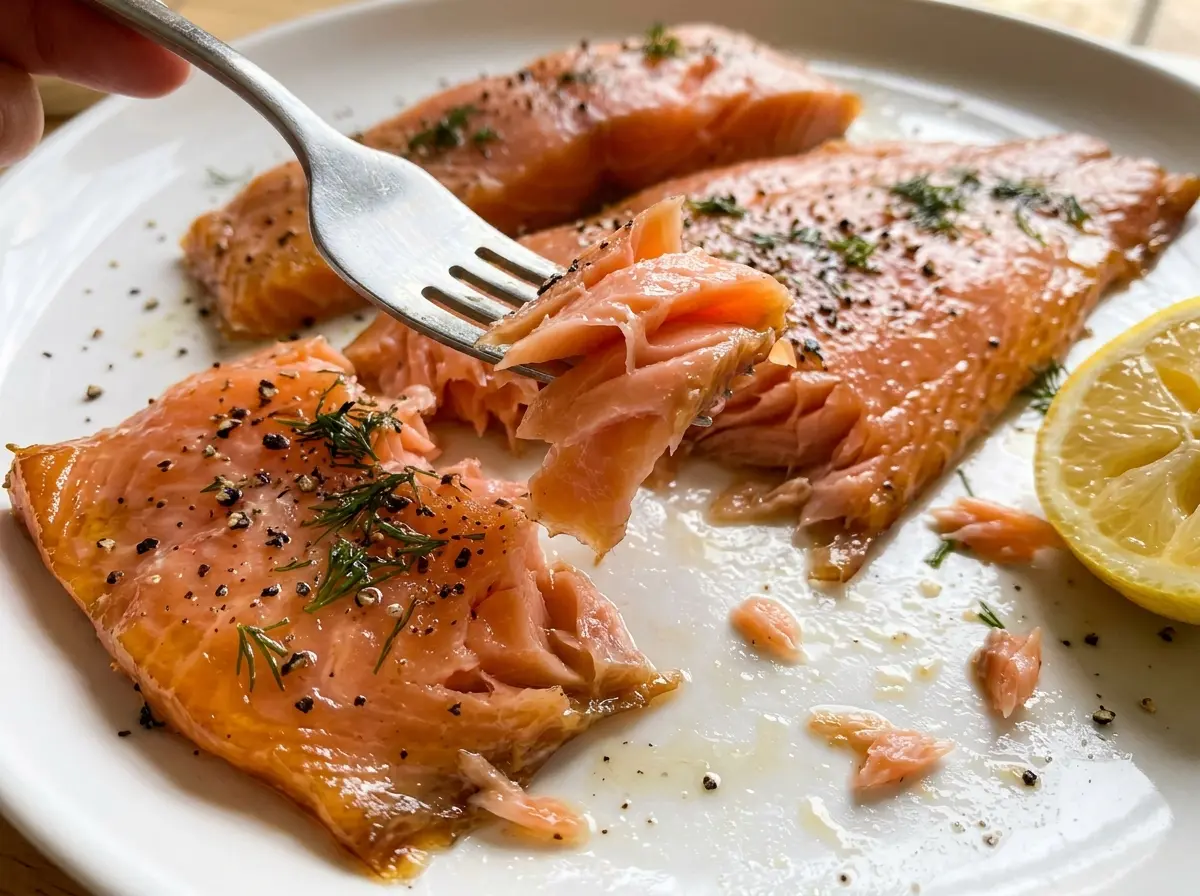
When a salmon fillet comes off the smoker, the edges should be lightly bronzed and the center should still look moist, not chalky. I learned that the cure needs a rinse before the fish goes in: otherwise the salt and sugar left on the surface can make each bite taste more intense than the salmon itself. This smoked salmon keeps the process simple, with a short dry cure and a steady applewood smoke.
The uncovered hour in the refrigerator gives the rinsed fish time to dry before it reaches the smoker. That little pause helps the smoke cling to the surface instead of meeting damp patches. I keep the skin underneath while it cooks, then let the fillet rest briefly before serving. The result is gently sweet, savory salmon with a clean wood-smoke aroma and a tender center.
Kitchen Note
Keep the skin underneath the salmon for the whole smoke. It gives the hot, tender fillet a sturdy base when you move it to the platter.
Save this smoked salmon for its applewood aroma, tender flakes, and lightly sweet dry cure.
Why the Uncovered Hour Matters Before the Salmon Meets Smoke
Salt draws moisture toward the surface during the cure. A quick rinse removes the loose salt and sugar, but it also leaves the fish damp. If that surface stays wet, the smoke has a harder time settling evenly, and the finish can be patchy rather than lightly bronzed.
Resting the salmon uncovered on a rack gives air a chance to reach the flesh on all sides. The rack also keeps the fish from sitting in any moisture that collects on the baking sheet. After an hour, the surface should feel dry rather than slick. That doesn’t mean the fish is cured through or dried out; it’s just ready for the smoker. The distinction matters: a longer cure changes the seasoning, while this short uncovered rest prepares the exterior for a cleaner, more even smoke.
There’s no need to add more chips to compensate for a damp surface. Start with the applewood amount, keep the smoker at the set temperature, and let the fish take on a steady smoke as it cooks.
What the Salmon, Sugar, and Applewood Each Bring

- Salmon fillet — A skin-on fillet is easier to handle after smoking, and a piece with an even thickness cooks more evenly from end to center. Fresh or fully thawed salmon both work; the important thing is starting with a fillet free of pin bones.
- Kosher salt — Its larger crystals are easy to distribute across the flesh. Stick with kosher salt here rather than swapping in table salt measure-for-measure, since finer salt packs more tightly and can make the cure too salty.
- Light brown sugar — The mild molasses note rounds out the salt without turning the fish sweet. Dark brown sugar can stand in at the same volume for a deeper molasses flavor, though the result will taste a little less delicate.
- Black pepper — Freshly ground pepper gives the cure a brighter, more aromatic bite, but preground black pepper works when that’s what you have.
- Applewood chips — Applewood gives the salmon a mellow, lightly sweet smoke that won’t crowd out the fish. Use chips intended for your smoker and follow its loading directions; the wood choice has a noticeable effect on the finished aroma.
From Dry Cure to Tender, Smoked Salmon
Coat the Flesh and Let the Cure Work
Stir the kosher salt, packed light brown sugar, and black pepper together until the mixture looks evenly combined. Rub it across the flesh side of the salmon, spreading it from edge to edge rather than piling it in one spot. Set the fillet in a shallow dish, cover it, and refrigerate for 4 hours. A shallow dish keeps the salmon supported while it cures.
Rinse, Dry, and Rest on the Rack
Rinse the salmon briefly under cold water, then pat it dry. A quick rinse is enough; don’t leave it under running water, which would wash away more of the cure than needed. Set it skin-side down on a wire rack over a rimmed baking sheet and refrigerate uncovered for 1 hour. The rack lets air circulate while the sheet catches any drips.
Bring the Smoker to Temperature
Add the applewood chips according to your smoker manufacturer’s instructions, then preheat the smoker to 200°F. Give the smoker time to reach a steady temperature before adding the fish. If the temperature is still climbing, the salmon can cook unevenly while the smoker settles. Keep the setup simple and use the smoker as intended rather than placing loose smoking chips in an indoor oven.
Smoke Until the Thickest Part Reaches 145°F
Place the salmon skin-side down in the smoker. Smoke it for 1 to 2 hours, checking the thickest part with an instant-read thermometer as it approaches the end of the cooking time. The fillet is ready when that center reaches 145°F; thickness affects how quickly it gets there, so use the temperature as your doneness check rather than relying on color alone. Transfer it to a platter and let it rest for 5 minutes before serving.
Two Simple Ways to Change the Smoke or Cure
Alderwood for a Milder Smoke
Replace the applewood chips with the same amount of alder chips and load them according to your smoker’s instructions. Alder gives the salmon a gentler, less fruity smoke, which lets the fish’s own flavor come through more clearly.
A Less-Sweet, More Savory Cure
Leave out the brown sugar and rub the salmon with the salt and black pepper instead. The fish will taste more directly savory, with less of the rounded sweetness from the original cure; keep the same 4-hour cure and follow the same smoking method.
Storage and Reheating
- Refrigerator: Refrigerate leftovers in a covered, airtight container within 2 hours of cooking and use them within 3 to 4 days. The salmon will firm up as it chills.
- Freezer: It freezes well for about 2 to 3 months when wrapped tightly and placed in an airtight freezer container. Thaw it in the refrigerator for the best texture.
- Reheating: Warm portions gently in a covered low oven or microwave, stopping as soon as they’re hot; reheat leftovers to 165°F. Prolonged heat dries the fish quickly, so avoid cooking it again for several minutes after it’s warmed through.
Questions That Come Up When Smoking Salmon
Smoked Salmon
Ingredients
Equipment
Method
- Mix the kosher salt, brown sugar, and black pepper.
- Rub the mixture evenly over the flesh side of the salmon.
- Place the salmon in a shallow dish, cover, and refrigerate for 4 hours.
- Rinse the salmon briefly under cold water.
- Pat the salmon dry.
- Set it skin-side down on a wire rack over a rimmed baking sheet and refrigerate uncovered for 1 hour.
- Add the applewood chips to the smoker according to the manufacturer’s instructions.
- Preheat the smoker to 200°F.
- Smoke the salmon skin-side down for 1 to 2 hours, until the thickest part reaches 145°F on an instant-read thermometer.
- Transfer the salmon to a platter.
- Let it rest for 5 minutes before serving.