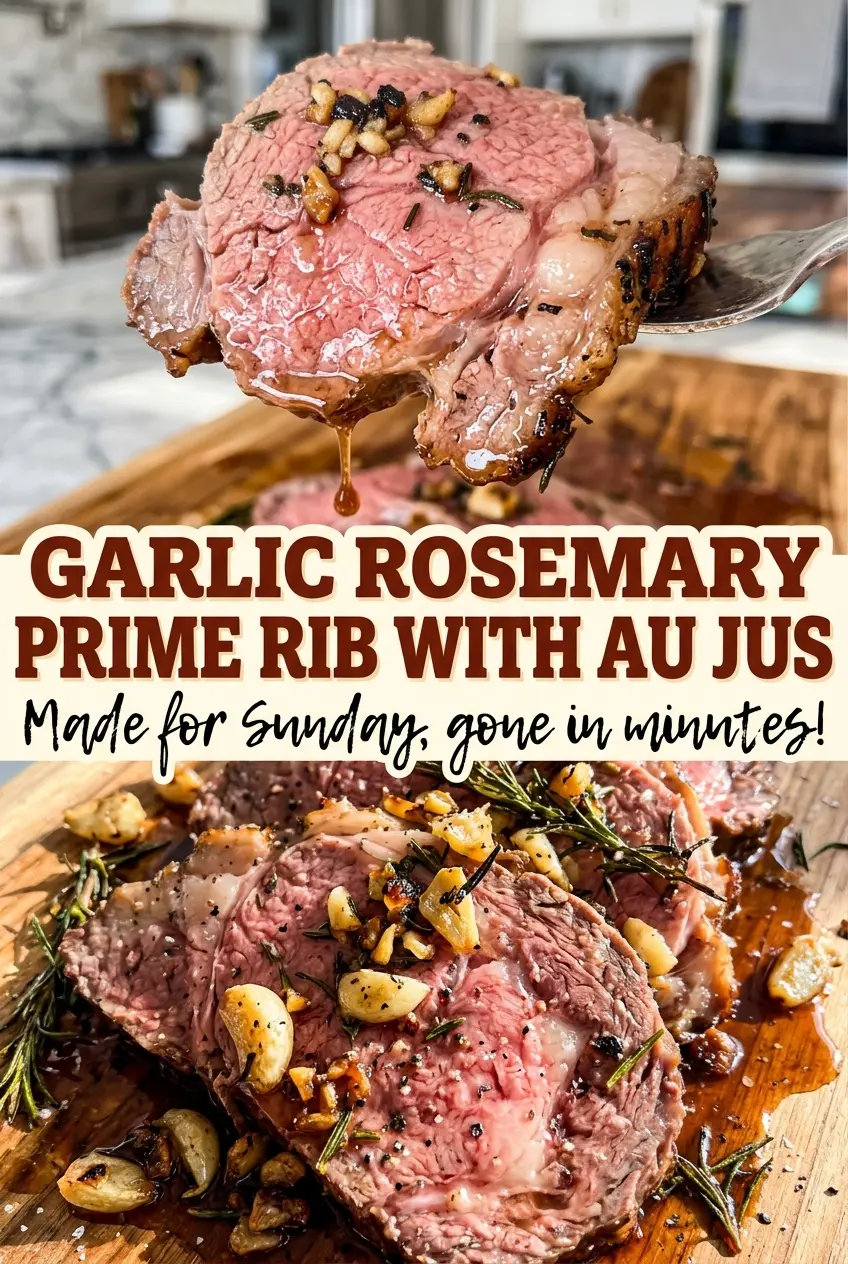
At the 450°F start, the garlic butter melts over the roast and the kitchen fills with rosemary before the longer, gentler stretch begins. I make this garlic rosemary prime rib with au jus for the contrast: a well-browned outside, tender slices, and a warm pan-dripping sauce to serve alongside. With a bone-in roast this size, the clock gives you a useful window, but it can’t tell you exactly what’s happening in the center.
Salting the roast uncovered on a rack for 12 to 24 hours gives the surface time to dry in the refrigerator. That helps the softened butter mixture spread over the meat instead of sliding across a damp surface. The first 20 minutes at high heat starts the browning, then the oven temperature comes down so the roast can cook through more gradually. The result is a rosy, savory centerpiece with garlic and rosemary in every slice.
Kitchen Note
I set a timer for the first 20 minutes before the roast goes into the oven. That high-heat stretch is brief; lowering the oven to 325°F on time keeps the outside from taking more heat than it needs.
Save this garlic rosemary prime rib with au jus for a special dinner: a browned herb-butter crust and savory drippings sauce make the bone-in roast worth planning ahead for.
Why the Thermometer Belongs Away from the Rib Bones
A standing rib roast isn’t a uniform block of meat. The bones run along one side, and a thermometer pushed against a bone won’t give you a reliable reading of the thickest part of the roast. Place the instant-read thermometer into the center of the meat, away from the bone, and use that temperature—not the color of the crust or the roasting time alone—to decide when it’s ready.
The estimate of 1 1/2 to 2 1/2 hours at 325°F is a window, not a promise that every roast will finish at the same minute. Start checking after 1 1/2 hours, then keep the thermometer in the thickest area as you take readings. The target for this roast is 145°F. A correctly placed reading takes the guesswork out of cooking a large cut and keeps you from cutting into the meat just to check the middle.
What the Butter, Rosemary, and Drippings Contribute
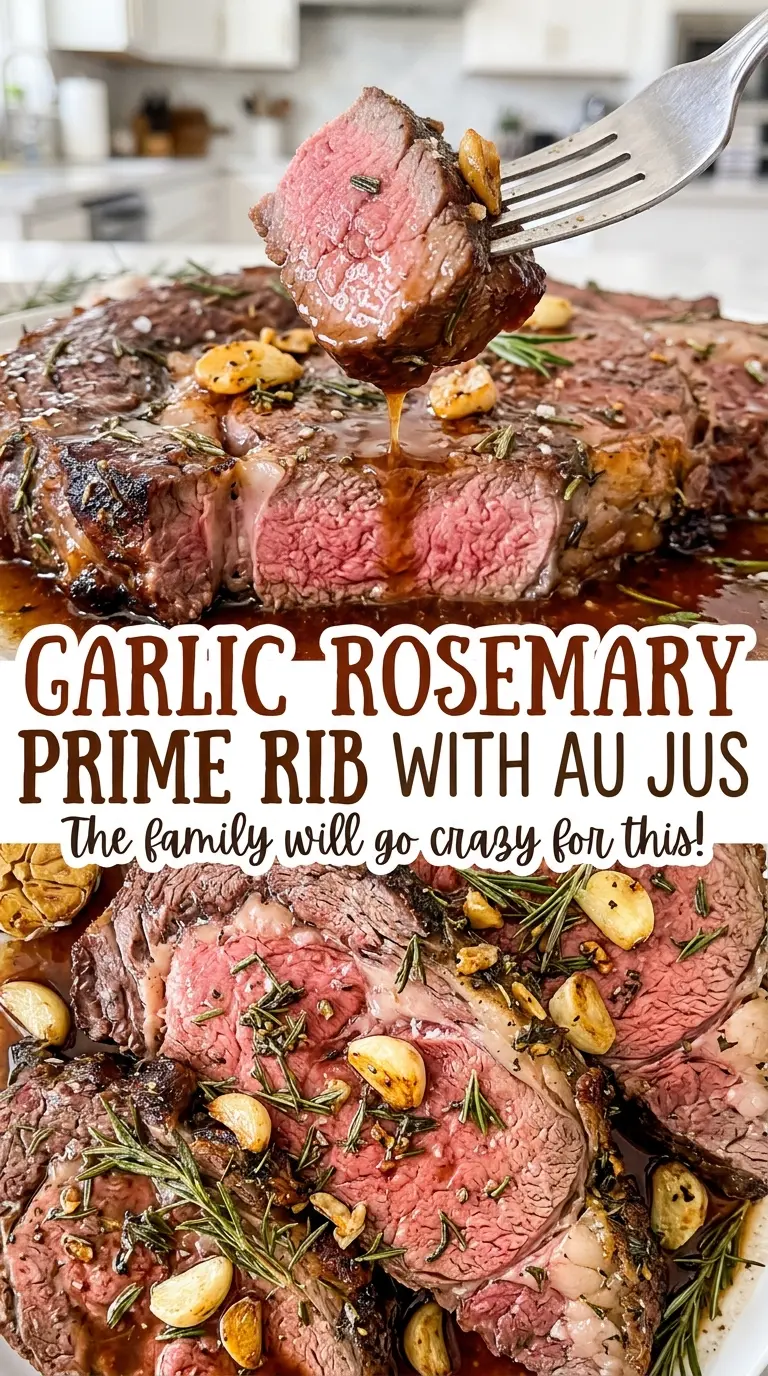
- Bone-in standing rib roast — The bones are part of the cut this timing is built around, and the rack holds the roast above the pan so drippings can collect below. Choose a roast that fits comfortably on the rack in the 12×16-inch pan; a boneless roast has a different shape and won’t follow the same timing as neatly.
- Kosher salt — The uncovered refrigerator rest seasons the meat while drying its surface. Stick with kosher salt for the stated amount; table salt is denser by volume, so swapping it measure-for-measure can make the roast too salty.
- Unsalted butter and black pepper — Softened unsalted butter makes a spreadable base for the garlic and rosemary, while unsalted gives you control over seasoning alongside the salt on the roast. For a dairy-free version, use a firm, softened plant-based butter in the same amount; the coating will be a little less buttery in flavor.
- Fresh garlic and rosemary — Minced garlic spreads through the butter instead of sitting in large pieces, and fresh rosemary gives the coating its piney, aromatic note. Fresh thyme is a good swap for the rosemary in the same amount, with a softer, earthier aroma.
- Pan drippings, low-sodium beef broth, and Worcestershire sauce — The drippings bring roasted beef flavor, broth gives the jus enough volume to serve, and Worcestershire adds savory tang. Low-sodium broth is useful here because the drippings and sauce already contribute plenty of seasoning; a store-brand broth works well.
From the Overnight Salt Rest to a Savory Pan Jus
Salt the Roast and Let the Surface Dry
Pat the bone-in roast dry, then rub the kosher salt over every side. Set it bone-side down on a rack in a 12×16-inch roasting pan and refrigerate it uncovered for 12 to 24 hours. Leaving it uncovered lets the surface dry rather than trapping moisture beneath a cover. Don’t skip the rack; the roast needs to sit above the pan where the drippings will gather.
Take the Chill Off Before Roasting
Take the roast out of the refrigerator 1 hour before it goes into the oven. Heat the oven to 450°F during that hour so it’s ready when the butter mixture is on. In a bowl, mix the softened butter with the minced garlic, chopped rosemary, and black pepper. Spread the mixture over the roast in an even layer, working it across the top and sides.
Start Hot, Then Lower the Oven
Roast at 450°F for 20 minutes, then reduce the oven temperature to 325°F. The first blast gives the outside a head start on browning; the lower setting carries the roast through without keeping it at high heat. After 1 1/2 hours at 325°F, check the thickest part with an instant-read thermometer, keeping the probe away from the bone. Continue roasting as needed, using 145°F as the target rather than relying on the estimated time alone.
Rest the Meat Before Slicing
Transfer the roast to a cutting board when it reaches 145°F and tent it loosely with foil. Let it rest for 20 to 30 minutes before slicing so the juices have time to settle back through the meat. Keep the foil loose rather than wrapping the roast tightly. The rest also gives you time to finish the jus.
Turn the Drippings into Au Jus
Strain the pan drippings into a 2-quart saucepan, then skim off the excess fat. Add the low-sodium beef broth and Worcestershire sauce, and bring the mixture to a simmer over medium heat. Cook for 8 to 10 minutes, stirring occasionally. Slice the rested roast and serve it with the warm au jus.
Simple Changes That Still Suit a Standing Rib Roast
Use Fresh Thyme Instead of Rosemary
Replace the chopped fresh rosemary with the same amount of chopped fresh thyme in the butter mixture. The roast keeps its fragrant herb coating, but the flavor turns less piney and more gently earthy.
Make the Herb Butter Dairy-Free
Use the same amount of softened, firm plant-based butter in place of the unsalted butter. It gives the garlic and herbs a coating to cling to, though the crust won’t have quite the same dairy richness.
Give the Au Jus a Soy-Savory Edge
Swap the Worcestershire sauce for the same amount of low-sodium soy sauce. The sauce will taste deeper and less tangy, so keep the low-sodium beef broth to avoid making the jus overly salty.
Storage and Reheating
- Refrigerator: Refrigerate sliced beef and au jus in separate airtight containers within 2 hours. They keep for 3 to 4 days; the beef will firm up as it chills.
- Freezer: Freeze the sliced roast and jus separately in airtight containers for up to 2 to 3 months for best quality. Thaw overnight in the refrigerator.
- Reheating: Warm sliced beef covered in a 300°F oven with a little jus until it reaches 165°F. Reheat only what you plan to serve; prolonged heating dries the slices out.
Questions That Come Up Before Serving Prime Rib
Garlic Rosemary Prime Rib with Au Jus
Ingredients
Equipment
Method
- Pat the roast dry and rub it all over with the salt.
- Set the roast bone-side down on a rack in a 12x16-inch roasting pan and refrigerate uncovered for 12 to 24 hours.
- Take the roast out of the refrigerator 1 hour before cooking.
- Heat the oven to 450°F.
- Mix the butter, garlic, rosemary, and pepper.
- Spread the butter mixture over the roast.
- Roast for 20 minutes.
- Reduce the oven temperature to 325°F and continue roasting for about 1 1/2 to 2 1/2 hours.
- After 1 1/2 hours, check the thickest part away from the bone with an instant-read thermometer; cook to 145°F.
- Transfer the roast to a cutting board, tent loosely with foil, and rest for 20 to 30 minutes.
- Slice the roast.
- Strain the pan drippings into a 2-quart saucepan and skim off excess fat.
- Add the beef broth and Worcestershire sauce.
- Bring to a simmer over medium heat and cook for 8 to 10 minutes, stirring occasionally.
- Serve the au jus with the sliced roast.