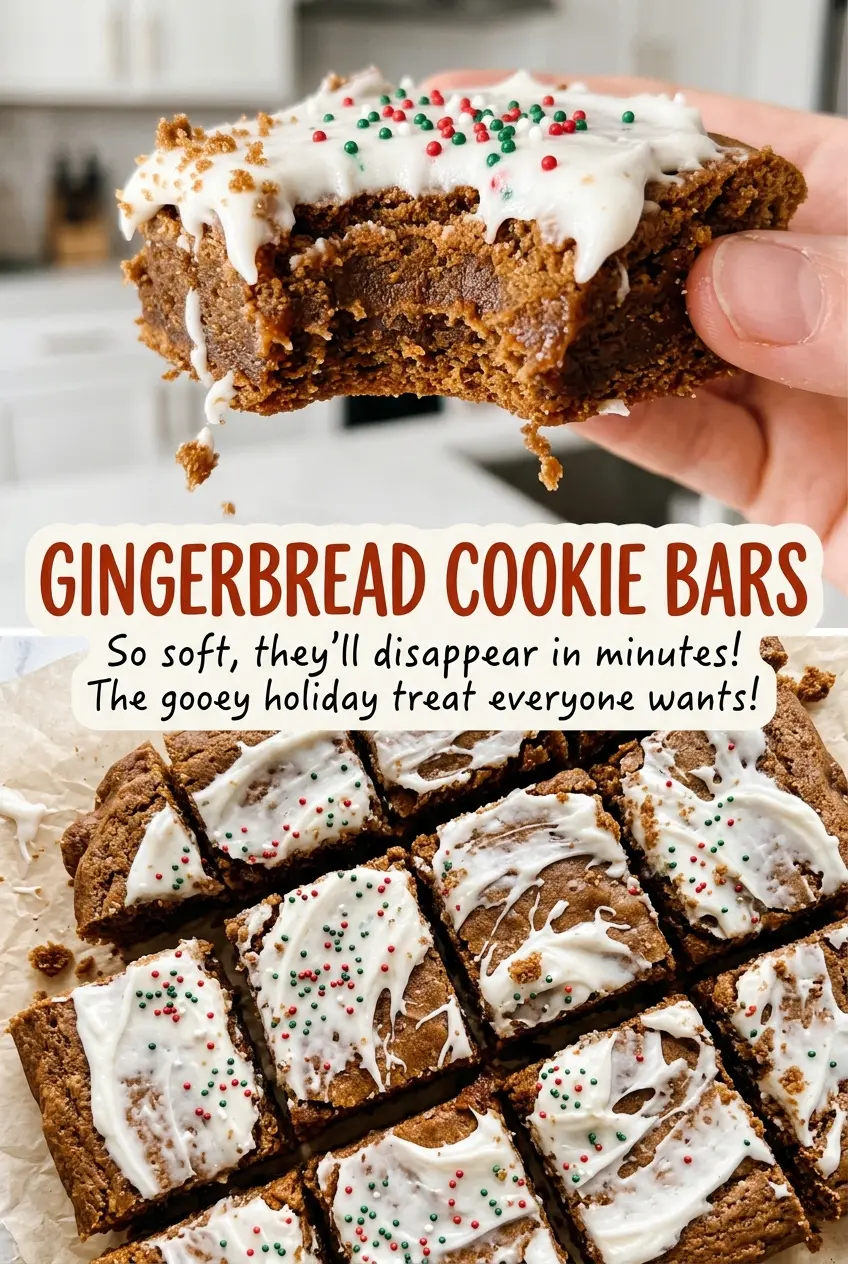
The dough for these bars is thicker than cake batter and softer than cutout-cookie dough, which is exactly what lets it bake into a tender, easy-to-slice layer. In a 9×13-inch pan, the edges turn lightly golden while the center stays soft, and the ginger, cinnamon, cloves, and molasses come through in every bite. Gingerbread Cookie Bars keep the cozy spice of a rolled cookie without the rolling pin, cookie cutters, or batches in and out of the oven.
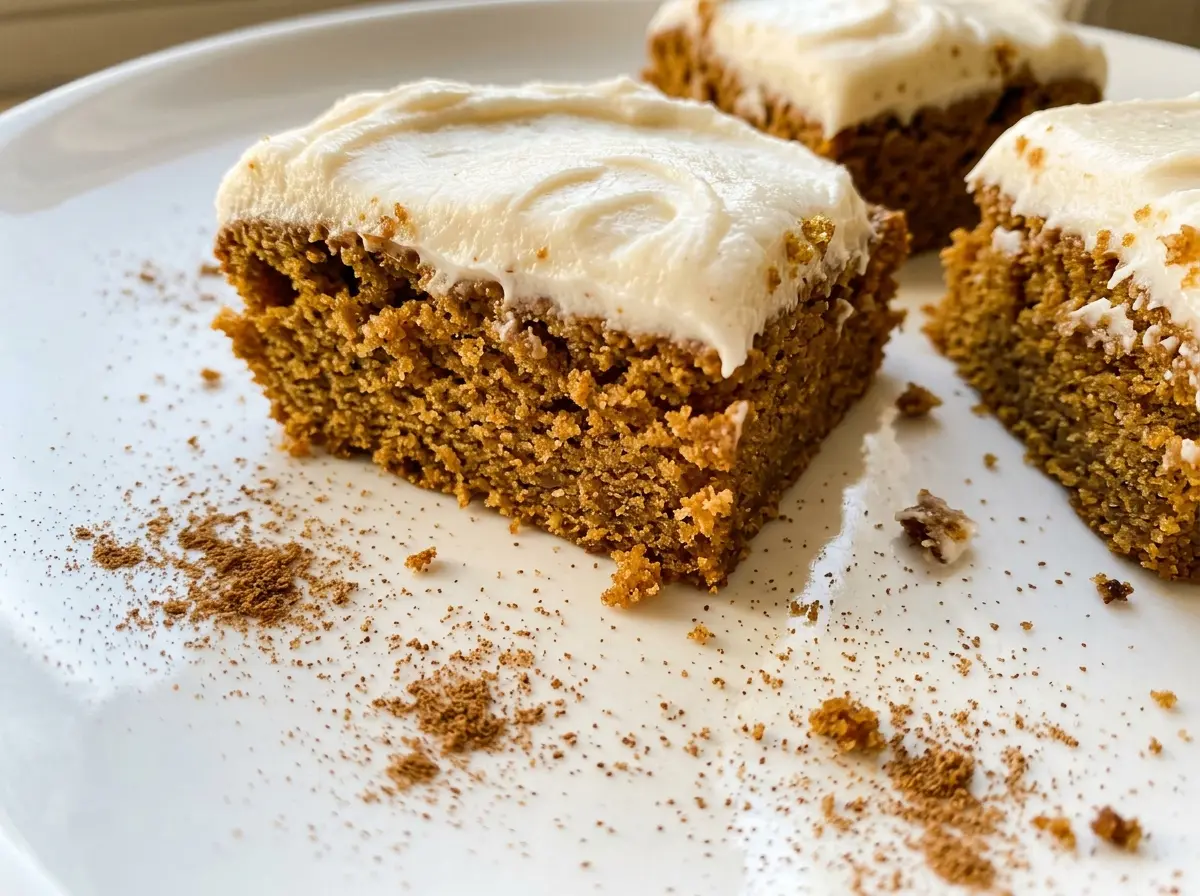
I spread the dough all the way into the corners before baking so the middle and edges finish at nearly the same time. Once the bars are completely cool, a smooth cream cheese frosting adds a tangy contrast to the brown sugar and molasses. A short chill sets the topping, leaving you with neat squares and a soft, gently spiced crumb.
Kitchen Note
For smooth frosting, the cream cheese and butter should be pliable all the way through, without a cool, firm center. If either is still cold, small lumps can linger even after you beat the frosting.
Save these Gingerbread Cookie Bars for soft, molasses-rich squares topped with tangy cream cheese frosting.
Why These Gingerbread Bars Need an Even Layer, Not a Cookie-Dough Chill
Gingerbread cookies are often rolled and cut, so it’s natural to expect this dough to need chilling before it goes in the oven. These bars take a different route: the dough goes straight into the prepared pan, where its thickness determines how evenly it bakes. If one side is piled higher than the other, that part can stay soft while the thinner edge browns first.
Think of the pan as one broad cookie. Spread the dough into a level layer and press it into the corners, rather than leaving a thick mound in the middle. That gives the heat a more even path through the dough and keeps the finished bars tender instead of dry around the edges. The texture cue matters more than chasing a deeply browned top: the edges should be set and lightly browned, and the center should look set too. Since the dough is meant to be soft and spreadable, it won’t feel like a firm ball of cookie dough before baking.
How Molasses and Cream Cheese Shape the Gingerbread Flavor
- Unsulphured molasses — It brings the dark, rounded sweetness that makes these bars taste unmistakably like gingerbread. Blackstrap molasses is much more bitter and intense, so it isn’t a good swap here.
- Ground ginger, cinnamon, and cloves — Ginger leads, cinnamon fills out the warmth, and cloves add a small but noticeable depth. Fresh, fragrant spices make a difference; if the jars smell faint when you open them, the finished bars will taste less lively.
- Light brown sugar — Its soft texture creams readily with the butter and gives the bars a gentle caramel note. Break up any hard lumps before beating so they don’t remain as sweet pockets in the dough.
- Unsalted butter — Butter gives the bars their tender, rich crumb and helps the sugar cream into a smooth base. Softened butter should yield when pressed but still hold its shape; melted butter won’t cream the same way.
- Block cream cheese — The tangy frosting balances the molasses and spices. A block gives a thicker result than cream cheese sold in a tub, which is made to be softer and can leave frosting looser.
- All-purpose flour — It gives the dough enough structure to hold its bar shape. Spoon it into the measuring cup and level it rather than packing it down; compacted flour can make the baked layer heavier.
From Creamed Butter to Frosted, Sliceable Bars
Prepare the pan and spice mixture
Heat the oven to 350°F and lightly grease a 9×13-inch pan with cooking spray. Line it with parchment paper, leaving an overhang on two sides so you can lift the cooled bars out later. Whisk the flour, baking soda, ginger, cinnamon, cloves, and salt together in a medium bowl until the spices are evenly distributed. A thorough whisk now prevents a concentrated patch of baking soda or spice in the finished bars.
Cream the butter, sugar, and wet ingredients
Beat the softened butter and packed light brown sugar in a large bowl until creamy, about 2 minutes. Scrape the sides of the bowl if sugar is clinging there, then beat in the egg, molasses, and vanilla until combined. Add the flour mixture on low speed and stop as soon as no dry streaks remain. Mixing beyond that point can develop the flour more than you want for a tender bar.
Spread and bake the gingerbread layer
Transfer the dough to the prepared pan and spread it evenly, including right into the corners. The layer should look level rather than domed in the middle. Bake for 20–24 minutes, until the edges are set and lightly browned and the center looks set. Start checking at the shorter end of the range; taking the pan out when the center is still visibly unset can leave the middle gummy.
Cool, frost, and chill before slicing
Set the pan on a wire rack and let the bars cool completely in the pan, about 1 hour. For the frosting, beat the softened cream cheese and butter in a medium bowl until smooth, then gradually beat in the powdered sugar and add the vanilla. Spread the smooth, spreadable frosting over the cooled bars. Refrigerate for 20–30 minutes to set the topping, then use the parchment overhang to lift the slab out and cut it into 24 pieces.
Two Ways to Change the Finish Without Losing the Gingerbread Base
Gluten-free gingerbread bars
Replace the all-purpose flour with a cup-for-cup gluten-free baking blend intended for baking, using its 1:1 conversion. The bars may have a slightly more delicate crumb, so let the slab cool completely before lifting it from the pan. Don’t substitute almond or coconut flour; they behave differently and won’t give you the same bar texture.
Leave the bars unfrosted
Skip the cream cheese frosting for a less sweet, more spice-forward bar. The gingerbread base stays tender, but you lose the cool tangy contrast from the topping. This is a useful option if you want the bars plain or need to keep the frosting separate until serving.
Storage and Reheating
- Refrigerator: Keep frosted bars covered in the refrigerator for 3–4 days. The chilled bars will be firmer than they are at room temperature.
- Freezer: Freeze the bars in a single layer until firm, then wrap them airtight for up to 2 months. Thaw them in the refrigerator; the cream cheese frosting may be a little less smooth afterward.
- Reheating: Don’t reheat frosted bars; heat softens the topping and makes the squares messy. Serve chilled or let a portion sit briefly at room temperature, and return the rest to the refrigerator within 2 hours.
Questions That Come Up When Baking Gingerbread Cookie Bars
Gingerbread Cookie Bars
Ingredients
Equipment
Method
- Preheat the oven to 350°F.
- Lightly grease a 9x13-inch baking pan with the cooking spray.
- Line the pan with parchment paper, leaving an overhang on two sides.
- Whisk the flour, baking soda, ginger, cinnamon, cloves, and salt together in a medium bowl.
- Beat the softened butter and brown sugar in a large bowl until creamy, about 2 minutes.
- Beat in the egg, molasses, and vanilla until combined.
- Mix in the flour mixture on low speed just until no dry streaks remain.
- Spread the dough evenly in the prepared pan.
- Bake for 20–24 minutes, until the edges are set and lightly browned and the center looks set.
- Cool completely in the pan on a wire rack, about 1 hour.
- Beat the cream cheese and softened butter in a medium bowl until smooth.
- Gradually beat in the powdered sugar.
- Beat in the vanilla until the frosting is smooth and spreadable.
- Spread the frosting over the cooled bars.
- Refrigerate for 20–30 minutes to set.
- Lift the bars out using the parchment and cut into 24 pieces.
- Refrigerate any leftovers.