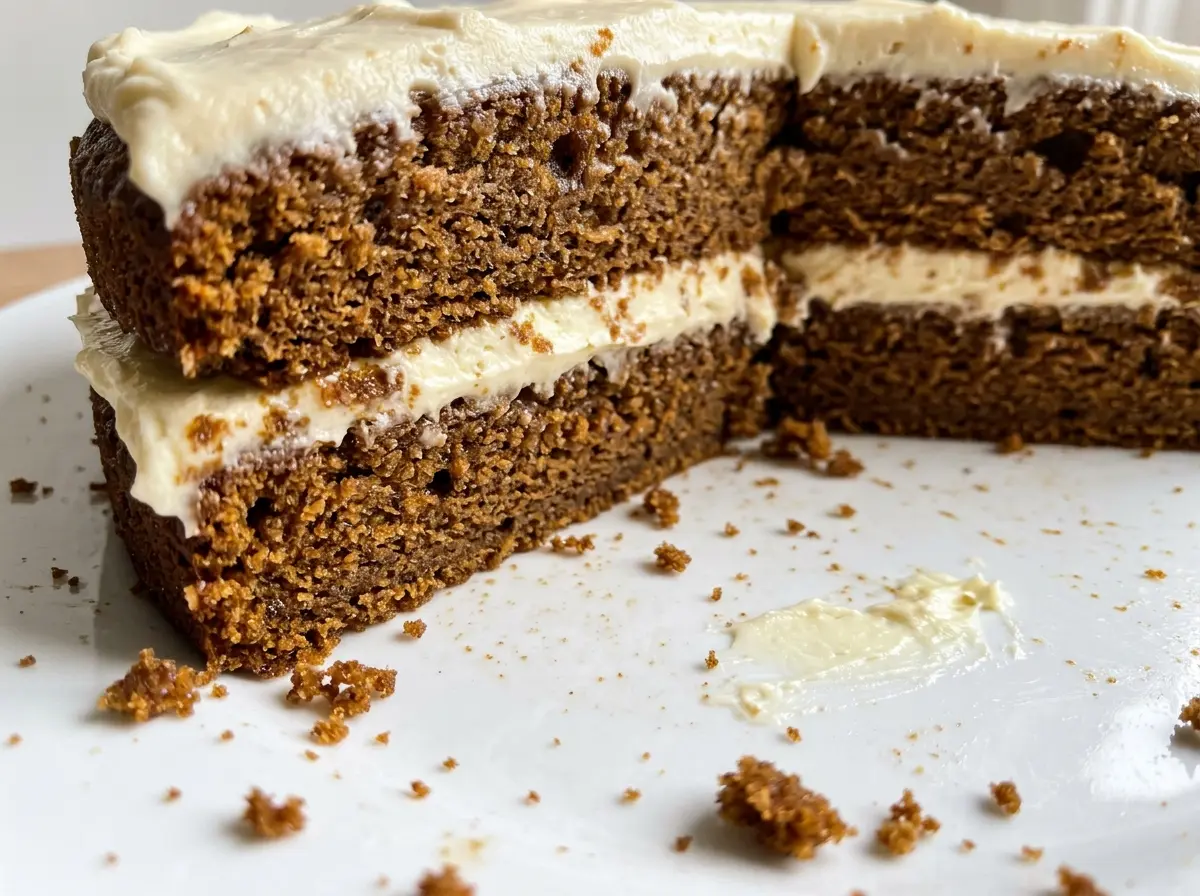
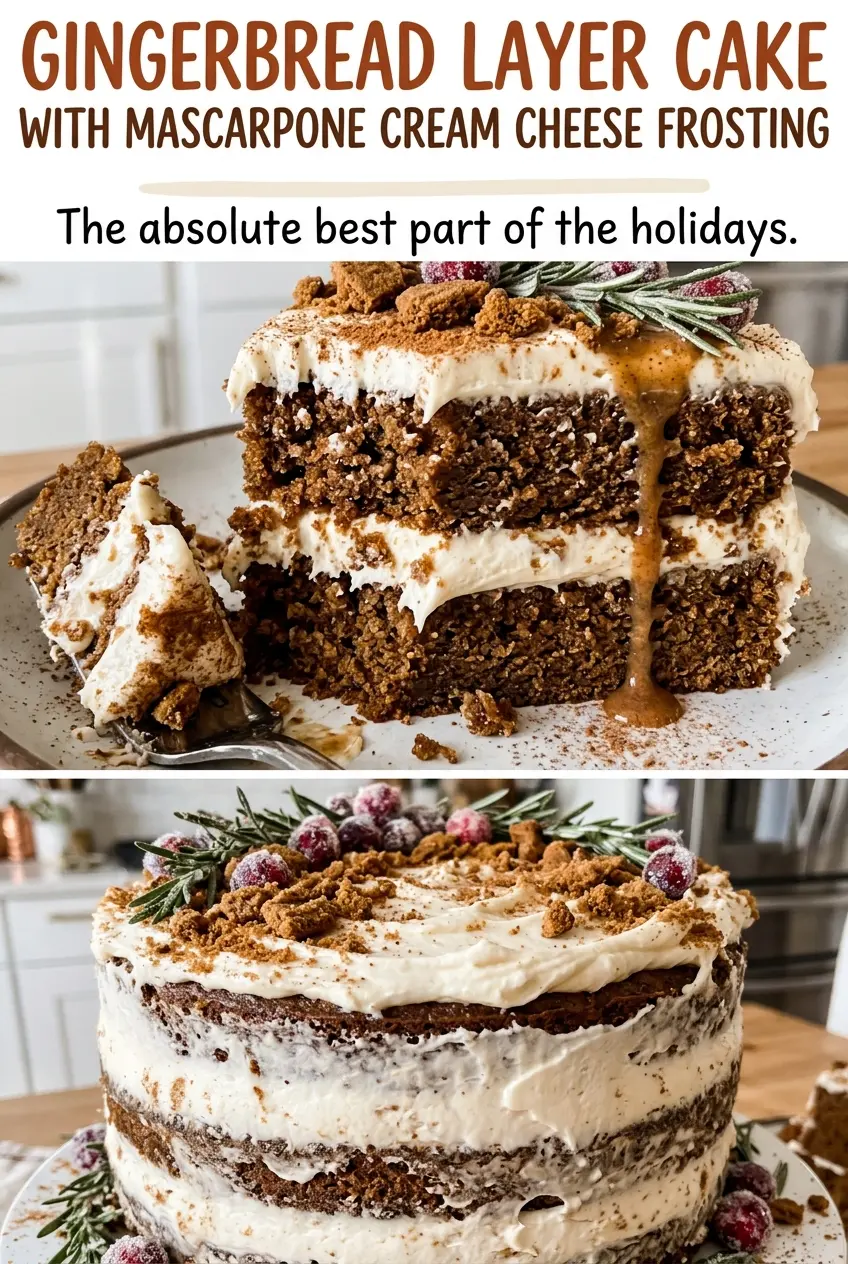
The molasses gives the batter a deep, dark color before it even reaches the oven, and the warm spice scent starts building as the cakes bake. These gingerbread layers have a soft, even crumb, with enough ginger and cinnamon to make every bite taste unmistakably like gingerbread without overpowering the mascarpone cream cheese frosting.
I mix the flour in gradually, alternating it with the buttermilk, so the batter comes together without getting tough. That little bit of patience matters: once the flour goes in, mixing just until combined keeps the finished layers tender. A thick swipe of frosting between the layers brings a cool, creamy contrast to the spice, and the finished cake slices neatly after a short chill.
Kitchen Note
Mascarpone doesn’t need a long beating to become smooth. I add it on low and stop as soon as it’s combined; extra mixing can leave this frosting softer than you want for a layer cake.
Save this gingerbread layer cake for a special bake: tender spiced layers meet a cool mascarpone cream cheese frosting.
Why This Gingerbread Cake Uses Both Baking Soda and Baking Powder
Molasses and buttermilk bring acidity to the batter, so baking soda has a job to do beyond simply adding lift. It reacts with those acidic ingredients and helps the cake brown as it bakes. The baking powder contributes additional rise, which helps the layers stay light instead of turning into dense, sticky gingerbread.
That balance is why I keep both leaveners in the dry-ingredient mix and measure them carefully. Too much baking soda can leave an unpleasant taste, while leaving out the baking powder changes the cake’s lift. Whisking the leaveners thoroughly with the flour also helps them spread evenly through the batter, so you don’t get one heavy spot or an overly domed patch. The result is a sturdy but tender crumb that can hold a generous layer of frosting.
What Makes the Gingerbread Flavor Deep, Not Harsh
- Unsulfured molasses — It gives the cake its signature dark sweetness and helps keep the crumb moist. A standard unsulfured molasses is a good choice; there’s no need to buy a specialty brand. Blackstrap is much more bitter and assertive, so it changes the flavor in a way I wouldn’t want here.
- Ground ginger, cinnamon, and cloves — Fresh, fragrant spices make a noticeable difference because they carry most of the cake’s warmth. If your spice jars have been open for years, the cake can taste muted; replacing them is more useful than increasing every amount. Ginger leads, cinnamon rounds it out, and cloves are potent enough that a little goes a long way.
- Buttermilk — It loosens the batter and adds a gentle tang that keeps the molasses from tasting one-dimensional. Use fresh buttermilk when you can. If you’re out, stir 1 tablespoon of lemon juice or white vinegar into 1 cup of milk and let it stand for 5 minutes before using it.
- Light brown sugar and softened butter — The butter should give slightly when pressed but shouldn’t look greasy or melted; softened butter traps air when beaten with the sugar. Light brown sugar keeps the molasses flavor balanced. Dark brown sugar can stand in at the same amount for a deeper, more pronounced molasses note.
- Cream cheese and mascarpone — A block of cream cheese gives the frosting structure, while mascarpone makes it milder and silkier than cream cheese frosting alone. Use block cream cheese rather than a spreadable tub, which has a softer consistency. The mascarpone should be cool but not refrigerator-cold so it blends smoothly without needing extra beating.
From Two Pans to Clean, Frosted Layers
Prepare the Pans and Spice Mix
Heat the oven to 350°F, coat two 9-inch round cake pans with nonstick cooking spray, and line their bottoms with parchment. Whisk the flour, baking soda, baking powder, salt, ginger, cinnamon, and cloves together in a medium bowl until the spices are evenly distributed. Getting the dry mix uniform now means you won’t have to stir the finished batter more than necessary.
Cream the Butter and Build the Batter
Beat the softened butter and packed light brown sugar on medium speed for about 2 minutes, until the mixture looks light and fluffy. Add the eggs one at a time, then mix in the molasses. Add the flour mixture in three additions, alternating with the buttermilk in two additions and starting and ending with flour. Keep the mixer on low and stop as soon as the last dry streaks disappear; a smooth batter doesn’t need extra beating.
Bake Until the Tester Shows Moist Crumbs
Divide the batter evenly between the pans and bake for 30 to 35 minutes. The edges should look set, and a toothpick inserted in the center should come out with a few moist crumbs rather than wet batter. Don’t wait for the tester to come out perfectly clean, which can mean the cake has baked longer than it needs. Cool the pans on wire racks for 10 minutes, run a knife around the edges, then turn out the layers, peel off the parchment, and cool completely.
Make a Smooth Mascarpone Frosting
Beat the softened cream cheese on medium speed until smooth. Gradually beat in the powdered sugar on low, then mix in the vanilla. Add the cool-but-not-cold mascarpone and beat on low only until the frosting looks smooth and combined. It should be creamy and spreadable, not loose or runny.
Stack and Set the Cake
Set one completely cooled layer on a serving plate and spread about 1 1/2 cups of frosting over it. Place the second layer on top, then use the remaining frosting over the top and sides. Refrigerate the cake for at least 30 minutes so the frosting can set before slicing.
Three Ways to Adapt the Layers and Spice
Make It Gluten-Free
Replace the all-purpose flour with the same amount of a cup-for-cup gluten-free baking blend formulated for cakes. The layers may be a little more delicate, so let them cool completely before turning them out and frosting them.
Give the Spice a Stronger Ginger Edge
For a sharper ginger note, use 1 tablespoon plus 1 teaspoon ground ginger and reduce the cinnamon to 1 teaspoon. The cake keeps its warm spice character, but ginger moves to the front instead of sharing the lead with cinnamon.
Finish It as a Semi-Naked Cake
Keep the frosting between the layers, then spread a thin coat over the top and sides so some gingerbread shows through. This gives the cake a more rustic look and lets the dark layers stand out; use a light hand so you still have enough frosting to cover the top.
Storage and Reheating
- Refrigerator: Keep the cake covered for up to 4 days. The crumb firms up while chilled, then softens as it sits out.
- Freezer: I don’t recommend freezing the assembled cake; mascarpone frosting can lose its smooth texture after thawing.
- Reheating: Don’t microwave it. Let the cake stand at room temperature for about 20 minutes before serving so the frosting softens without melting.
Questions That Come Up With Gingerbread Layer Cake
Gingerbread Layer Cake With Mascarpone Cream Cheese Frosting
Ingredients
Equipment
Method
- Heat the oven to 350°F.
- Grease two 9-inch round cake pans with nonstick cooking spray.
- Line the bottoms of the pans with parchment paper.
- Whisk the flour, baking soda, baking powder, salt, ginger, cinnamon, and cloves together in a medium bowl.
- Beat the butter and brown sugar in a large bowl with an electric mixer on medium speed until light and fluffy, about 2 minutes.
- Beat in the eggs one at a time.
- Mix in the molasses.
- Add the flour mixture in three additions, alternating with the buttermilk in two additions, beginning and ending with the flour mixture; mix on low just until combined.
- Divide the batter evenly between the pans.
- Bake for 30 to 35 minutes, until a toothpick inserted in the center comes out with a few moist crumbs.
- Cool the cakes in their pans on wire racks for 10 minutes.
- Run a knife around the edges.
- Turn the cakes out.
- Peel off the parchment.
- Cool completely.
- Beat the cream cheese in a large bowl on medium speed until smooth.
- Gradually beat in the powdered sugar on low speed.
- Mix in the vanilla.
- Add the mascarpone and beat on low just until smooth and combined; do not continue beating once the frosting is smooth.
- Set one cake layer on a serving plate.
- Spread about 1 1/2 cups frosting over it.
- Place the second layer on top.
- Spread the remaining frosting over the top and sides.
- Refrigerate the cake for at least 30 minutes to set the frosting.
- Store it covered in the refrigerator.
- Let it stand at room temperature for about 20 minutes before serving.