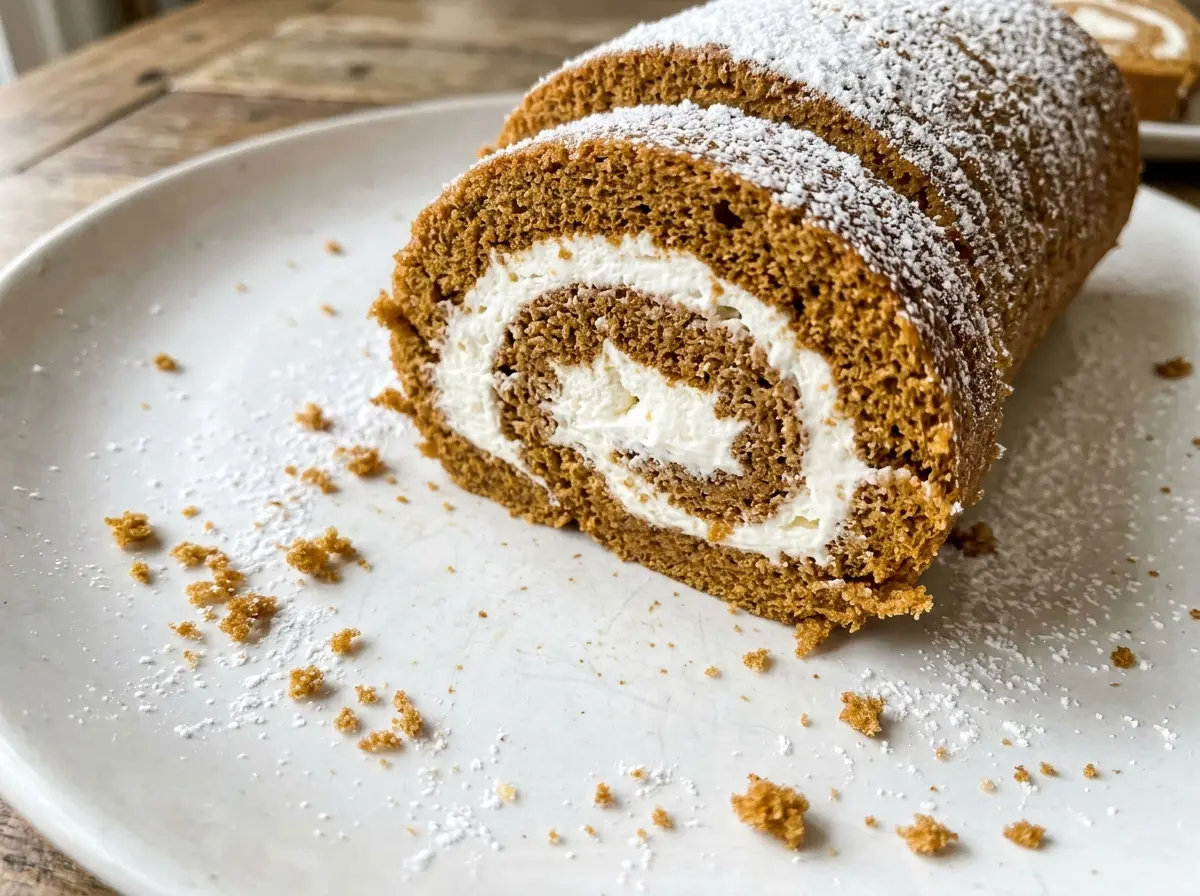
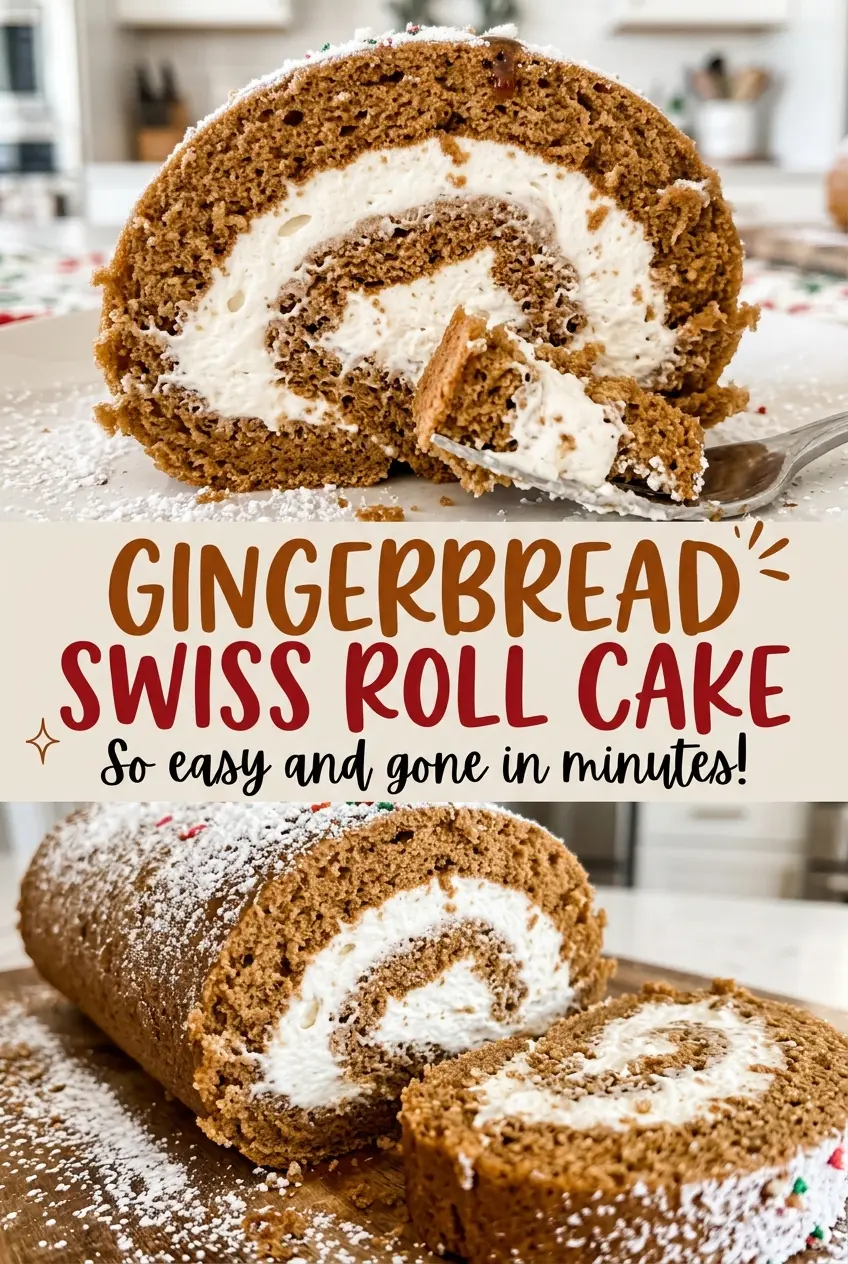
The cake comes out of the oven thin, fragrant with ginger, and soft enough to bend without breaking. That last part matters: a sponge cake that cools flat can crack when you try to roll it, so I roll this Gingerbread Swiss Roll Cake while it’s still warm and let it cool in its parchment cradle. The result is a tender spiral with a generous cream cheese filling, not a stack of crumbs on the cutting board.
Molasses brings the deep gingerbread flavor, but it also makes the yolk batter heavier than a plain sponge. Whipped egg whites give it lift, and folding them in gently keeps the cake flexible enough to roll. Once the filling is spread inside, the whole cake needs a short chill so the cream cheese and whipped cream hold their shape when you slice it. Each piece has a soft spice cake wrapped around a cool, tangy center.
Kitchen Note
Stop beating the egg whites when they hold medium-stiff peaks. If they turn dry and clumpy, they’re harder to fold through the batter without losing the air you just worked in.
Save this Gingerbread Swiss Roll Cake for its soft spiced sponge and tangy cream cheese swirl.
Why Molasses Needs the Lift of Whipped Egg Whites
Molasses gives this cake its dark, unmistakable gingerbread taste, but it makes the yolk mixture thicker and heavier than a basic sponge batter. Beating the yolks with sugar first creates a pale, thick base that can hold the molasses and spices evenly. The flour goes in only until combined; mixing longer at that point would make the cake tougher, not sturdier.
The separate egg whites do the lifting. Folding one-third into the dense batter first loosens it, so the remaining whites can be folded through without being crushed. That matters in a rolled cake because a little air in the crumb helps it stay tender and bendable. The batter should spread evenly across the pan, but don’t expect it to pour like a thin crepe batter. Gentle folding keeps the gingerbread flavor rich without leaving you with a heavy, tight sheet that fights the roll.
What Gives This Gingerbread Roll Its Flavor and Structure
- Unsulphured molasses — This is the source of the cake’s rounded, slightly smoky gingerbread flavor and its deep color. Use regular unsulphured molasses rather than blackstrap, which tastes much more bitter and can overpower the spices. There isn’t a simple swap that keeps the same flavor and moisture in this thin sponge.
- Ground ginger and the supporting spices — Ginger leads, while cinnamon, nutmeg, and cloves give the cake a warmer, layered finish. Freshly opened spices make the biggest difference here; older jars tend to taste muted. Keep the blend intact for the intended gingerbread balance, or use the milder variation below if cloves aren’t your preference.
- Separated eggs — The yolks enrich and bind the batter, while the whites provide the lightness that lets the cake roll. Room-temperature eggs are easier to incorporate into the yolk mixture and whip into a stable foam. There isn’t a dependable egg-free replacement for this sponge because the whites supply both structure and lift.
- All-purpose flour — It gives the cake enough structure to hold its spiral without making the crumb bready. A cup-for-cup gluten-free baking blend formulated for baking is the most practical substitute; the finished cake may be a little more delicate, so handle it gently. Avoid swapping in a starch-heavy flour on its own.
- Block cream cheese and cold heavy cream — Softened block cream cheese makes a smooth, tangy base, and cold heavy cream whips into the volume that keeps the filling light. Tub-style cream cheese is softer and can leave the filling loose. Keep the cream cold until you beat it; that’s more important than buying a premium brand.
- Confectioners’ sugar and vanilla — The fine sugar dissolves smoothly into the cream cheese, and vanilla rounds out its tang. Ordinary granulated sugar won’t disappear as neatly in a no-cook filling, so keep the confectioners’ sugar for a smooth result. Any standard vanilla extract works well here.
From Whipped Batter to a Neat Gingerbread Spiral
Build the Molasses Batter
Heat the oven to 350°F and prepare a 10×15-inch jelly-roll pan with oil and parchment. Whisk the flour, baking powder, spices, and salt so the leavening and seasonings are distributed before they meet the wet ingredients. Beat the yolks with part of the sugar until thick and pale, then mix in the molasses and remaining oil. Stir the dry mixture into the yolks just until it comes together; a few seconds too much mixing can make the sponge less tender.
Fold in the Air Without Deflating It
In a clean, dry bowl, beat the whites until foamy, then add the remaining sugar gradually and beat to medium-stiff peaks. Stir about one-third of the whites into the batter first to loosen it. Fold in the rest gently, turning the bowl as you go, and stop as soon as you no longer see white streaks. Spread the batter evenly in the pan so the thin cake bakes to a consistent thickness.
Bake, Roll, and Cool in Parchment
Bake for 10–12 minutes, until the center springs back when you press it lightly. Set a clean sheet of parchment on the counter and turn the hot cake onto it, then peel off the parchment that baked against the cake. Starting at a short end, roll the cake up with the clean parchment inside; the warm sponge is flexible, while cooling flat makes it more likely to crack when shaped later. Leave it rolled until completely cool, about 45–60 minutes.
Fill the Cooled Cake and Let It Set
Beat the softened cream cheese with the confectioners’ sugar and vanilla until smooth. In a separate bowl, whip the cold cream to stiff peaks, then fold it into the cream cheese mixture until there are no big streaks. Unroll the cooled cake carefully and spread the filling evenly, leaving a 1/2-inch border so it has room to shift as you roll. Roll it back up without the parchment, set it seam-side down, and refrigerate for at least 30 minutes before slicing.
Three Ways to Adapt the Gingerbread Roll
A Gentler Spice Finish
Leave out the ground cloves and keep the other spices unchanged. The cake still tastes warmly of ginger and cinnamon, but loses the sharper, more assertive note that cloves bring.
A Gluten-Free Sponge
Replace the all-purpose flour with the same volume of a cup-for-cup gluten-free baking blend made for cakes. Choose a blend that includes xanthan gum or another binder; the cake can be more fragile than the wheat version, so roll and unroll it with a light touch.
A Flat Gingerbread Cake
Skip rolling the cake and let it cool flat on the parchment instead. Spread the cream cheese filling over the top, then cut it into squares. You’ll trade the spiral for a softer, cake-and-frosting style dessert while keeping the same spice and filling combination.
Storage and Reheating
- Refrigerator: Keep the filled cake covered and refrigerated for up to 4 days. The sponge gradually softens where it touches the filling.
- Freezer: Freeze individual slices tightly wrapped, then place them in a freezer-safe container for up to 1 month. The whipped filling may lose a little of its airy texture after thawing; thaw slices in the refrigerator.
- Reheating: This cake is best served chilled and doesn’t need reheating. Skip the microwave, which can soften the filling unevenly and make the sponge warm and fragile.
Questions That Come Up When Making a Swiss Roll
Gingerbread Swiss Roll Cake
Ingredients
Equipment
Method
- Heat the oven to 350°F.
- Brush a 10x15-inch jelly-roll pan with 1 teaspoon of the oil.
- Line the pan with parchment paper and lightly brush the parchment with the same oil.
- Whisk the flour, baking powder, ginger, cinnamon, nutmeg, cloves, and salt in a medium bowl.
- Beat the egg yolks with 1/4 cup of the granulated sugar until thick and pale.
- Beat in the molasses and the remaining 2 teaspoons of oil.
- Stir the flour mixture into the yolk mixture just until combined.
- In a clean, dry bowl, beat the egg whites until foamy.
- Gradually beat in the remaining 1/4 cup granulated sugar until medium-stiff peaks form.
- Fold one-third of the egg whites into the batter to lighten it.
- Gently fold in the remaining whites until no streaks remain.
- Spread the batter evenly in the pan.
- Bake for 10–12 minutes, until the cake springs back when lightly pressed in the center.
- Set a clean sheet of parchment on the counter and invert the hot cake onto it.
- Peel away the parchment attached to the cake.
- Starting at a short end, roll the cake up with the clean parchment inside.
- Let the rolled cake cool completely, about 45–60 minutes.
- Beat the cream cheese, confectioners’ sugar, and vanilla in a medium bowl until smooth.
- In a separate bowl, beat the heavy cream to stiff peaks.
- Gently fold the whipped cream into the cream cheese mixture.
- Carefully unroll the cooled cake.
- Spread the filling evenly over it, leaving a 1/2-inch border.
- Roll the cake back up without the parchment.
- Place the cake seam-side down and refrigerate for at least 30 minutes before slicing.