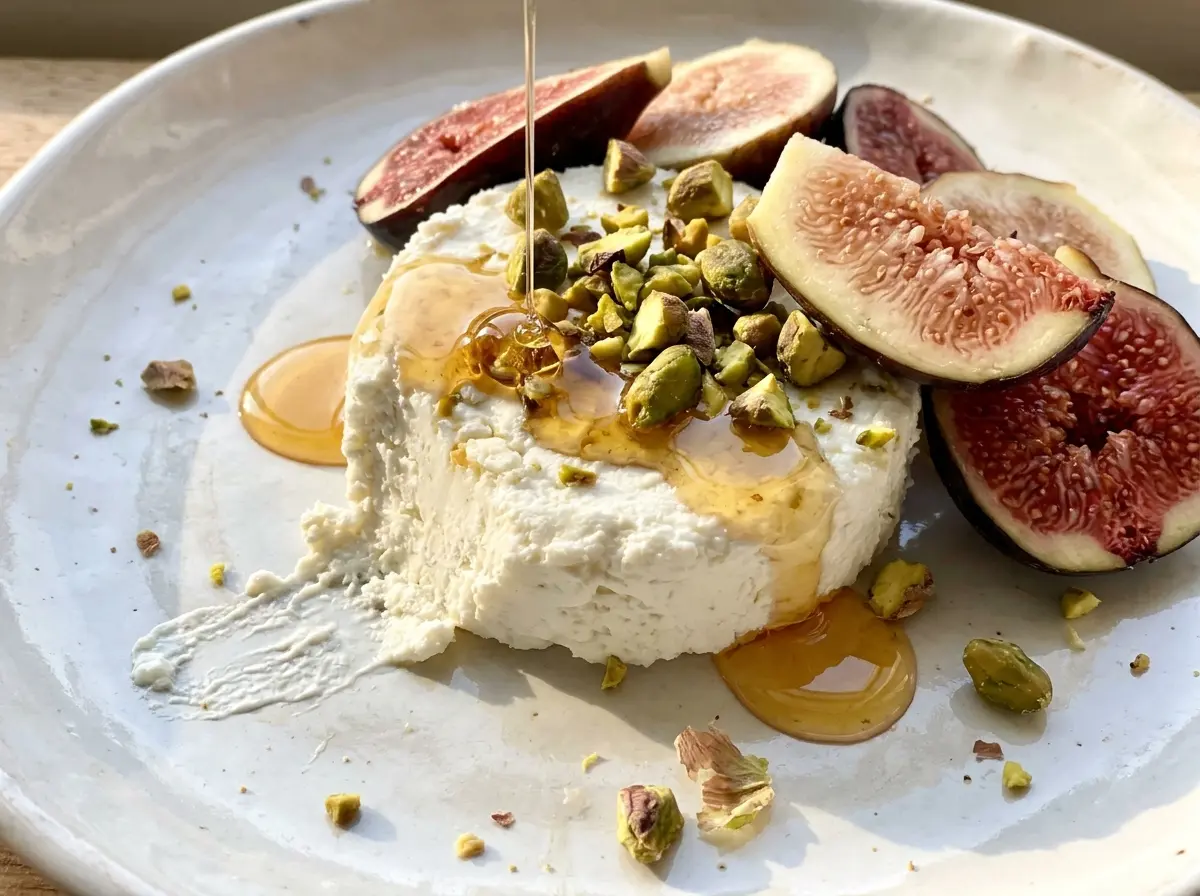
The figs start to soften and slump as they simmer, and the honey turns glossy around them. That’s the moment I watch for with this goat cheese appetizer: the fruit should be tender, but the topping should still have enough body to sit on the cheese instead of running across the plate. A little lemon juice keeps the honeyed figs from tasting one-note sweet.
I like this for a small gathering because the stovetop work happens in one saucepan, and the rest is just arranging everything on a plate. The tangy goat cheese gives the figs somewhere rich and creamy to land, while finely chopped pistachios add a crisp finish. Set out the crackers around the cheese and you’ve got an 8-serving appetizer with a good balance of soft, crunchy, sweet, and tart in every bite.
Kitchen Note
Give the goat cheese its full 20 minutes at room temperature. It softens enough to spread under the topping, but still holds its shape on the plate.
Save this honeyed fig and goat cheese appetizer for a gathering when you want a sweet-tart topping and a little pistachio crunch.
Why a Short Fig Simmer Beats Turning This Into Jam
The topping needs to do two jobs at once: bring concentrated fig and honey flavor, and stay spoonable over a soft log of cheese. A long, hard boil pushes it toward a thick preserve, while too little time leaves a loose syrup that can spread beyond the cheese. A gentle simmer gives the fruit time to soften and lets the liquid reduce without asking the figs to disappear.
That texture matters once everything is on the plate. The figs should still be recognizable, with syrup clinging to them rather than pooling like a thin glaze. Lemon juice goes in after the pan comes off the heat, so its bright, tart edge stays noticeable next to the mellow honey. The result is a topping that tastes like cooked fruit, not candy, and sits neatly on tangy goat cheese.
Fresh Figs, Tangy Goat Cheese, and the Crunch That Makes Them Work
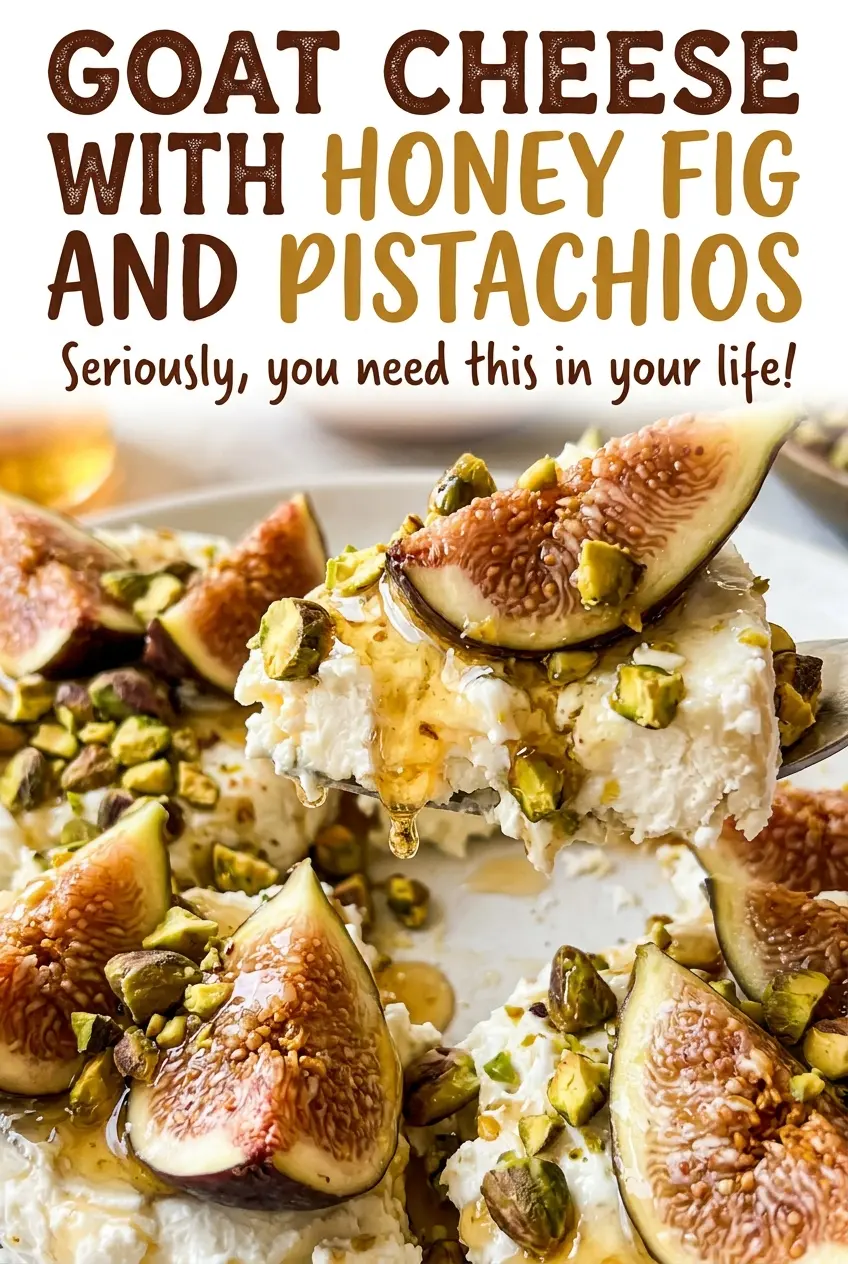
- Fresh figs — Choose figs that feel plump and give slightly when pressed; bruised or shriveled fruit won’t give the topping the same fresh-fruit character. Stem and quarter them before they go into the saucepan so the pieces soften evenly. Dried figs aren’t a direct stand-in because they bring much less moisture.
- Honey — Honey supplies sweetness and helps make the glossy syrup around the figs. A mild, everyday honey lets the fruit stay in front, so there’s no need to reach for a specialty jar. I keep the honey rather than swapping in another sweetener, since a different sweetener changes both the flavor and the way the topping reduces.
- Fresh lemon juice — This small finishing addition cuts through the honey and makes the cooked fruit taste brighter. Fresh juice gives the cleanest lift; bottled juice works in a pinch, though it can taste less lively. Stir it in after the pan leaves the heat rather than cooking it with the figs.
- Goat cheese — An 8-ounce log gives the topping a creamy, tangy base and makes a tidy centerpiece. Plain goat cheese is the right fit here; a strongly seasoned version can compete with the figs and honey. Keep it in log form for the plated presentation.
- Pistachios and crackers — Finely chopped pistachios add crunch without making each bite difficult to scoop. Shelled nuts save prep time, and pre-chopped pistachios are fine if they smell fresh rather than stale. The crackers are the vehicle for the creamy cheese and fruit, so choose a crisp kind sturdy enough to carry a generous bite.
The Simmer, Cool, and Assemble Sequence
Soften the Figs and Reduce the Honey
Combine the quartered figs, honey, water, and kosher salt in a small saucepan over medium heat, then bring the mixture to a simmer. Reduce the heat to medium-low and cook for 8–10 minutes, stirring occasionally. The figs should soften, and the syrup should thicken enough to cling to the fruit. If it still looks watery at the end of that window, keep the simmer gentle and watch for the syrup to thicken rather than turning the heat up sharply.
Finish with Lemon and Let the Topping Cool
Take the pan off the heat before stirring in the fresh lemon juice. Let the topping cool for 10–15 minutes; it will settle into a thicker, easier-to-spoon consistency as it rests. Don’t rush this part by pouring the hot mixture straight onto the cheese. The topping should be warm or cool, not steaming, when you assemble the plate.
Set Out the Cheese and Build the Plate
Remove the goat cheese from the refrigerator and let it sit at room temperature for the time noted in the Kitchen Note. Place it on a serving plate, then spoon the cooled fig topping over the top. Sprinkle with the finely chopped pistachios and arrange the crackers around the cheese. Serve once assembled so the crackers stay crisp and ready for scooping.
Two Ways to Change the Format Without Losing the Fig-and-Goat-Cheese Balance
Make Individual Fig-and-Goat-Cheese Bites
For a more grab-and-go presentation, spread some goat cheese onto each cracker and top it with a little fig mixture and pistachio. The flavors stay the same, but each bite is portioned in advance; assemble them close to serving so the crackers don’t soften under the topping.
Use Gluten-Free Crackers
Replace the crackers with a gluten-free variety to make the appetizer gluten-free. Pick a crisp, sturdy cracker that can hold the soft cheese and topping; the fig mixture and goat cheese stay unchanged, so the flavor balance is the same.
Storage and Reheating
- Refrigerator: Store the fig topping and goat cheese separately, covered, for up to 3 days. The topping firms up when cold, while the cheese stays easiest to spread after it loses its chill.
- Freezer: This appetizer doesn’t freeze well assembled. The goat cheese can turn crumbly after thawing, and the fig topping may lose its fresh, spoonable texture.
- Reheating: Warm only the fig topping gently in a small saucepan over low heat, stirring until it’s loose enough to spoon. Don’t warm the goat cheese along with it.
Questions That Come Up When the Figs Hit the Pan
Goat Cheese with Honey Fig and Pistachios
Ingredients
Method
- Combine the figs, honey, water, and salt in a small saucepan over medium heat.
- Bring the mixture to a simmer, then reduce the heat to medium-low.
- Cook for 8-10 minutes, stirring occasionally, until the figs soften and the syrup thickens.
- Remove the pan from the heat and stir in the lemon juice.
- Let the topping cool for 10-15 minutes.
- Remove the goat cheese from the refrigerator and let it sit at room temperature for 20 minutes.
- Set the goat cheese on a serving plate and spoon the fig topping over it.
- Sprinkle with the pistachios.
- Arrange the crackers around the cheese and serve.