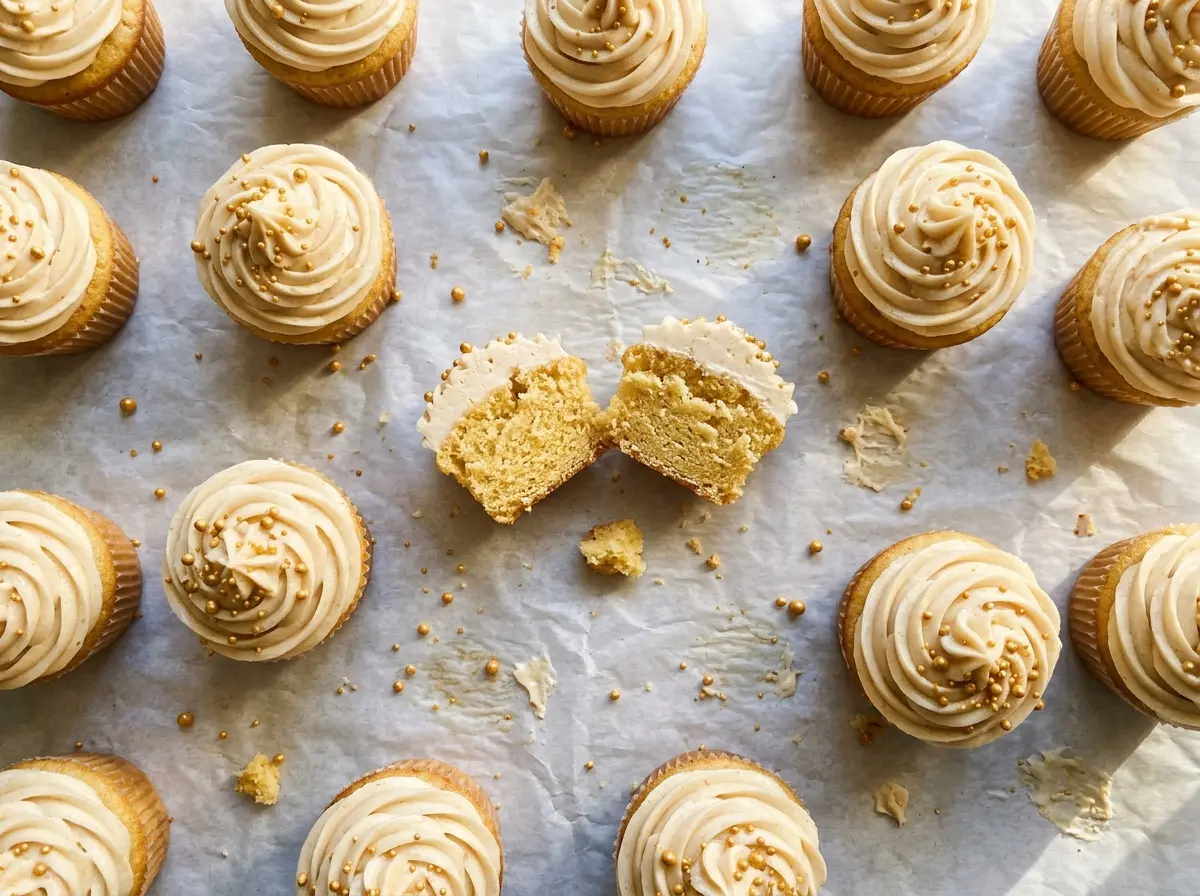
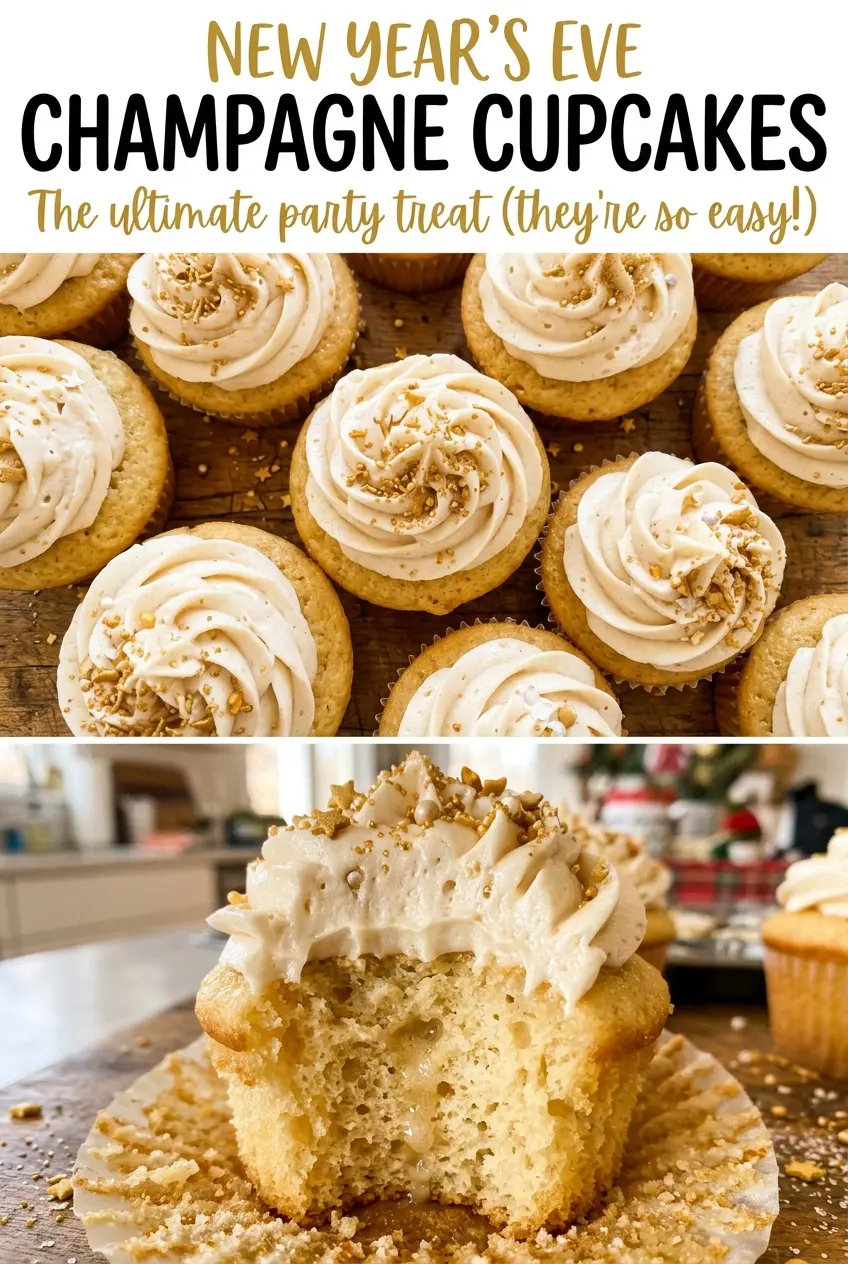
The batter turns silky as the champagne and sour cream disappear into the butter and sugar, and the cupcakes come out with a close, tender crumb instead of a dry, airy one. I like these New Year’s Eve Champagne Cupcakes because the sparkling wine shows up in both the cake and the frosting without making either taste sharp or overly sweet.
The order you add the ingredients matters more than extra mixing. Alternating the flour with the sour cream and champagne gives the batter a chance to take in the liquid gradually, so the finished cupcakes stay soft. The buttercream gets its champagne flavor from a small reduction, which needs to cool before it meets the butter. That leaves you with a fluffy frosting and a gentle champagne finish on each cupcake.
Kitchen Note
I watch the champagne reduction more closely than the clock. Stop when it measures about 2 tablespoons, then let it cool completely; even a warm reduction can soften the butter and leave the frosting too loose.
Save these New Year’s Eve Champagne Cupcakes for a celebration bake: tender champagne cake under fluffy champagne buttercream.
Why Alternating the Champagne Keeps These Cupcakes Tender
It’s easy to assume a longer mix will make cake batter smoother, but once flour is in the bowl, extra beating can make the crumb tougher. Here, the sour cream and champagne go in between portions of the flour mixture, so the liquid gets distributed without asking the flour to take on everything at once. Begin and end with flour, and stop as soon as the last dry streaks disappear.
That sequence also helps avoid a dense patch at the bottom of the cupcake. If you pour all the champagne in at once, the batter can look loose before the flour has had a chance to absorb it; keep the mixer on low and follow the alternating additions instead. The finished batter should look even, with no pockets of dry flour, but it doesn’t need to be beaten until glossy. A light hand here is what keeps the cupcakes tender enough to pair with the rich buttercream.
What the Champagne, Sour Cream, and Butter Each Bring
- Champagne — In the cupcakes, it brings a light wine aroma and thins the batter along with the sour cream. In the frosting, simmering concentrates its flavor so a modest amount can flavor the buttercream. Use a sparkling wine you’d be happy to drink; the reduced flavor is more noticeable in the frosting. Keep the cupcake portion at room temperature before mixing it in.
- Sour cream — Its tang and thickness give the cake a softer, more tender crumb than champagne alone. Full-fat sour cream is the best fit. Plain Greek yogurt can stand in at the same amount, though the crumb may be a little less rich; bring it to room temperature either way.
- Unsalted butter — Softened butter can hold air when beaten with sugar, which helps build the cupcake texture, and it gives the frosting its body. The brand matters less than starting with butter that’s soft enough to beat smoothly but not melted. Unsalted butter also lets the measured salt stay in balance.
- All-purpose flour and baking powder — All-purpose flour gives these cupcakes enough structure to support the buttercream, while baking powder provides their lift. A fresh container of baking powder is more useful than an expensive flour here. For a gluten-free batch, replace the all-purpose flour with the same amount of a cup-for-cup gluten-free baking blend; the cupcakes may have a slightly different crumb.
- Confectioners’ sugar — This dissolves into the butter more smoothly than granulated sugar and creates the frosting’s fine texture. Choose a fresh, dry bag; clumpy sugar is harder to incorporate evenly at low speed.
Build the Cupcakes Before You Make the Frosting
Get the butter and sugar light
Heat the oven to 350°F and line a standard 12-cup muffin pan with paper liners. Whisk the flour, baking powder, and salt in a medium bowl. Beat the softened butter and granulated sugar on medium speed for 2 to 3 minutes, until light and fluffy; stop if the butter is starting to look greasy rather than airy. Beat in the eggs one at a time, then mix in the vanilla.
Add the liquids in stages
With the mixer on low, add the flour mixture in three additions, alternating with the sour cream and champagne in two additions. Start and finish with the flour mixture. Scrape the bowl if flour is clinging to the sides, then mix only until the batter comes together. Continuing to beat after it’s combined can make the cupcakes less tender.
Bake until the tops spring back
Divide the batter among the liners, filling each about two-thirds full. Bake for 18 to 22 minutes, until the tops spring back lightly when touched and a toothpick comes out with a few moist crumbs. A toothpick covered in wet batter needs more time; don’t wait for it to come out completely dry, which can mean the cupcakes have baked too long. Cool them in the pan for 5 minutes, then move them to a wire rack to cool completely.
Reduce the champagne and finish the buttercream
Simmer the champagne in a 1-quart saucepan over medium heat for 6 to 10 minutes, until it has reduced to about 2 tablespoons. Transfer it to a small bowl and cool completely. Beat the softened butter until smooth, then gradually beat in the confectioners’ sugar on low speed until incorporated. Add the cooled reduction and beat on medium speed until fluffy, then spread or pipe it over the completely cooled cupcakes.
Three Simple Ways to Adapt the Champagne Flavor
Use a dry sparkling wine
Swap in an equal amount of dry sparkling wine for the champagne in both the cupcakes and buttercream. The flavor will shift with the wine you choose, but the same reduction cue applies: simmer the frosting portion until it measures about 2 tablespoons.
Make the flavor fruitier with sparkling rosé
Replace the champagne with the same amount of sparkling rosé. It gives the cupcakes and frosting a fruitier wine note, though the finished color won’t necessarily show much pink after baking and mixing.
Bake a gluten-free version
Use the same amount of a cup-for-cup gluten-free baking blend in place of the all-purpose flour. Pick a blend made for direct flour replacement rather than a single gluten-free flour; the texture may be a little more delicate, so let the cupcakes cool fully before frosting.
Storage and Reheating
- Refrigerator: Store frosted cupcakes in an airtight container for up to 3 days. The buttercream will firm up when chilled.
- Freezer: Freeze unfrosted, completely cooled cupcakes in an airtight container for up to 2 months. Thaw them in the refrigerator before frosting for the best texture.
- Reheating: Don’t microwave frosted cupcakes; the buttercream can melt. Let refrigerated cupcakes sit until the frosting softens before serving.
Questions That Come Up Before the First Bite
New Year's Eve Champagne Cupcakes
Ingredients
Equipment
Method
- Heat the oven to 350°F.
- Line a standard 12-cup muffin pan with paper liners.
- Whisk the flour, baking powder, and salt together in a medium bowl.
- Beat the butter and granulated sugar in a large bowl on medium speed until light and fluffy, 2 to 3 minutes.
- Beat in the eggs one at a time, then mix in the vanilla extract.
- With the mixer on low, add the flour mixture in three additions, alternating with the sour cream and champagne in two additions; begin and end with the flour mixture, and mix just until combined.
- Divide the batter among the liners, filling each about two-thirds full.
- Bake for 18 to 22 minutes, until the tops spring back lightly and a toothpick comes out with a few moist crumbs.
- Cool the cupcakes in the pan for 5 minutes.
- Transfer the cupcakes to a wire rack and cool completely.
- Simmer the champagne in a 1-quart saucepan over medium heat until reduced to about 2 tablespoons, 6 to 10 minutes.
- Transfer the reduction to a small bowl and cool completely.
- Beat the butter in a large bowl until smooth.
- Gradually beat in the confectioners' sugar on low speed until incorporated.
- Add the cooled champagne reduction and beat on medium speed until the buttercream is fluffy.
- Spread or pipe the buttercream over the completely cooled cupcakes.