The first time I rushed a pot of beef stew, the broth tasted sharper than I expected and the browned bits stayed stuck to the bottom. Giving the Guinness a few minutes to simmer after scraping up those bits changed the whole pot: the stout settled into the beefy broth instead of sitting on top of it. That short pause is one of the little details I pay attention to in this Guinness beef stew with tender chuck roast.
Chuck roast needs a slow, covered braise to turn fork-tender, so this stew starts in a 6-quart Dutch oven on the stove and finishes in the oven. I brown the beef in batches first, then build the broth in the same pot. Carrots and Yukon Gold potatoes go in later, which gives the beef a head start without leaving the vegetables to braise for the full stretch.
The finished stew has chunks of tender beef and vegetables in a dark, savory broth with the roasted edge of stout. Letting it rest before serving gives you a welcome pause to set out bowls while the pot settles.
Kitchen Note
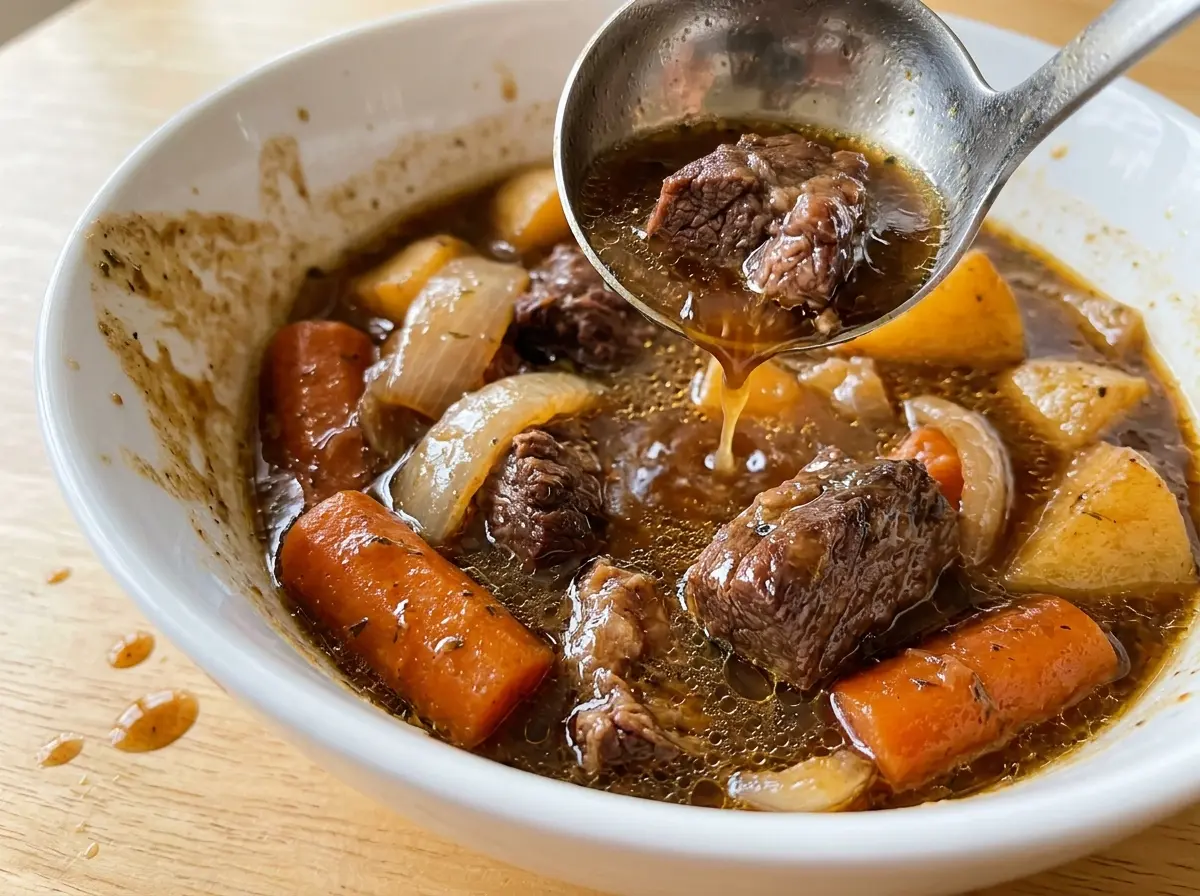
After you remove the bay leaf, let the stew rest for 10 minutes before serving. I use that pause to set out bowls and let the hot broth settle, rather than ladling straight from the oven.
Save this Guinness beef stew for a night when you want tender chuck roast, potatoes, and a stout-rich broth from one Dutch oven.
Why Guinness Needs a Short Simmer Before the Beef Goes Back In
Stout brings a deep, roasted flavor, but pouring it in and immediately adding everything else can leave that flavor tasting separate from the broth. Once the Guinness hits the hot pot, scrape across the bottom to loosen the browned bits left by the beef. Those bits are concentrated savory flavor, and they belong in the stew rather than stuck to the pan.
Let the stout simmer for 3 to 4 minutes before stirring in the broth and seasonings. That brief simmer gives the stout time to meld with the onion and tomato paste and keeps the liquid moving before the beef returns. It isn’t a long reduction; the goal is to bring the pot together, not cook away all the stout. If the bottom of the pot still has stubborn brown patches, keep scraping as the liquid bubbles gently so the fond lifts into the broth.
This matters even more in a covered braise, where the liquid stays in the pot for a long time. A good start gives the chuck roast a savory base to cook in, and the sauce develops alongside the meat instead of relying on a last-minute fix.
What the Chuck, Stout, and Potatoes Each Bring to the Pot
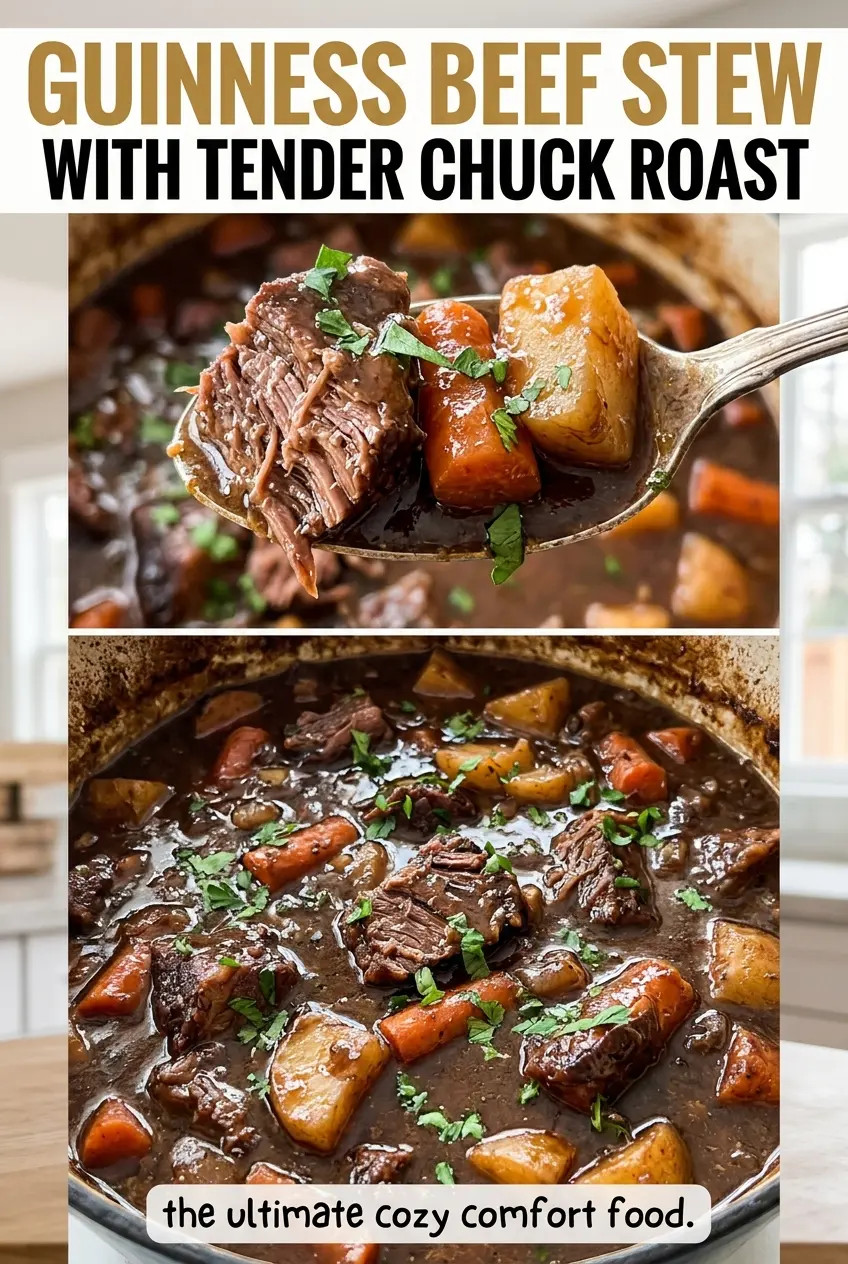
- Beef chuck roast — Chuck has enough connective tissue to become tender during a long braise and gives the broth a full, beefy character. Cut it into even pieces so they cook at a similar rate. A different braising cut can work, but the final texture won’t be quite the same; for this version, chuck is the dependable choice.
- Guinness stout — Stout contributes roasted, malty depth that plain broth can’t quite replace. Use the Guinness called for here when you want that distinct character; another stout in the same volume is a workable swap, though the finish will vary by brand. A fresh can is fine—there’s no need to seek out a specialty bottle.
- All-purpose flour — The light coating helps the beef brown and contributes body to the broth as the stew braises. Shake off loose flour before the beef goes into the pot; excess can scorch during browning. For a gluten-free version, use a cup-for-cup gluten-free flour blend for coating, then choose gluten-free stout and Worcestershire sauce as well.
- Yukon Gold potatoes — Their creamy, waxier texture helps them keep their shape during the long oven braise. Choose firm potatoes without soft spots and cut them into similarly sized pieces. Red potatoes are the closest easy swap and also hold together well; russets soften more and can make the broth cloudier.
- Low-sodium beef broth and Worcestershire sauce — Together they deepen the braising liquid without making the stout the only source of savory flavor. Low-sodium broth gives you more control over the finished seasoning, while a standard grocery-store Worcestershire sauce works well here. The onion, garlic, tomato paste, thyme, and bay leaf round out the base; fresh garlic and a fragrant dried thyme jar are worth using, but nothing needs to be fancy.
- Carrots and yellow onion — These bring sweetness and a familiar stew base without needing extra ingredients. Choose firm carrots, and chop the onion into pieces that soften evenly. Vegetable oil is a practical choice for browning; an inexpensive bottle works just as well as a premium one.
Building the Stew in the Dutch Oven, Then Letting the Oven Do the Work
Coat and Brown the Chuck in Batches
Heat the oven to 325°F, pat the beef dry, season it with the salt and pepper, and toss it with flour. Shake off excess flour before browning, or loose coating can darken too quickly in the pot. Heat the vegetable oil in a 6-quart Dutch oven over medium-high heat and brown the pieces in batches for 3 to 4 minutes per side. Look for a deep brown crust, then move each batch to a plate rather than crowding the pot.
Soften the Onion and Build the Stout Base
Reduce the heat to medium and add the chopped onion, stirring occasionally as it cooks for 5 minutes. It should soften without catching on the bottom. Stir in the minced garlic and tomato paste and cook for 1 minute, just until the paste darkens slightly and smells savory. Pour in the Guinness, scrape up the brown bits, and simmer for 3 to 4 minutes.
Start the Covered Oven Braise
Stir in the beef broth, Worcestershire sauce, dried thyme, and bay leaf, then return the beef and any juices on the plate to the pot. Bring the liquid to a simmer before covering the Dutch oven. Transfer it to the 325°F oven and braise for 1 hour 45 minutes. Keep the lid on during this first stretch so the chuck cooks gently in the broth.
Add the Vegetables for the Final Braise
Stir the carrots and Yukon Gold potatoes into the pot after the beef’s first braise. Cover it again and return it to the oven for 60 to 75 minutes more. The stew is ready when the beef is fork-tender and the vegetables are tender; if the beef still resists a fork, use tenderness rather than the clock alone as your cue. Remove the bay leaf before serving.
Simple Swaps That Keep This Stew Hearty
Make the Stout Nonalcoholic
Use a nonalcoholic stout in place of the Guinness, keeping the same volume. The result stays dark and roasted, though the brand’s malt and bitterness will shape the flavor. Keep the short simmer so the stout combines with the browned bits and tomato paste.
Use Red Potatoes for a Firmer Bite
Replace the Yukon Gold potatoes with red potatoes, cutting them into the same 1 1/2-inch pieces. They hold together well in the covered braise and have a slightly firmer, less buttery texture. Keep the same timing and check that the potatoes are tender before serving.
Make a Gluten-Free Pot
Coat the beef with a cup-for-cup gluten-free flour blend instead of all-purpose flour, and use gluten-free stout, Worcestershire sauce, and beef broth. The flour blend may give the broth a slightly different body, but the chuck still browns and braises in the same way. Check that each replacement is labeled gluten-free.
Storage and Reheating
- Refrigerator: Store in a covered container for 3 to 4 days. The potatoes soften a little as they sit in the broth.
- Freezer: Freeze in airtight containers for up to 2 to 3 months. The beef freezes well, though the potatoes may be softer after thawing.
- Reheating: Warm gently in a covered saucepan over medium-low heat, stirring occasionally, until steaming hot throughout. Avoid a hard boil, which can break up the softened potatoes.
Questions That Come Up While the Stew Braises
Guinness Beef Stew with Tender Chuck Roast
Ingredients
Equipment
Method
- Preheat the oven to 325°F.
- Pat the beef dry and season it with the salt and pepper.
- Toss the beef with the flour until coated, shaking off excess.
- Heat the oil in a 6-quart Dutch oven over medium-high heat.
- Brown the beef in batches for 3 to 4 minutes per side, transferring it to a plate as it browns.
- Reduce the heat to medium, add the onion, and cook for 5 minutes, stirring occasionally.
- Stir in the garlic and tomato paste and cook for 1 minute.
- Pour in the Guinness and scrape up the browned bits from the bottom of the pot.
- Simmer for 3 to 4 minutes.
- Stir in the broth, Worcestershire sauce, thyme, and bay leaf.
- Return the beef and any accumulated juices to the pot and bring to a simmer.
- Cover the pot and transfer it to the oven.
- Braise for 1 hour 45 minutes.
- Stir in the carrots and potatoes, then cover the pot.
- Braise for 60 to 75 minutes more, until the beef is fork-tender and the vegetables are tender.
- Remove the bay leaf and let the stew rest for 10 minutes before serving.