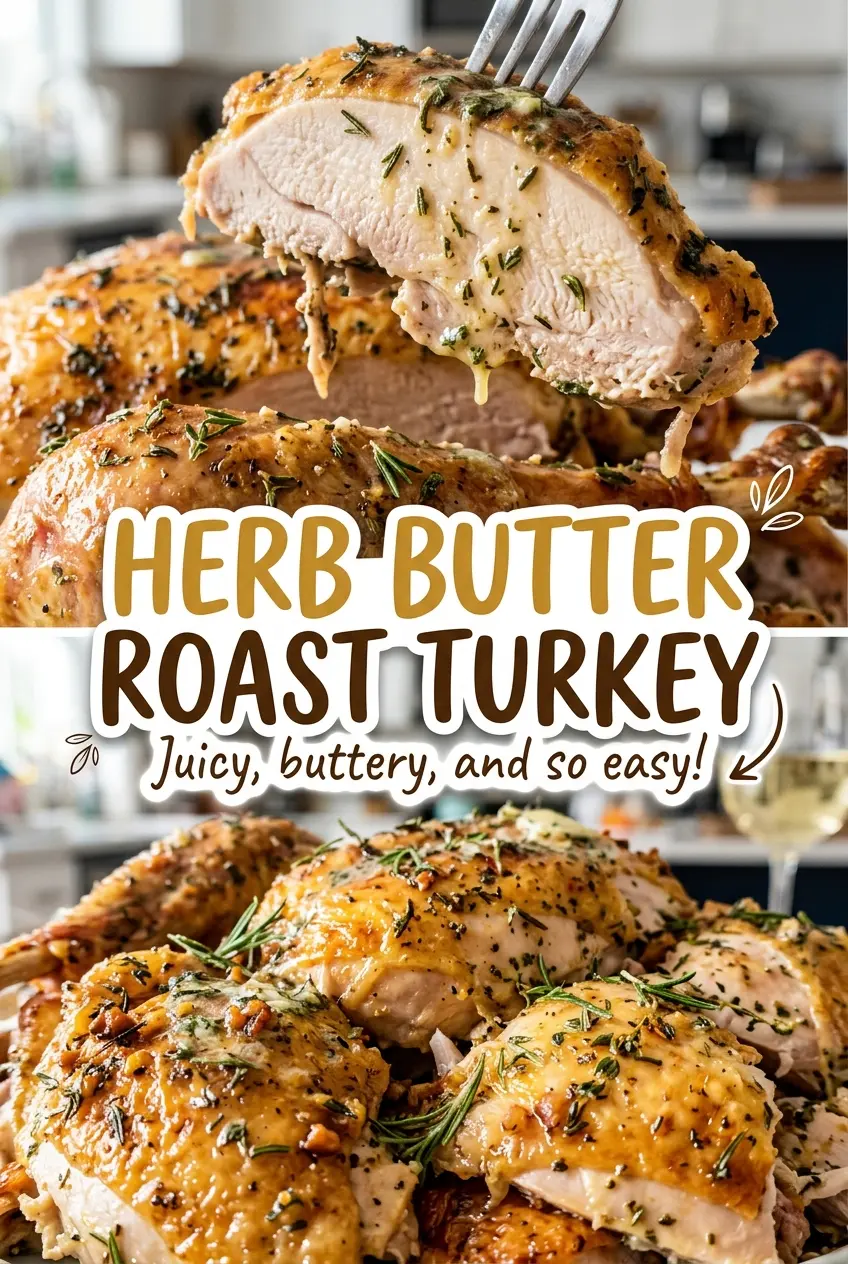
When the herb butter melts, it carries garlic and fresh herbs into the roasting pan, while the skin slowly turns golden in the oven. The first time I made this Herb Butter Roast Turkey, I paid more attention to the clock than to the thermometer; with a bird this size, those two don’t always agree. Now I treat the roasting time as a window and let the temperature tell me when the turkey is ready.
I spread some of the butter beneath the skin, where it can season the breast and thighs directly, and rub the rest over the outside. That gives the turkey flavor under the skin as well as a fragrant, browned surface, without needing a complicated brine or a long list of seasonings. Onion, lemon, and celery sit loosely in the cavity, and a little broth goes into the roasting pan. The result is a classic roast turkey with savory herb butter, tender slices, and a pan full of fragrant drippings.
Kitchen Note
I set the rack in the 16×13-inch roasting pan before I start handling the turkey. A buttered 12- to 14-pound bird is awkward to lift, and having the pan ready makes it easier to set it down without scraping off the herb butter.
Save this Herb Butter Roast Turkey for a golden, herb-scented centerpiece with buttery flavor under the skin and savory pan drippings.
Why Herb Butter Belongs Under the Turkey Skin
Butter rubbed over the outside seasons the skin, but it has less direct contact with the meat. Loosening the skin lets some of the herb butter sit right against the breast and thighs instead. As the butter softens in the oven, the garlic and herbs are held close to the meat rather than only on the surface.
That’s useful with a whole turkey because the breast and thighs don’t cook at exactly the same pace. The skin forms a barrier, so work patiently with your fingers and open a pocket without tearing it. A small tear won’t ruin dinner, but it makes the butter harder to distribute where you want it. Keep the split roughly half and half: about half under the skin, the rest rubbed across the outside. You get seasoned meat and a flavorful skin, without repeatedly opening the oven to baste.
The butter also makes the herb mixture easy to spread evenly. If you only coat the outside, the herbs can brown there before their flavor reaches much beyond the surface. Tucking some underneath gives each slice a more even, savory taste.
What the Herbs, Turkey, and Broth Each Bring to the Roast
- Unsalted butter — It carries the chopped herbs and garlic into a spreadable paste, and unsalted butter lets the kosher salt stay in your control. A standard grocery-store butter works well; softened butter is much easier to spread without dragging at the skin.
- Fresh herbs — Parsley keeps the mixture green and light, while sage, thyme, and rosemary give it the woodsy aroma people expect from roast turkey. Fresh herbs are worth using here because their chopped leaves distribute through the butter. If you’re missing one, leave that herb out rather than guessing at a dried-herb conversion.
- Unbrined whole turkey — The butter mixture already contains kosher salt, so an unbrined bird keeps the seasoning predictable. A frozen turkey is fine once it’s fully thawed; choose one in the stated size range so the roasting window remains appropriate.
- Onion, lemon, and celery — These aromatics add a gentle savory and citrus scent inside the cavity as the turkey roasts. Cut them as specified and place them loosely, rather than packing the cavity tightly.
- Low-sodium chicken broth — Broth adds a savory base to the roasting pan and keeps the drippings from being only rendered fat. Low-sodium broth is a good choice alongside the salted butter; an inexpensive carton works just as well as a premium one.
From Herb Butter to a Rested, Carvable Turkey
Mix the Soft Herb Butter
Stir the softened butter with the chopped parsley, sage, rosemary, thyme leaves, minced garlic, kosher salt, and black pepper until the mixture looks evenly speckled. Soft butter should blend without leaving hard lumps of herbs or garlic. If it’s too firm to stir, give it more time at room temperature instead of melting it; melted butter won’t stay put as easily when you spread it.
Dry the Bird and Loosen the Skin
Heat the oven to 325°F with a rack in the lower third. Remove the giblets and neck from the cavity, then pat the turkey dry inside and out with paper towels; don’t rinse it. Slide your fingers gently between the skin and the breast and thighs to loosen the skin. If you meet resistance, ease your fingers back and work in another direction rather than pulling hard.
Season Beneath the Skin and Fill the Cavity
Spread about half of the herb butter beneath the loosened skin, then rub the rest over the outside of the turkey. Work the butter across the surface instead of leaving it in one thick patch, which can brown unevenly. Put the onion, lemon, and celery loosely in the cavity, then tuck the wing tips behind the bird. Set it breast side up on the rack and pour the broth into the roasting pan.
Roast Until Both Checkpoints Read Ready
Roast uncovered for 3 to 3 3/4 hours. The skin should become golden, but color alone doesn’t tell you whether the thickest parts are cooked through. Check the thickest part of the breast and the innermost thigh with a thermometer, keeping the tip away from bone; both should read at least 165°F. If the skin browns too quickly before the turkey is ready, tent it loosely with foil.
Rest Before Carving
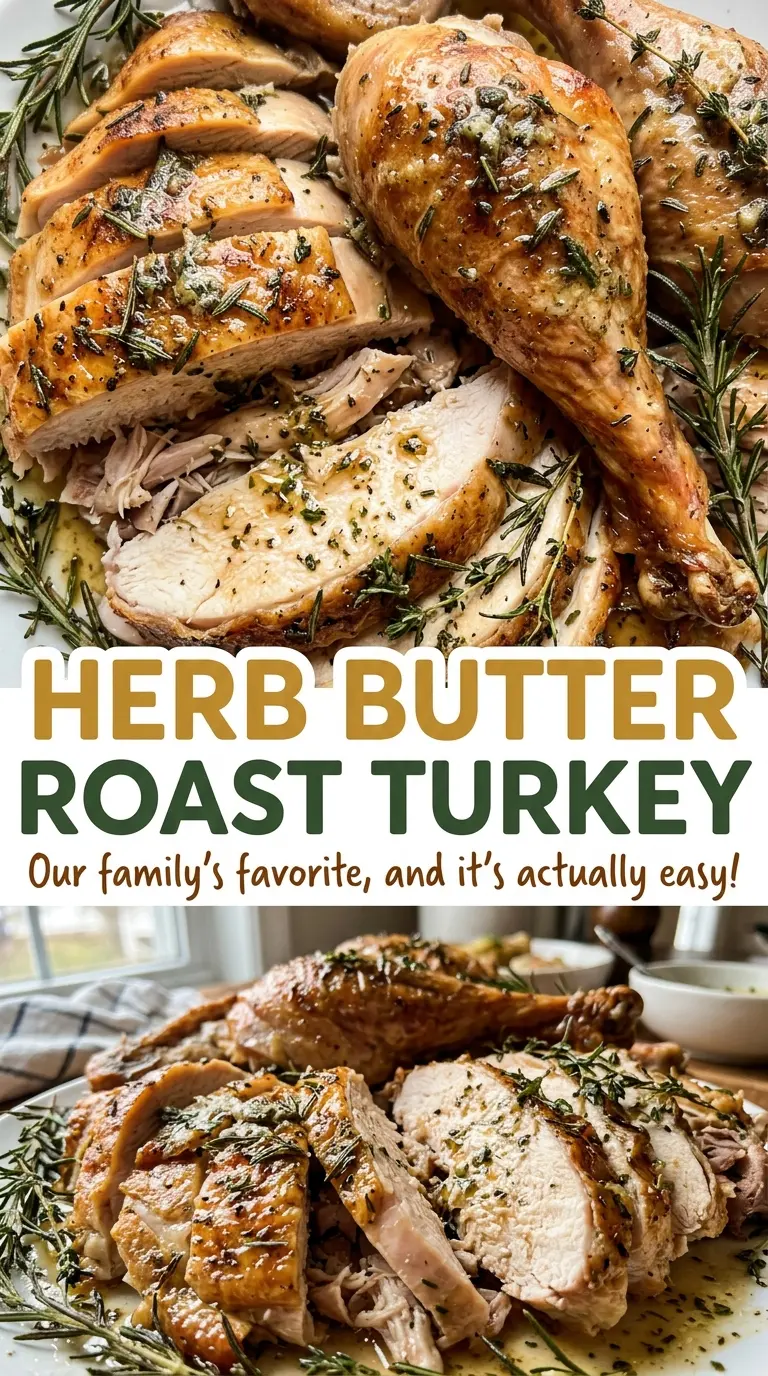
Transfer the turkey to a carving board and tent it loosely with foil. Let it rest for 30 minutes before carving; the pause gives the juices time to settle and makes the meat easier to slice neatly. Use a sharp carving knife and cut the breast against the grain into even slices. Save the pan drippings for the table or another use.
Three Simple Ways to Change the Herb Butter Roast
Make It Dairy-Free
Replace the unsalted butter with an equal amount of firm, unsalted dairy-free butter and keep the herbs and seasonings the same. The mixture may spread a little differently, and the finished turkey won’t have quite the same buttery richness, but it still carries the garlic and herbs beneath the skin.
Make the Herb Mix Less Piney
Leave out the rosemary and keep the parsley, sage, and thyme. The butter will have a softer, less woodsy aroma while still tasting clearly herbed. This is a handy change if rosemary tends to overpower the other herbs for you.
Let the Lemon Stand Out
Leave the celery out of the cavity and keep the onion and lemon. The citrus aroma comes through more clearly, with less of the mellow celery note, and the roasting method stays the same.
Storage and Reheating
- Refrigerator: Refrigerate carved leftovers within 2 hours and use them within 3 to 4 days. The skin will soften in storage.
- Freezer: Freeze carved turkey in airtight freezer-safe packaging for 2 to 6 months for best quality. Thaw it in the refrigerator before reheating.
- Reheating: Warm the slices covered in the oven with a splash of broth until they reach 165°F. Keeping them covered helps limit drying; uncovered high heat can toughen the edges.
Questions That Come Up When Roasting This Turkey
Herb Butter Roast Turkey
Ingredients
Equipment
Method
- In a small bowl, mix the softened butter, parsley, sage, thyme, rosemary, garlic, kosher salt, and black pepper until evenly combined.
- Heat the oven to 325°F with a rack in the lower third.
- Remove the giblets and neck from the turkey cavity.
- Pat the turkey dry inside and out with paper towels; do not rinse.
- Gently loosen the skin over the breast and thighs with your fingers.
- Spread about half of the herb butter under the skin and rub the rest over the outside of the turkey.
- Place the onion, lemon, and celery loosely in the cavity.
- Tuck the wing tips behind the turkey.
- Set the turkey breast side up on a rack in a 16x13-inch roasting pan.
- Pour the broth into the pan.
- Roast uncovered for 3 to 3 3/4 hours, tenting loosely with foil if the skin browns too quickly, until a thermometer inserted into the thickest part of the breast and the innermost thigh without touching bone reads at least 165°F.
- Transfer the turkey to a carving board.
- Tent loosely with foil and let it rest for 30 minutes before carving.