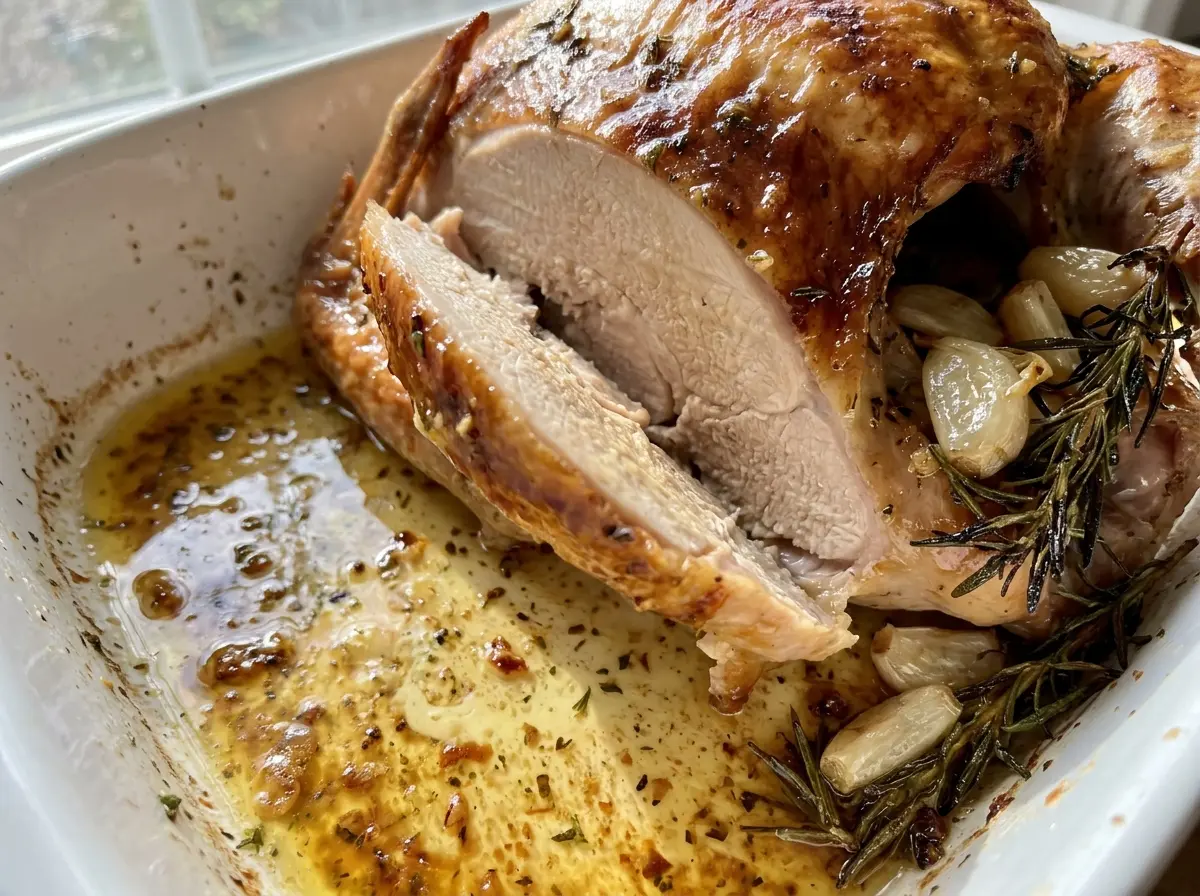
The butter starts to melt as soon as it hits the warm oven, and the garlic and rosemary perfume the kitchen before the turkey has even begun to brown. I used to smear all the herb butter over the skin, then wonder why the breast meat tasted less seasoned than the crisp exterior. This herb butter roasted turkey with garlic and rosemary solves that by putting part of the butter where it can season the meat directly.
Softened butter is much easier to spread under the skin than cold butter, and finely grated garlic blends into it without leaving big pieces behind. The onion and lemon tucked into the cavity add their own gentle aroma as the turkey roasts. By the time the bird rests on the carving board, the skin is golden and fragrant, with tender, herb-scented slices underneath.
Kitchen Note
Watch the breast as the roast progresses. If it browns faster than the rest of the bird, lay foil loosely over it; a snug cover can press against the skin and trap steam.
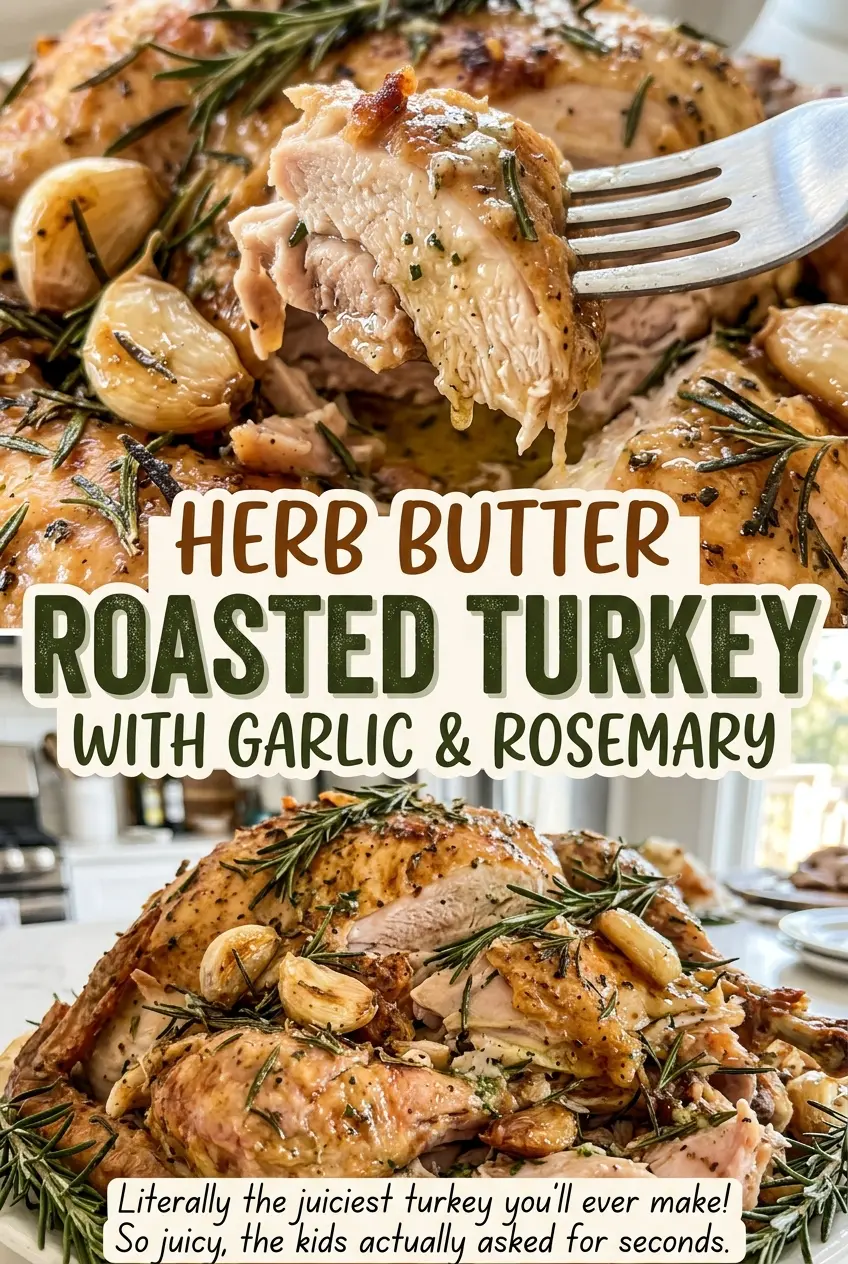
Save this herb butter roasted turkey for a golden centerpiece with garlic, rosemary, and thyme tucked into every slice.
Why the Herb Butter Needs to Reach the Meat, Not Just the Skin
A buttery, browned exterior is lovely, but it isn’t the whole point of this roast. The skin sits between the seasoning and the meat, so butter rubbed only on top gives the strongest flavor to the surface. Working some of the herb mixture underneath that skin puts the garlic, rosemary, thyme, and salt in closer contact with the breast and thighs.
That little bit of handwork also helps the butter spread across more of the bird instead of gathering in one thick patch. Use your fingers to loosen the skin gently, then smooth the butter underneath without rushing. If you feel resistance, shift to another spot rather than tugging hard; keeping the skin intact gives the butter room to coat the meat and leaves the outside ready for the remaining butter. The result is seasoning that carries through the slices, not just a flavorful first bite of skin.
Fresh Rosemary, Soft Butter, and the Bird: What Changes the Result
- Unsalted butter — Starting with unsalted butter lets the kosher salt season the bird without an extra, unknown amount of salt from the butter. It should be soft enough to stir smoothly with the herbs; if it’s still firm, it will be difficult to work beneath the skin. There isn’t a direct dairy-free replacement in this ingredient set, so changing the butter changes the recipe’s central coating.
- Garlic, rosemary, and thyme — Fresh rosemary brings a piney, resinous note, while thyme is softer and more earthy. Finely grate the garlic so it disperses through the butter instead of leaving large pieces on the skin. If you want a milder herb butter, leave out the garlic; for a thyme-led flavor, leave out the rosemary rather than adding another herb.
- The whole turkey — Choose a fully thawed bird in the listed size range, with the giblets and neck removed. A bird that’s still icy inside won’t roast evenly, and a much larger or smaller one won’t follow the same timing. Patting the skin dry matters because surface moisture slows browning.
- Onion and lemon — These aromatics scent the cavity as the turkey roasts; they aren’t a substitute for the herb butter’s seasoning. If you’re short one, use the other by itself. Onion alone gives a rounder, savory aroma, while lemon alone makes the cavity smell brighter.
From Soft Herb Butter to a Properly Rested Bird
Stir the garlic and herbs into soft butter
Stir the softened butter with the finely grated garlic, chopped rosemary, chopped thyme, kosher salt, and black pepper in a bowl. Keep mixing until the herbs and garlic are evenly distributed, with no large pockets of salt or garlic. If the butter is cold and lumpy, it won’t spread smoothly later, so let it soften before you start. The finished mixture should be cohesive and easy to smear.
Dry the turkey and prepare the cavity
Heat the oven to 325°F and set a rack in a 16-inch roasting pan. Pat the fully thawed turkey dry with paper towels, then place it breast side up on the rack. Put the quartered onion and lemon inside the cavity, and tuck the wing tips underneath the bird. Dry skin helps the outside brown instead of staying damp.
Season beneath and over the skin
Gently loosen the skin over the breast and thighs with your fingers. Spread half of the herb butter underneath, taking care not to tear the skin, then rub the remaining butter over the turkey’s exterior. Work the outside butter across the exposed skin so it isn’t left in a thick mound. If the skin pulls tightly in one area, ease your fingers back and continue from another spot.
Roast, check the thickest areas, and rest
Roast the turkey for 3 to 3 3/4 hours, tenting the breast loosely with foil if it browns too quickly. Check with a thermometer in the thickest part of the breast and the innermost part of the thigh, keeping the probe away from bone; both areas should read 165°F. Once it reaches that temperature, transfer the turkey to a carving board and let it rest for 30 minutes before carving. Cutting too soon lets the juices run onto the board instead of staying in the slices.
Small Changes That Keep This Roast in the Same Flavor Family
The whole bird and herb butter are what make this roast itself, but you can shift the balance with the ingredients already in the mix. These changes keep the same straightforward roasting method while giving the turkey a different emphasis.
A gentler garlic-and-herb butter
Leave out the garlic and keep the rosemary and thyme in the butter. The roast will have a cleaner herbal aroma without the sharper garlic note, while the same butter still coats the meat and skin.
A thyme-led roast
Leave the rosemary out and use the thyme as the only herb in the butter. The flavor turns softer and less piney, which suits anyone who finds rosemary too assertive. Keep the garlic and the rest of the method unchanged.
Choose one cavity aromatic
Use the quartered lemon without the onion for a brighter aroma, or keep the onion and leave out the lemon for a mellower, savory scent. Either way, the butter remains the main seasoning, so this change is about the background aroma rather than a new flavor coating.
Storage and Reheating
- Refrigerator: Carve leftover meat from the bones and refrigerate it in shallow, airtight containers within 2 hours. Use within 3 to 4 days; chilled breast meat will be firmer than freshly carved turkey.
- Freezer: Freeze carved turkey in airtight portions for up to 2 to 3 months for best quality. Thaw it in the refrigerator before reheating.
- Reheating: Reheat covered in the microwave or a low oven until steaming hot throughout. Warm only what you plan to eat; repeated heating dries out the breast meat.
Questions That Come Up While Roasting This Turkey
Herb Butter Roasted Turkey with Garlic and Rosemary
Ingredients
Equipment
Method
- Stir the butter, garlic, rosemary, thyme, salt, and pepper together in a bowl until evenly combined.
- Preheat the oven to 325°F and set a rack in a 16-inch roasting pan.
- Pat the turkey dry with paper towels and place it breast side up on the rack.
- Put the onion and lemon quarters in the cavity, then tuck the wing tips under the turkey.
- Loosen the skin over the breast and thighs with your fingers, spread half the herb butter underneath, and rub the remaining butter over the outside of the turkey.
- Roast for 3 to 3 3/4 hours, tenting the breast loosely with foil if it browns too quickly, until a thermometer reads 165°F in the thickest part of the breast and the innermost part of the thigh without touching bone.
- Transfer the turkey to a carving board and rest for 30 minutes before carving.