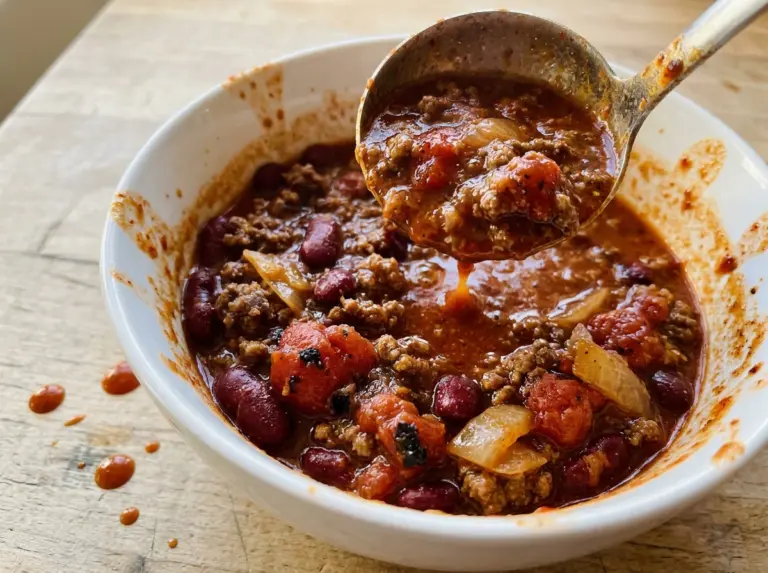
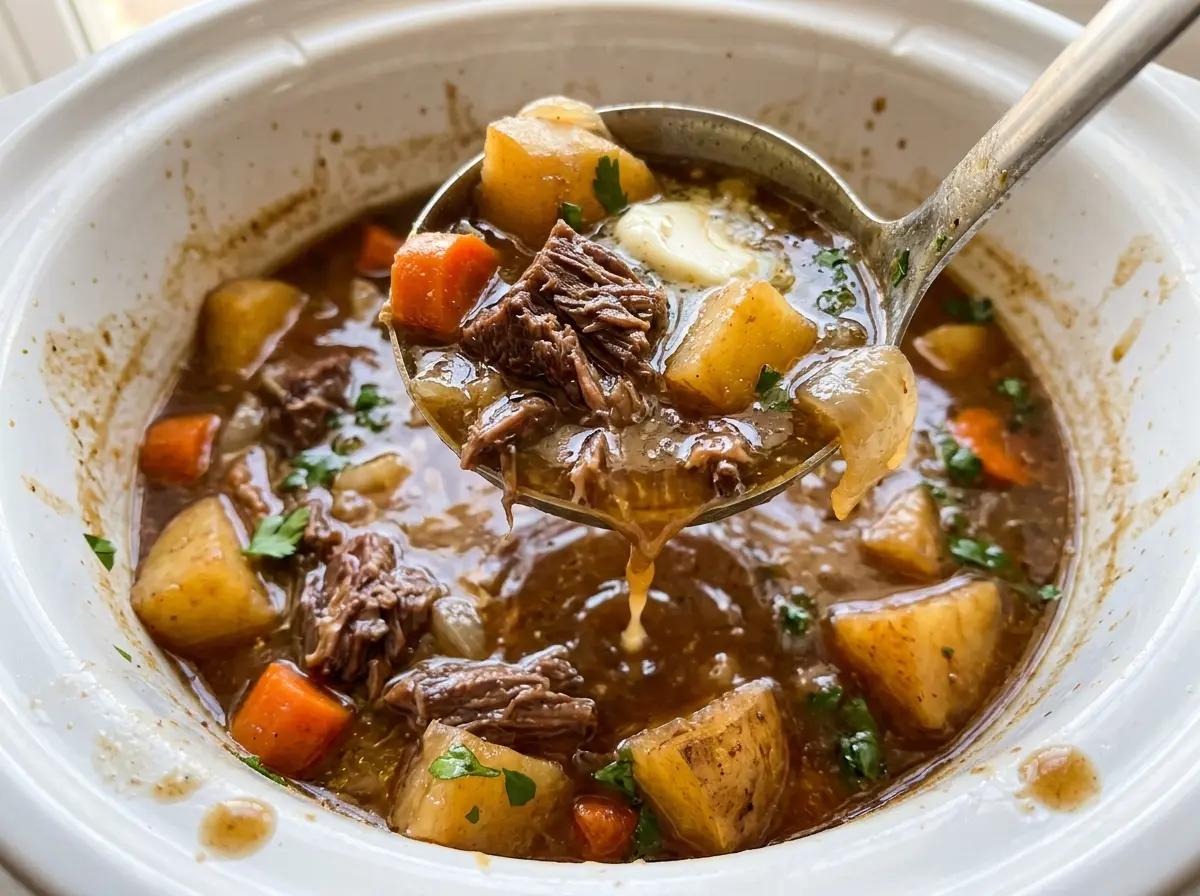
When the slow cooker lid comes off, the beef should give way under a fork while the potatoes still hold their shape. I brown the chuck before it goes in, because that quick skillet step gives the broth a deeper, more savory base than the slow cooker can build on its own. After a long, hands-off cook, this slow cooker beef and potato stew with garlic butter has tender chunks of beef, soft Yukon Gold potatoes, and a gravy that clings instead of pooling thinly at the bottom of the bowl.
The finish is what makes the stew feel complete. I stir in a smooth cornstarch slurry after the beef and vegetables are tender, then add garlic butter just before serving. Keep the garlic over low heat and take it off the burner as soon as it smells fragrant; it brings a mellow, buttery finish without scorching. Each spoonful has a little of that garlic and parsley tucked into the rich gravy.
Kitchen Note
The garlic cooks quickly, so stay close once it goes into the melted butter. When it smells fragrant, pull the saucepan off the heat; browned garlic can make the whole finish taste bitter.
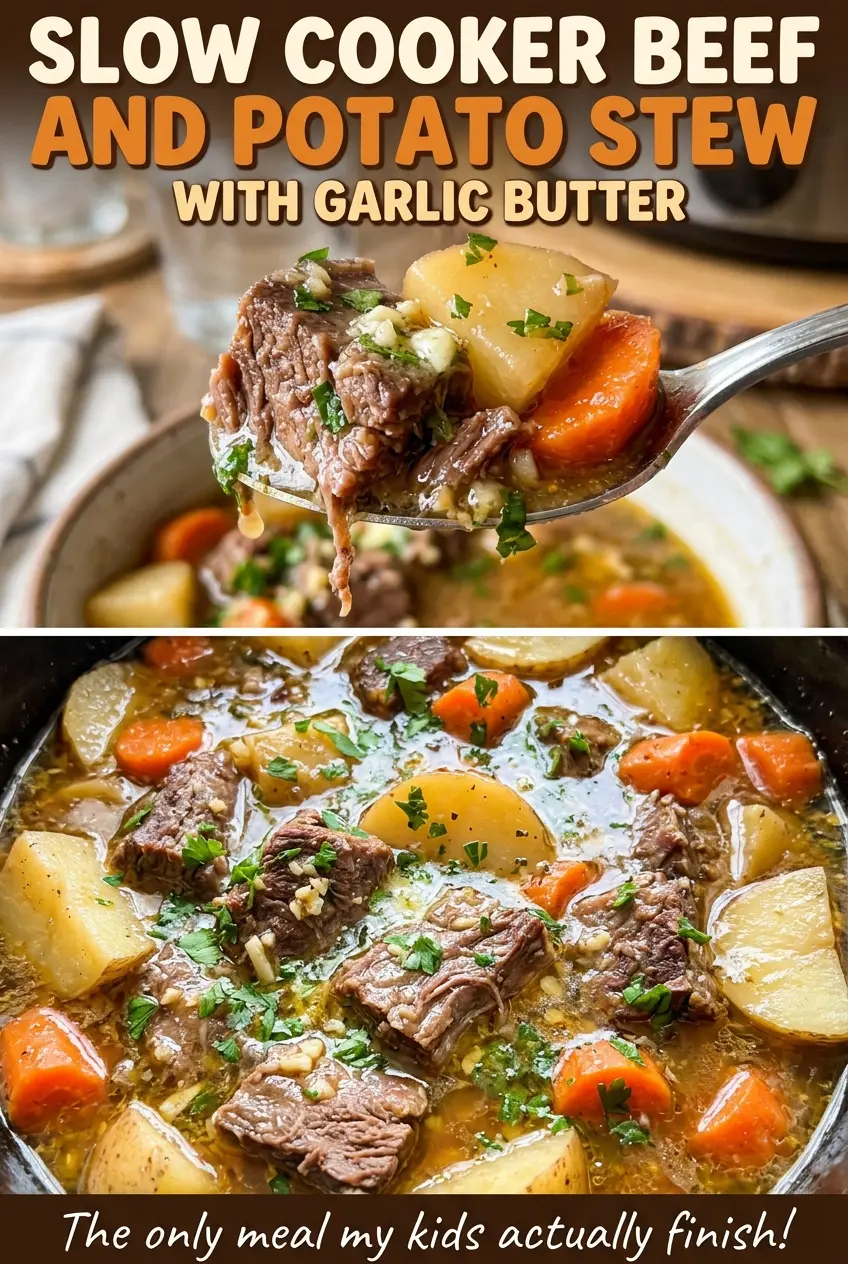
Save this slow cooker beef and potato stew with garlic butter for a cozy dinner with tender chuck, soft potatoes, and a savory garlic-butter finish.
Why the Gravy Gets Thick After the Beef Is Tender
A covered slow cooker holds onto moisture, so the broth doesn’t reduce the way it would in an uncovered pot on the stove. That’s useful here: the beef and vegetables have plenty of liquid for their long cook, and the broth carries the flavor from the onion, tomato paste, thyme, and Worcestershire. It also means the stew needs a separate thickening step if you want a gravy with body.
Adding the cornstarch slurry after the long cook keeps the timing straightforward. The potatoes and carrots soften in the broth first, then the slurry thickens the liquid near the end, when you can see the texture you’re working toward. Mix cornstarch with cold water until smooth before it goes into the slow cooker; dry clumps are harder to disperse once they hit hot stew. Give it the full thickening time before deciding the gravy needs anything else.
Chuck, Yukon Golds, and the Ingredients That Shape This Stew
- Boneless beef chuck — Chuck has enough connective tissue to turn tender during a long, moist cook, while leaner cuts are more likely to feel dry or firm. Ask the butcher to trim it, or trim away large hard pieces of fat yourself, then cut the meat into even pieces so they cook at a similar pace.
- Yukon Gold potatoes — Their creamy centers suit a thick stew, and they’re less likely to crumble than a floury potato when cooked for hours. Red potatoes are a useful swap if you want pieces that hold their shape; cut them to the same size as the original potatoes.
- Low-sodium beef broth — It gives you more control over the stew’s saltiness while still supplying the beefy base. A basic store-brand broth works well; a richer, premium broth isn’t necessary when it’s simmering with browned beef and aromatics.
- Tomato paste and Worcestershire sauce — Tomato paste brings concentrated savory depth, while Worcestershire adds a tangy, fermented note that keeps the gravy from tasting flat. Use the Worcestershire called for rather than relying on extra tomato paste to do both jobs.
- Cornstarch — It thickens the broth without needing a separate flour-and-fat roux. Keep it for the slurry and whisk it with cold water until there are no dry pockets before adding it to the stew.
- Butter, garlic, and fresh parsley — Fresh garlic gives the finishing butter its aroma, and parsley adds a fresh edge to the rich gravy. Fresh parsley is worth using here; dried parsley won’t give the same bright finish, though the stew will still be savory without it.
Building the Stew in the Skillet and Slow Cooker
Brown the Chuck in Batches
Pat the beef dry, season it all over with the kosher salt and black pepper, and heat the olive oil in a 12-inch skillet over medium-high heat. Brown the beef in batches for 2 to 3 minutes per side, then move each batch to a 6-quart slow cooker. Avoid crowding the skillet: crowded pieces release moisture and steam rather than browning. Look for deep brown patches on the beef, not a gray surface.
Turn the Skillet Bits Into Broth
Add the diced onion to the same skillet and cook for 3 to 4 minutes, stirring occasionally, until it begins to soften. Stir in the tomato paste and cook it for 1 minute, then add the Worcestershire sauce and beef broth. Scrape the skillet as the liquid goes in so the browned bits loosen from the bottom; pour this mixture over the beef in the slow cooker.
Cook Until the Beef Gives Easily
Add the dried thyme, bay leaves, potatoes, and carrots to the slow cooker, then stir to distribute them through the broth. Cover and cook on LOW for 8 to 9 hours or HIGH for 4 to 5 hours. The timing is a range, so check for the result rather than relying only on the clock: the beef should be fork-tender and the potatoes soft. Keep the lid on during cooking so the slow cooker retains its heat.
Thicken the Broth After the Long Cook
Whisk the cornstarch and cold water together in a small bowl until smooth. Stir the slurry into the stew, cover, and cook on HIGH for 20 to 30 minutes, until the gravy thickens. If you stir in the cornstarch before the vegetables are tender, you lose the advantage of thickening the broth at the end, when the stew is nearly ready to serve.
Stir in the Garlic Butter and Rest
Melt the unsalted butter in a small saucepan over low heat, add the finely minced garlic, and cook for 30 to 60 seconds until fragrant. Remove the pan from the heat and stir in the chopped fresh parsley. Stir the garlic butter into the finished stew, take out the bay leaves, and let the pot rest for 10 minutes before serving so the gravy settles around the beef and vegetables.
Simple Swaps for a Different Version of This Stew
Use Red Potatoes for Firmer Pieces
Replace the Yukon Gold potatoes with the same amount of red potatoes and cut them into the same-size pieces. Their waxier texture tends to hold its shape well in the slow cooker, though the stew will have a less creamy potato bite.
Make the Garlic Butter Dairy-Free
Use an unsalted plant-based butter in place of the dairy butter, then prepare it with the garlic and parsley the same way. The stew keeps its buttery finish, though the flavor and richness will depend on the plant-based butter you choose.
Make It Gluten-Free
Choose gluten-free beef broth and gluten-free Worcestershire sauce, keeping the rest of the ingredients the same. Cornstarch thickens the gravy without wheat flour, so there’s no need to change the thickening step.
Storage and Reheating
- Refrigerator: Store leftovers covered for 3 to 4 days. The potatoes may soften more as they sit in the gravy.
- Freezer: Freeze in airtight portions for up to 2 to 3 months. The beef and gravy freeze well, though the potatoes may be softer or grainier after thawing.
- Reheating: Warm gently in a saucepan over medium-low heat, stirring occasionally, until steaming hot throughout; the center should reach 165°F. Avoid a hard boil, which can break up the potatoes and make the beef seem drier.
Questions That Come Up While the Stew Cooks
Slow Cooker Beef and Potato Stew with Garlic Butter
Ingredients
Equipment
Method
- Pat the beef dry and season it all over with the salt and pepper.
- Heat the olive oil in a 12-inch skillet over medium-high heat.
- Brown the beef in batches for 2 to 3 minutes per side, then transfer it to a 6-quart slow cooker.
- Add the onion to the skillet and cook for 3 to 4 minutes, stirring occasionally.
- Stir in the tomato paste and cook for 1 minute.
- Add the Worcestershire sauce and beef broth, scraping up any browned bits, then pour the mixture over the beef.
- Add the thyme, bay leaves, potatoes, and carrots to the slow cooker and stir.
- Cover and cook on LOW for 8 to 9 hours or HIGH for 4 to 5 hours, until the beef is fork-tender and the potatoes are soft.
- Whisk the cornstarch and cold water in a small bowl until smooth, then stir the mixture into the stew.
- Cover and cook on HIGH for 20 to 30 minutes, until the gravy thickens.
- Melt the butter in a small saucepan over low heat.
- Add the garlic and cook for 30 to 60 seconds, until fragrant.
- Remove the garlic butter from the heat and stir in the parsley.
- Stir the garlic butter into the stew and remove the bay leaves.
- Let the stew rest for 10 minutes before serving.