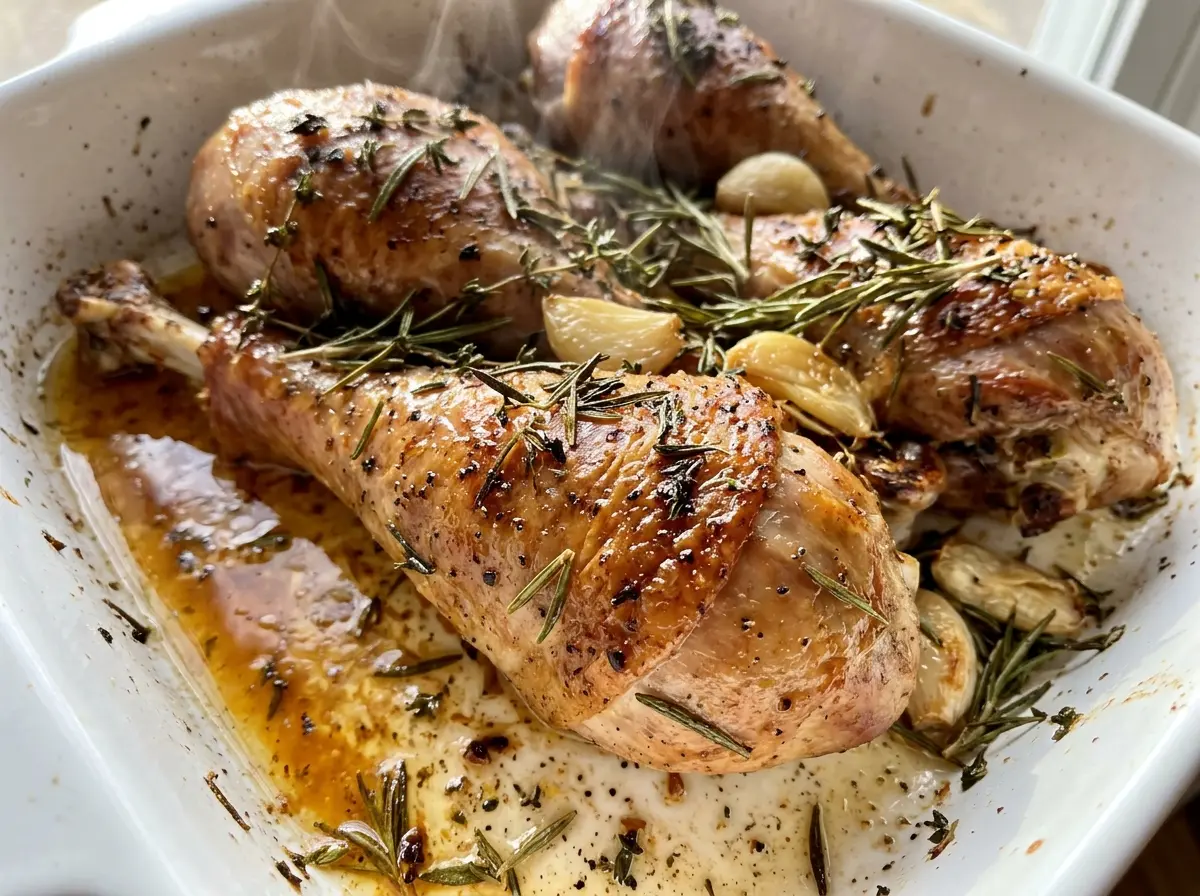
As the turkey legs roast, the skin tightens and turns bronze while the butter tucked underneath melts into the meat. That contrast is what I want from a bone-in leg: crisp skin on top, with rosemary, thyme, sage, and garlic close to every bite. These herb roasted turkey legs with crispy skin are built around that payoff, without a complicated rub or a long list of ingredients.
I keep the herbs in softened butter and spread them under the skin, where they stay protected during the long roast instead of drying out on the surface. A little olive oil goes over the skin, and the oven does the rest in two stages. The result is a generous, deeply savory turkey leg with skin that crackles at the edges and meat that stays tender.
Kitchen Note
Work slowly when loosening the skin, keeping your fingers close to the meat as you make room for the herb butter. Stop as soon as you have a pocket; pushing farther than you need to can tear the skin.
Save these herb roasted turkey legs for a crisp-skinned roast with rosemary, thyme, sage, and garlic tucked under the skin.
Why the Rack Matters for Crisp Turkey Skin
A rimmed baking sheet catches drippings, but the wire rack does a different job: it lifts the turkey legs above the pan. Air can move underneath the skin instead of leaving the underside pressed against a hot, damp surface. That difference matters through a long roast, when moisture and rendered fat collect below the meat.
Set the rack inside the 12×17-inch pan before the legs go in, and keep the legs up on that rack for the full roasting time. The open space underneath also means you don’t need to turn the legs halfway through. The skin stays exposed while the turkey cooks, and the pan catches what drips away. If crisp skin is the reason you’re choosing this method, that bit of separation is doing real work.
Why Fresh Herbs and Unsalted Butter Make a Better Under-Skin Paste

- Turkey legs: Use drumsticks about 1 1/4 pounds each so the cook time suits a substantial, bone-in cut. Turkey breast isn’t a direct swap here; it has a different shape and won’t follow the same timing or give you the same skin-to-meat ratio.
- Unsalted butter: Softened butter makes a spreadable base that holds the chopped herbs and garlic together under the skin. Unsalted butter also lets the kosher salt on the outside season the turkey without extra saltiness. A standard grocery-store butter works well; there’s no need for a specialty brand.
- Fresh rosemary, thyme, and sage: Fresh leaves give the butter a bright, aromatic quality and distribute easily when chopped or stripped from their stems. The individual herbs matter more than buying an expensive bundle. Dried herbs don’t make the same soft, fresh mixture, so I stick with fresh for this preparation.
- Garlic: Mince the cloves finely so there aren’t large pieces competing with the herbs or making the butter mixture difficult to spread. Fresh garlic has a cleaner, more immediate flavor here than a prepared garlic paste.
- Olive oil: A thin coating helps the outside of the skin take on an even sheen before it goes into the oven. An everyday olive oil is fine; save a more expensive bottle for a dish where its flavor is meant to stand out.
How to Roast Turkey Legs Through to the Bone Without Losing the Crisp Skin
Set Up the Rack and Hot Oven
Heat the oven to 425°F and place a wire rack inside a 12×17-inch rimmed baking sheet. Get the pan ready before handling the turkey so the seasoned legs can go straight onto the rack. The rimmed sheet sits underneath to catch drippings while the rack keeps the legs lifted.
Dry the Legs and Make a Pocket
Pat each turkey leg dry with paper towels; a dry surface gives the oil and seasoning a better chance to stay where you put them. Gently loosen the skin without tearing it. You only need enough room to spread the butter mixture over the meat beneath the skin, not to remove the skin or separate it completely.
Tuck in the Herbs and Season the Outside
Mix the softened butter with the rosemary, thyme, sage, and minced garlic until the herbs are distributed through the butter. Spread the mixture under the loosened skin. Rub olive oil over the skin, then season the legs all over with kosher salt and black pepper so the outside is seasoned from end to end.
Roast in Two Stages and Check Each Leg
Arrange the legs on the rack and roast for 20 minutes at 425°F. Reduce the oven to 350°F and continue roasting for 60 to 90 minutes, until the skin is crisp and the thickest part of each leg reaches at least 165°F. Keep the thermometer tip away from the bone, which can give you a misleading reading. Check each leg individually; larger pieces may need longer than smaller ones.
Rest Before Serving
Transfer the roasted legs to a platter and let them rest for 15 minutes before serving. The skin will stay crispest if you don’t cover the platter tightly while they rest. Give the legs the full resting time, then serve them while the skin is still crackly.
Three Easy Ways to Change the Herb Butter
Make the Herb Butter Dairy-Free
Replace the 1/4 cup softened butter with 1/4 cup olive oil, then mix in the rosemary, thyme, sage, and garlic as usual. The mixture will be looser and less rich than butter, but it still carries the herbs under the skin. Keep the separate tablespoon of olive oil for rubbing over the skin.
Leave Out the Garlic
For a garlic-free version, omit the two minced cloves and keep the butter and fresh herbs. The turkey will taste more directly of rosemary, thyme, and sage, with a gentler savory note underneath.
Skip the Rosemary for a Milder Herb Blend
Leave out the rosemary and use the thyme and sage in the butter mixture. The result is softer and less piney, while the garlic and sage still give the turkey a savory center.
Storage and Reheating
- Refrigerator: Refrigerate leftovers within 2 hours in a covered container; they’ll keep for 3 to 4 days. The skin softens after chilling, even though the meat stays flavorful.
- Freezer: These legs freeze well. Wrap them tightly or pack the meat in an airtight container, and use within 3 months for the best texture; thaw in the refrigerator.
- Reheating: Warm covered in a 325°F oven until steaming hot in the center. Uncover for the last few minutes if you want to firm the skin back up; microwaving a whole leg can leave the center cool while the outside gets hot.
Questions That Come Up When Roasting Turkey Legs
Herb Roasted Turkey Legs with Crispy Skin
Ingredients
Equipment
Method
- Heat the oven to 425°F and set a wire rack inside a 12x17-inch rimmed baking sheet.
- Pat the turkey legs dry and gently loosen the skin without tearing it.
- Mix the butter, rosemary, thyme, sage, and garlic.
- Spread the butter mixture under the skin.
- Rub the skin with olive oil.
- Season the legs all over with the salt and pepper.
- Arrange the legs on the rack and roast for 20 minutes.
- Reduce the oven to 350°F.
- Roast for 60 to 90 minutes more, until the skin is crisp and the thickest part of each leg reaches at least 165°F without touching bone.
- Transfer the legs to a platter and rest for 15 minutes before serving.