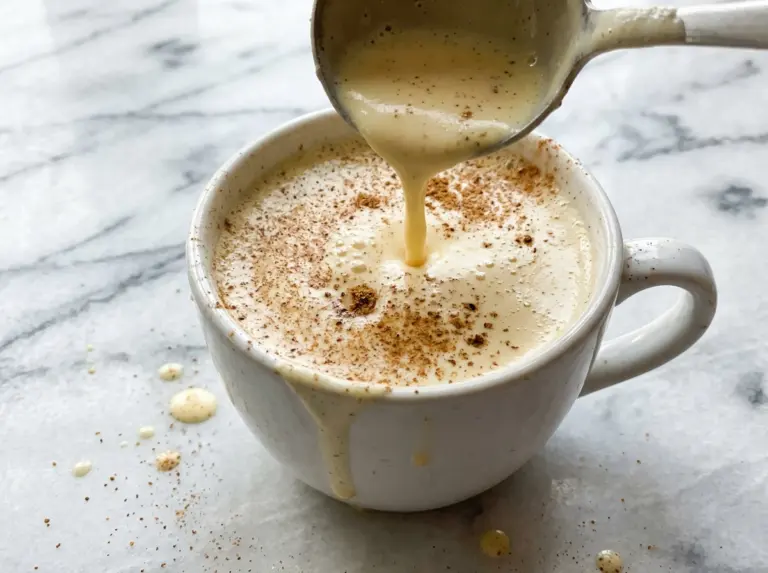
When tiny bubbles gather around the edge of the saucepan, the milk and cream are ready to meet the eggs. Let the mixture boil, though, and the eggs can turn lumpy before you have a chance to fix them. This homemade Christmas eggnog with nutmeg and vanilla uses a slow tempering step to keep the custard smooth and gently cooked.
I like that it gets its richness from whole milk, heavy cream, and whole eggs, with no need for a separate whipped topping or extra flavorings. Nutmeg warms in the dairy as it heats, and vanilla goes in after the pan comes off the burner so its aroma stays clear. After an ice-water bath and a good chill, each glass is creamy, cool, and easy to pour.

Kitchen Note
Pour the warm eggnog through a fine-mesh strainer before it goes into the ice bath, even if it looks smooth in the pan. The mesh catches tiny bits you might not notice until they’re in your glass.
Save this homemade Christmas eggnog with nutmeg and vanilla for a smooth, creamy pitcher you can chill ahead and pour straight from the fridge.
Why Adding Hot Milk Too Fast Turns Eggnog Into Sweet Scrambled Eggs
Eggs thicken this drink, but they’re also the part most likely to go wrong. Pour hot dairy directly into the bowl and the eggs can seize in spots, leaving little cooked flecks in a mixture that should be smooth. Tempering gives the eggs time to warm gradually: whisk in a small portion of the hot milk mixture first, then return that warmed egg mixture to the saucepan.
That gradual change in temperature matters more than whisking harder after the eggs have already overheated. Once everything is back in the pan, steady stirring spreads the heat through the custard instead of letting the bottom cook first. Keep the burner moderate and don’t let the mixture boil. A gentle, patient cook gives the eggs time to thicken the milk and cream without turning into curds.
This is also why homemade eggnog isn’t just milk with spices stirred in at the end. The eggs give it body and a custardy texture, while the careful heat keeps that texture pourable. Think smooth, lightly thickened custard—not a pudding and not a frothy drink.
What Whole Milk, Cream, and Whole Eggs Each Bring to Eggnog
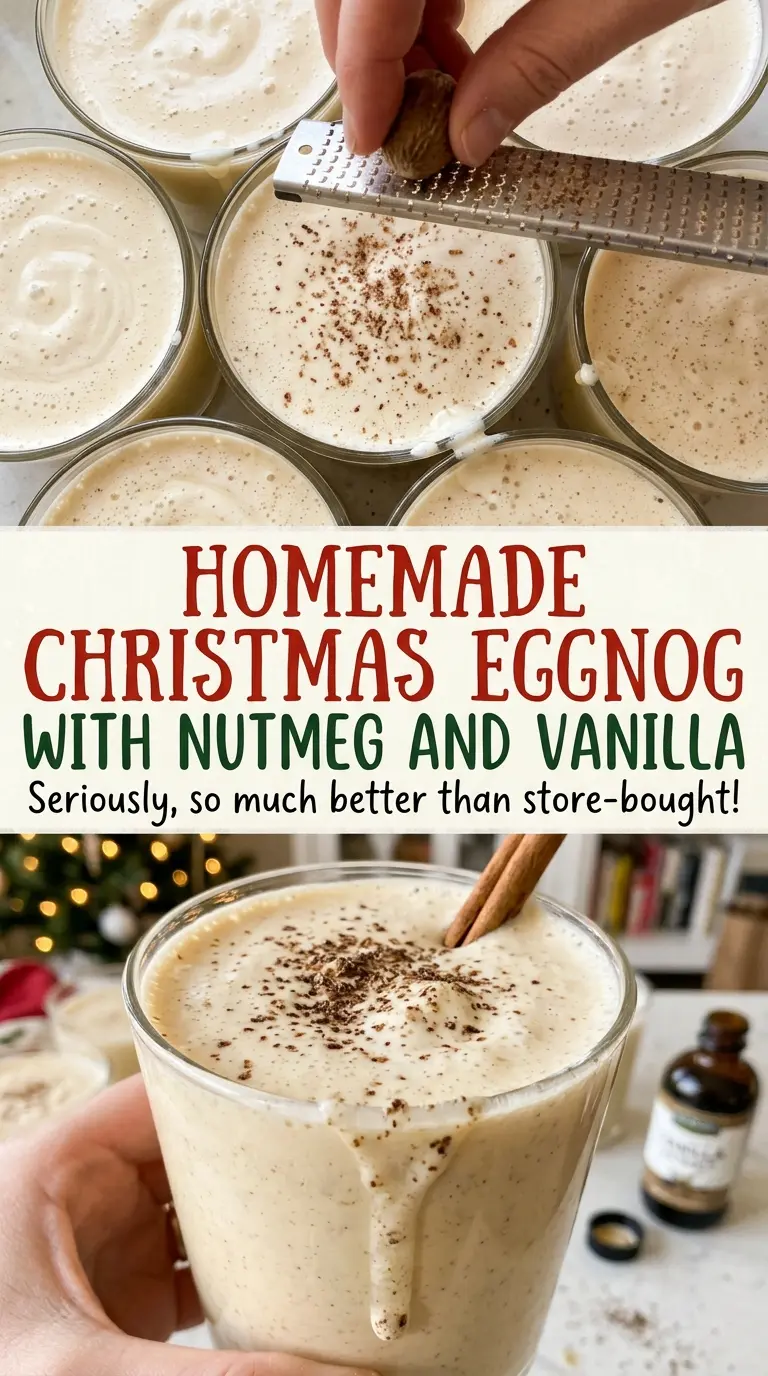
- Whole eggs — They thicken the dairy and give the drink its custard-like body. Use large eggs for the intended balance; egg whites alone won’t give the same richness, and there isn’t a simple swap that keeps this recipe’s texture.
- Granulated sugar — It sweetens the eggs and dissolves readily as you whisk. Regular store-brand granulated sugar works well here; a strongly flavored or liquid sweetener would change both the taste and the balance of the custard.
- Whole milk — Whole milk keeps the base creamy without making it as heavy as cream alone. Two-percent milk works if that’s what you have, but the finished eggnog will be thinner and less rich.
- Heavy cream — Cream gives the chilled drink its rounded, velvety feel. It doesn’t need to be a premium brand; for a lighter result, replace it with whole milk, knowing the eggnog will lose some richness.
- Ground nutmeg — Ground nutmeg disperses through the dairy and gives the eggnog its familiar warm aroma. Freshly grated nutmeg can stand in for ground, but it’s more assertive; use a little less at first rather than matching it spoon for spoon.
- Vanilla extract — Vanilla softens the sharp edge of the spice and rounds out the custard. A good-quality extract is lovely, but an everyday bottle works; imitation vanilla can also be used in the same amount, with a simpler flavor.
How to Cook the Custard Without Losing Its Silky Texture
Whisk the Eggs and Sugar Until Smooth
In a medium bowl, whisk the eggs and granulated sugar until the mixture looks even and the sugar is no longer sitting in a layer at the bottom. There shouldn’t be streaks of clear egg white around the bowl. Set the mixture nearby while you warm the dairy, so it’s ready when the milk mixture comes off the heat.
Warm the Milk, Cream, and Nutmeg Gently
Combine the whole milk, heavy cream, and ground nutmeg in a 3-quart saucepan over medium heat. Give the mixture about 5 minutes to become steaming, with small bubbles forming around the edge. Don’t wait for a rolling boil; bubbling across the surface is too hot for the next step.
Temper the Eggs and Thicken the Custard
Slowly whisk about 1 cup of the hot milk mixture into the eggs, pouring in a steady stream as you whisk. Gradually whisk the warmed egg mixture back into the saucepan, then lower the heat to medium-low and stir constantly. Cook until an instant-read thermometer reads 160°F, about 5–8 minutes; the mixture should look smooth and slightly thickened, not lumpy or foamy. If you see it starting to boil, take the pan off the burner briefly and lower the heat before continuing.
Strain, Cool, and Chill Until Pourable
Take the saucepan off the heat and stir in the vanilla extract. Pour the eggnog through a fine-mesh strainer into a pitcher, then set the pitcher in an ice-water bath and stir occasionally as it cools, about 20 minutes. Cover the pitcher and refrigerate at 40°F or below for at least 4 hours. Stir before serving so the chilled eggnog has an even texture from the first glass to the last.
Three Practical Ways to Adjust the Flavor and Richness
Make a Lighter, Milk-Forward Batch
Replace the heavy cream with the same amount of whole milk. The eggnog will still be custardy, but it won’t feel as lush on the tongue; keep the rest of the ingredients and cooking method the same.
Make It Lactose-Free
Use lactose-free whole milk and lactose-free heavy cream in place of their regular counterparts, keeping the same amounts. The eggs still provide the custard’s body, and the drink keeps a creamy texture without lactose.
Turn Up the Nutmeg
For a more pronounced spice note, add a little extra ground nutmeg to the milk and cream as they warm. Keep the increase modest so the nutmeg doesn’t take over the vanilla and egg custard.
Make-Ahead and Serving
- Refrigerator: Keep the pitcher covered and use the eggnog within 3 days. It may thicken slightly as it chills.
- Freezer: Freezing isn’t recommended; the egg-and-dairy mixture can separate and turn grainy when thawed.
- Serving: Stir before pouring, and keep the pitcher chilled between servings for the smoothest texture.
Questions That Come Up While Making Homemade Eggnog
Homemade Christmas Eggnog with Nutmeg and Vanilla
Ingredients
Equipment
Method
- In a medium bowl, whisk the eggs and sugar until smooth.
- In a 3-quart saucepan, combine the milk, heavy cream, and nutmeg.
- Heat over medium until steaming and small bubbles form around the edge, about 5 minutes, without letting it boil.
- Slowly whisk about 1 cup of the hot milk mixture into the egg mixture.
- Gradually whisk the tempered egg mixture back into the saucepan.
- Cook over medium-low heat, stirring constantly, until the eggnog reaches 160°F on an instant-read thermometer, about 5–8 minutes; do not let it boil.
- Remove the saucepan from the heat and stir in the vanilla.
- Pour the eggnog through a fine-mesh strainer into a pitcher.
- Set the pitcher in an ice-water bath and stir occasionally until cool, about 20 minutes.
- Cover and refrigerate at 40°F or below for at least 4 hours.
- Stir before serving.